
Our eventual goal on this leg of our journey, is Skopje, in North Macedonia. So we decided to cruise down the Dalmatian Coast, do some sightseeing and some chillin’ on the beach prior to cutting across Albania, Bosnia-Herzegovina and Kosovo to get to Macedonia. Split was the first stop on this itinerary.
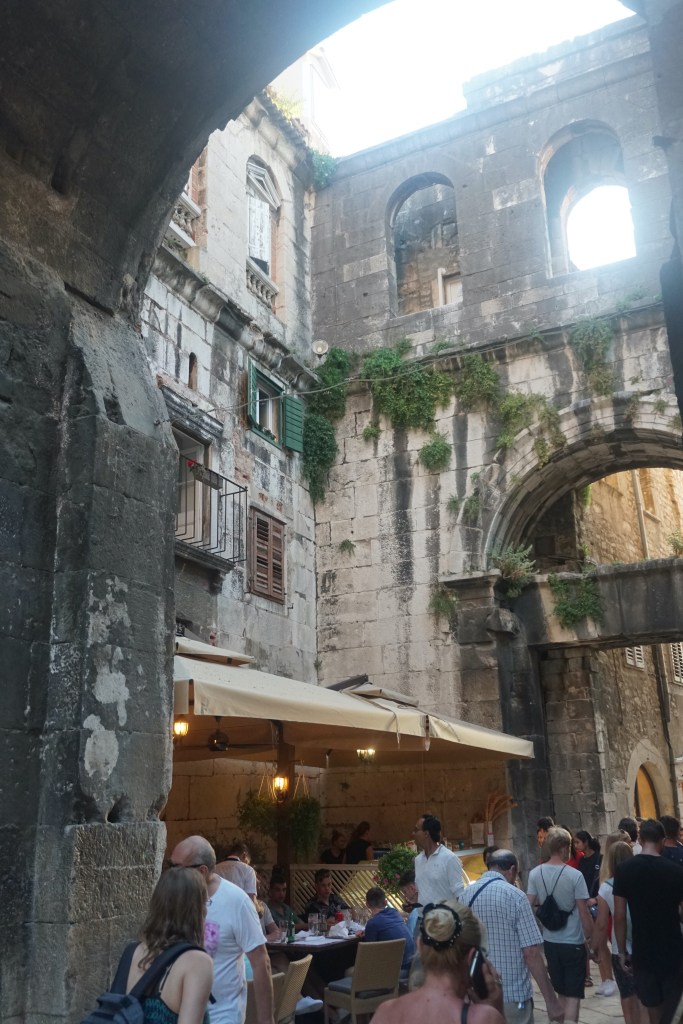
Split, Croatia, on the Dalmatian Coast, is a prime tourist destination. It is the second largest city in Croatia after Zagreb, the capital. For two millennia, it has been a major strategic outpost for its rulers – Greeks, Romans, Venetians, Hungarians, Austrians, Napoleon I… The list goes on. In the late 3rd and early 4th Century CE, Diocletian, a Roman emperor from 284 to 305, chose to build his retirement home in Split. Just a modest little bungalow? No! The Palace forms about half of the old town of Split. Half was for his personal use (about 91,500 square feet) and half was a well armed fortress. By Medieval times, small churches, residences and family palaces were build inside the walls. But the original layout of the Palace still exists. Today these spaces are home to souvenir and jewlery shops, restaurants and tourist accommodations. Despite these many transitions, Diocletian’s palace remains one of the most well preserved ancient buildings and has been declared a UNESCO World Heritage Site.
As we’ve mentioned, we’re using Airbnb exclusively so far to find our housing. And so far, so good. This time the address we were given was not where we ended up staying and there was about an hour of calling and waiting and looking for parking (and dealing with a really cranky guy yelling in Croatian) before we got into our apartment. That made for a grouchy evening. But by the next day, tranquility had prevailed, we had settled in, the car was parked for the duration of our stay, and we were able able to walk anywhere we wanted to go. Except to the beach, and then we took an Uber. (No Lyft available in Croatia.)
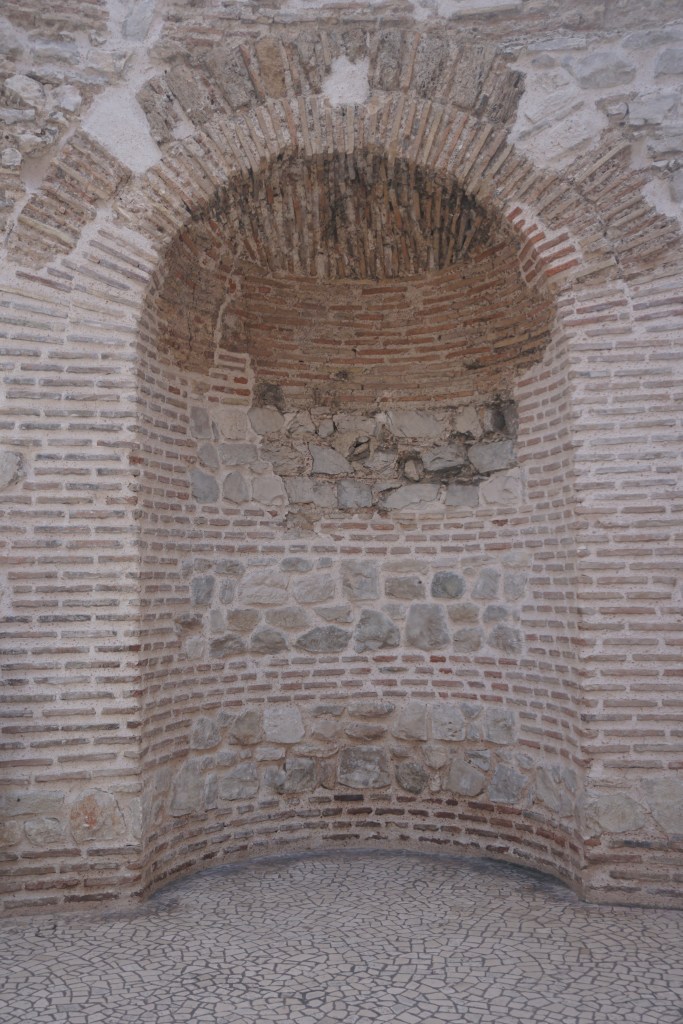
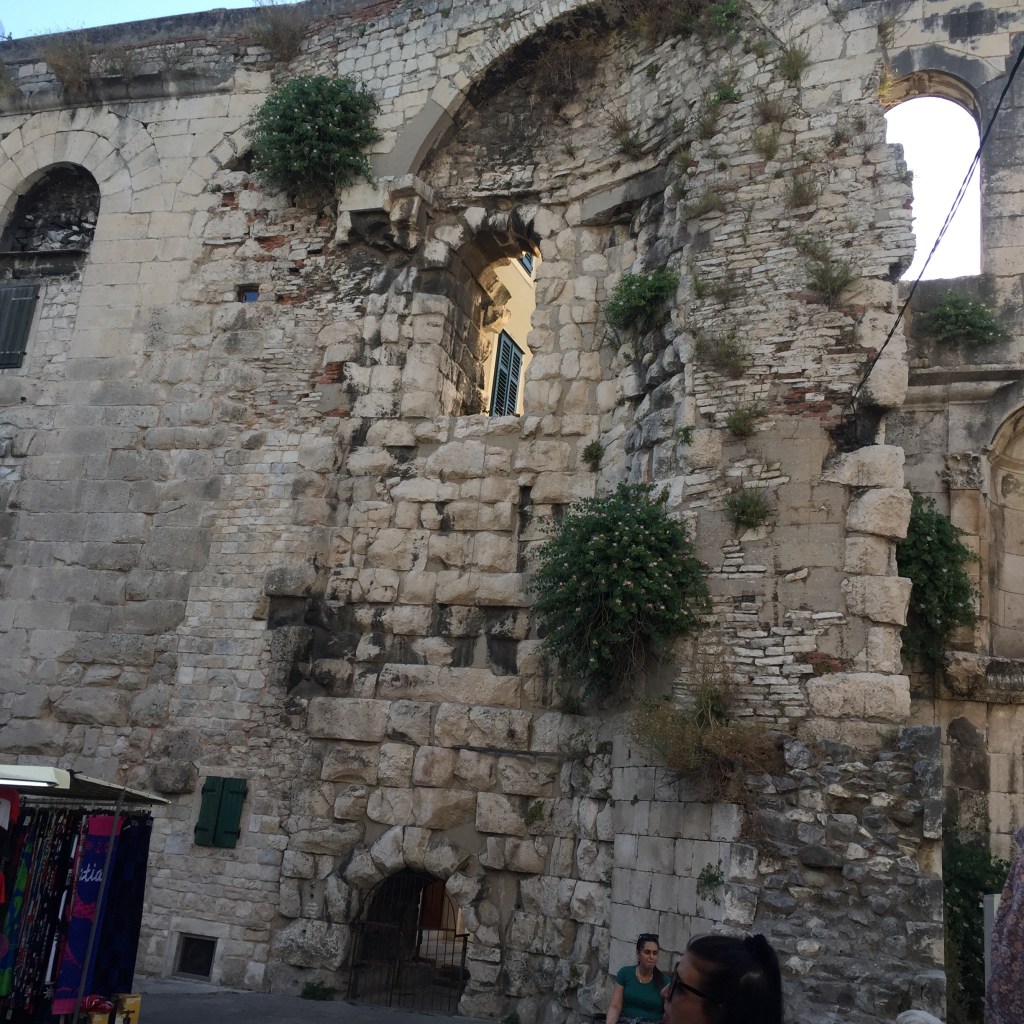
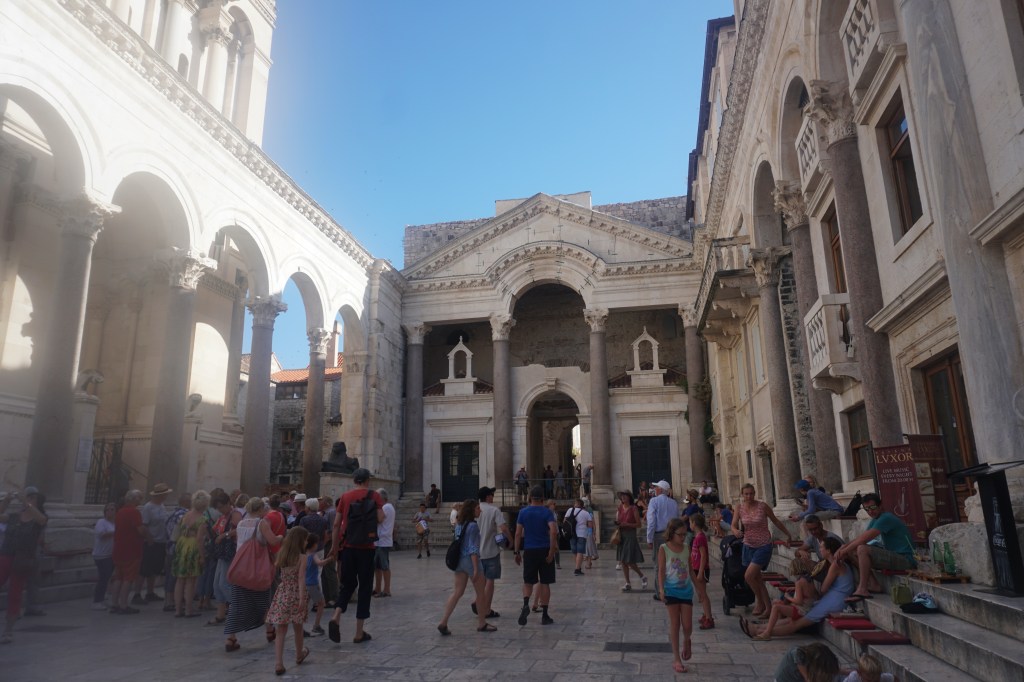
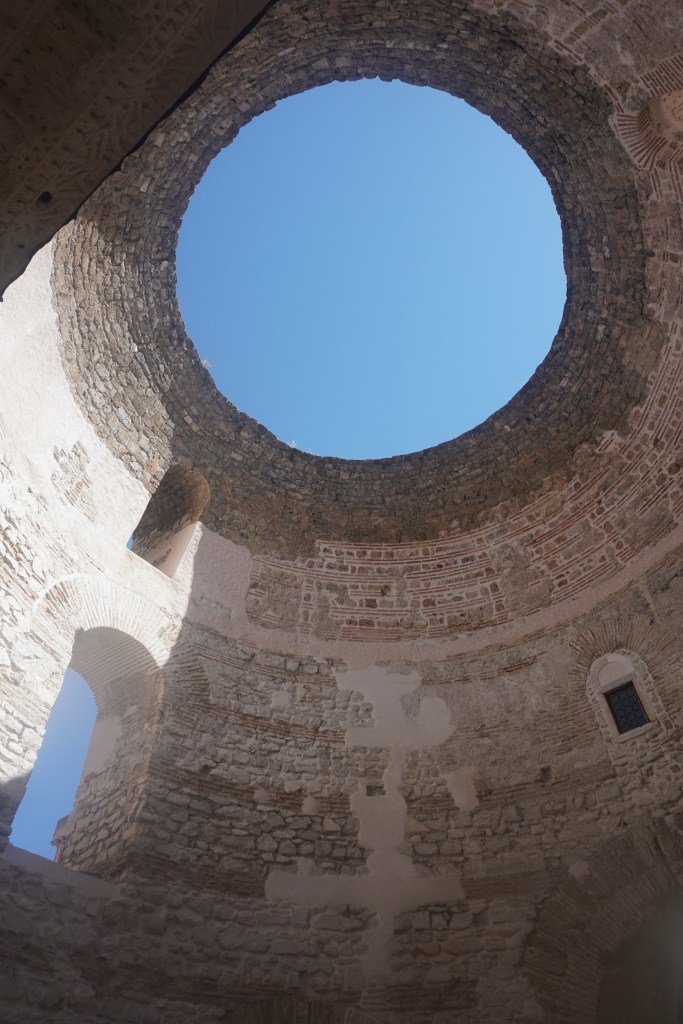
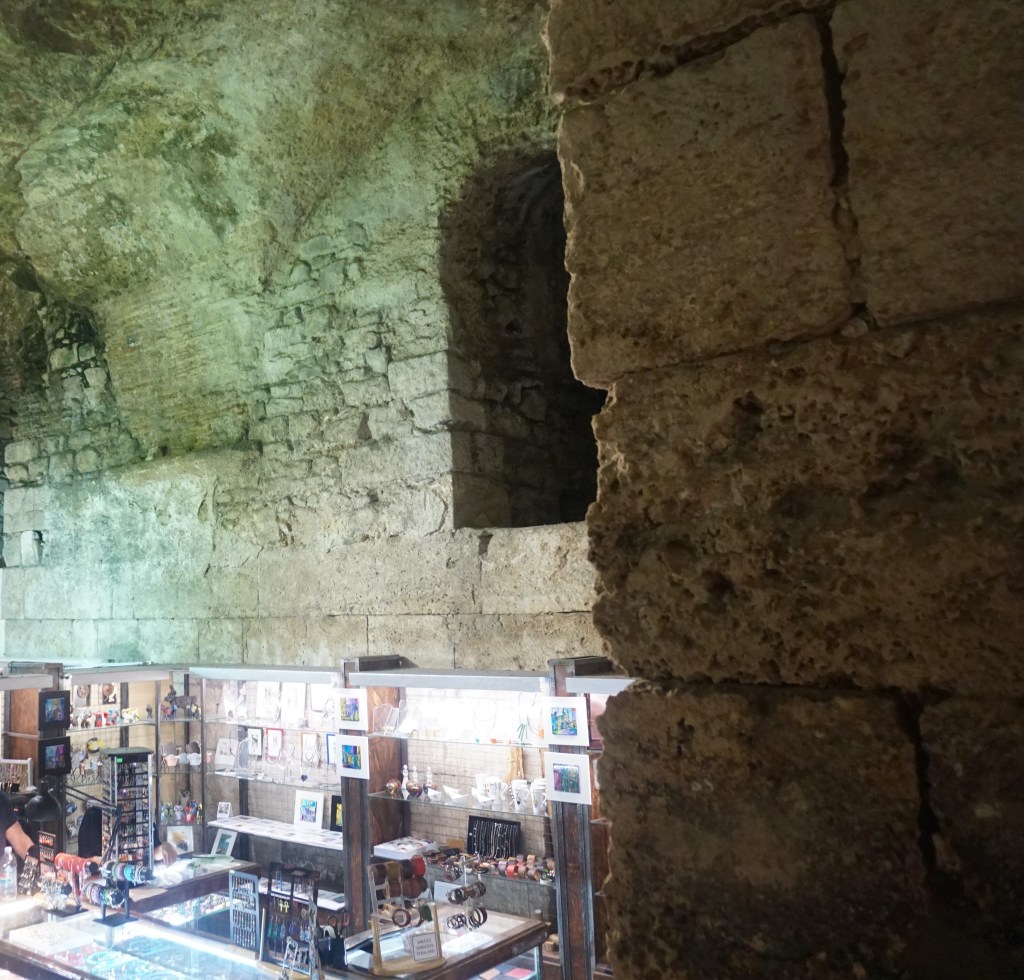
The first day, we spent walking around Diocletian’s Palace. We were still experiencing heat in the high 80’s and low 90’s, so this was an exercise in stamina for us. And for LuLu. The coolest place in the palace was the lower level which previously held one of the baths, but now contains shop after shop of souvenirs – something for everyone!
After walking about and gawking for a couple of hours, we decided to take a guided walk with a very knowledgeable guide. The Palace is a lesson in 17 centuries of architecture. From Roman to the Middle Ages to the Renaissance, there is an example of every era in this building. Pagan temples to Christian churches, all nestled in together. Clearly, Diocletian and his architects designed a proper imperial palace, with reception spaces, dining rooms, private apartments and so on. A tremendous amount of restoration has taken place and it continues apace. The mausoleum is currently under reconstruction.

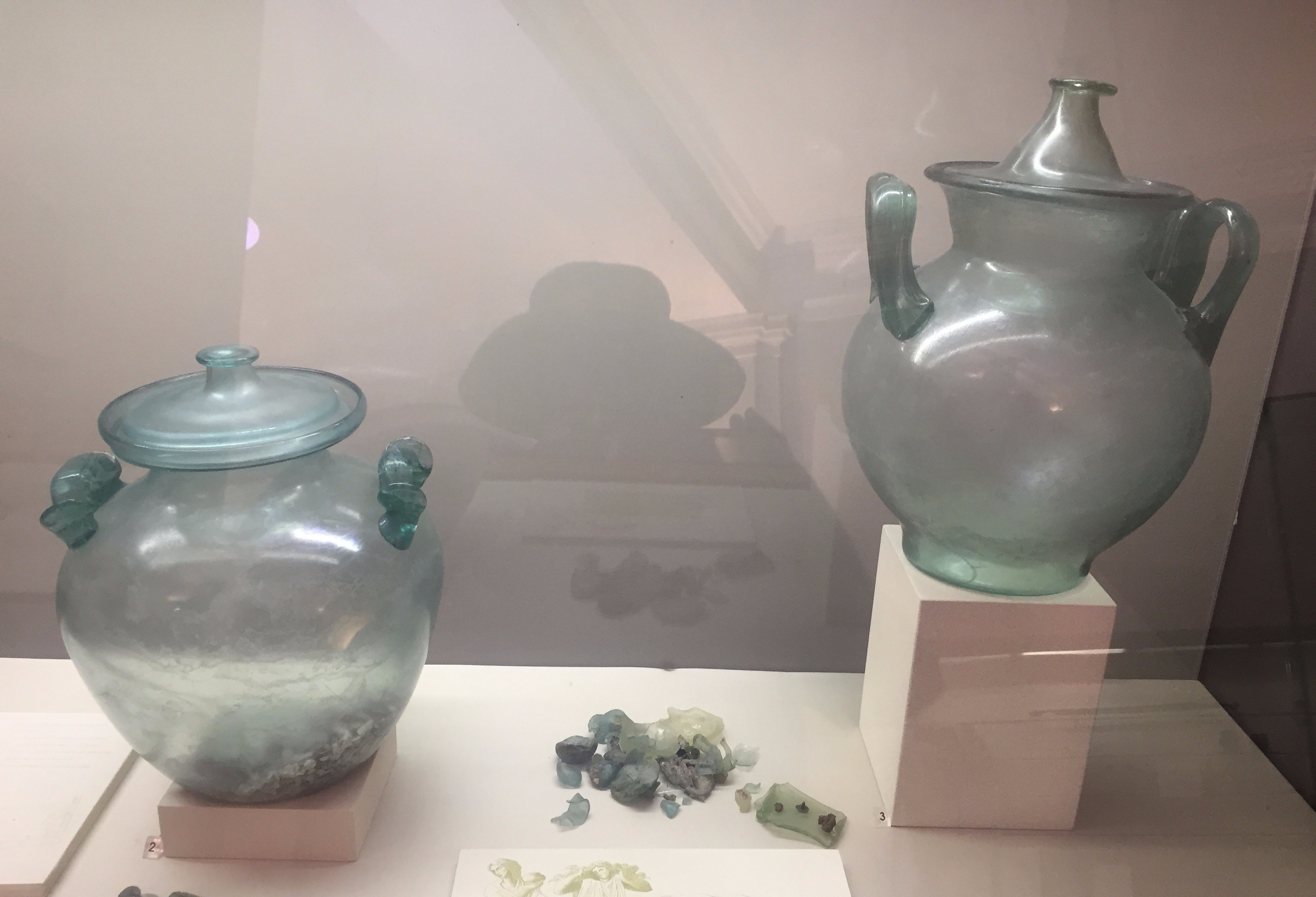
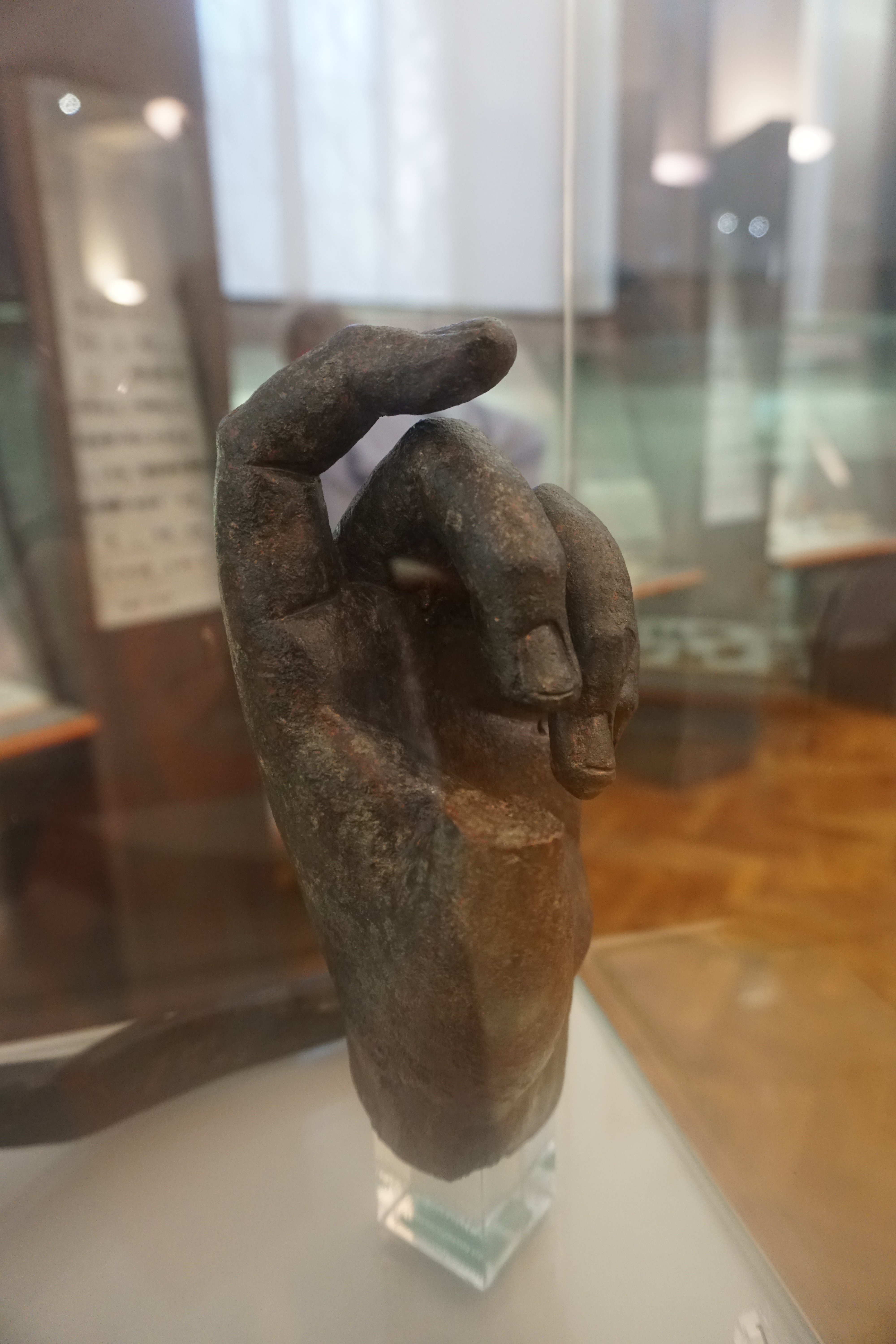
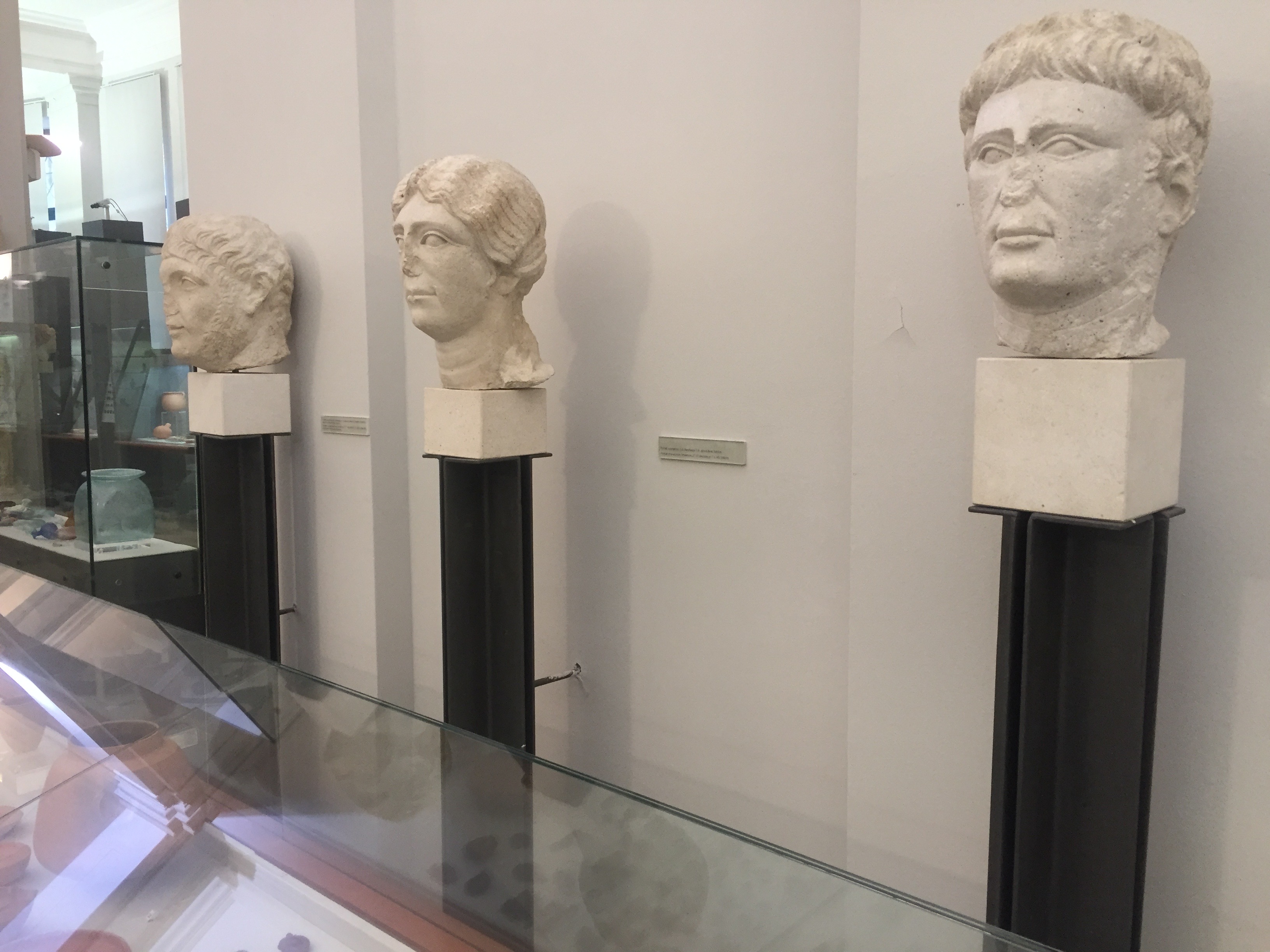
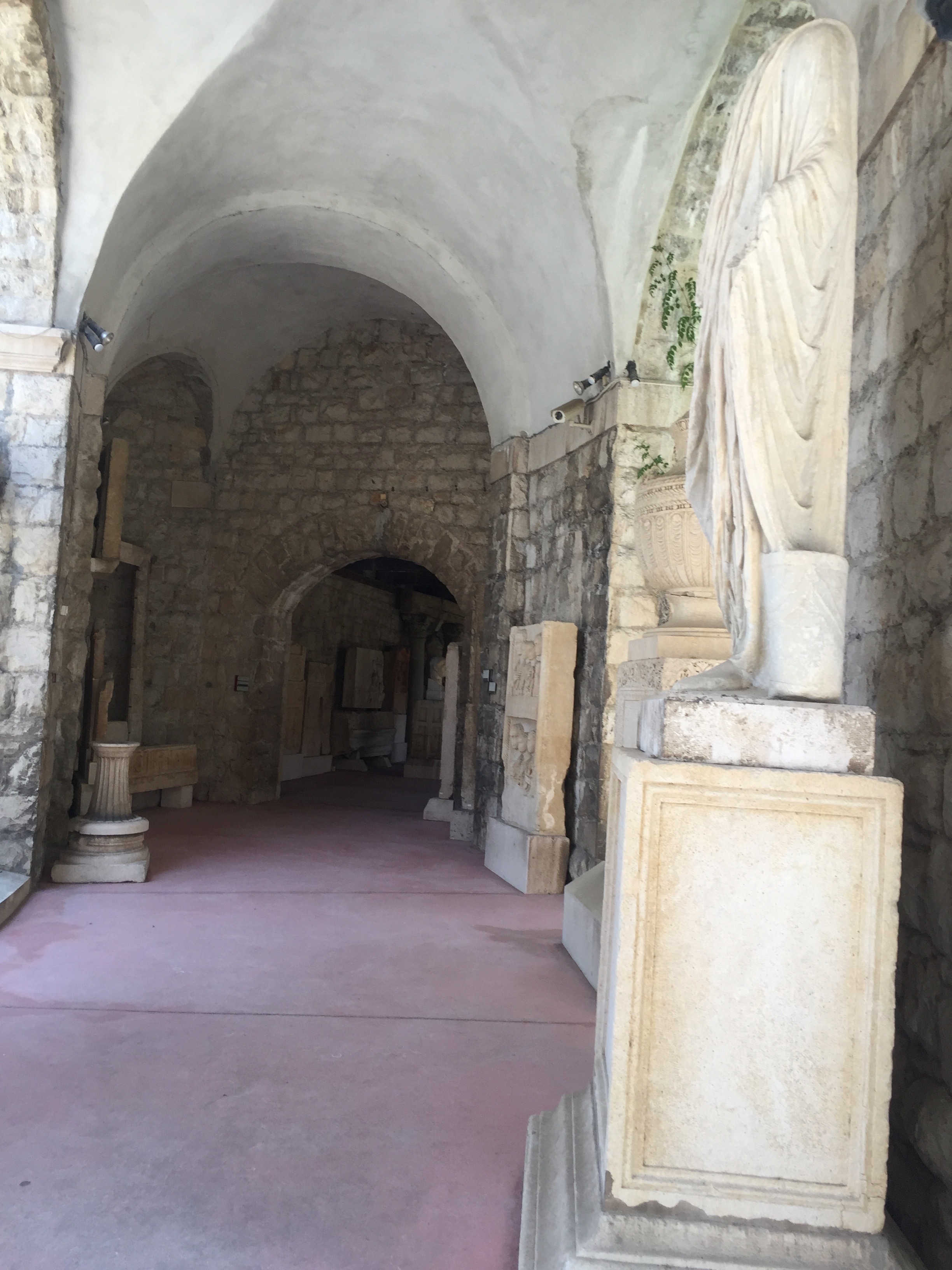
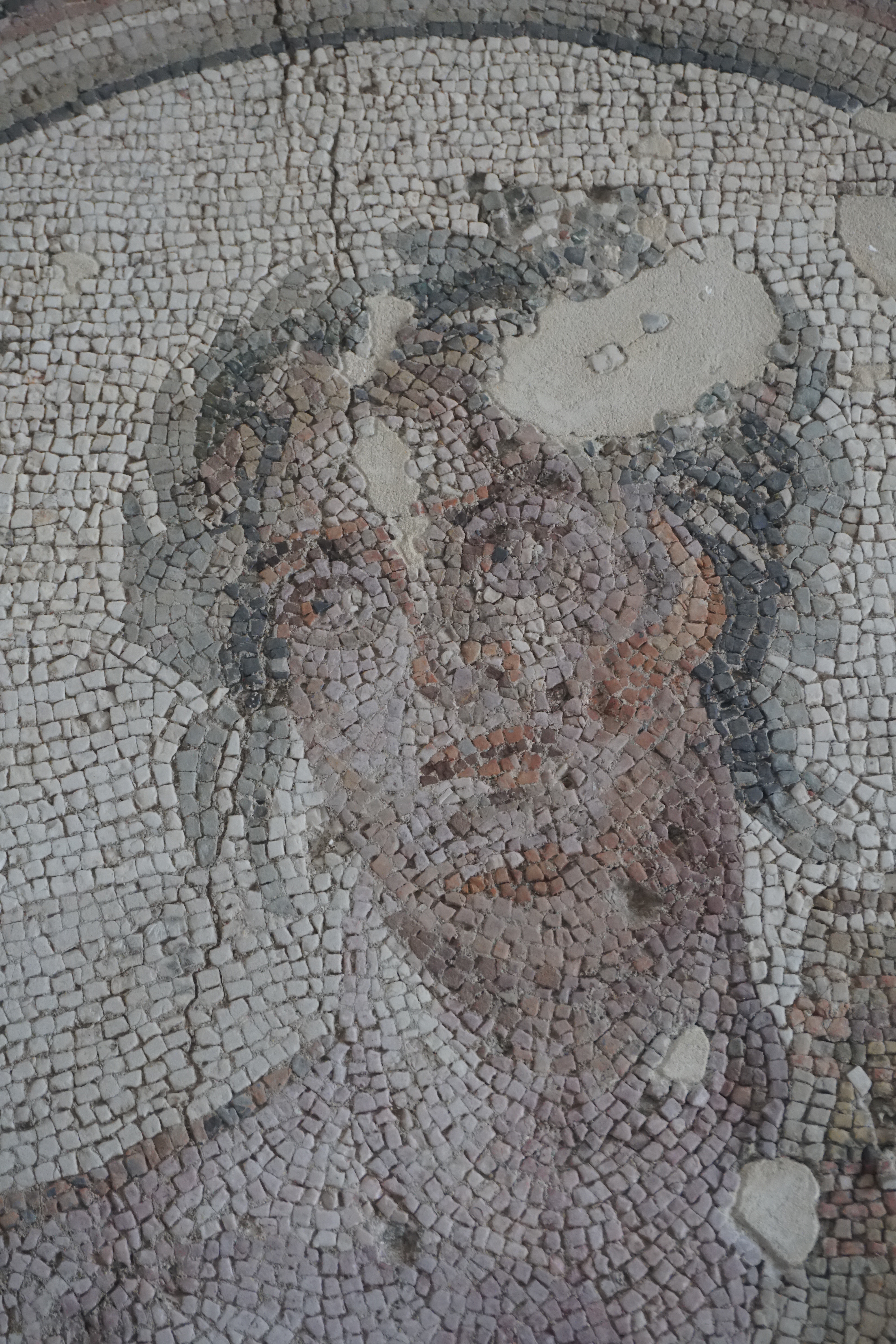
The next morning, we went to the Archeological Museum, which was just a few blocks from our flat. It’s a small museum, just one floor containing small items, with some larger pieces in the surrounding gardens. The first case was almost the most amazing. Glass pieces from the 1st and second centuries CE! We don’t even have glassware from 10 years ago! The glass jugs were multi-purpose, used in the kitchen until they were needed to hold cremains! The small Shmoo-shaped bottles are unguentariums, specifically for potions. Outside, loggias are filled with statues, sarcophagi and large mosaic portraits. Including a mosaic that could have ben entitled “Joan Crawford was here”

After lunch, we decided to hit the beach. And it was glorious! The water was clear and Coke bottle green near the pebbled shore and turned dark teal farther out. Cool and refreshing, we bobbed in the gentle waves, while heartier folks practiced their water polo strategy. It was a great relaxing break and reminded us that we ARE on vacation and not professional sightseers! There we go again, giving up another (semi-)professional discovery!
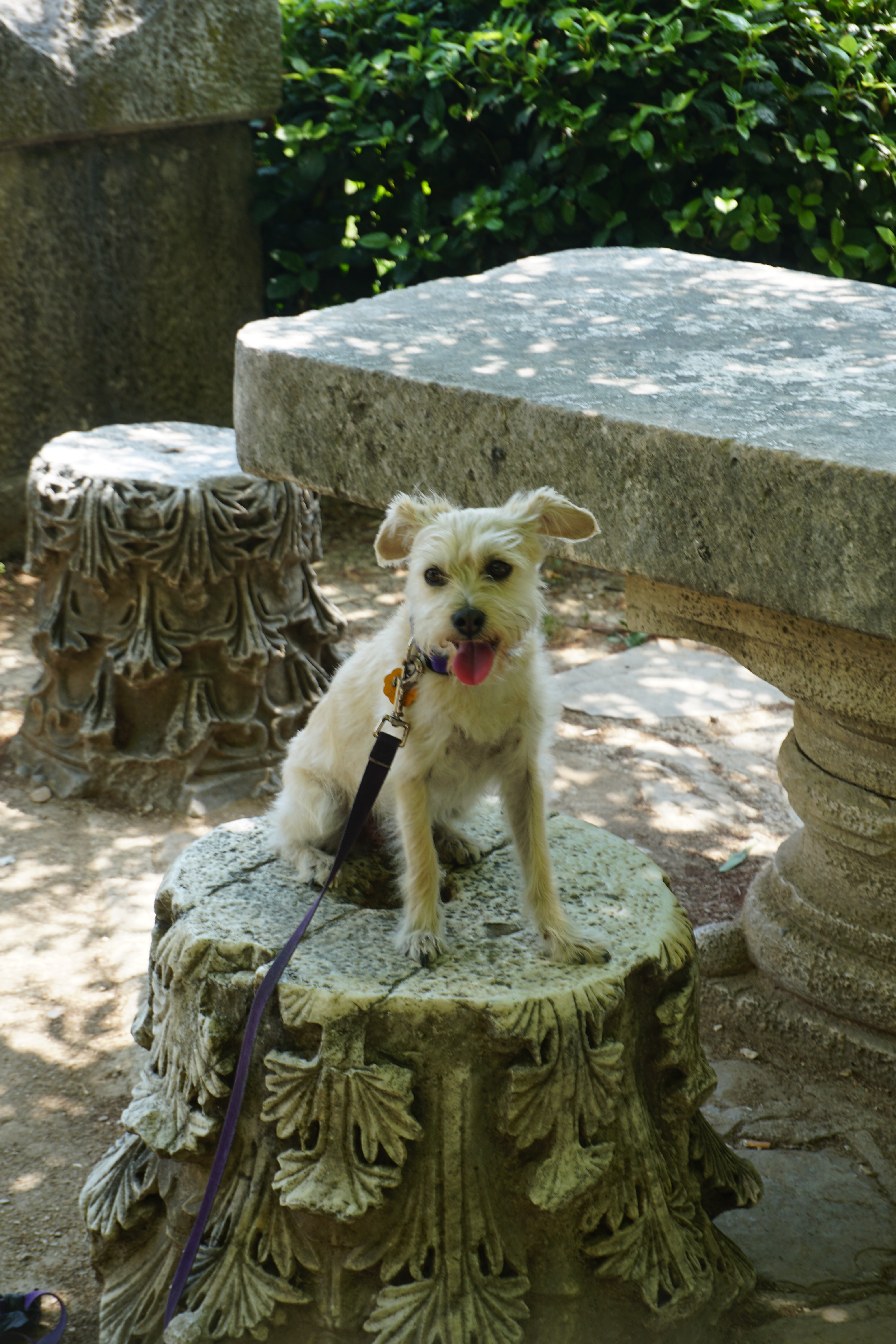
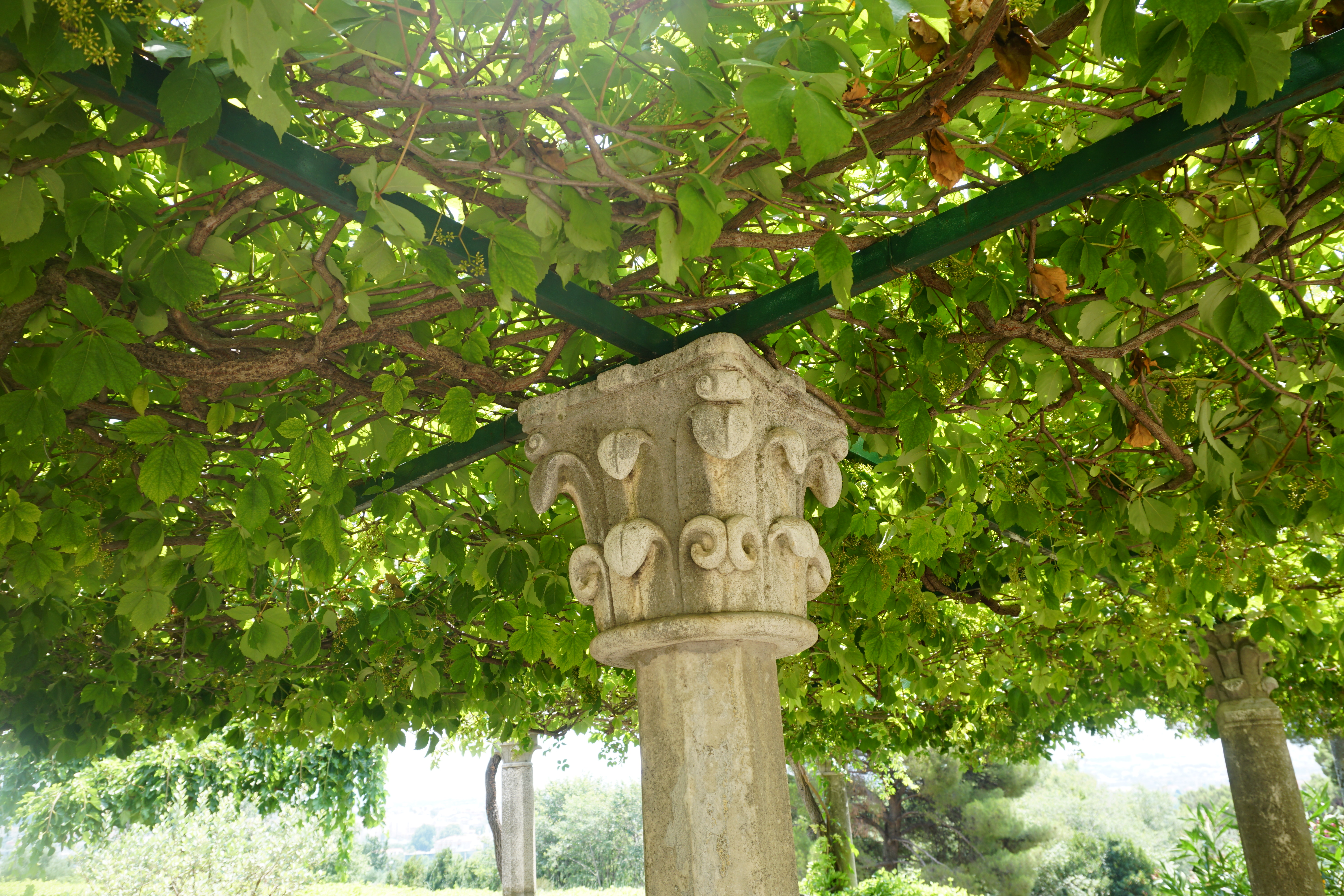
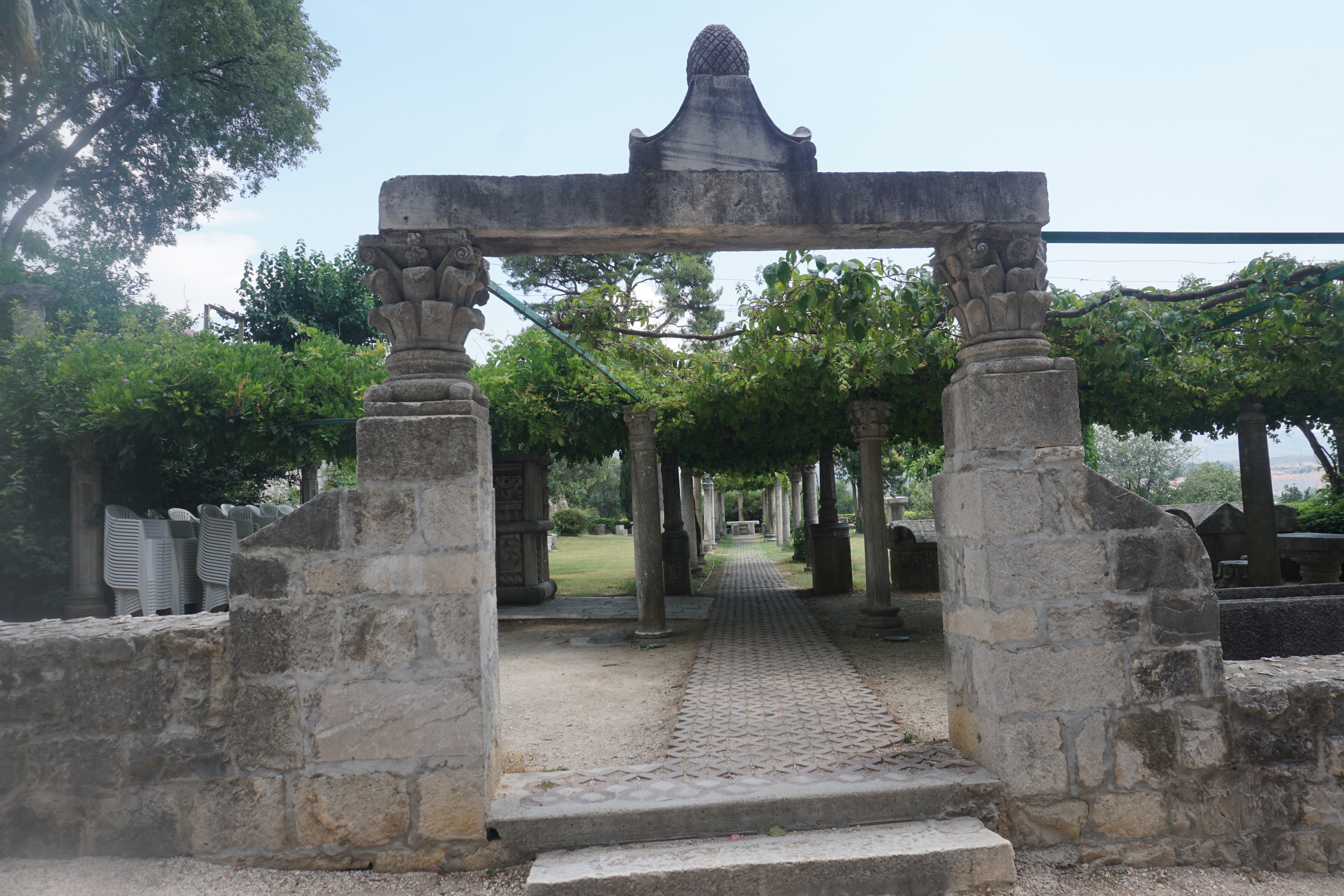
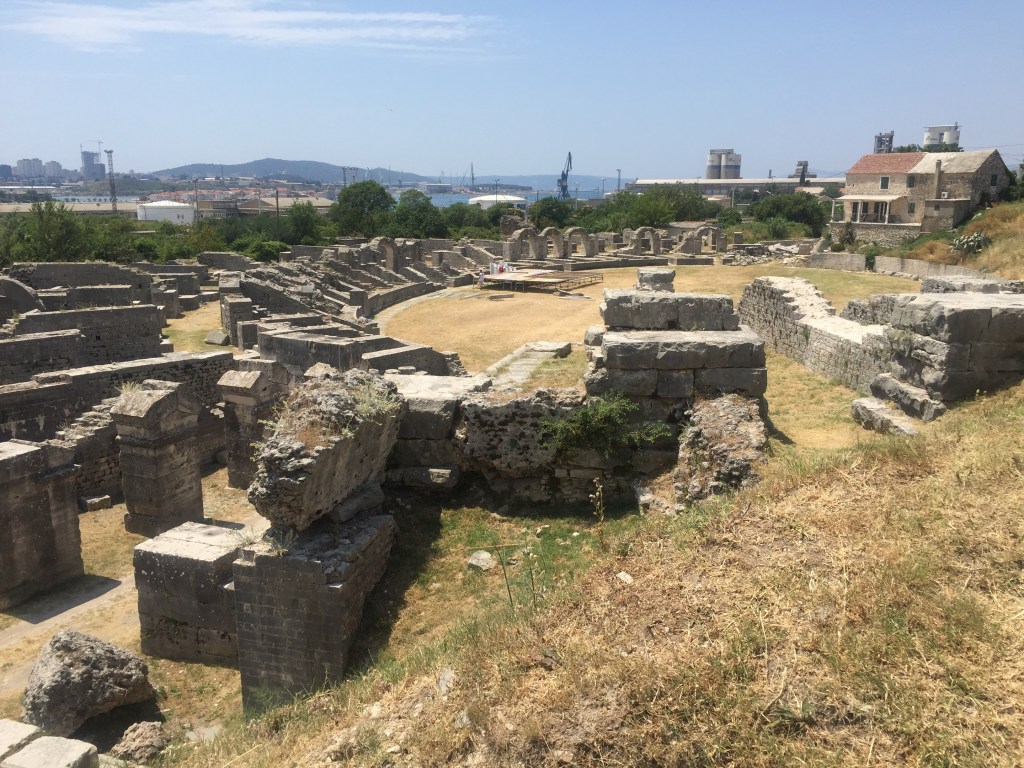
The next day, in the scorching heat of the day, we drove about 3.5 km over to Salona, previously the capital of the Roman province of Dalmatia. Today it is an archeological site, with ruins of a settlement, temples, baths, aqueducts, cemeteries and an amphitheater. We saw a collection of capitals at the headquarters of Monsignor Frane Bulić, the archaeologist who discovered and worked to reveal the site. Every capital, whether it’s a podium for LuLu or supporting a trellis is a different style! A long, stone-lined trench contained an uncounted number of sarcophagi.


From here we are headed to Dubrovnik, another over-touristed town, and again, one that is difficult to pass up. We will try to tread lightly.
Sending our love to you all,
Sam, Donna & LuLu
July 4th, 2019

 LuLu's Outta Town