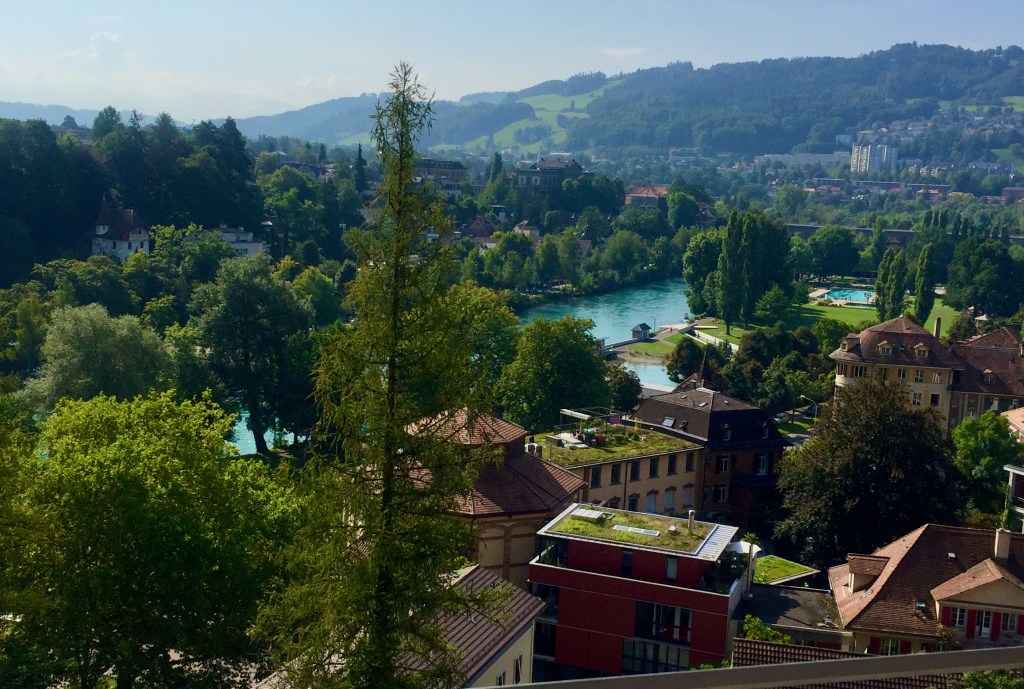
A view of Bern, Switzerland taken from the park next to the cathedral. We had a surprisingly lovely day! That really is the color of the river! Fed by glaciers in the Swiss alps, it is pure, clean and cold!
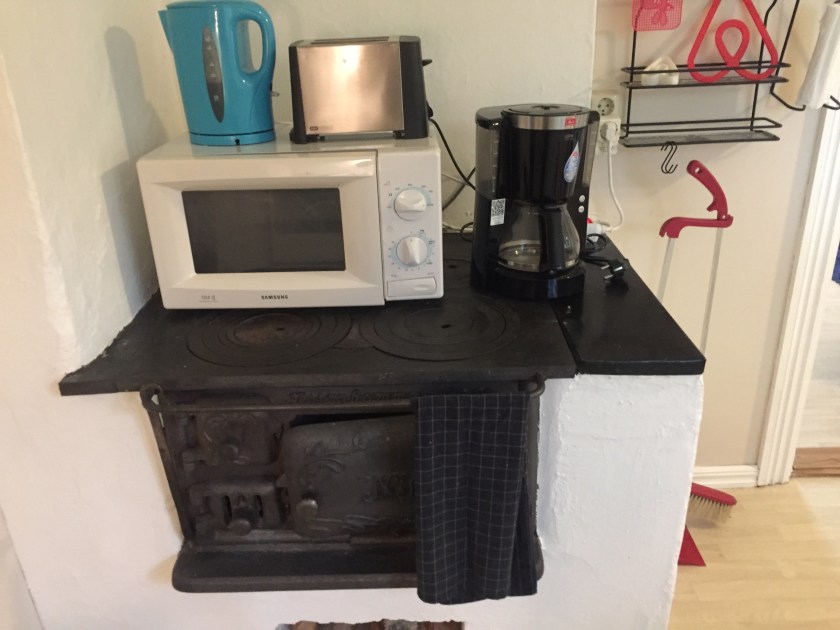
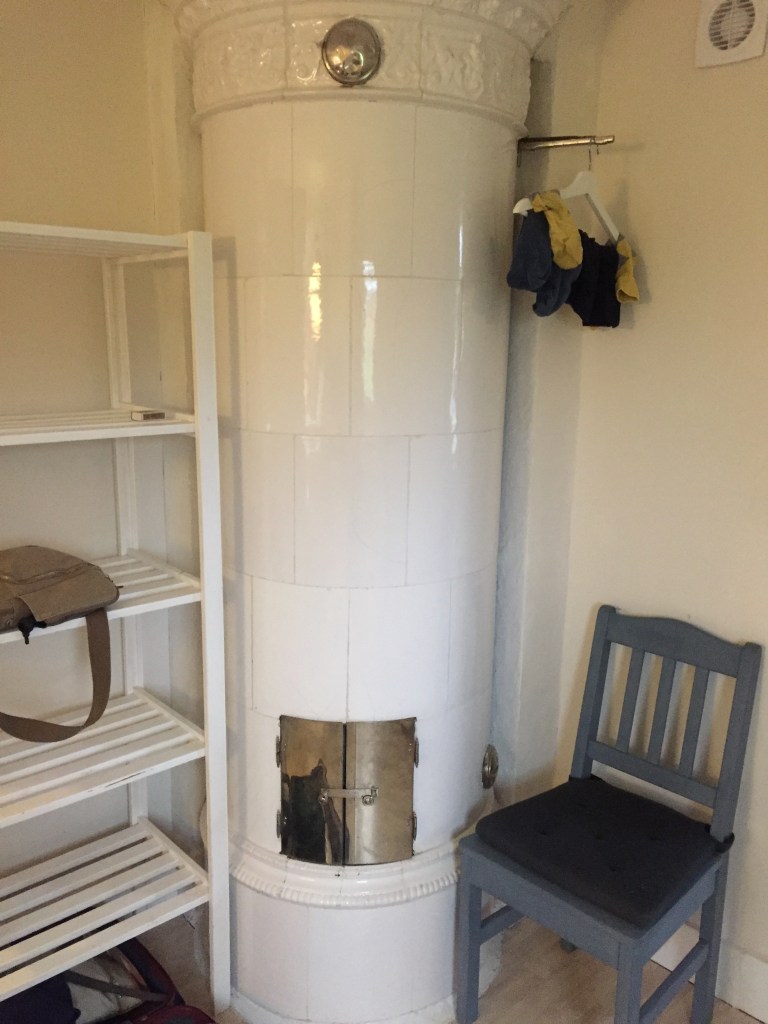
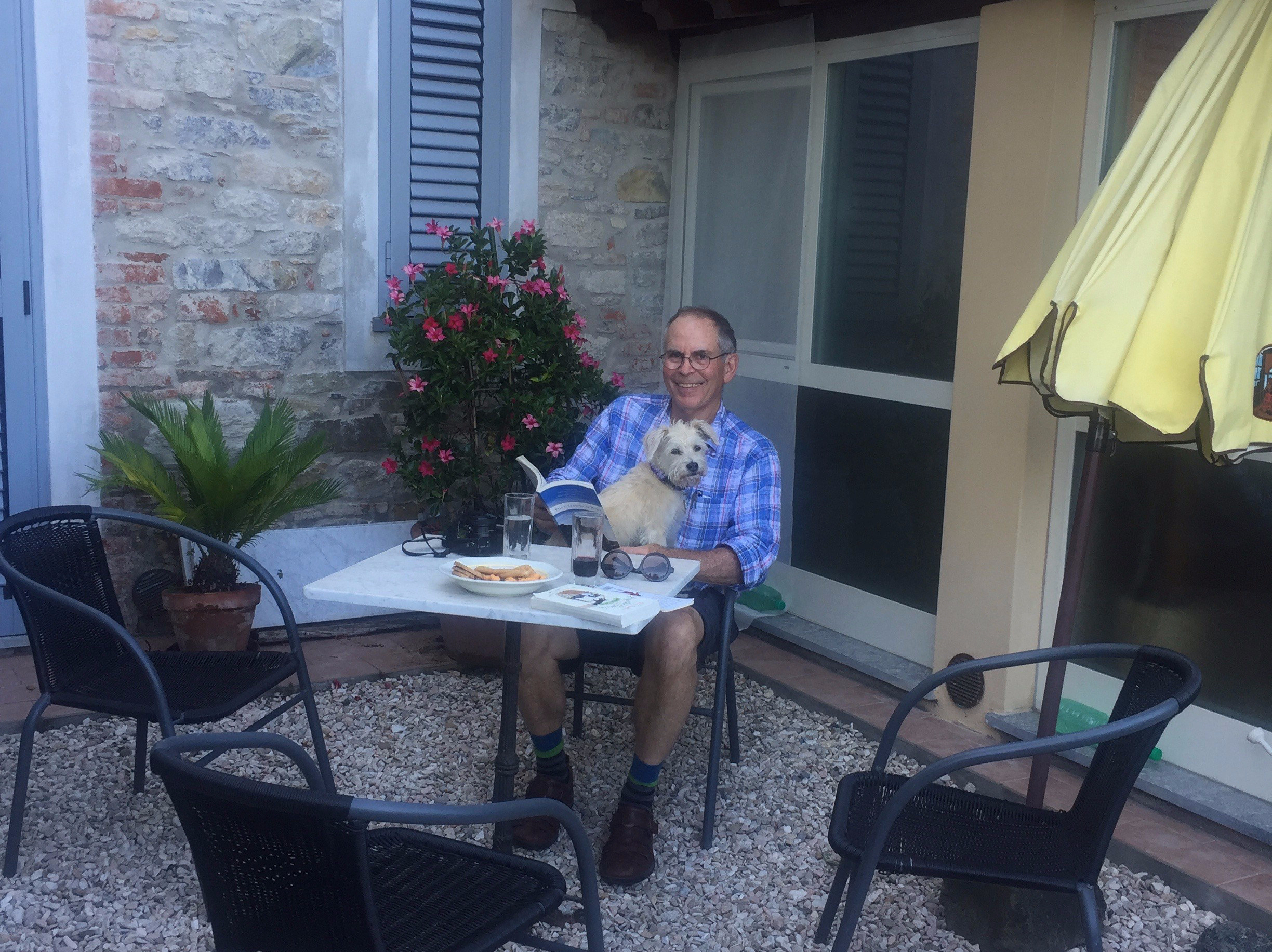
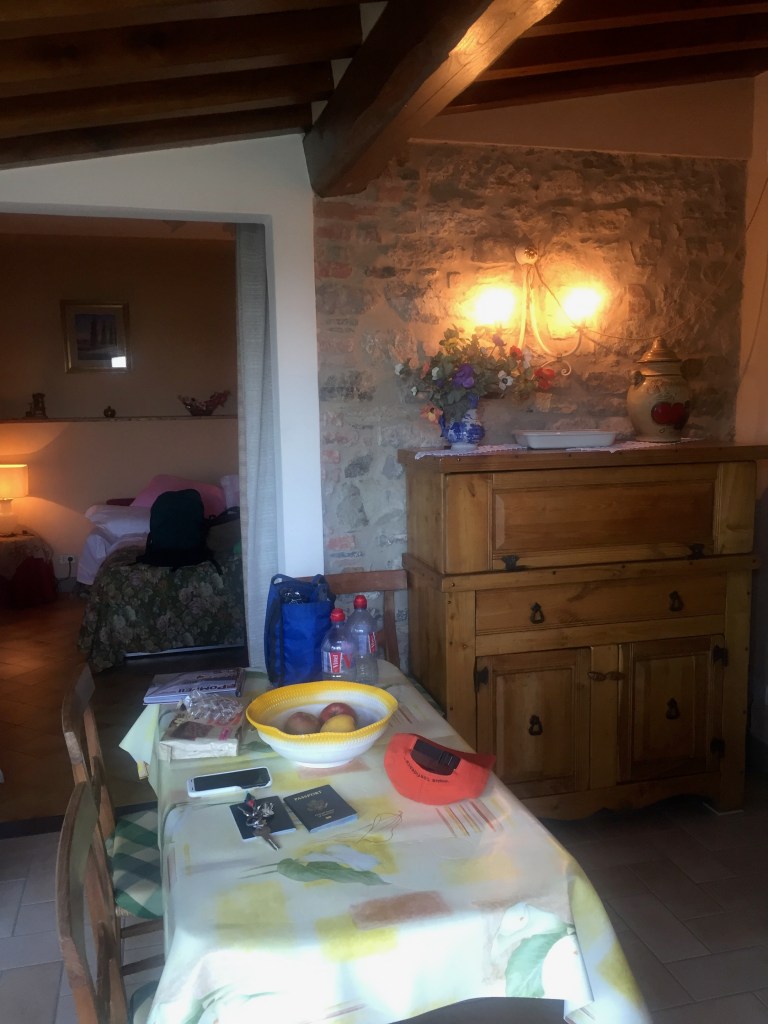
We arrived in Bern on August 30th. Two days from our planned arrival in St. Rémy. Germany had been just lovely, but we were eager to get to France and not expecting much from the capital of Switzerland. We rented an Airbnb in Münsingen, about 20 minutes by train from the center of Bern. It was a delightful respite, charmingly decorated, with a terrific kitchen and chickens in the back yard! Anneliese is a retired primary teacher, so she and Donna bonded over their love of children – AND their enjoyment of retirement!
Situated on a bend in the Aare River (good crossword answer!), Bern was established in 1191 by Berchtold V, Duke of Zahringen. Although there are several theories about the name of the city, an archeological find in the 1980’s, with Gaulish inscriptions, suggests that the city’s name derives from Celtic times, when it was perhaps named ‘Berna’, meaning ‘cleft’. Wherever the name came from, the city has chosen to adopt a stylised black bear as its symbol and this has appeared on its coat of arms for roughly eight centuries.
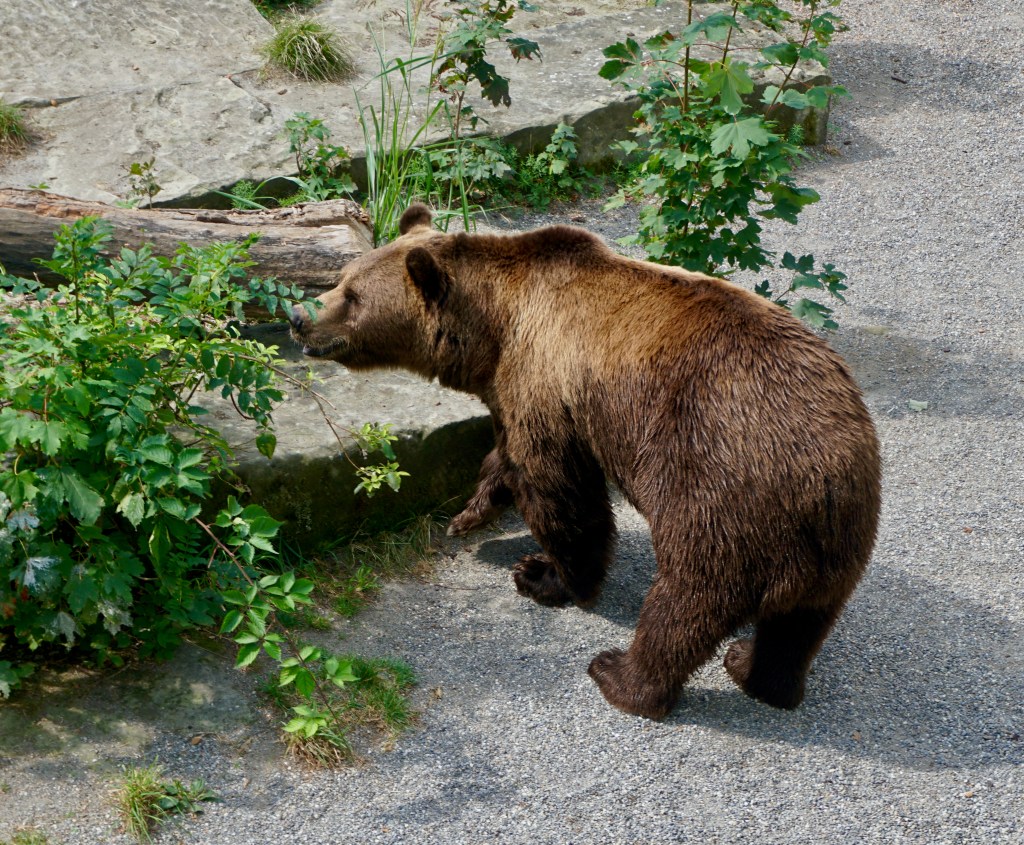
After its founding in 1191, Bern became a Free Imperial City within less than three decades, with more than 500 inhabitants. The city soon elected its own mayor and was an important part of the Holy Roman Empire, and by 1300, Berne boasted a population exceeding 3,000 people. In the next couple of centuries, Bern expanded by overthrowing the canton of Aargau in 1415 and Vaud in 1535. At that point, Bern was the largest and most powerful city-state north of the Alps. Farming and agriculture were the mainstay of the residents. A tannery was established and soon, leather goods were being exported.
Bern’s population continued to grow from 12,000 in 1803 to 140,00 currently. The service sector is presently the largest source of employment in the Canton of Berne. Tourism is a significant driver of the economy in the Bernese Oberland. Tech, agriculture and wine growing are also strong components of the Bern economy. Bern also provides the location for the Swiss and European headquarters of big international groups such as The Swatch Group, eBay and Swisscom.
Since we only had one day in Bern, we decided to take a guided walking tour led by a delightful young woman with a strong entrepreneurial streak! Eva Marie owns Airbnb rentals herself in Costa Rica and Switzerland. Born and raised near Bern, she is a former executive in the hotel industry and has a deep knowledge of the history of Bern. Her hospitality background informs her perspective as a guide to tourists.
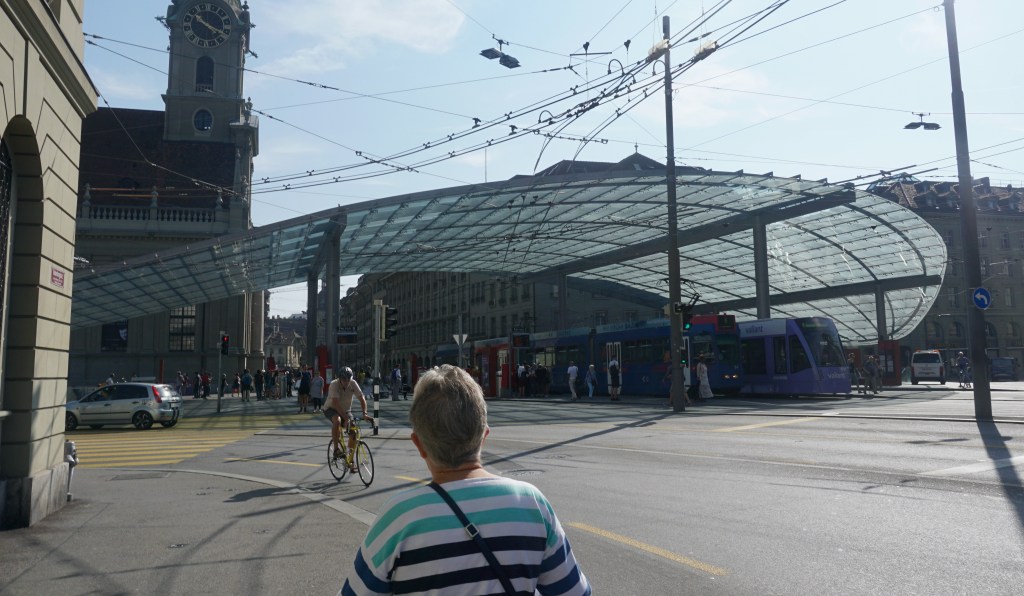
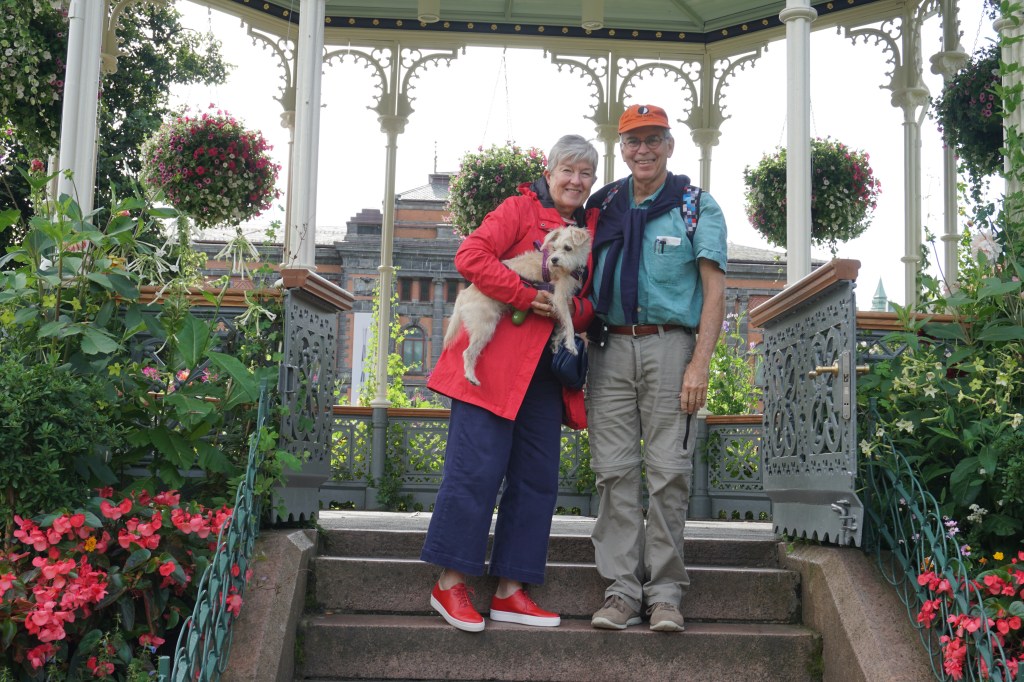
Along with Irina, another guest, and LuLu, our tour began at the Hauptbahnhof, the main train station. Sam was captivated by the glass canopy, called the Baldachin, on the main square in front of the station. We could imagine its utility on rainy or snowy days. It was graceful addition to the old town and did not seem out of place at all.
Bern is famous for its fountains. There are over 100 wellsprings in this little city. Apart from being works of art and social commentary, the fountains had a practical role. Located in the middle of the street, as in many Swiss cities, the fountains were a public source of water and at the heart of urban life until as recently as 80 years ago. Fed by natural springs, the fountains are cleaned regularly to remove any unwanted substances. The fountains below are the work of 16th century Fribourg artist Hans Gieng, who created most of the oldest fountains in the city with various motifs.
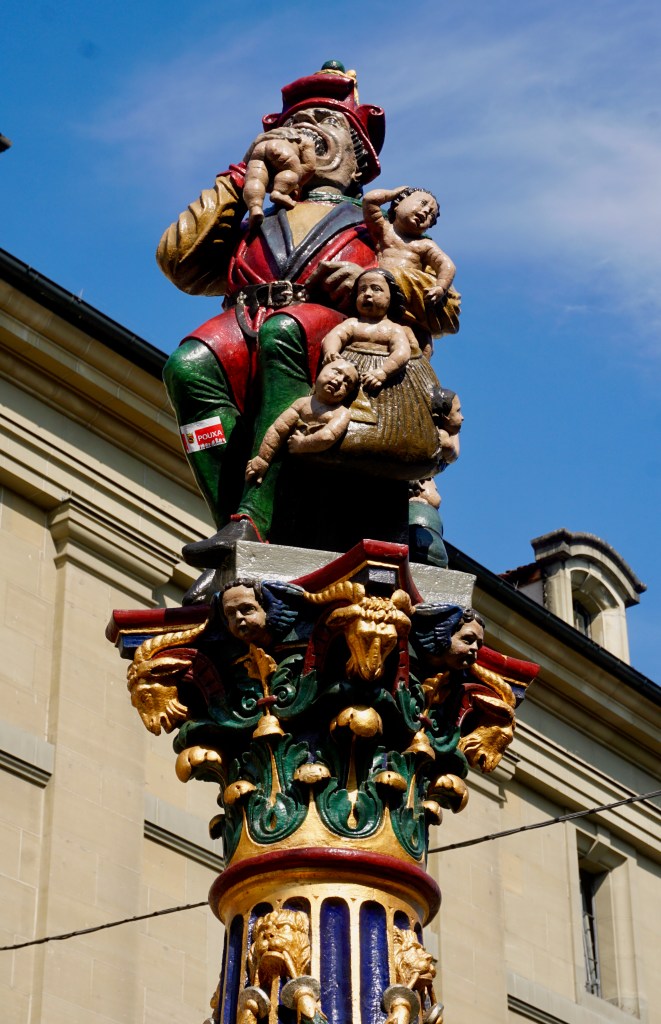

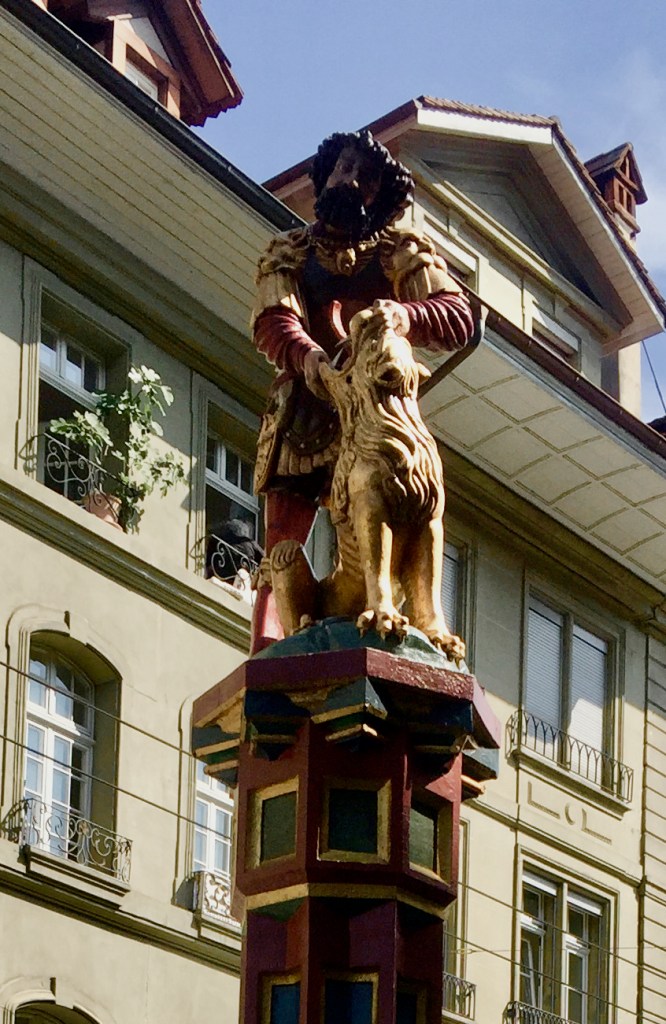

There are several theories regarding the meaning of the Kindlifresser (Child eater) fountain. One theory is that the statue is the likeness of Krampus, the beast-like creature from Alpine folklore thought to punish children who misbehaved during the Christmas season. Another theory posits that it is just a carnival character intended to frighten disobedient children. It scared us! The Samson fountain shows him defeating the lion. The Zahringer fountain depicts a bear in full armor, with another bear cub at his feet. The bear represents the bear that, according to legend, Berchtold shot on the Aare peninsula as he was searching for a site to build a city. The armored bear carries a shield and a banner, both emblazoned with the Zähringen lion.
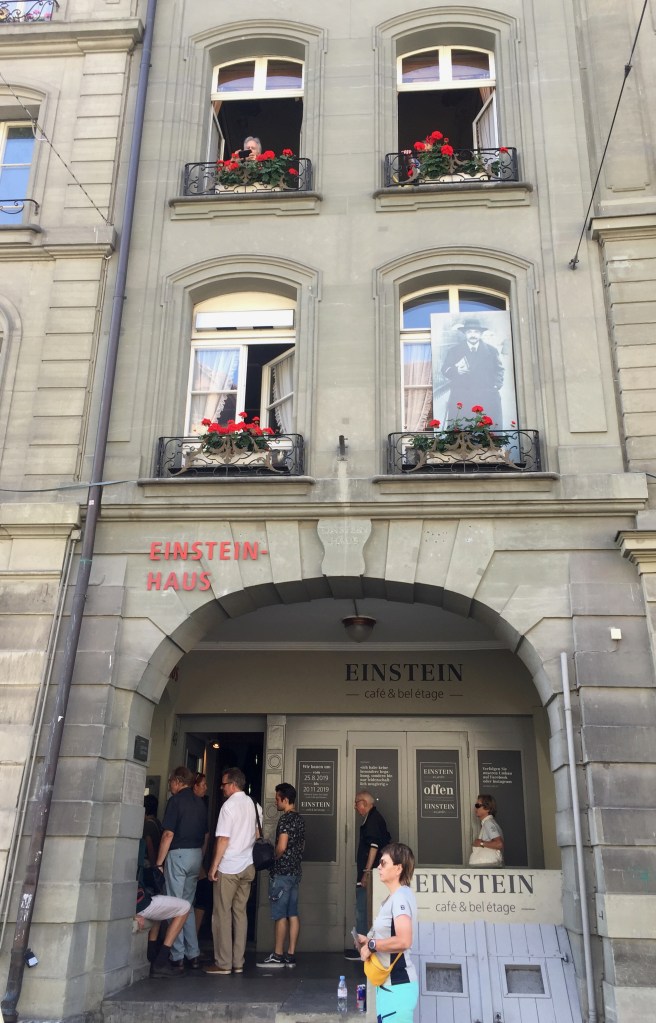
We passed Einstein’s home, an apartment in the third floor of Kramgasse 49, in the heart of the Old Town. He and his wife, Mileva, moved into the apartment while he worked at the federal patent office. This period included 1905 – Einstein’s annus mirabilis (extraordinary year) – which was his most creative period of scientific discovery. And as Eva Marie noted, it is now becoming clear that Mileva, perhaps having paid better attention in grade school arithmetic, made some significant contributions to her husband’s groundbreaking theory. Gotta give the lady some credit! We wonder if the New York Times has published an obituary on the former Ms. Einstein.
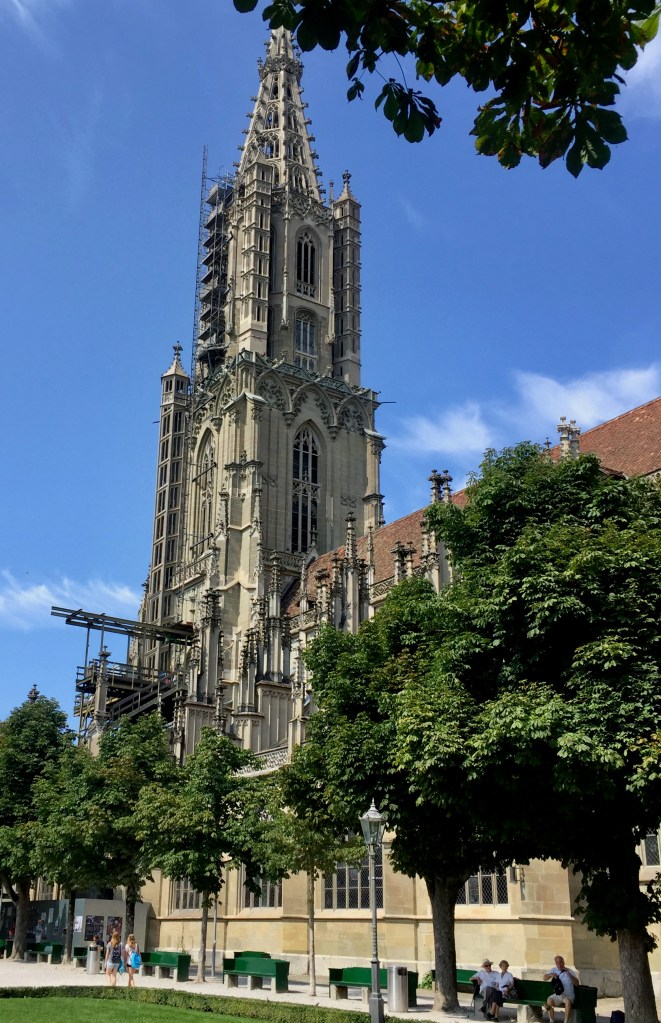
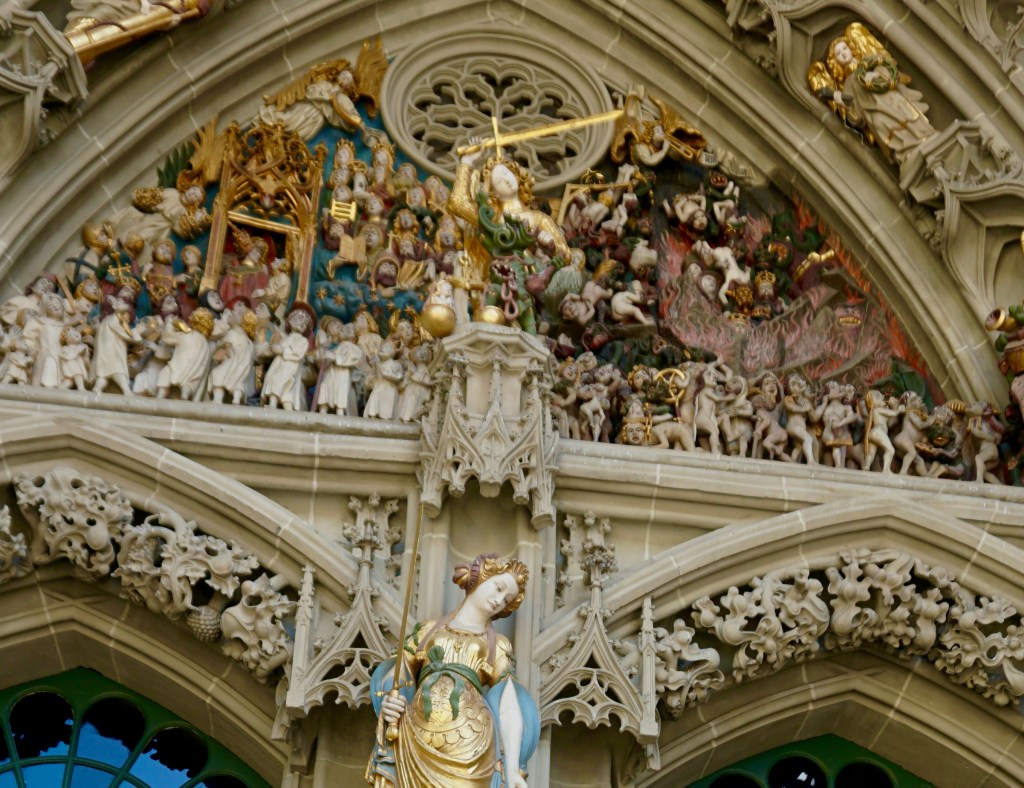
The Bern Münster Cathedral of St. Vincent is the most impressive late-Gothic building in the city and the largest and most important late medieval church in Switzerland. The tower is over 300 feet high. Construction started in 1421, but the tower was not completed until 1893. Eva told us that there is almost ALWAYS scaffolding somewhere on the church. The only time she recalls it not being there was during the 800th anniversary of the city’s founding in 1991. An outstanding feature of the cathedral is the main portal, where you can admire the depiction of the Last judgment – the only image that was spared the iconoclasm of the Reformation. The figures on the left are on their way to Heaven and the ones on the right are condemned to Hell.
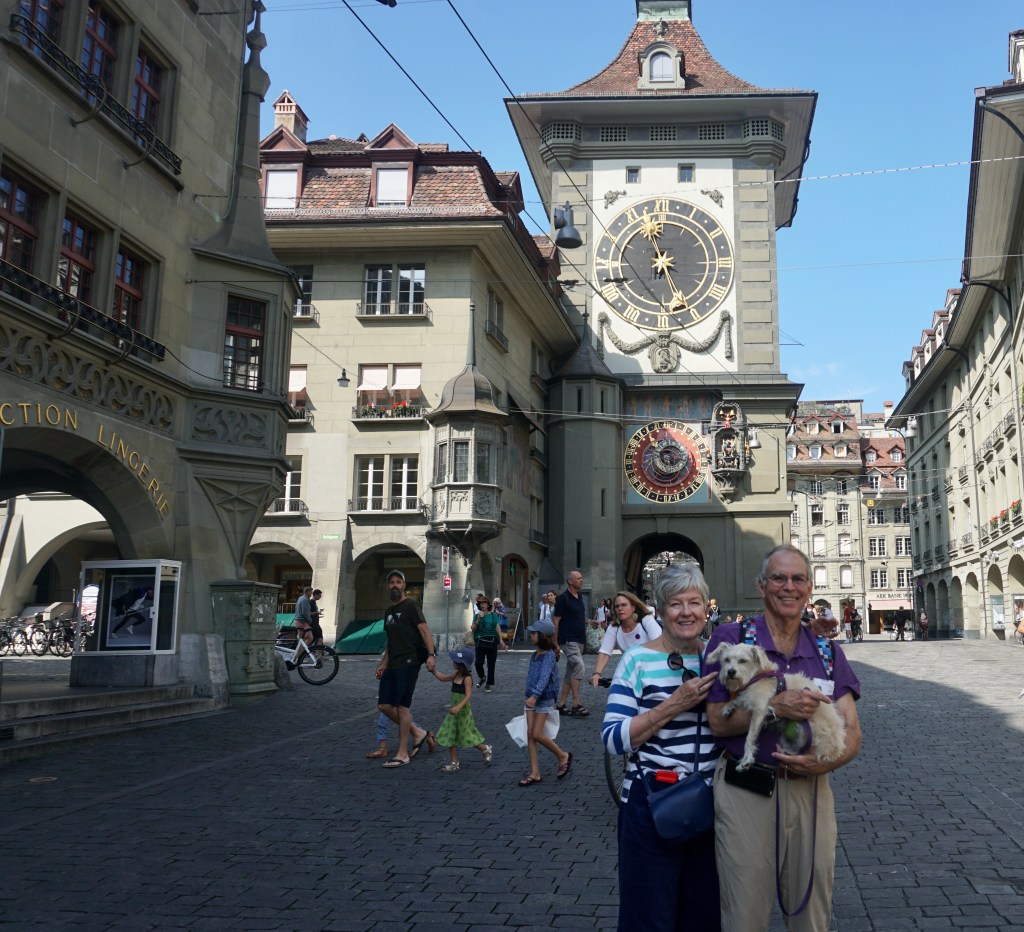
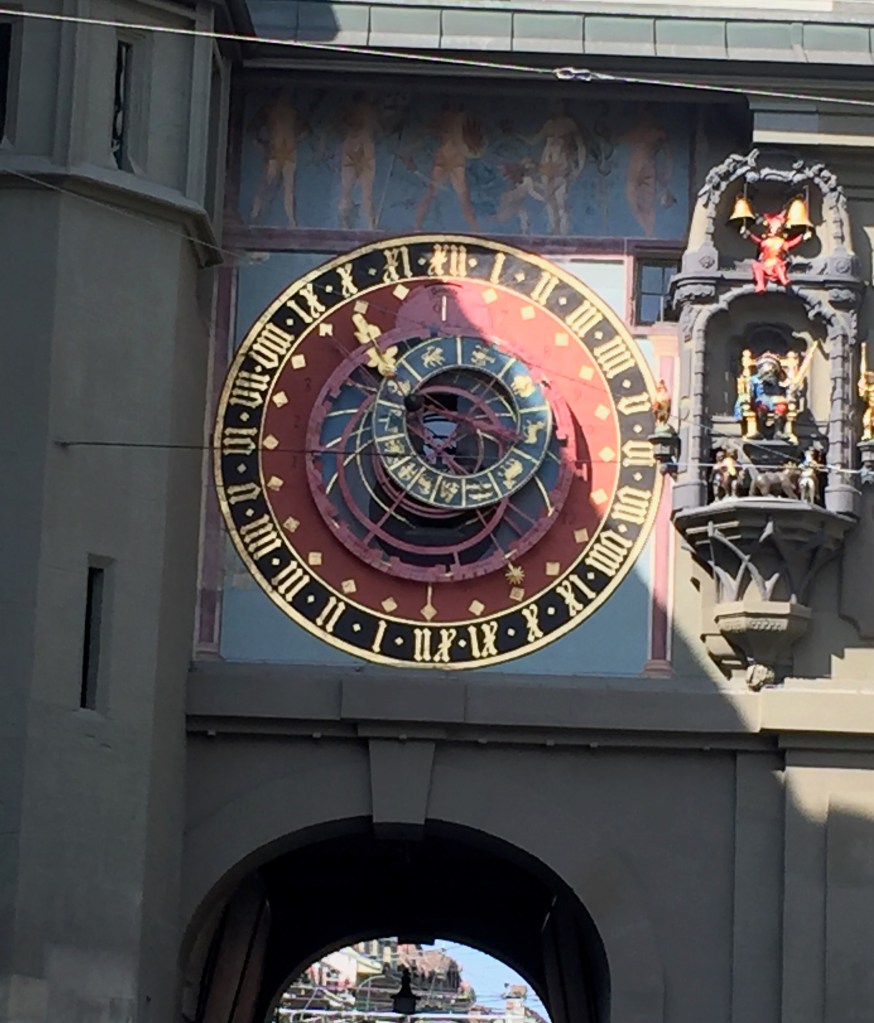
2 & 3. Another requisite photo! The 179 foot tower has served many purposes over the years, but the astronomical clock was added in the 15th century. It was built by Kaspar Brunner, a man who was NOT a Swiss clockmaker, but an engineer, gunsmith, locksmith and blacksmith. He never built another clock after this one! 4. 5. A view through the casino towards the river.
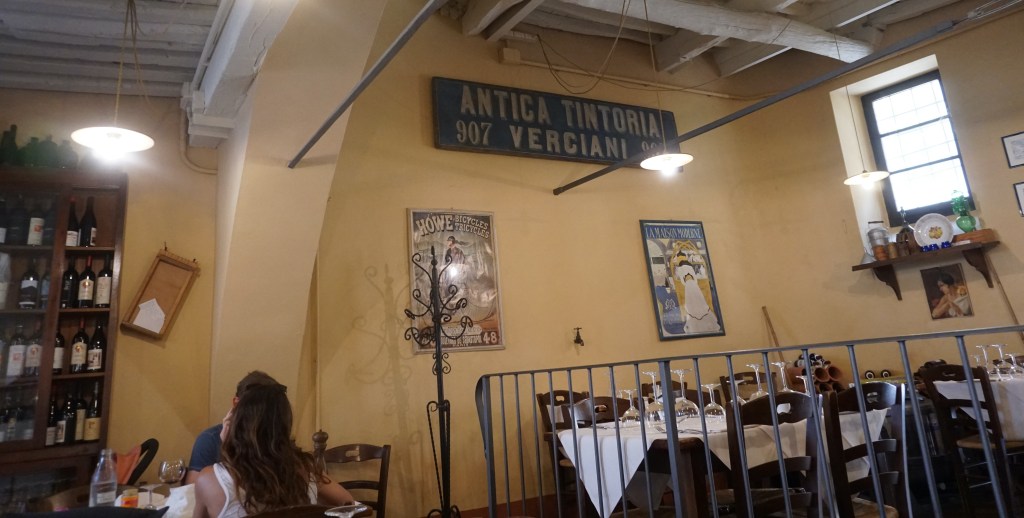
So, a wee bit weary from our walking, we headed to a restaurant serving the renowned cheese fondue of Switzerland. Eva and Irina joined us and we had a lovely lunch.
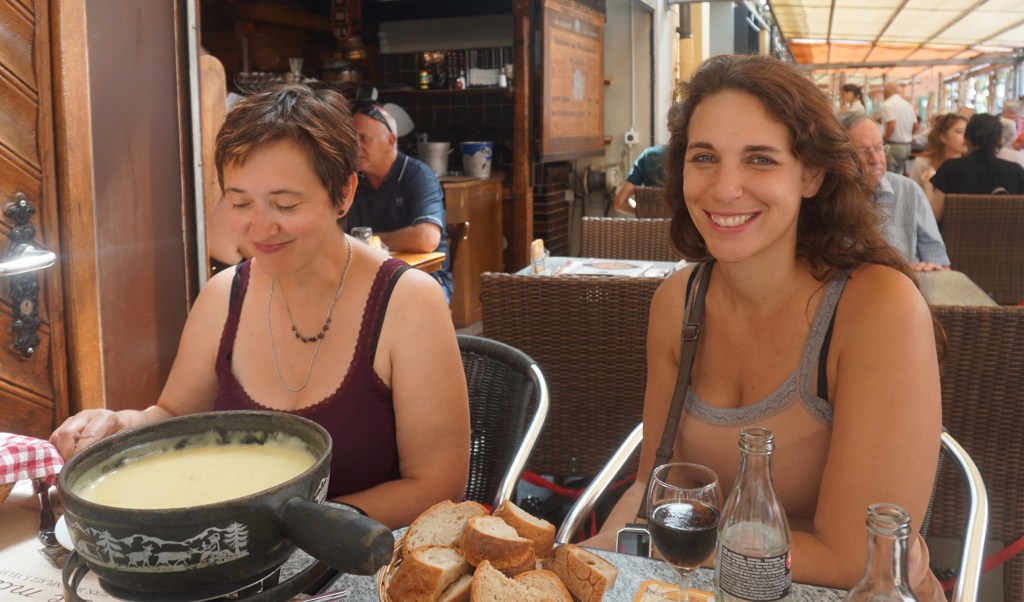
We spent another hour or so wandering around this gorgeous little city (on a time-consuming, fruitless search for a source of Euros on Sunday in Switzerland!). Then we headed back to our Airbnb and to pack up for tomorrow! It will take us 6 or 7 hours to get to St. Rémy de Provence and we can’t wait!
We send our love to you all,
Sam, Donna & LuLu
August 31, 2019























 LuLu's Outta Town