Roma! Roma! Roma! Part II

Day Two in Rome dawned HOT HOT HOT! We were still a bit exhausted from the slightly maniacal walking tour of the previous day. Sam was reading Four Seasons in Rome by Anthony Doerr and was looking forward to visiting the Trastevere quarter, where Doerr spent a year at the American Academy. Also, Ben and Rachel had shared their fond memories of a day and an evening there. So, we hopped on a bus and headed in that direction.
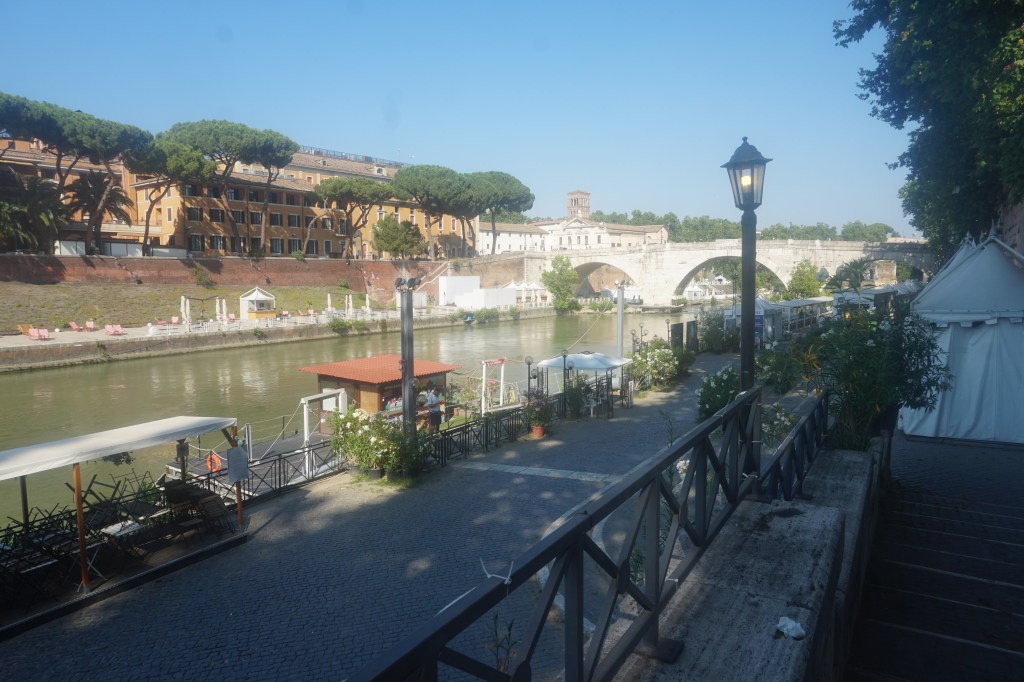
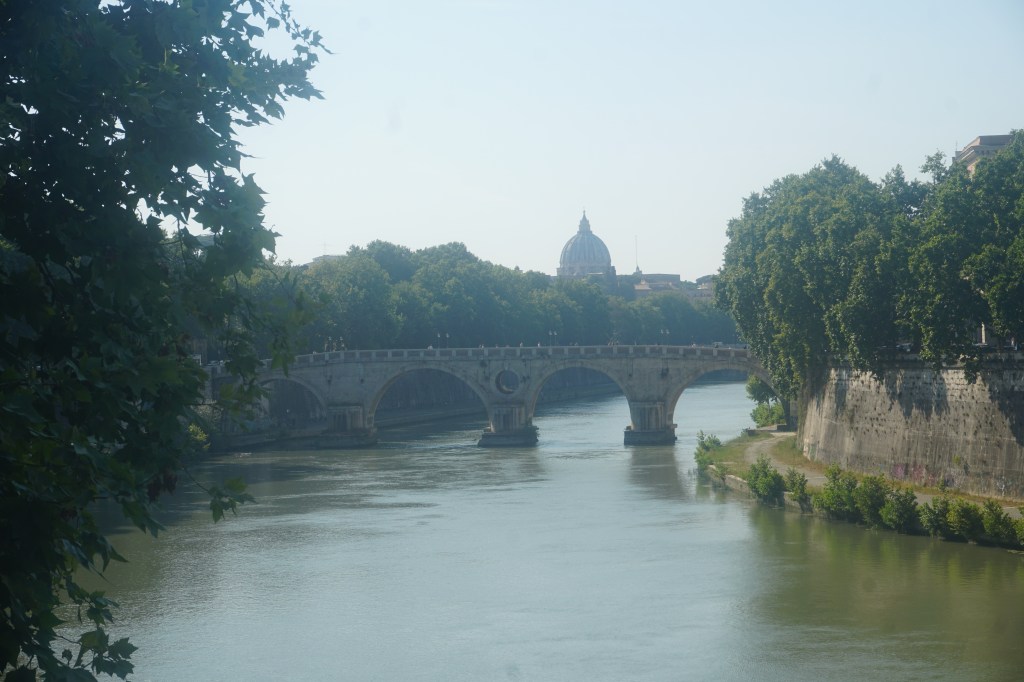
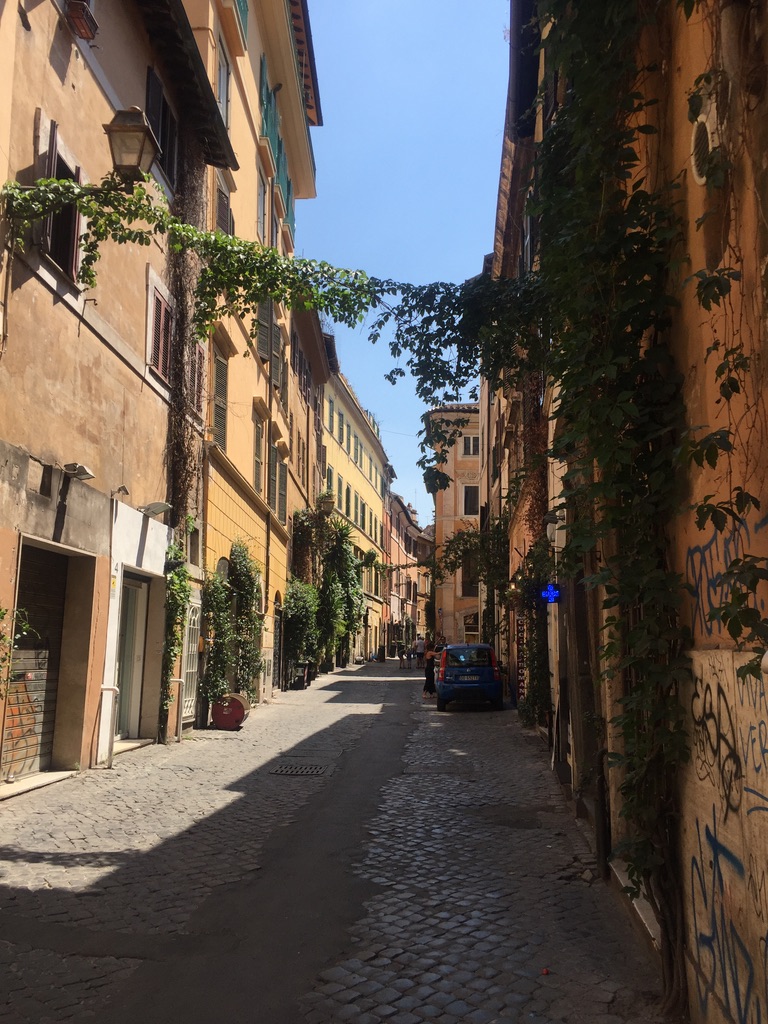
Trastevere is a charming medieval neighborhood. Very few tourists seemed to be there the day we spent wandering the streets. This was a lovely low key day. We did some wandering, we did some shopping, we ate lunch in a fabulous trattoria (Casa Mia in Trastevere) we sat under a tree by the Tiber and ate some gelato, we headed home! We did not go into a church or basilica, we missed the palazzo and skipped the frescoes! But it was a thoroughly enjoyable day without crowds or congestion.

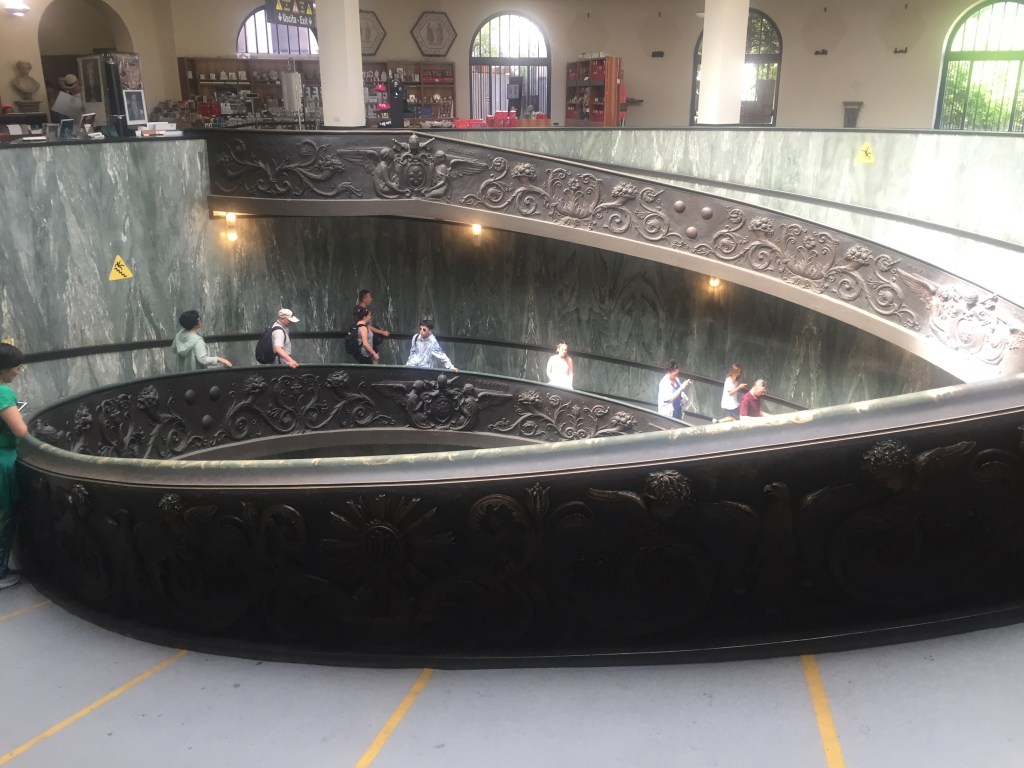
The next day, we went back to being tourists. We scheduled a walking tour of the Vatican Museums and the Sistine Chapel. They call these tours “Skip the Line” tours, but you are still standing in a line a lot of the time. There are rigorous security checks and there are MANY “Skip the Line” tours, so you are always behind another group. The only way to truly skip the line is to go before they open and be the first one in the door!
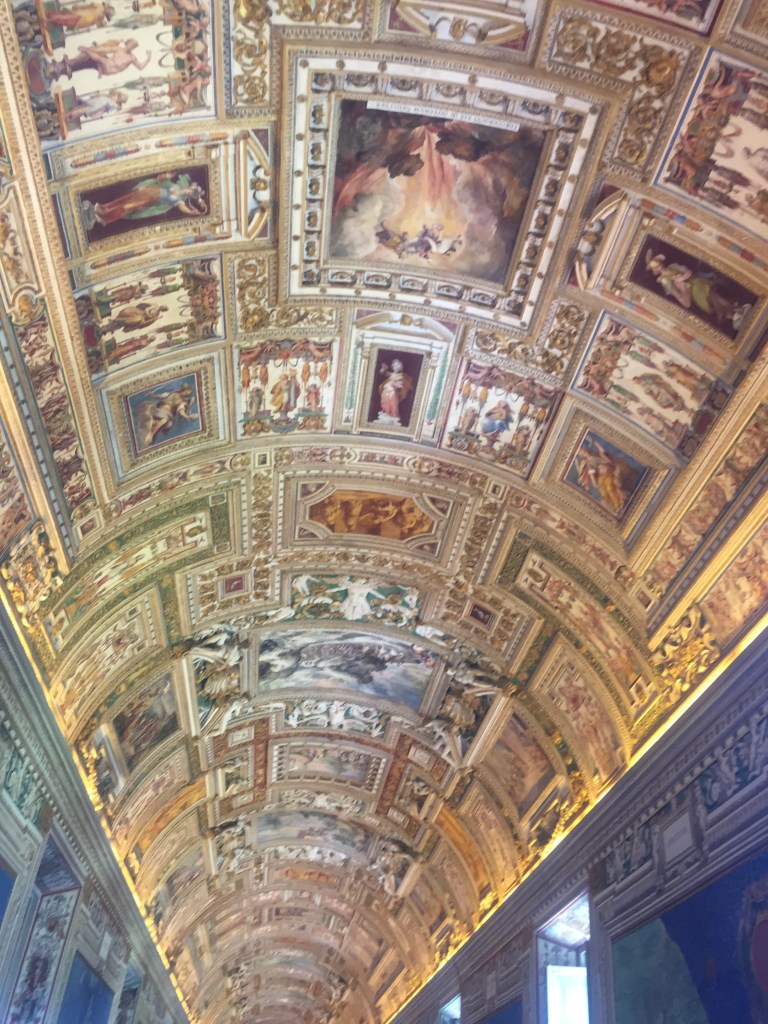
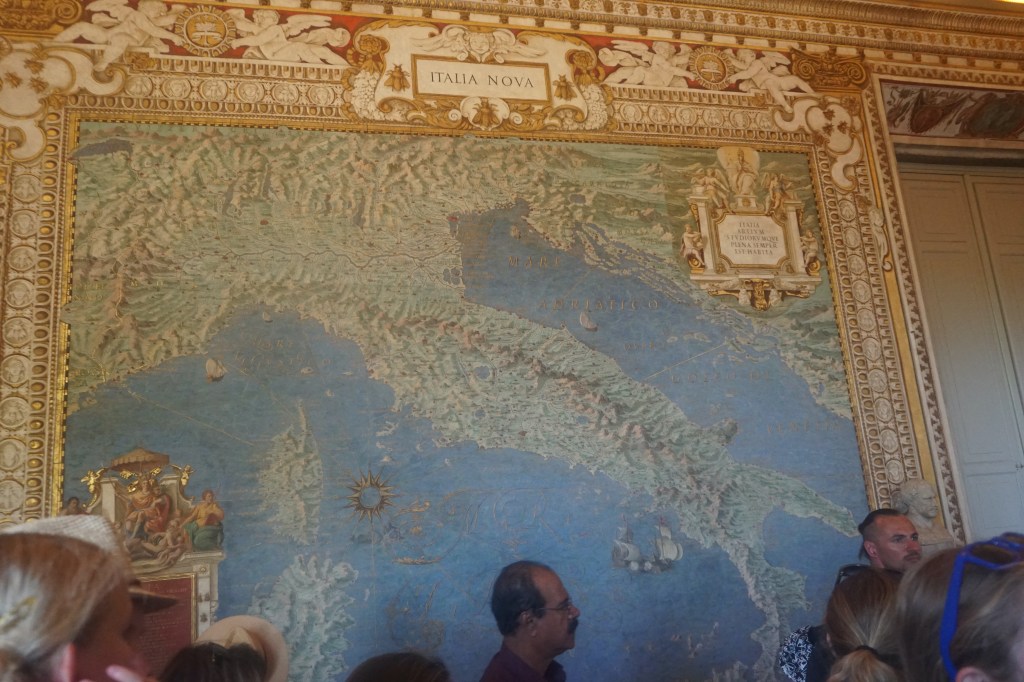
The Map Gallery fascinated us! All of the maps in this gallery are by a friar and geographer Ignazio Danti. It took him only 3 years to complete the 40 maps. We noticed strong similarities between the hill shading by Danti and Sam’s father’s innovative hill shading technique. The map of Italy is from 1580.
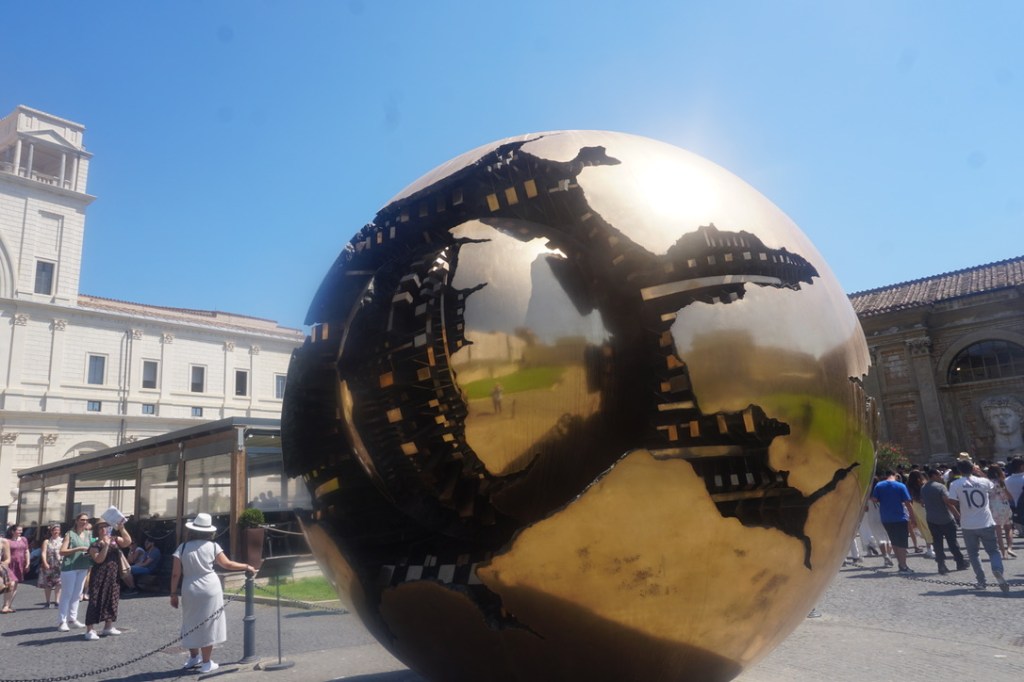
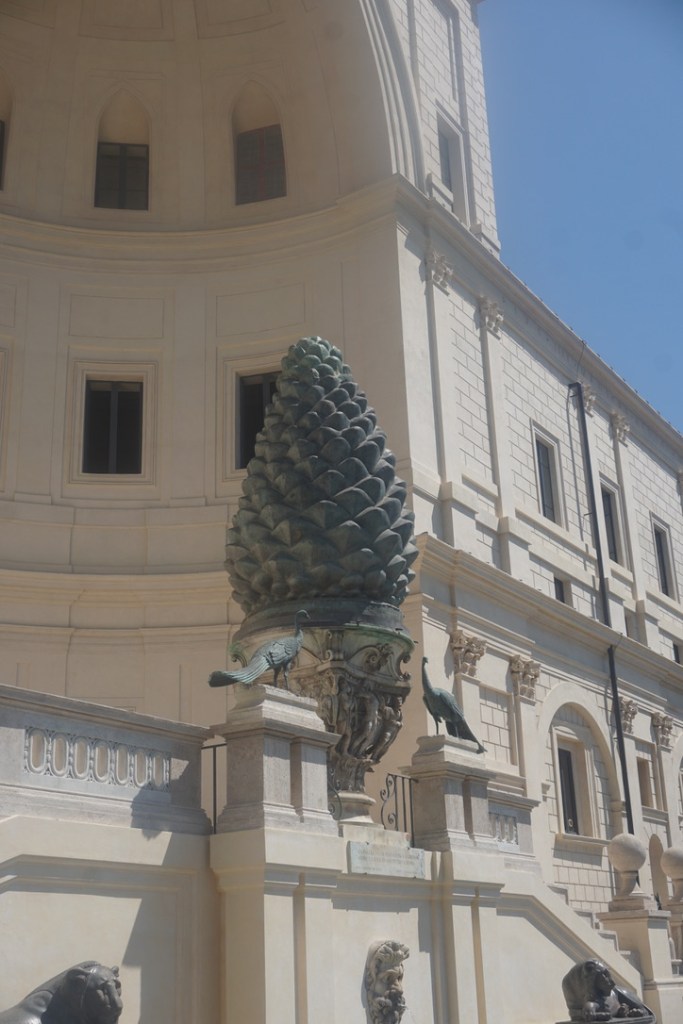
Let’s just stipulate at the outset that there is an OVERWHELMING amount of art to be seen at the Vatican. Everywhere one looks – floors, ceilings, walls, indoors, outdoors – there is art. There are innumerable paintings, sculptures, mosaics and frescoes. Giotto, da Vinci, Raphael, Titian, Caravaggio, Veronese, and of course, Michaelangelo! It is clearly too much to absorb in a 3 hour tour. It would take a lifetime of study to understand the scope of what is there. That said, it was enormously pleasurable, even in the dreadful heat, to spend some time experiencing this vast treasure trove of amazing works by creative and abundantly talented human beings.
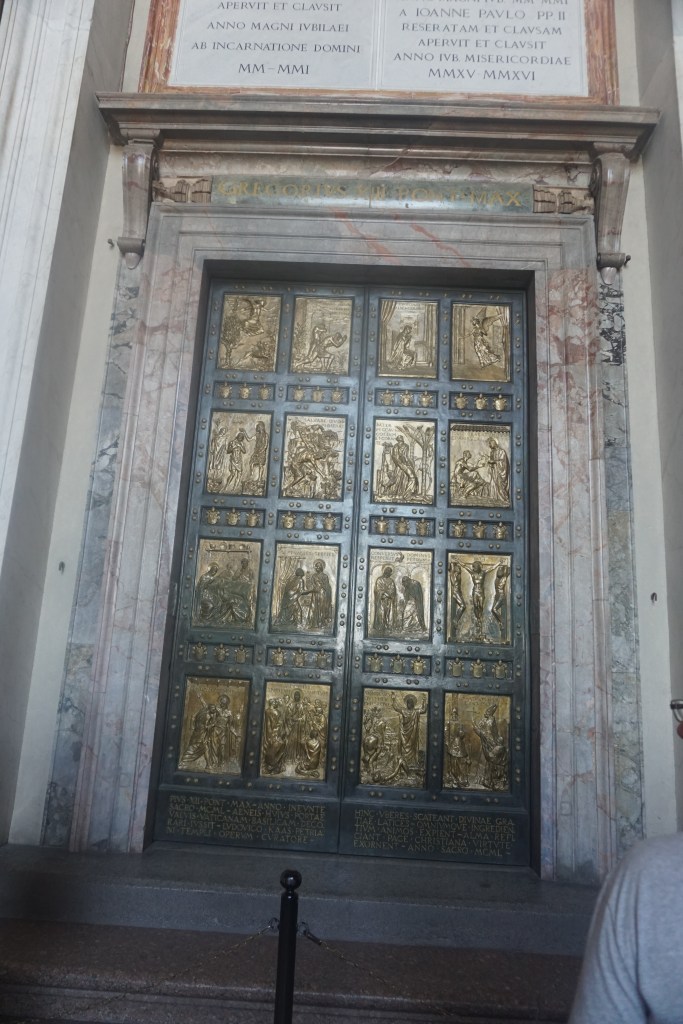
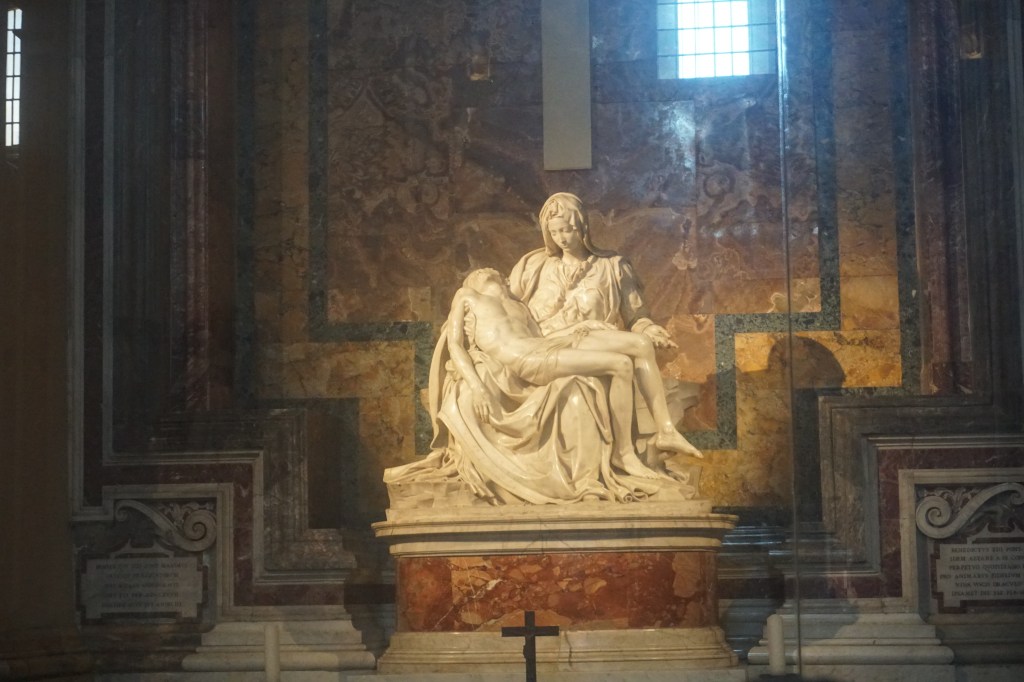
Clockwise from top left: 1. The Holy Door or ‘Porta Sancta’ by Vico Consorti built in 1950. This door is only opened every 25 years by the Pope for the Jubilee. 2. The animal section of the sculpture gallery. This is a tiny fraction of the works in this area. 3. A landscape from the ceiling of the Gallery of Maps. 4. The Pièta by Michelangelo Buonarroti. He completed this magnificent sculpture at age 24! 5. Though this scene of six men, a bird and what appears to be (gasp!) a severed head, looks like a bas relief sculpture, it is actually a painting!

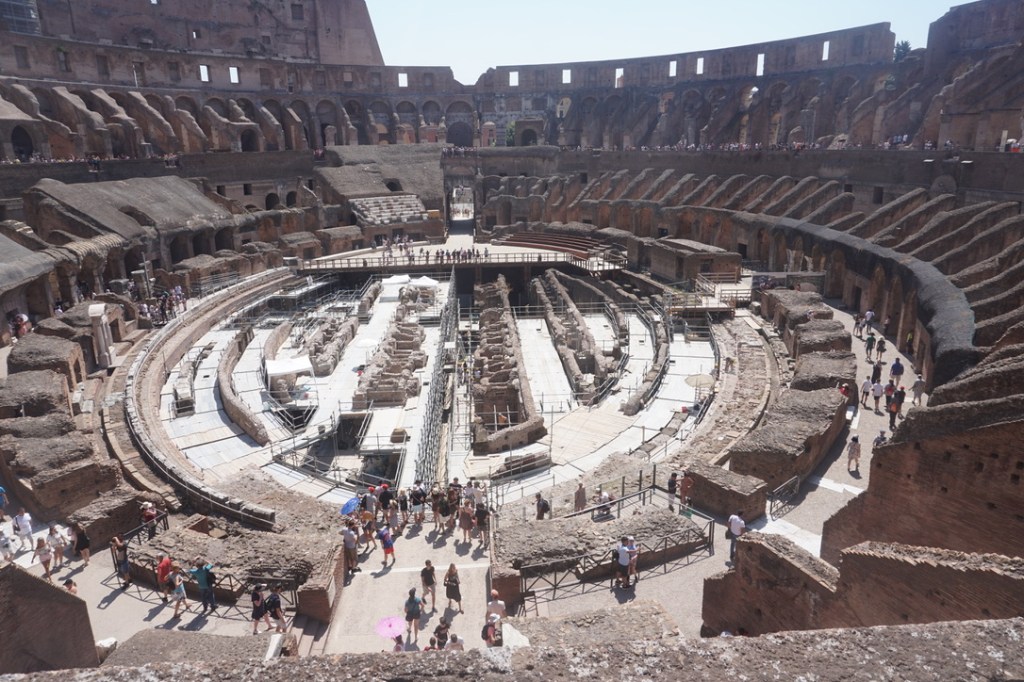
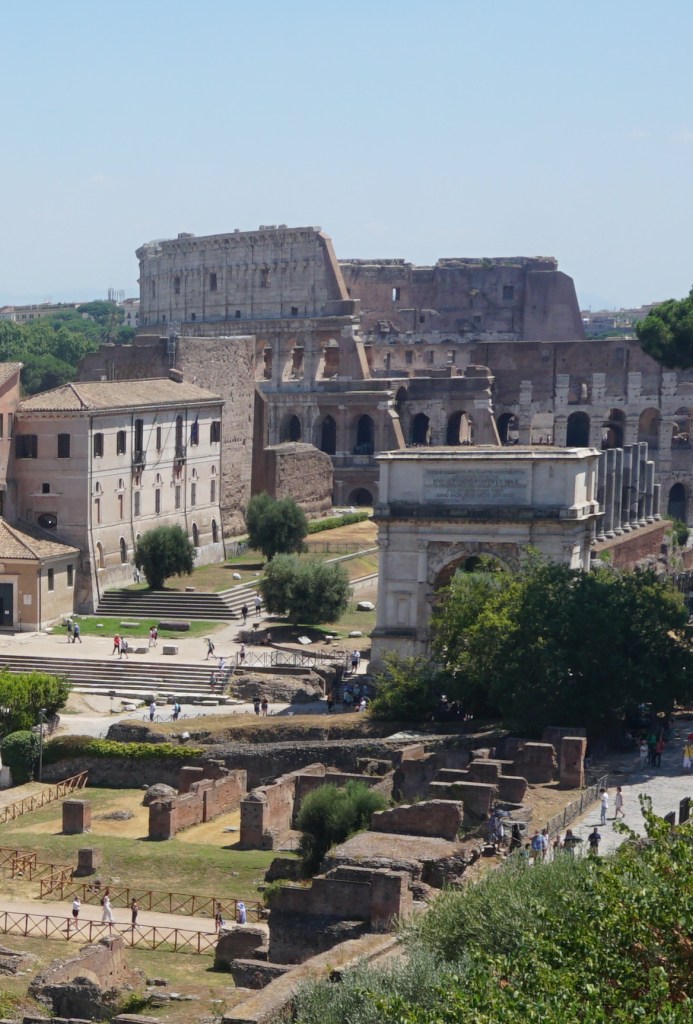
Day Four in Rome – You can imagine where we were headed! The Colosseum, the Forum and the Palatine Hill, of course! It was about 95˚F outside, but there is no way to skip these treasures! Again, a guided tour seemed the best way to really learn about what we were looking at. So, packing up several bottles of water, putting on our hats and walking shoes, off we went!

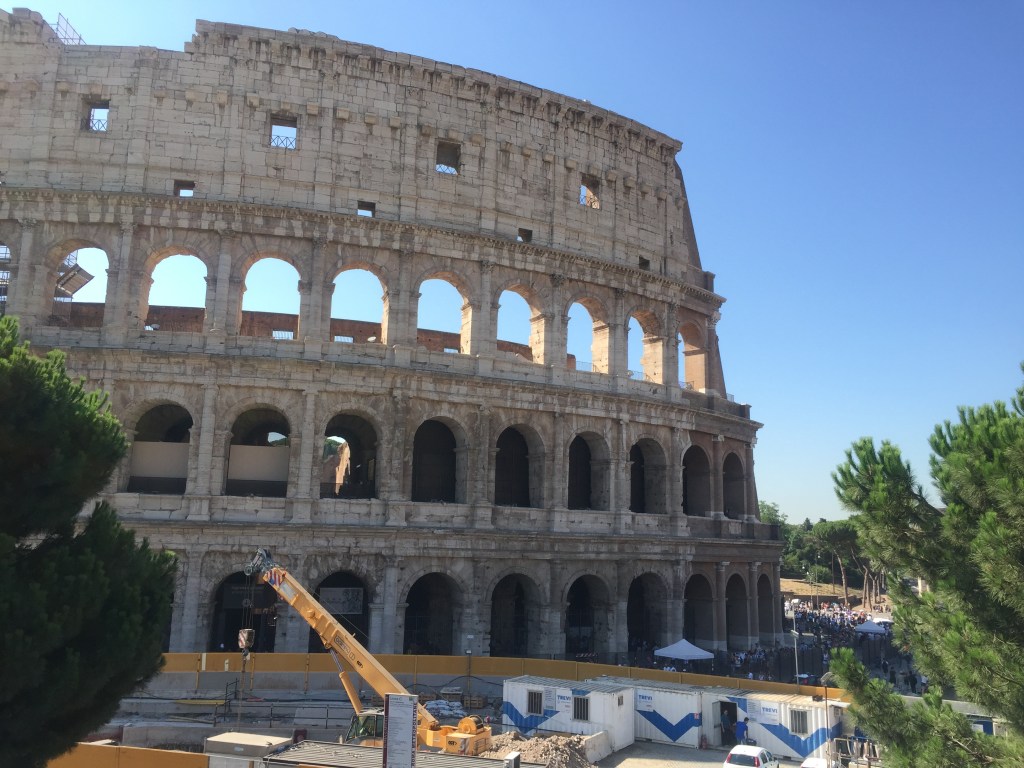
The amphitheater known as the Colosseum was commissioned around A.D. 70-72 by Emperor Vespasian as a gift to the Roman people. The Colosseum was built by thousands of Jewish slaves captured in Jerusalem by Titus, the son of Vespasian. It was constructed of limestone, brick, concrete and tufa, in only eight years. After his father’s death, Titus opened the Colosseum with 100 days of games, including gladiatorial combats and wild animal fights. Attending events at the Colosseum was free – if you were a male Roman citizen. Inside, the Colosseum had seating for more than 50,000 spectators, who were arranged according to social ranking.  The only women allowed to attend were the Vestal Virgins. After four centuries of active use, the moral weight of a million human deaths and countless deaths of captive animals brought this magnificent creation to a halt, and up until the 18th century it was used as a source of building materials for numerous building projects, including the cathedrals of St. Peter and St. John Lateran, the Palazzo Venezia and defense fortifications along the Tiber River. 

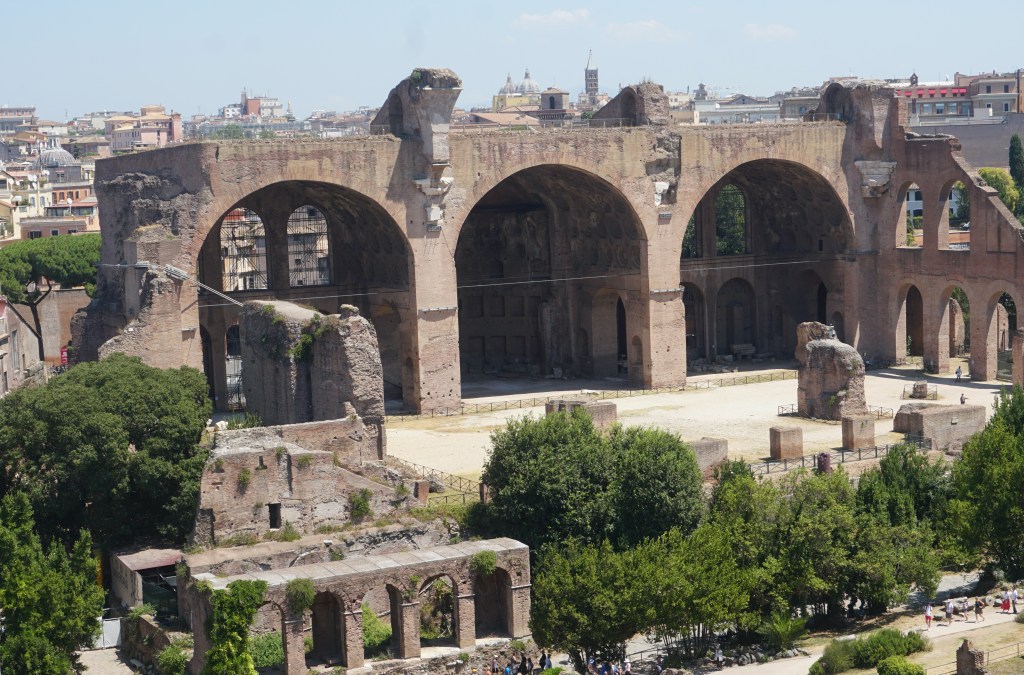
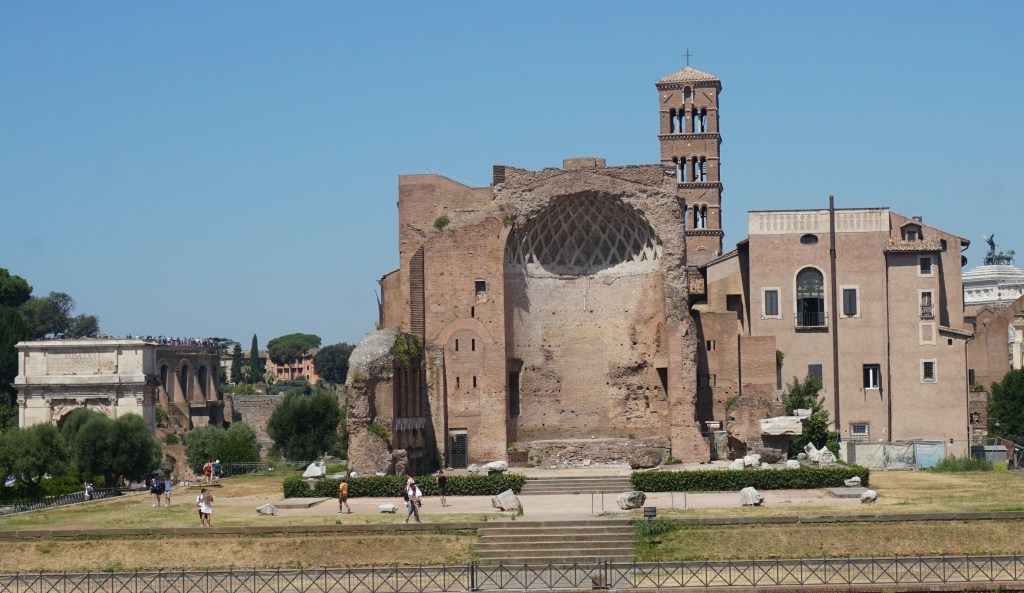
After two toasty hours of the Colosseum, our group headed up the Palatine Hill. Considered the birthplace of Rome, it was shady and a spectacular place to overlook the Forum. A rectangular plaza surrounded by the ruins of several important ancient government buildings at the center of the city of Rome, the Forum was the center of day-to-day life in Rome for centuries. There were triumphal processions, court trials, meetings of the Senate, and public speeches. This is the site of the Temple of the Vestal Virgins who tended the sacred fire, an eternal flame. There were also other temples and basilicas. Today, after intermittent archeological excavations, the Forum is a sprawling ruin of architectural fragments.
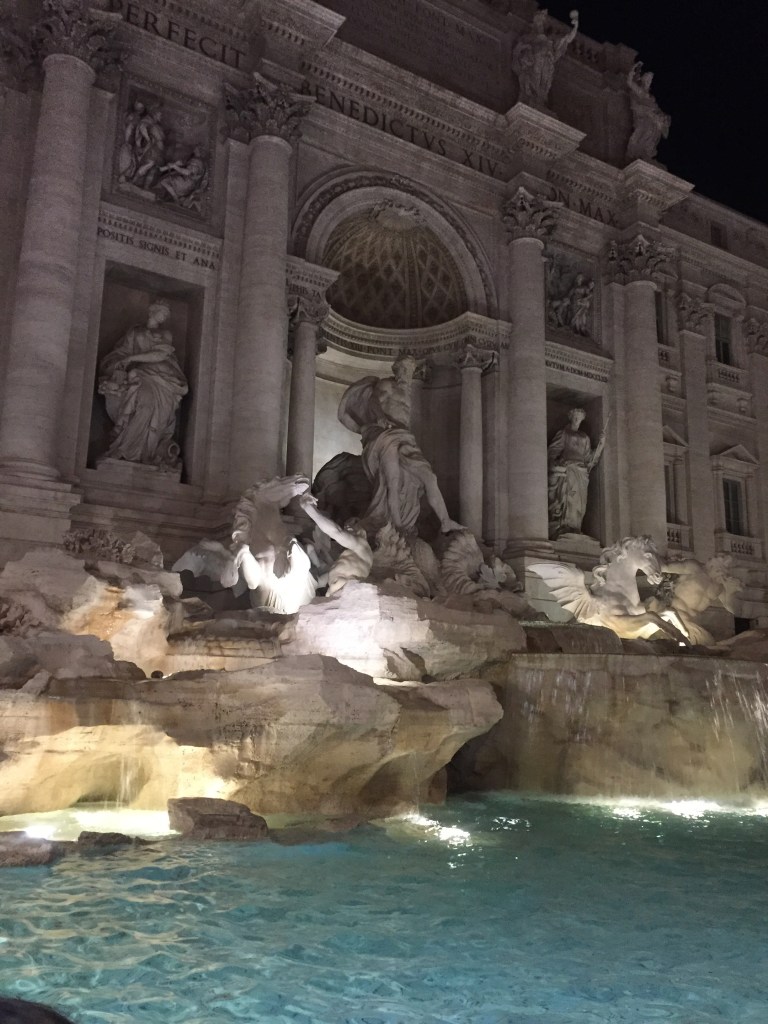
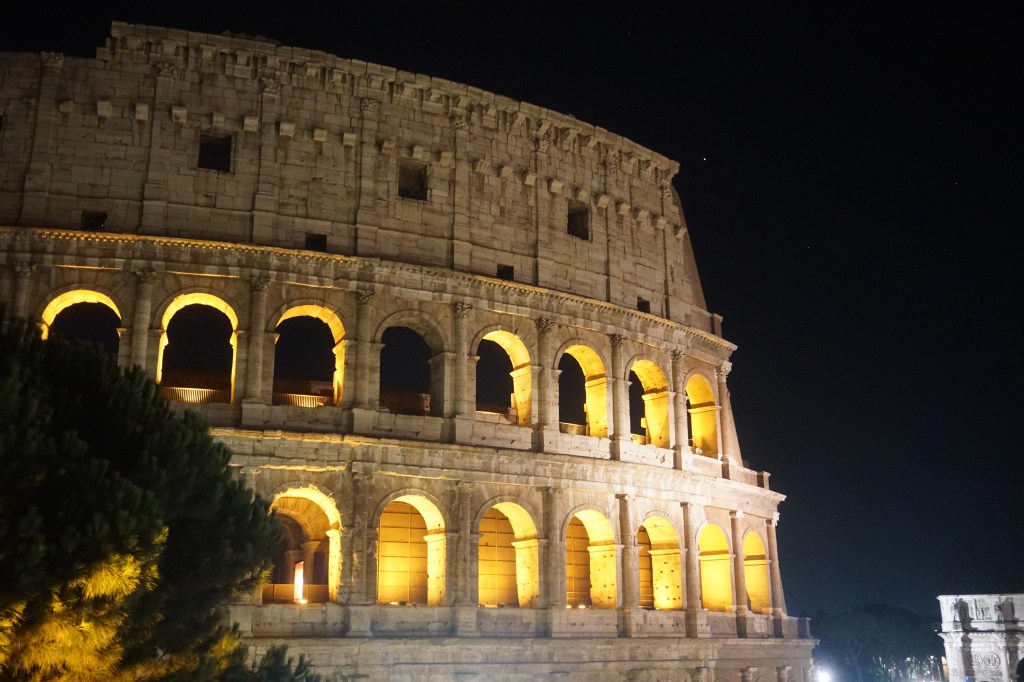
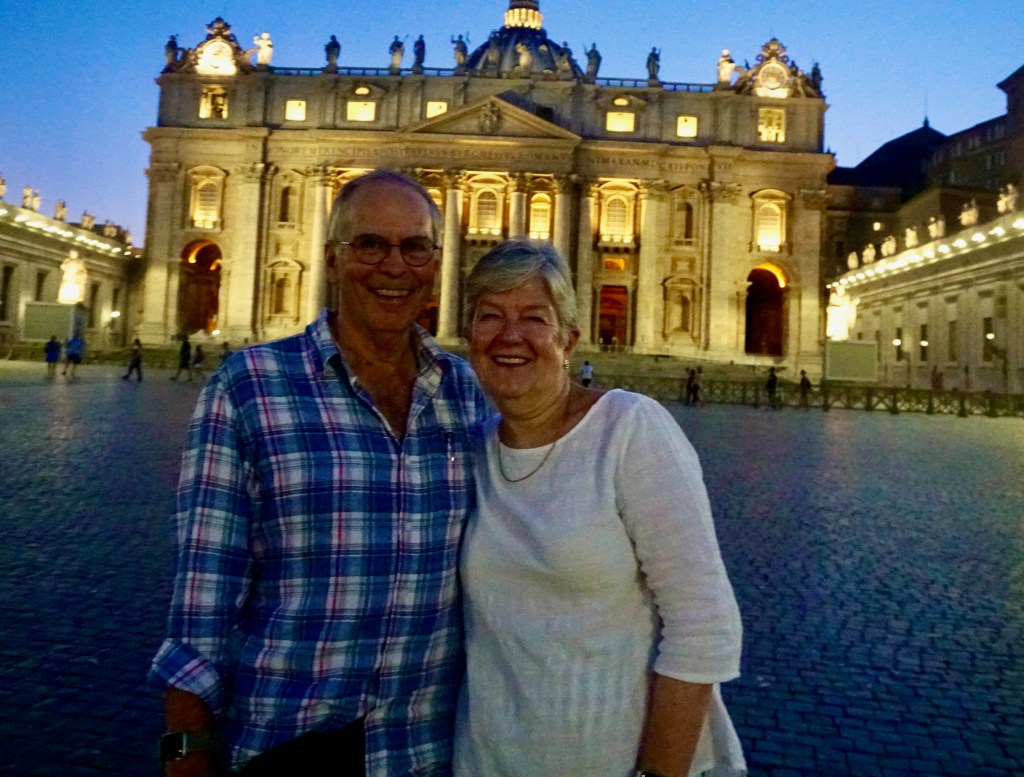
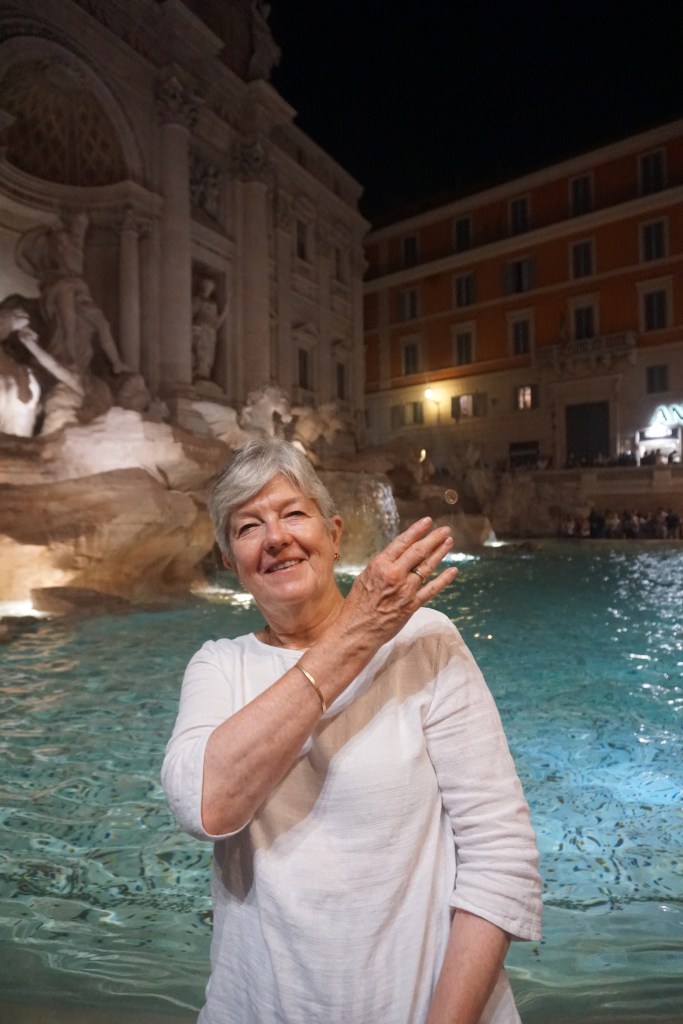
Our last evening in Rome, we did possibly the most touristy thing we’ve ever done – we took a night time driving tour of the sights of Rome, including dinner and gelato! It started around 7:30, when it is still light in Rome in late July. But St. Peter’s Square was lovely in the twilight and blessedly free of most people! The Pantheon, the Piazza Navona, the Trevi Fountain, the Colosseum and the Spanish Steps were other highlights of this quickie tour. Our guide was quite knowledgeable, but so were we, after four days of a Roman Intensive Course!
Our next target is Lucca in Tuscany. Of course there will be more ruins and cobblestones, but we’ve signed up for a pasta making class while we’re there!

Our love to you all,

Sam, Donna & LuLu

July 26, 2019

Roma! Roma! Roma!

After struggling to get through a toll gate – 40 minutes of bumper cars – the road into Rome was blissfully open and free of jams. At a certain point, we crested a slight rise, and there, laid out in front of us, was the Metropolitan City of Rome. It’s stunningly low-rise. There isn’t a building over six storeys, as far as we could tell, although we later learned that the Colosseum was seven storeys. It was near sunset and the city seemed bathed in a golden light. It was probably the reflection of 98˚F heat radiating off the buildings! But it was still gorgeous and we were excited to be there.

Our Airbnb was a lovely apartment in a complex about 20 minutes by bus away from the center of action. We went through a locked gate into a calm, quiet, plant-filled courtyard. It was a cool and heavenly respite from the noise and heat of the city. Plus we were only two blocks from Carrefour, a supermarket open 24 hours a day, and there were some terrific restaurants right on our street. We were all set!

In the apartment, we found a book of guided walks around Rome. So, Monday morning, despite the heat, we set out to walk from the Pantheon to Piazza Navona. Rome is a sprawling, cosmopolitan city with nearly 3,000 years of globally influential art, architecture and culture on display. It would be nearly impossible to see everything, but we hoped to get to The Greatest Hits!

The Pantheon.

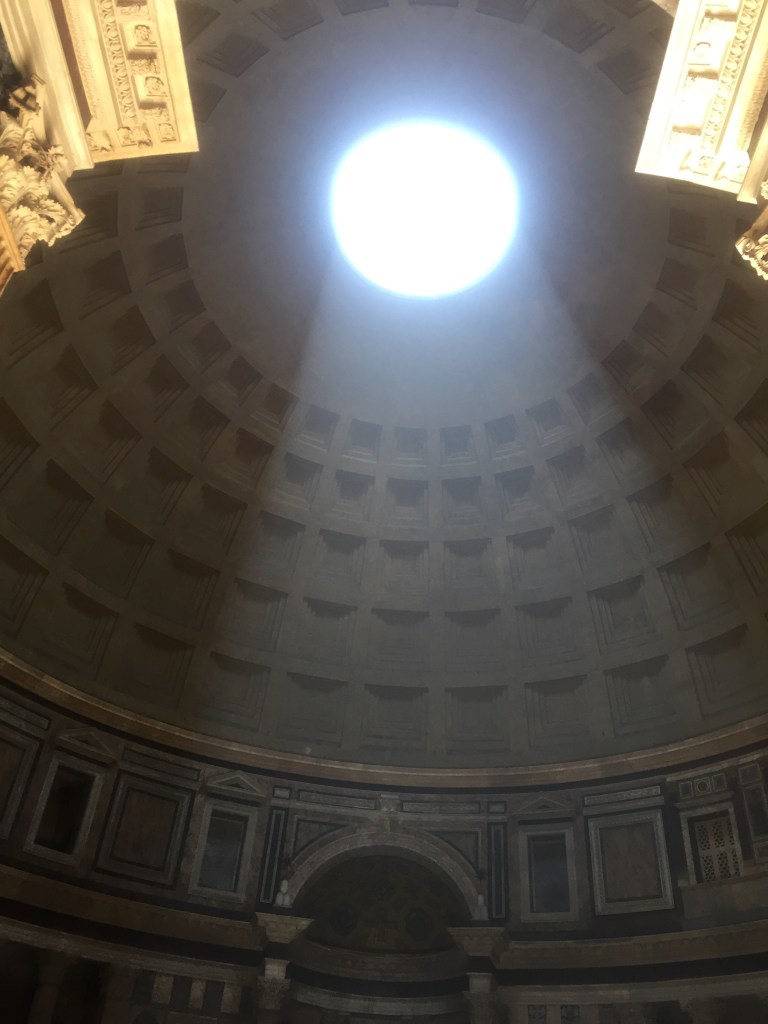
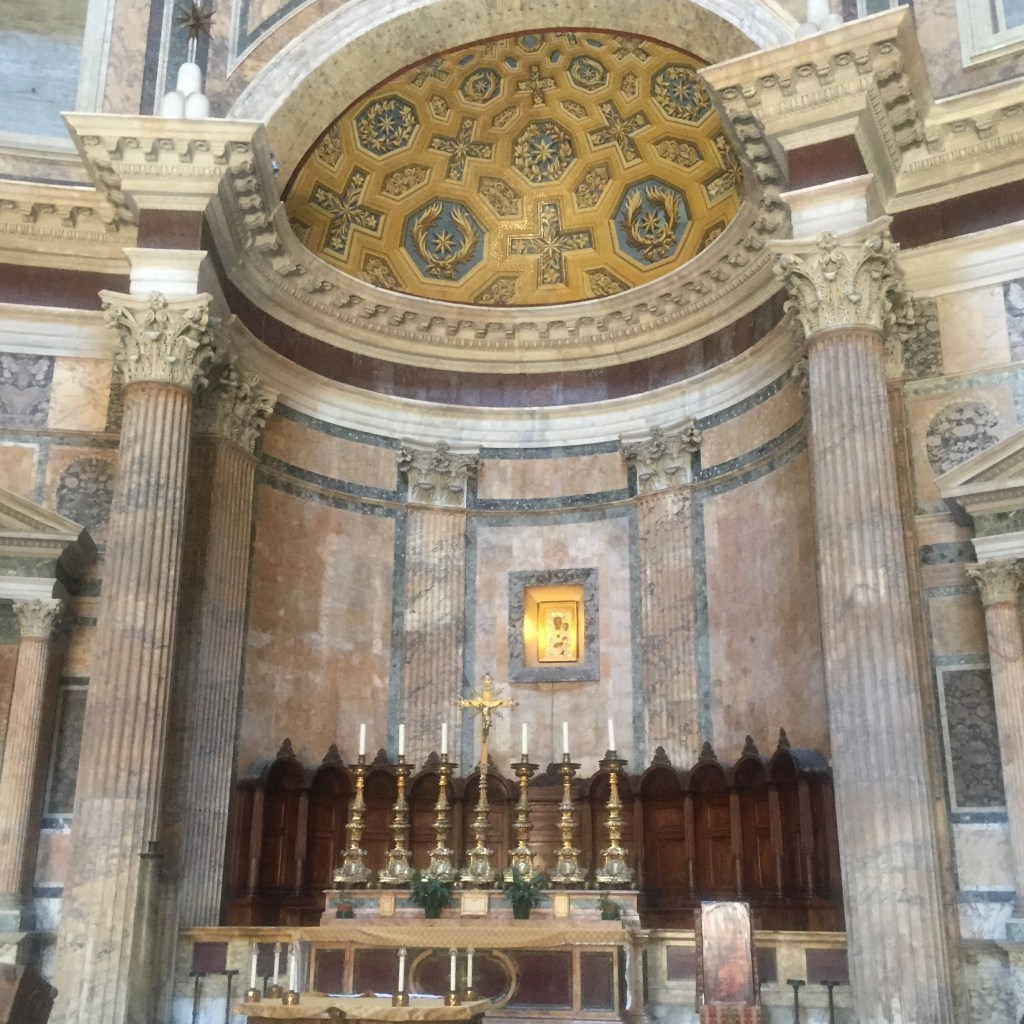
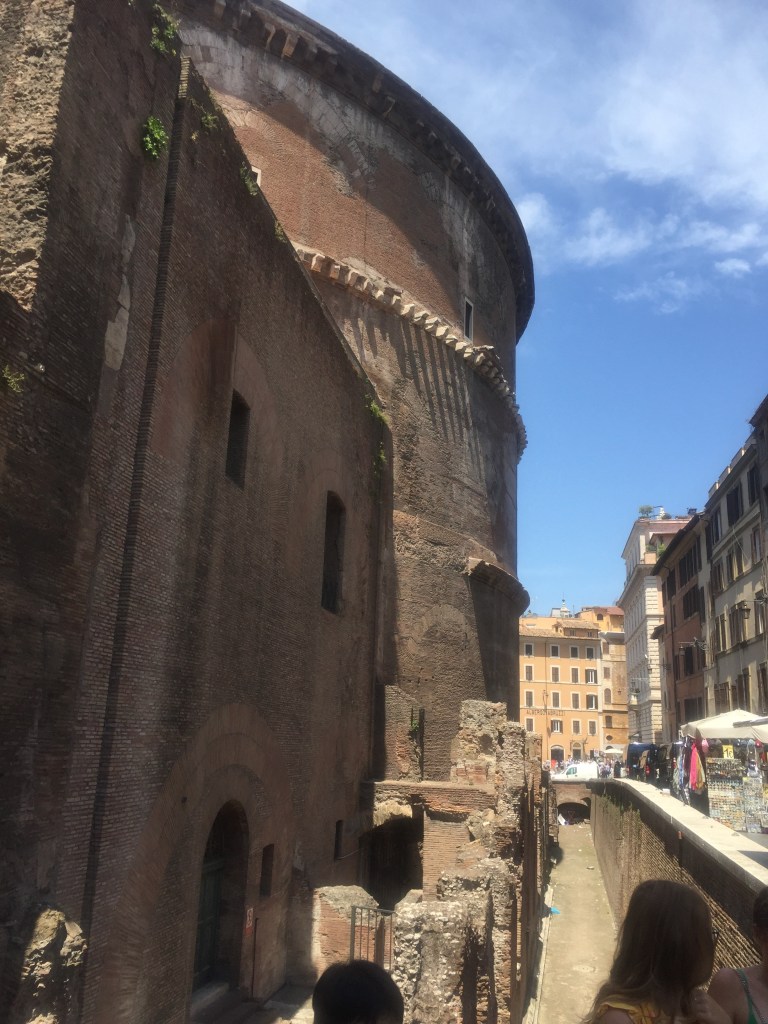
First stop, The Pantheon. It is one of the best-preserved of all of the ancient Roman buildings, in part because it has been in continual use throughout its history. Once a temple to all the Roman gods, since the 7th century the Pantheon has been a Catholic church dedicated to St. Mary and the Martyrs. As with many Roman antiquities, the Pantheon has been stripped of bronze and marble. Emperor Constans II of Turkey, stripped the bronze roof in 663 CE and sent it to Constantinople. Much of the exterior marble has been removed over the centuries. Columns and sculptures were lost. Pope Urban VIII stripped away the bronze ceiling of the portico. Happily, the marble interior has survived, albeit with a lot of restoration. Missing from the coffers in the dome is gold. It’s not clear how much coverage there was but we heard that the gold leaf in the coffers was expropriated for use somewhere else in Rome.

The Oculus is a stunning architectural achievement. The thickness of the dome varies – 21 feet at the base to about 4 feet at the Oculus. Directly below the Oculus holes in the marble floor that act as a drainage system in the rain -or the very occasional blush of melting snow. The dome is unreinforced concrete and its staying power has caused endless engineering debate. Is the concrete a lost recipe (mix design)? Was the freshly-poured concrete agitated (vibrated) to a fare-thee-well to eliminate air bubbles?

Another highlight of the walking tour included the monument to the unification of Italy in 1870. The Monumento Nazionale a Vittorio Emanuele was inaugurated in 1911 as a tribute to Victor Emmanuel II, the first king of Italy after the country’s unification. The Romans call it the Wedding Cake! It is so out of scale with the buildings in the entire rest of the city, it is hard to ignore!

This image has an empty alt attribute; its file name is vittoriano1.jpg

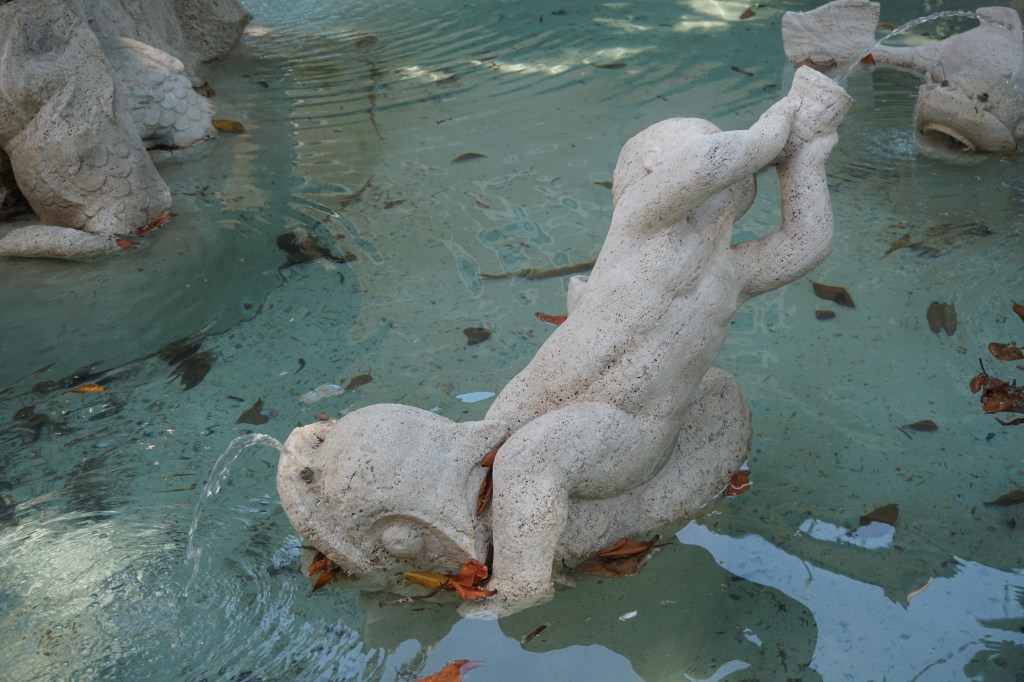
Next, the Piazza and Palazzo de Venezia. Built during the fifteenth century as a residence for Cardinal Pietro Barbo, the Renaissance building of Palazzo Venezia later became the papal residence (so much for that vow of poverty…) and the Embassy of the Republic of Venice. In 1916 it became property of the Italian state. It was converted into Mussolini’s headquarters during the Fascist era. The best part of this palazzo is the courtyard that is open to the public. On a 90˚+ day, a few minutes in a shady courtyard with a lovely fountain can be truly reviving!

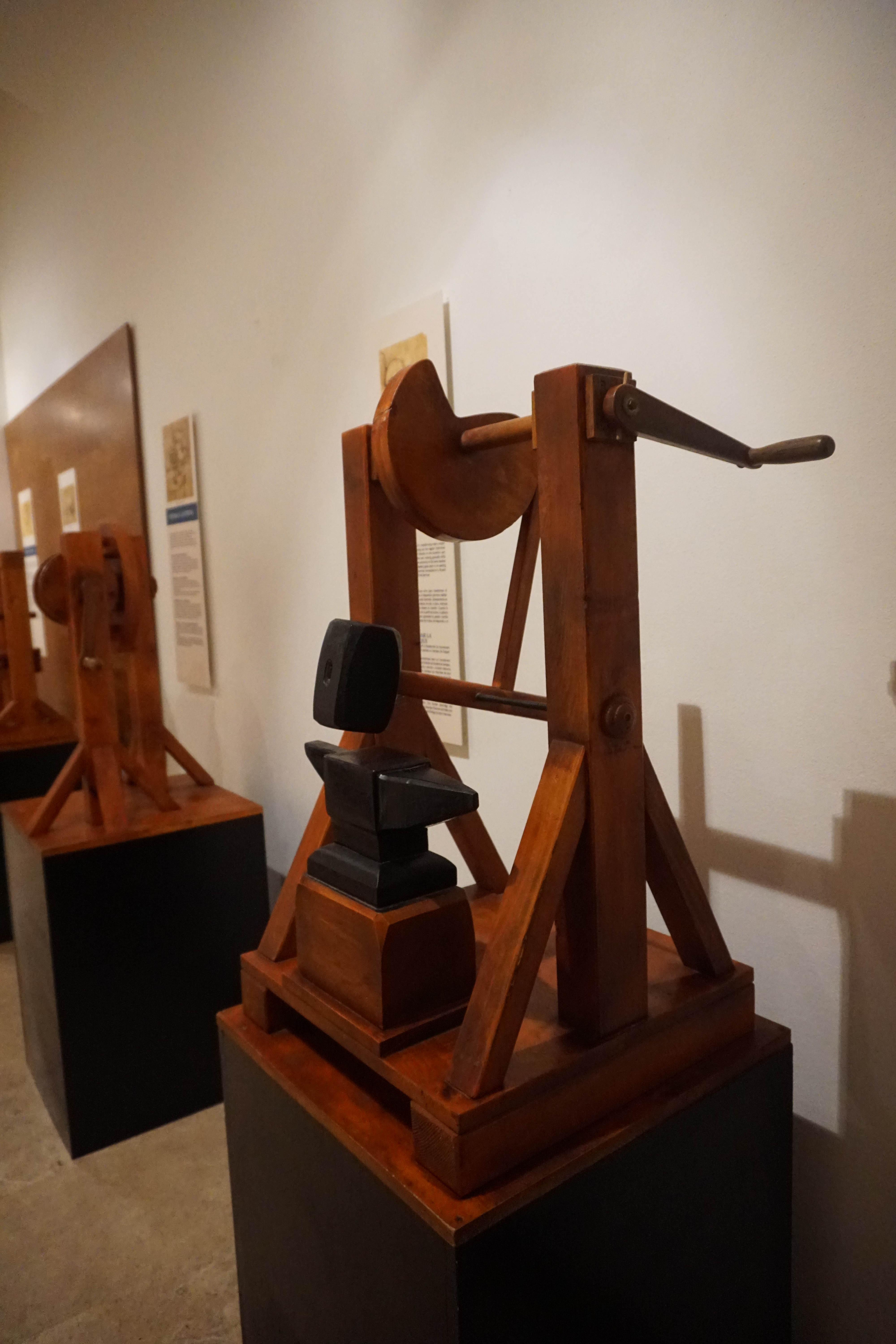
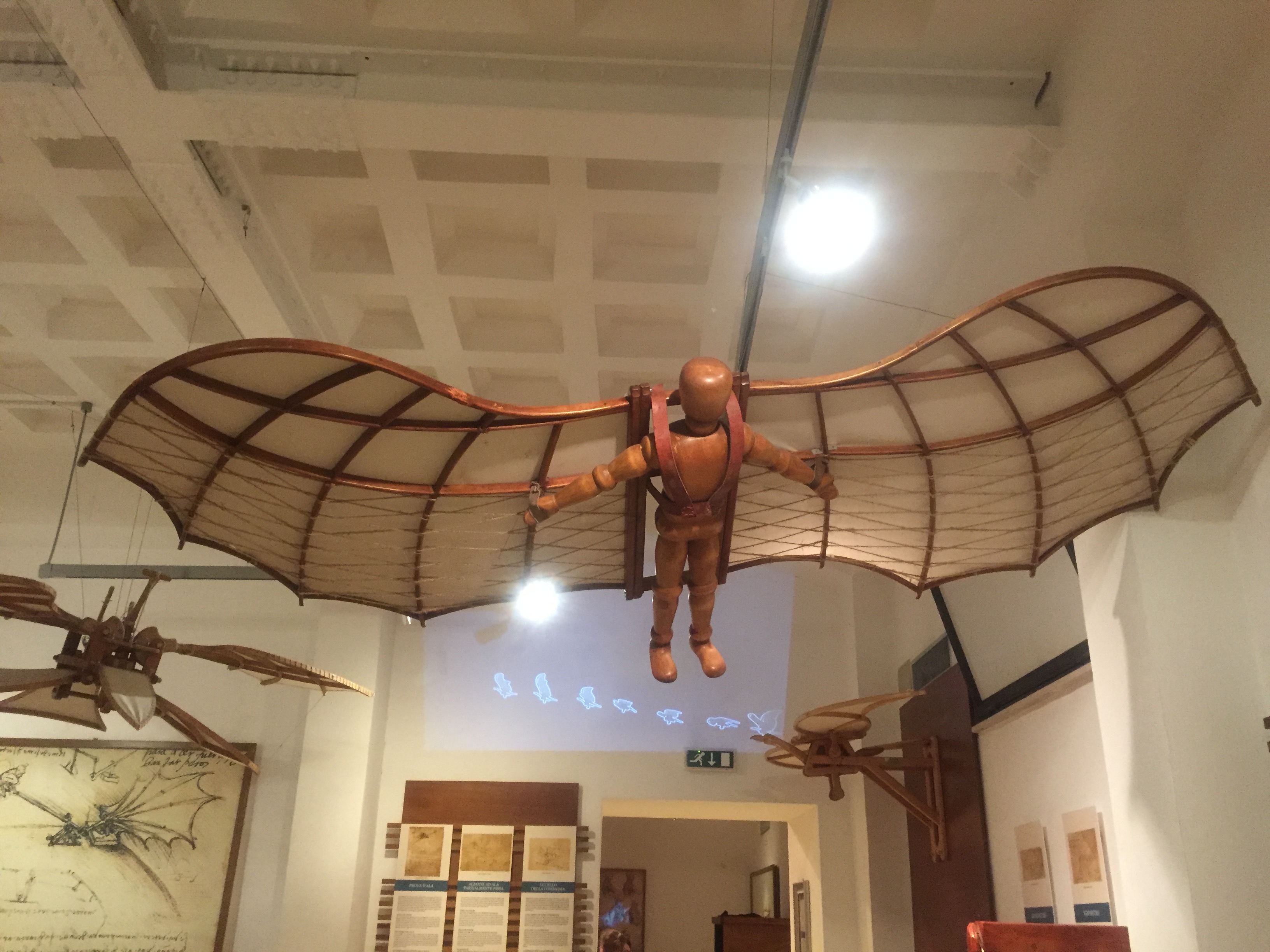
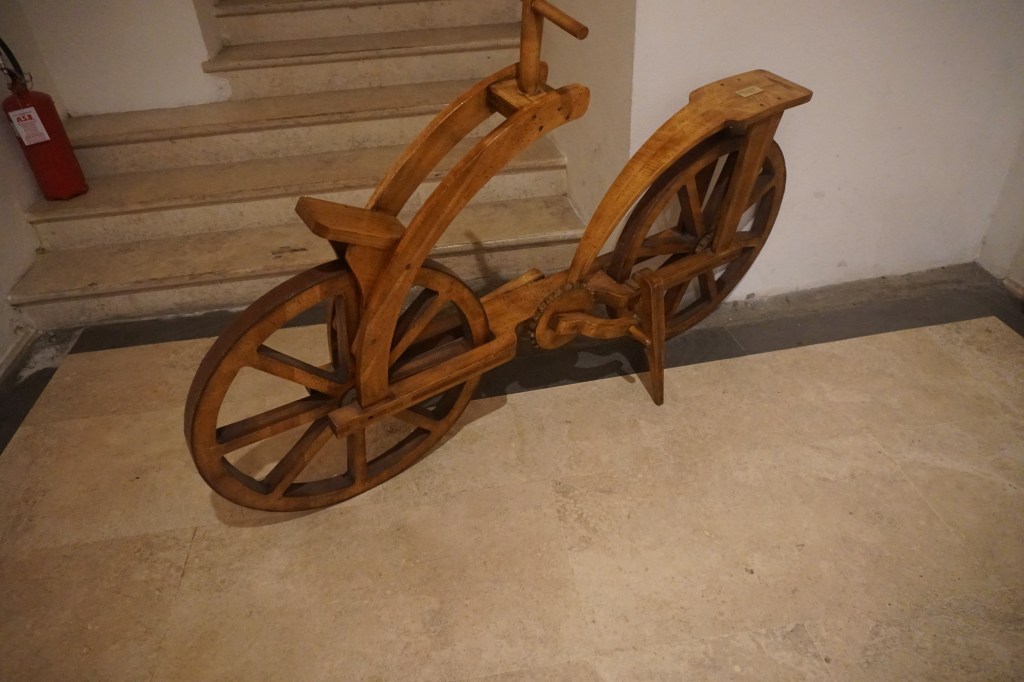
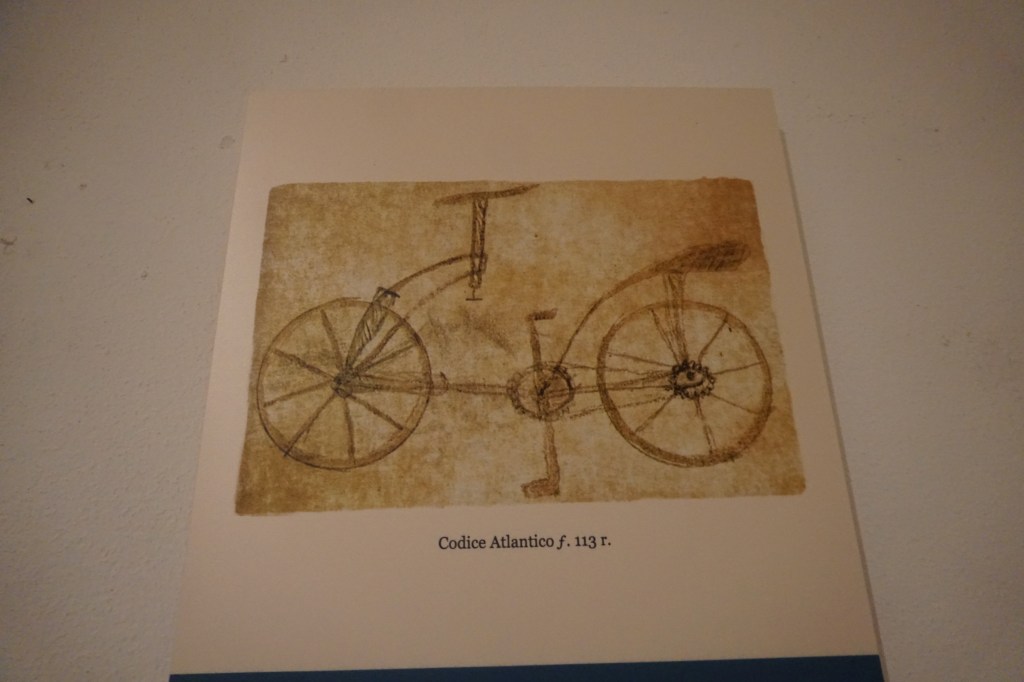
Somewhere in the middle of this ambitious trek, we bumped into an exhibition of the creations of Leonardo DaVinci. This exhibition had three things going for it: 1. It was air conditioned. 2. Because it is a private exhibition, LuLu was allowed in. 3. Leonardo da Vinci’s amazing mind!  It included 200 wooden machines and 65 working models all constructed from da Vinci’s drawings – including flying machines, anatomical drawings, a machine gun, adaptable machines to do repetitive work such as the hand powered sledge hammer, below, and a bicycle. Just amazing! Da Vinci eventually gave up on the flying device because it would be too arduous to operate for more than a few minutes.

There is some controversy regarding the bicycle drawing. Experts feel it was drawn by one of da Vinci’s students. It was found on the back of a sexual anatomy drawing censored for 500 years.

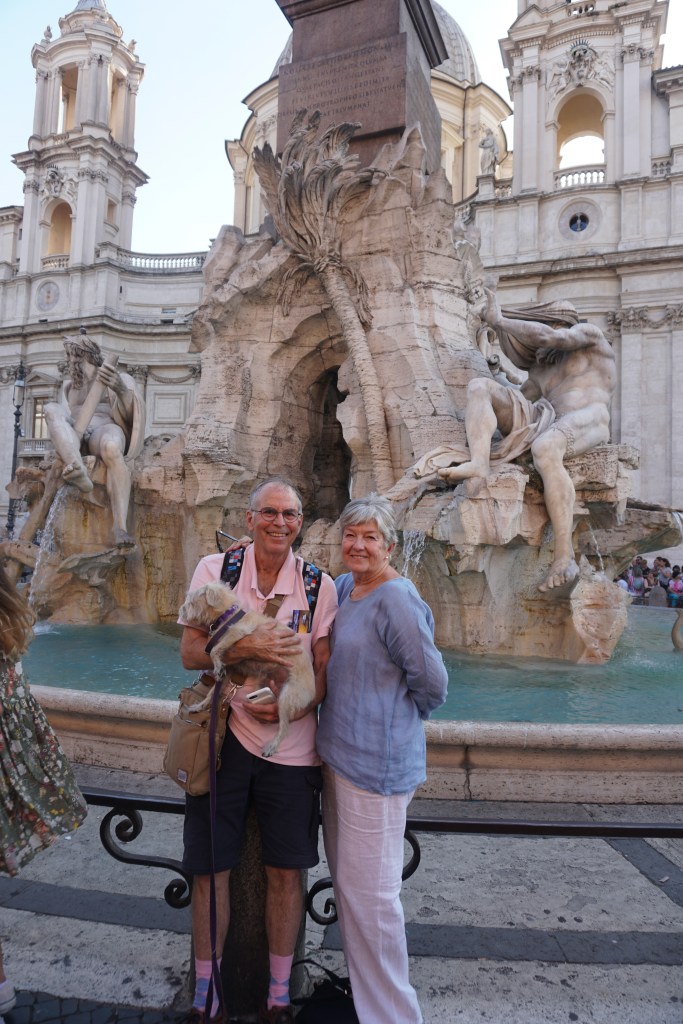
Many more palazzos and piazzas later, we wound up the self-guided walking tour at Piazza Navona. The public square is built on the site where the Stadium of Domitian  once stood. It could hold approximately 20,000 spectators, who came to see different athletic competitions. The most beautiful parts of Piazza Navona are its three fountains, designed during the papacy of Gregory XIII: the Fountain of the Four Rivers by Bernini in 1646-1648, the Fountain of the Moor by Giacomo della Porta in 1574 and renovateded by Bernini in 1653, and the Fountain of Neptune also created by Giacomo della Porta, also in 1574. There was a great deal of controversy and opposition to the construction of The Four Rivers, as Italy was in the grip of a famine and the citizens felt that extra taxes to build fountains took food away from their families.

We spent 3 more days in Rome. Part II of this post will drop soon!

Love to you all,

Sam, Donna & LuLu

July 25, 2019
Sorrento

With Bari in the rearview mirror, we headed for Salerno and the Amalfi Coast. Beautiful scenes from Italian movies, rapturous descriptions from friends & family, and amazing photographs in travel guides convinced us it was a Must-See! Fortunately for Donna, Sam did the driving! A Must-See it might be, but  her eyes were closed.  A Lot! 

So, imagine Highway 1 in the Big Sur area, but imagine it several feet narrower.  And the traffic is bumper to bumper going in both directions. Now imagine that about every 4th vehicle is a tour bus. Now add in motor scooters and motor cycles zipping in and out of the traffic – on curves, in tunnels – it doesn’t matter. It was Donna’s great fortune that Sam was driving. He was unflappable, even when a HUGE tour bus came  around a curve and almost took out our front end. Sam put on the brakes just in time and the tour bus driver inched his way past us. Whew! Close call!

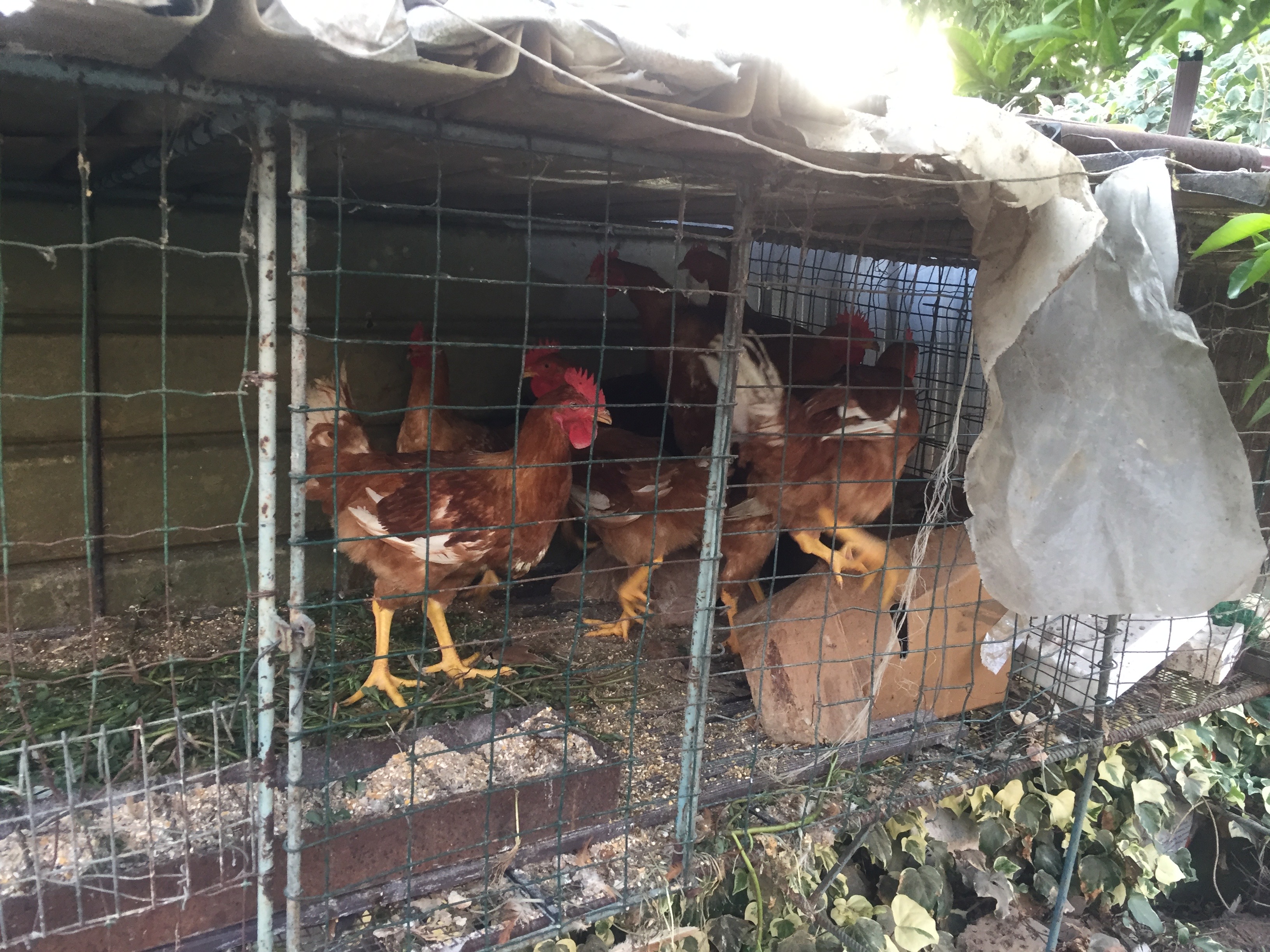
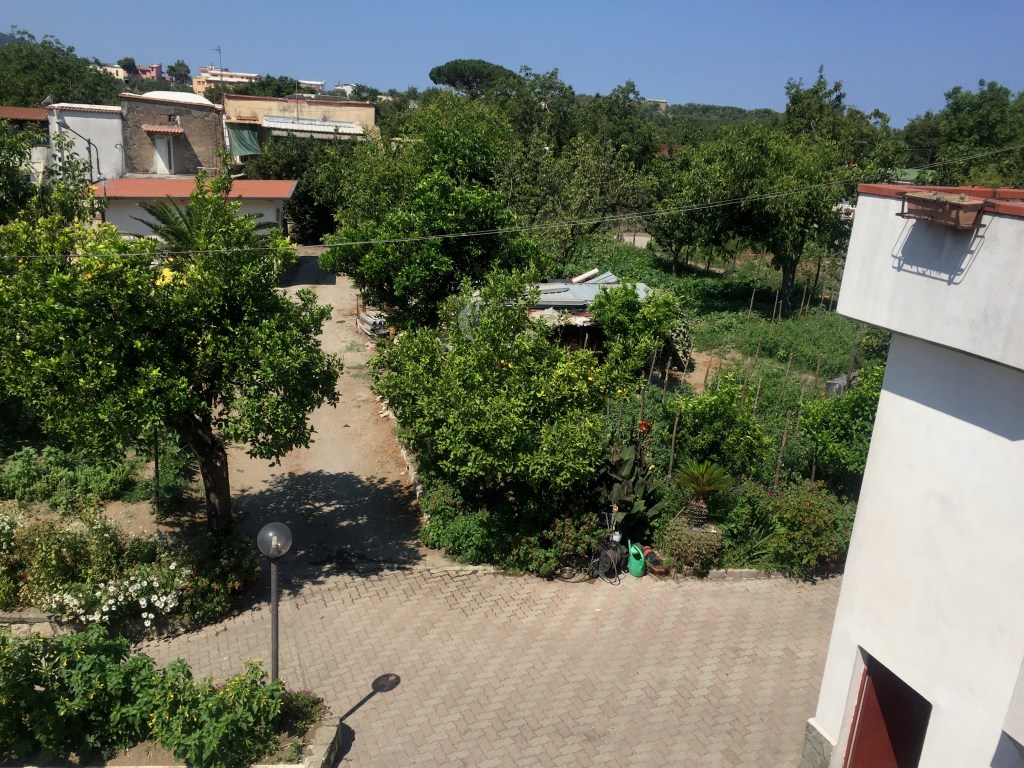
We arrived in Sorrento a bit shaken and looking forward to our Airbnb. As has happened a few times on this trip, GPS was not exactly accurate and sent us on a wild goose chase up into the hills on a road that was about 6″ wider than the car. An angel on a motor scooter re-directed us and an hour later we arrived at Villa Elena – a bit of paradise about 30 minutes outside of Sorrento. Elena is a Russian woman who came to Italy 18 years ago, married Tony, had a son and is managing what is a small farm with chickens, produce and a vacation rental. To say the tomatoes were abundant is an understatement – about 10 rows with about 10 plants in each row! Plus zucchini, potatoes, onions, cucumbers, herbs, amaranth, lemon trees…the list goes on! Plus two dogs and too many cats to count! The chickens are jealously guarded by Jerry, the German shepherd. He takes his job quite seriously and will not eat chicken meat!

Elena is friendly and out-going and generous and speaks not one word of English! Donna’s weak Italian was called into service again, and by the time we left her villa,  Donna and Elena were sharing thoughts about husbands, cooking and children.  

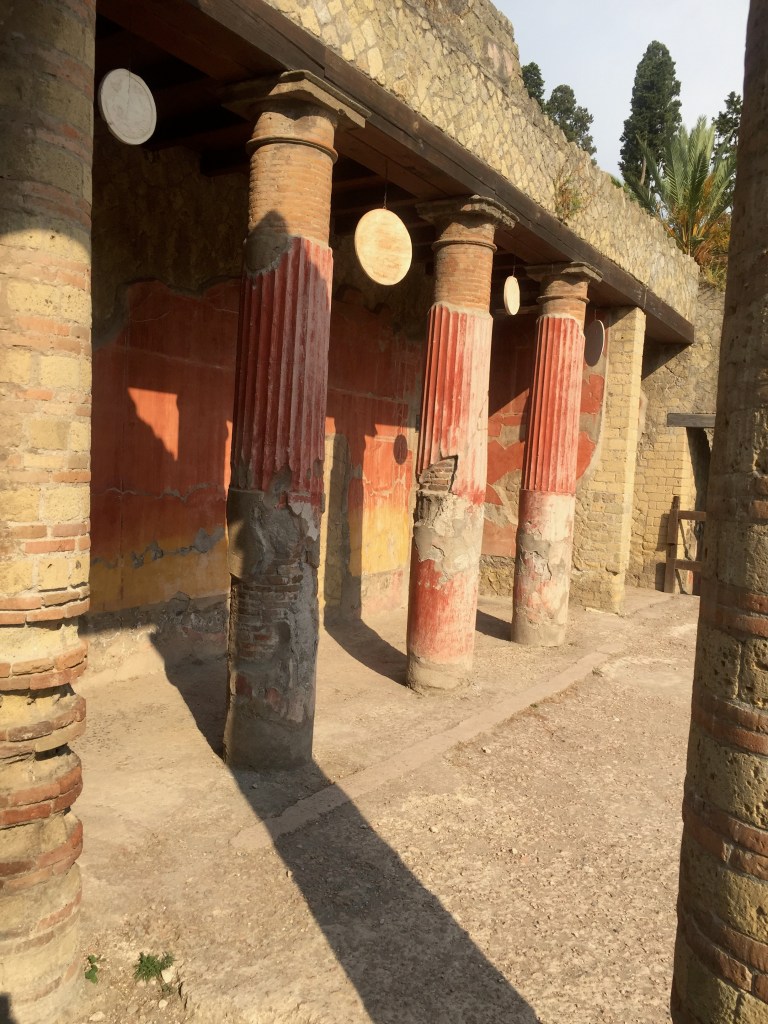
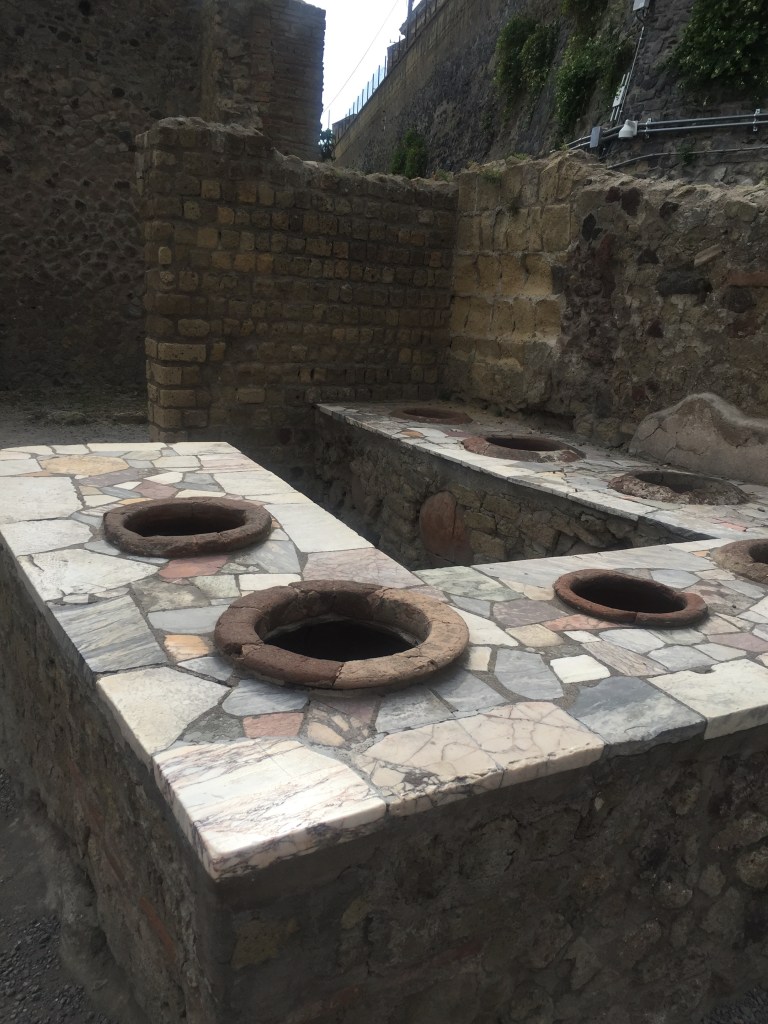
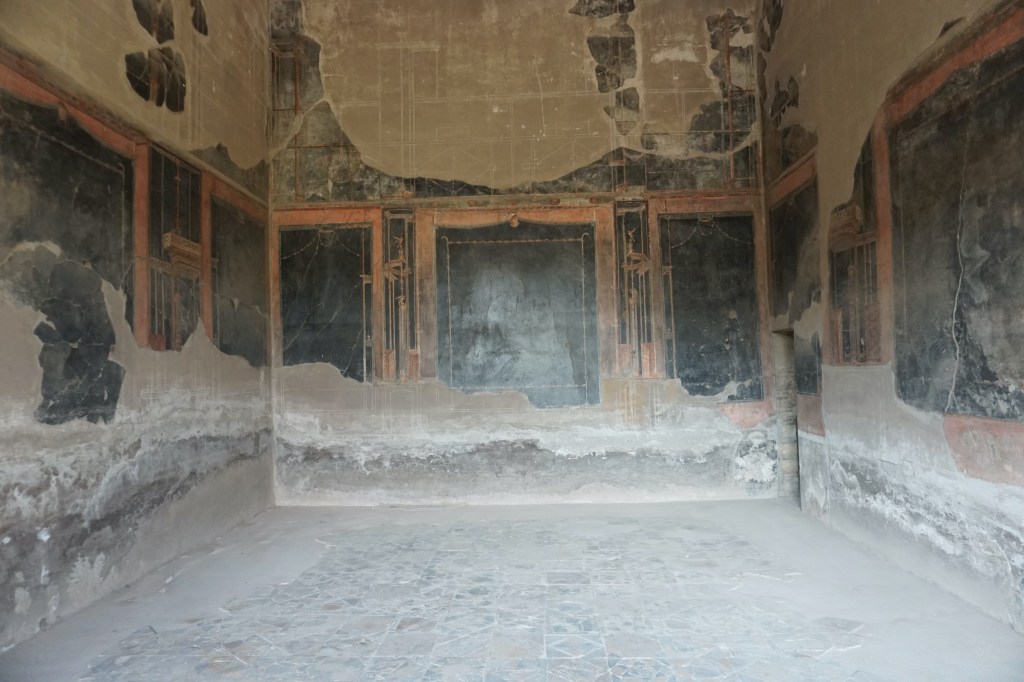
The following day the choices were Pompeii or Herculaneum. We had heard from an English couple that Herculaneum was smaller and less crowded, but also had better preserved ruins. So, Herculaneum it was. Still suffering from extreme heat, smaller and fewer fellow tourists sounded appealing. 

Herculaneum was the richer of the two cities. There are more expansive houses, more impressive mosaics, and more lavish marble in the ruins. Herculaneum was also destroyed in a different way than Pompeii, which has affected how well its ruins are preserved. Although a much smaller city, its ruins are also more dense, better preserved, more complete. The slower-falling ash covered and preserved wood and other organic objects (beds, roofs, doors, and even food!) better than in Pompeii. This also gave residents an opportunity to escape, which they did by sea. And recently archeologists discovered skeletons that had not been vaporized because they died from fumes and heat in some protected storage rooms near the sea.

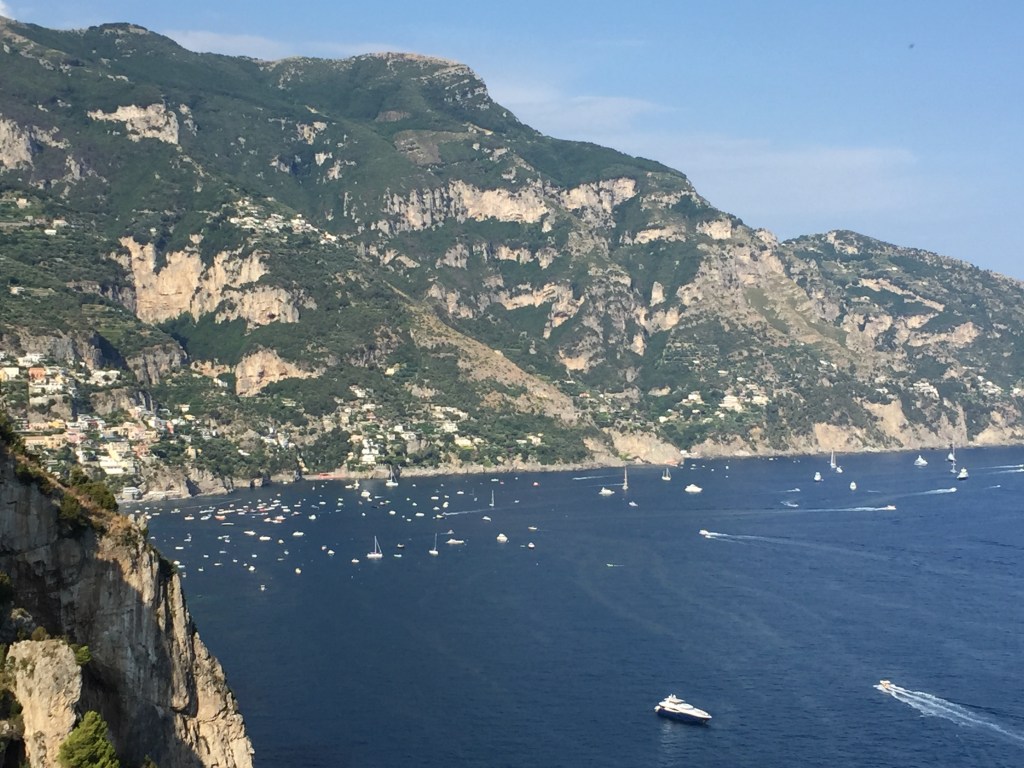
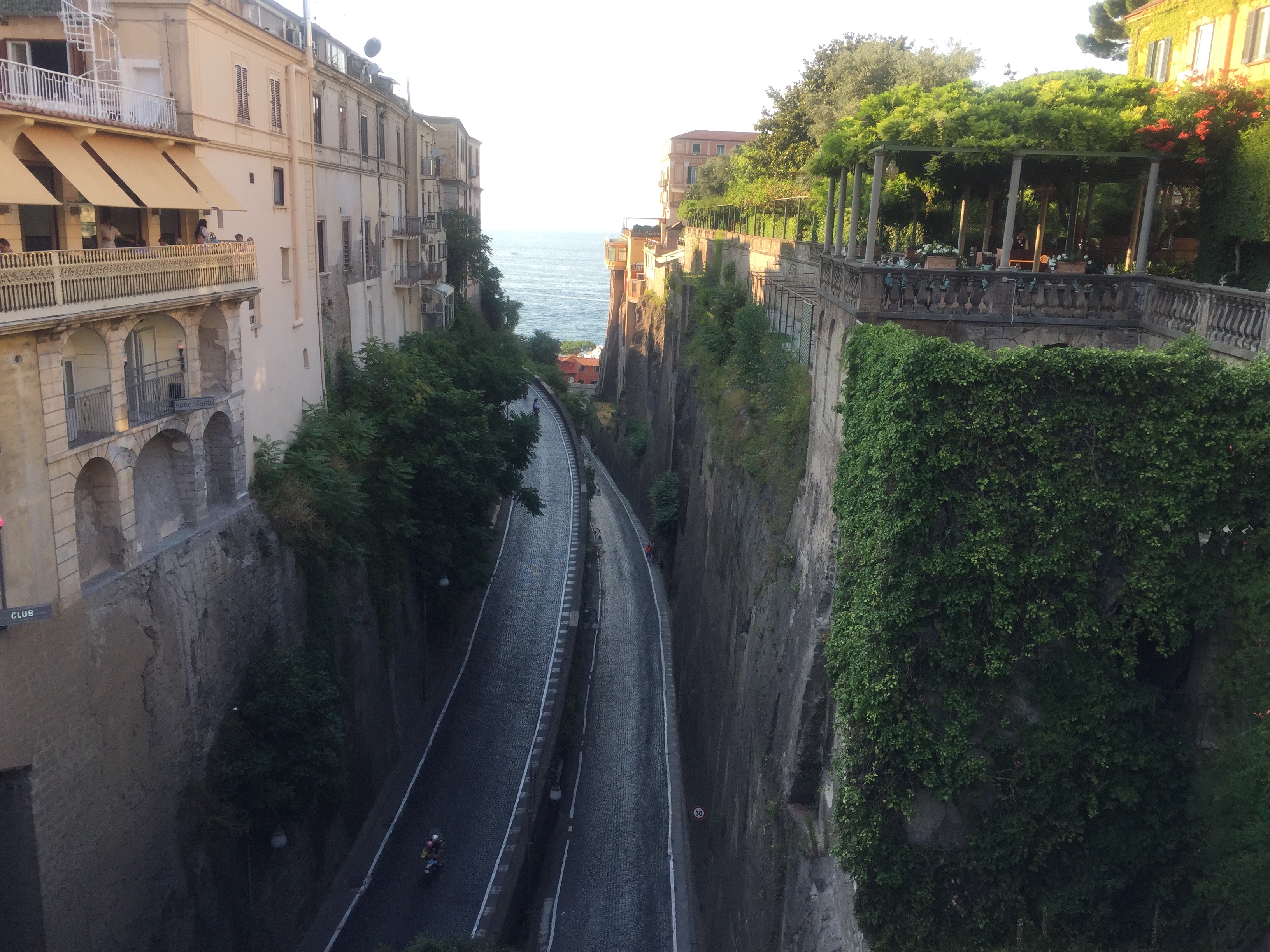
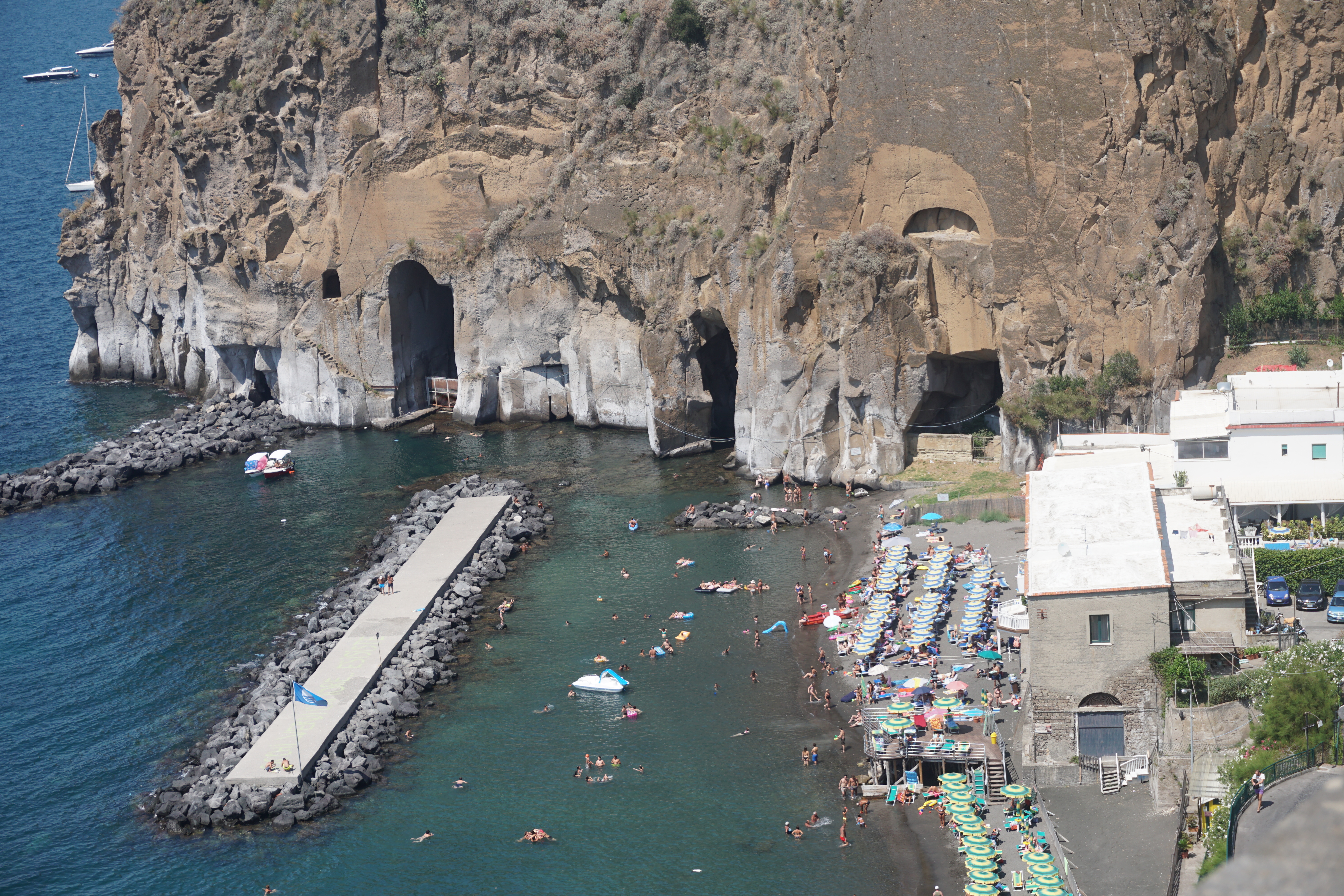
The next day we had to choose between a leisurely meal and a wander around Sorrento or more culture, heat and crowds in Naples. Again, smaller & fewer people won out. We headed to Sorrento. Sorrento is a popular tourist spot overlooking the Bay of Naples. As you walk along the west side of the city, you overlook rugged bluffs and beautiful beaches with sun chairs and umbrellas. The Mediterranean is an enticing dark blue. The flowering shrubs and trees were in full bloom, despite the heat!  The motor scooters were everywhere and the noise drove us indoors for lunch.

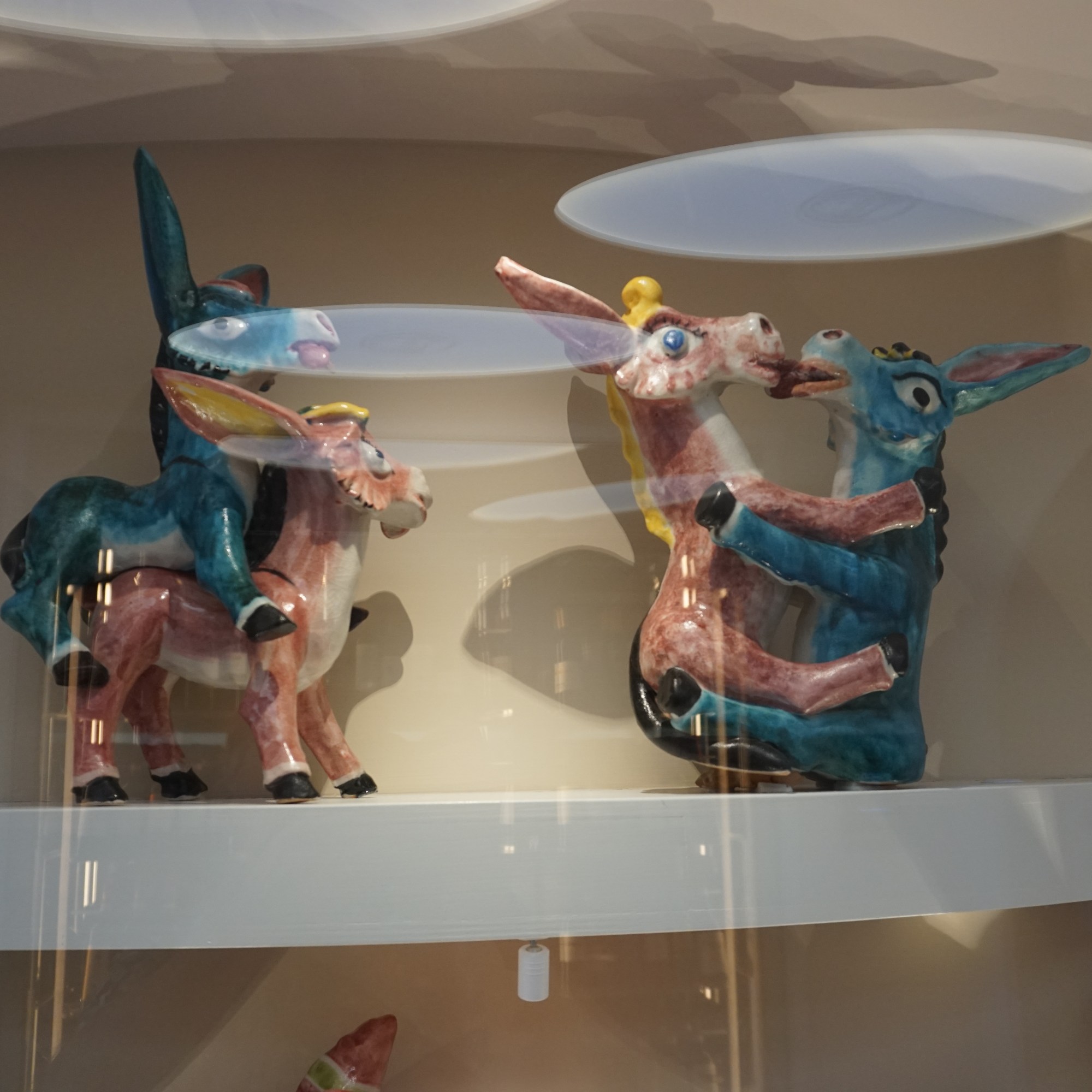
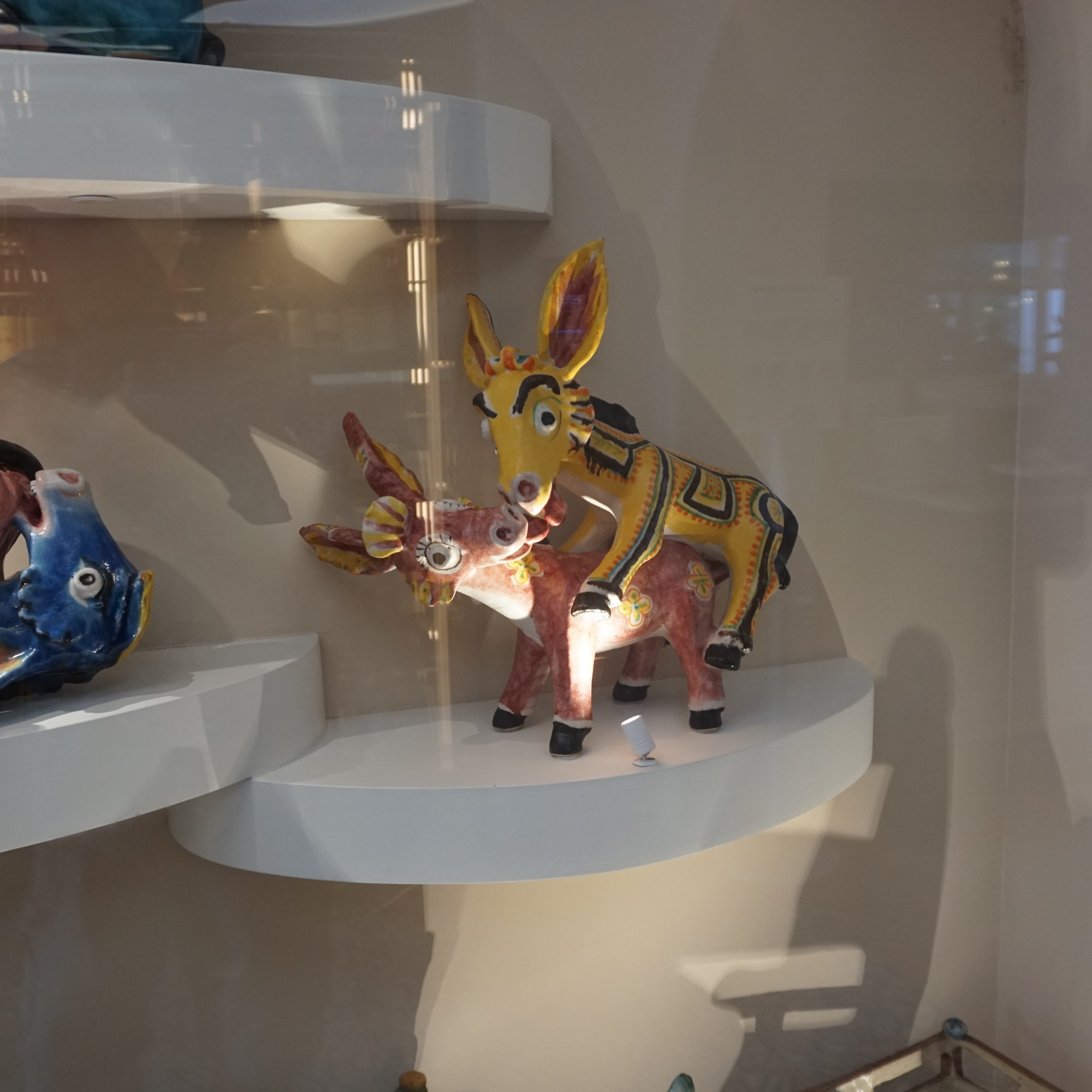
Just out of pure luck, we found Cafe Tasso It was peaceful and quiet and despite choosing it for its tranquility and acoustical isolation, we ended up having one of the most spectacular meals of our trip so far. It was perfect! And they had quite a collection of erotic donkey ceramics!

Views from our table at Tasso. Sculpture gallery featuring equus asinus reproducing equus asinus.

After lunch we wandered a few blocks down to the heart of the tourist area – narrow cobbled streets with souvenir shops, leather stores, jewelry shops, trinkets, olive oil, limoncello … and a million swarming tourists! There was nothing we haven’t seen before, so we didn’t stay long. We took a taxi back to the car, which we had parked far outside the tourist area, and drove back to Villa Elena.

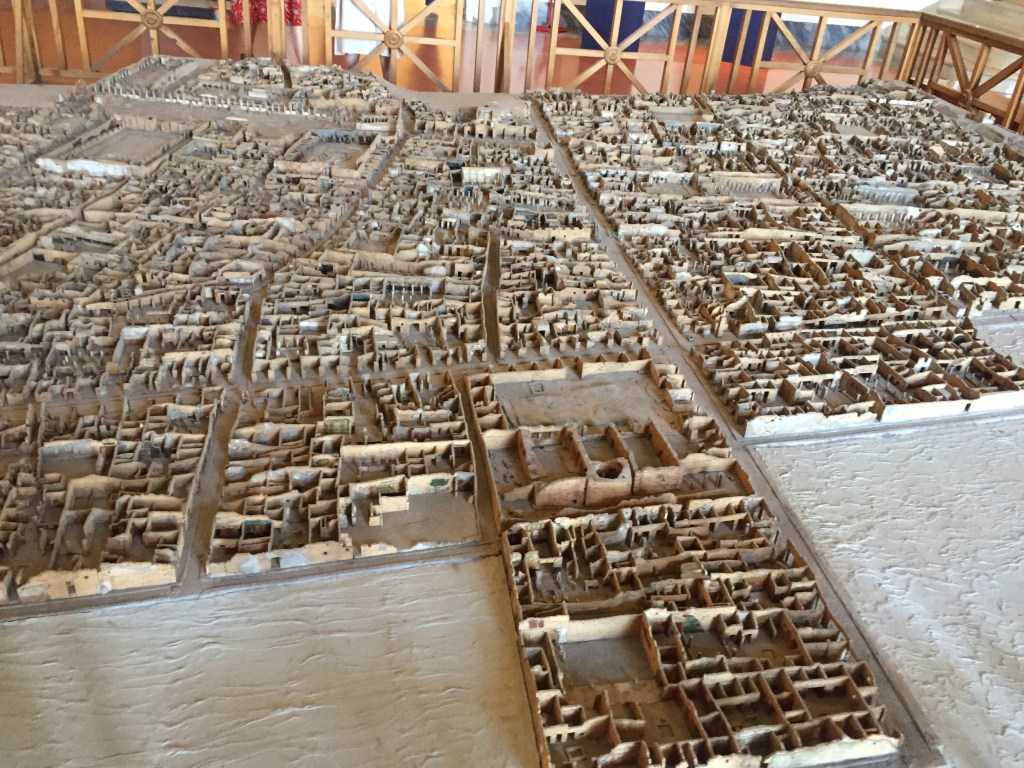
The visit to Naples the next day ended up being somewhat abbreviated due to heat and LuLu. The parking at the Archeological Museum was being renovated, so there was no covered parking. That meant that we took turns going in. And we were feeling pressure to get on the road to Rome, so it was a short visit for both of us. The sad news is that while we were both able to see the model of Pompeii and a lot of amazing art, we MISSED the room with the Roman era sex toys! Can you believe it?

So now, we’re off to Rome in 90ºF plus temperatures! So much to see! Will we see it all? Hard to tell!

Love to you all,

Sam, Donna & LuLu

July, 20,2019

Salmagundi

This will be a bit of a hodgepodge! We have been discussing so many things we are seeing and experiencing and thinking about.

LULU: We knew that our trip would be different with LuLu along, but we didn’t know HOW it would be different! For starters, LuLu is a great ice-breaker. Most people smile when they see her, but lots of people want to greet her and pet her and ask questions about her age or canine ancestry or where she is from. A lot of fellow tourists have left their dogs at home and are missing them. LuLu gets a lot of overflow affection! Could she be a vicar of vicarious indulgences?

She is handling the travel like a champ! She seems to recognize that a morning of packing bags means a car trip and kind of follows us around making sure that she is on the packing list. Once we put her harness on, she calms down.

She accompanies us almost everywhere. We can leave her in the flat when we are headed to a museum or other locale that doesn’t allow pets – on the bed with our pajamas seems to keep her calmest. She was allowed in Herculaneum, if we carried her, but after about 15 minutes she was too heavy and too hot to continue with that. Fortunately,the car was parked underground and it was fairly cool, so she stayed in the car while we toured the ruins. Leonardo, being no fool, let LuLu into a private exhibit of wooden and fabric models of his work machines and flying devices.

Of necessity, her diet changes often. We try to keep some things the same – like blueberries or green beans, yoghurt and oatmeal. But the meat part has changed pretty much with every country. We’ve only found frozen food once in France. In Croatia we found a tube of dog food made in Italy, so we were excited to get to Italy and stock up on it, but haven’t found it anywhere since we’ve been here on the second leg. Go figure… Anyway, her digestive system has adapted to many changes and seems fine.

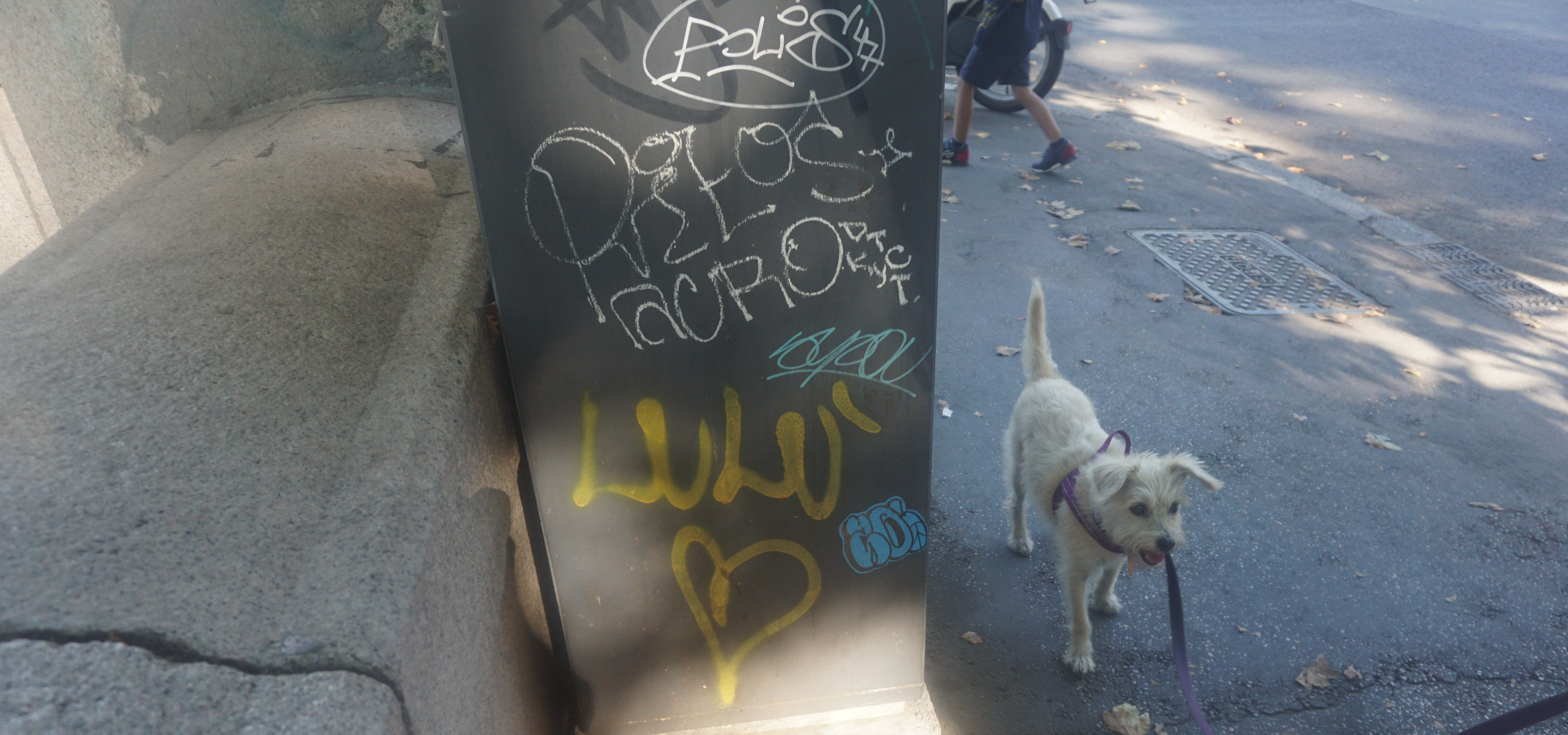
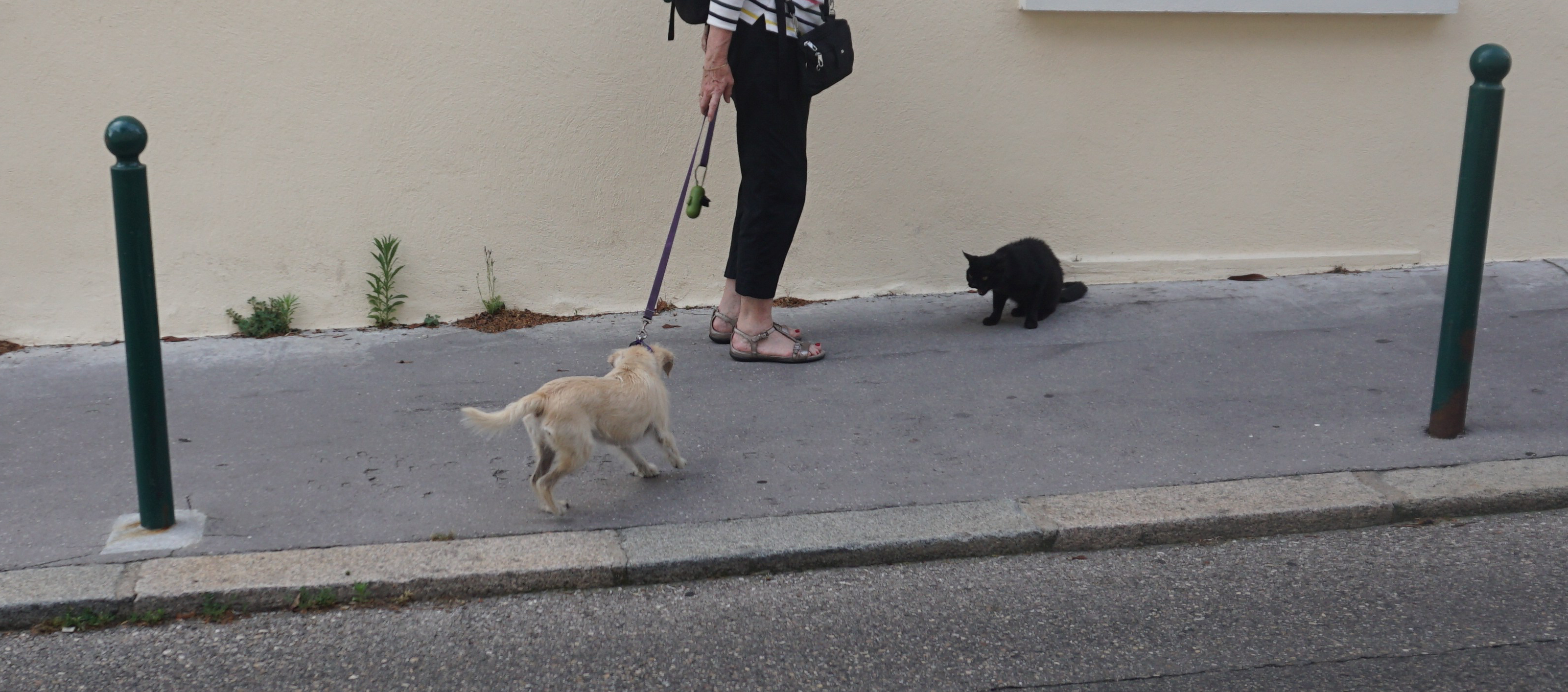
We were not aware that LuLu had an admirer in Rome! And here she is, being modest about it!

HEAT: Two weeks after our arrival in Europe, the heat wave started and has mostly not let up since then. Every time we check the weather for the next stop, it’s hotter than where we are. We are pretty scrupulous about making sure we stay hydrated, and we have both bought some linen pants and tops. But our northern California summers have not prepared us for this 90˚+ heat!

POLITICS: No kidding – we have heard a very few comments or questions about the circus currently going on in the US. If it comes up at all, the Europeans are merely sympathetic about what we are suffering through. One English couple we met called Boris Johnson a Tin-Pot Trump. But that was pretty much it. So one of us on this journey is elated about being away from the 24/7 news cycle, but we both catch a few articles and opinions and portions of punditcasts. 

AIRBNB: We have had almost uniformly great experiences with Airbnb. As mentioned previously, we had a sour experience after we could not stay in the previously-booked apartment in Dubrovnik (health hazard), for which Airbnb has refused to issue a refund. On the other side, each flat has been a respite from the heat, the culture shock, the exhaustion of touring around. Most have had washing machines, which, on a long trip are almost more important than a stove or refrigerator! Many of the hosts we have rented from have been terrifically generous, kind, interesting and helpful people. And almost without exception, we have slept in some of the most comfortable beds ever!

SEATBELTS: Until we reached Croatia, we observed that most people used seatbelts in the car. From Croatia on, we have observed that almost NO ONE uses seatbelts! We’ve seen toddlers standing up in the front seat, hanging out the back windows, or a pile of 2 or 3 on mom’s lap in the front seat! We don’t get it!

SMOKING: OMG, the smoke! Sam routinely checks the direction of the breeze before we sit down in a restaurant. Nearly everyone smokes, including pregnant women and nursing mothers! We have observed a lot of people rolling their own tobacco cigarettes. Teen-agers seem almost uniformly to be smokers! Again, we are not used to seeing this! Happily, there is no smoking on public transportation or in museums.

DRIVING: In France, Switzerland and Italy, the highways are usually toll roads and well maintained. But Croatia, North Macedonia and Greece are another matter entirely. Plus, they’re narrow! And windy! And full of pot holes!

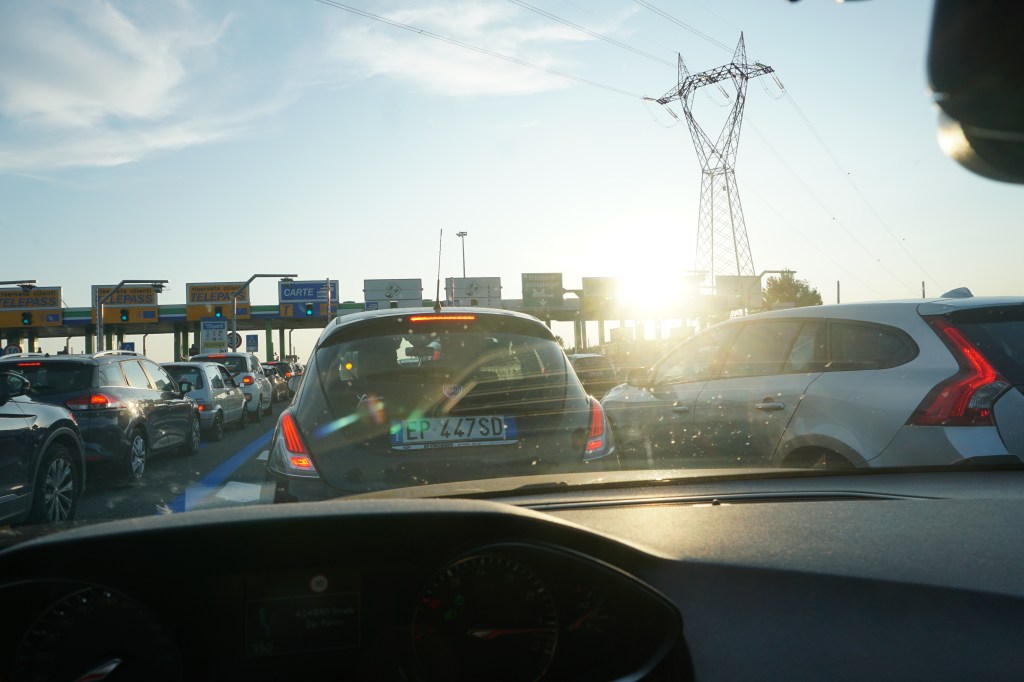
In Italy, the genteel rules of the road we observed in France, especially, are not in evidence! We just experienced a traffic jam coming from Sorrento into Rome that was a hot mess. About a half mile from the toll plaza, with probably 10 toll gates, the zany behavior started. We don’t have the Italian version of FasTrak, so we picked a lane that took cash. But as we neared the booth, it was apparent that 4 lanes of cars were vying for the same lane! And it was every driver for him or herself! Just because you have your blinker on, does NOT mean that anyone will let you in the lane. In fact, it usually means that they will edge you out viciously! We are not sure if our French plates cause some kind of chauvinistic furor or not! Forty minutes! It was exasperating but once through the toll gate, there was no apparent reason and the flow picked up.

As you can see, a sort of braiding technique takes place. You have to watch your front and your rear for incoming!

And motor scooters & cycles! Yikes! One tour guide called them “mosquitoes”! They dart in and out of the lanes with impunity! We have not discovered why one does not observe 10 motor scooter accidents a day! So Watch Out!!! This will be discussed in more detail on the Amalfi Coast post, coming next.

Goodbye North Macedonia, Hello Greece!

Our non-negotiable need to be in Gothenburg, Sweden, on August 5th, is moving us forward a little bit faster than we have been prepared for! So Greece is getting short shrift on this part of the trip. We are hoping to come back at a later date.

We left Skopje and puddled down the autobahn to Thessaloniki on Saturday, the 13th. We took an Airbnb in Perea, about 25 minutes outside Thessaloniki at Sofia’s apartment. The next morning we got up and walked down to the beach in Perea – a gorgeous strand that attracts families for vacation and seafood lunches and dinners. No Roman ruins, no museums, just vacation!

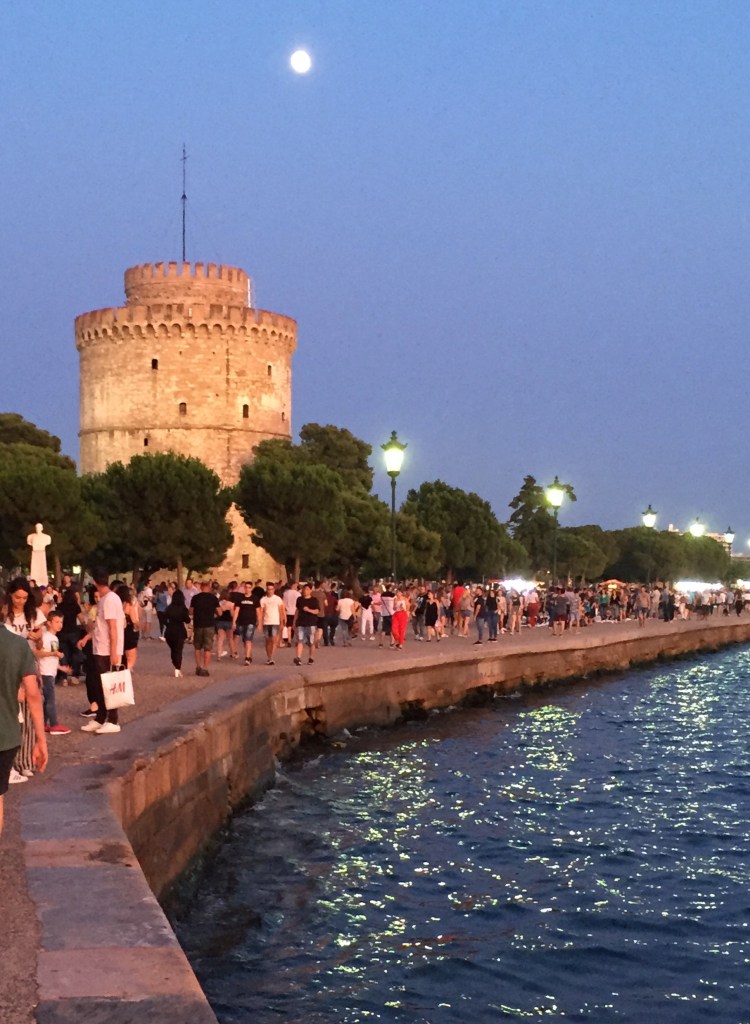
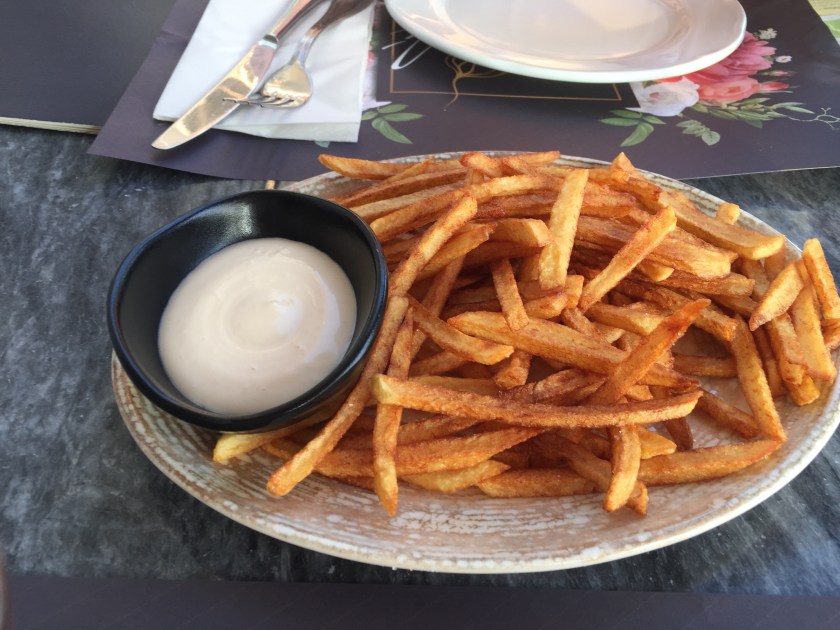
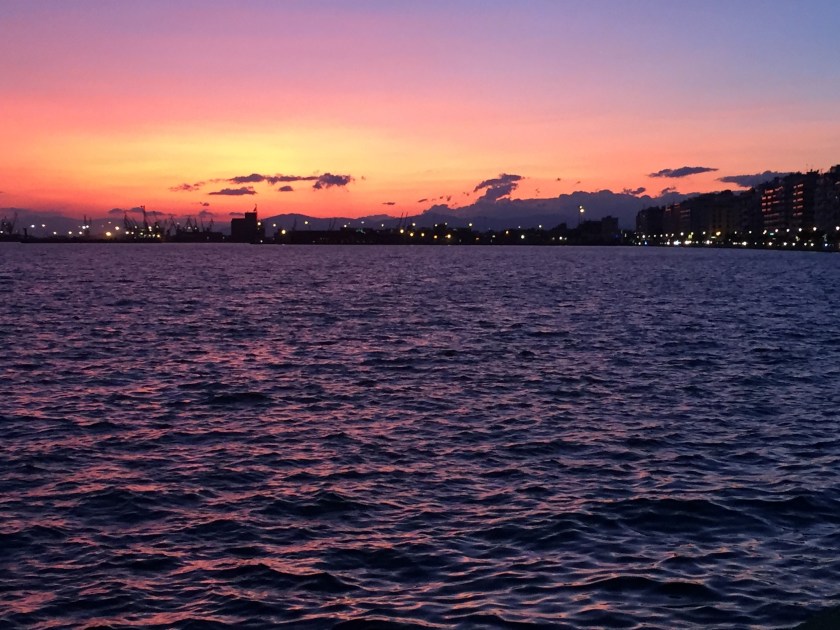
Later in the afternoon, we drove into Thessaloniki for a stroll and dinner. Couples and families, groups of girls, groups of boys – the strand was full of people strolling along chatting and relaxing. Across the street, the restaurants and bars were full and hopping with action. We found a small restaurant and ordered mezzes – shrimp, french fries, and a lovely Greek salad. YUM! And all in view of the Mediterranean with its refreshing breezes.

The next day we packed up for the ferry ride to Bari from Igoumenitsa, Greece. But first, we headed back to Thessaloniki – mostly in search of a camera shop for Sam to buy another battery for his DSLR Sony camera. A stop at a pet store for LuLu allowed us to meet Maria, who (clarifying directions given us ten blocks before) referred us to Mr. Kostas, who owns a camera shop on Aristotelous Square. Scored the battery and then went off in search of Roman ruins!

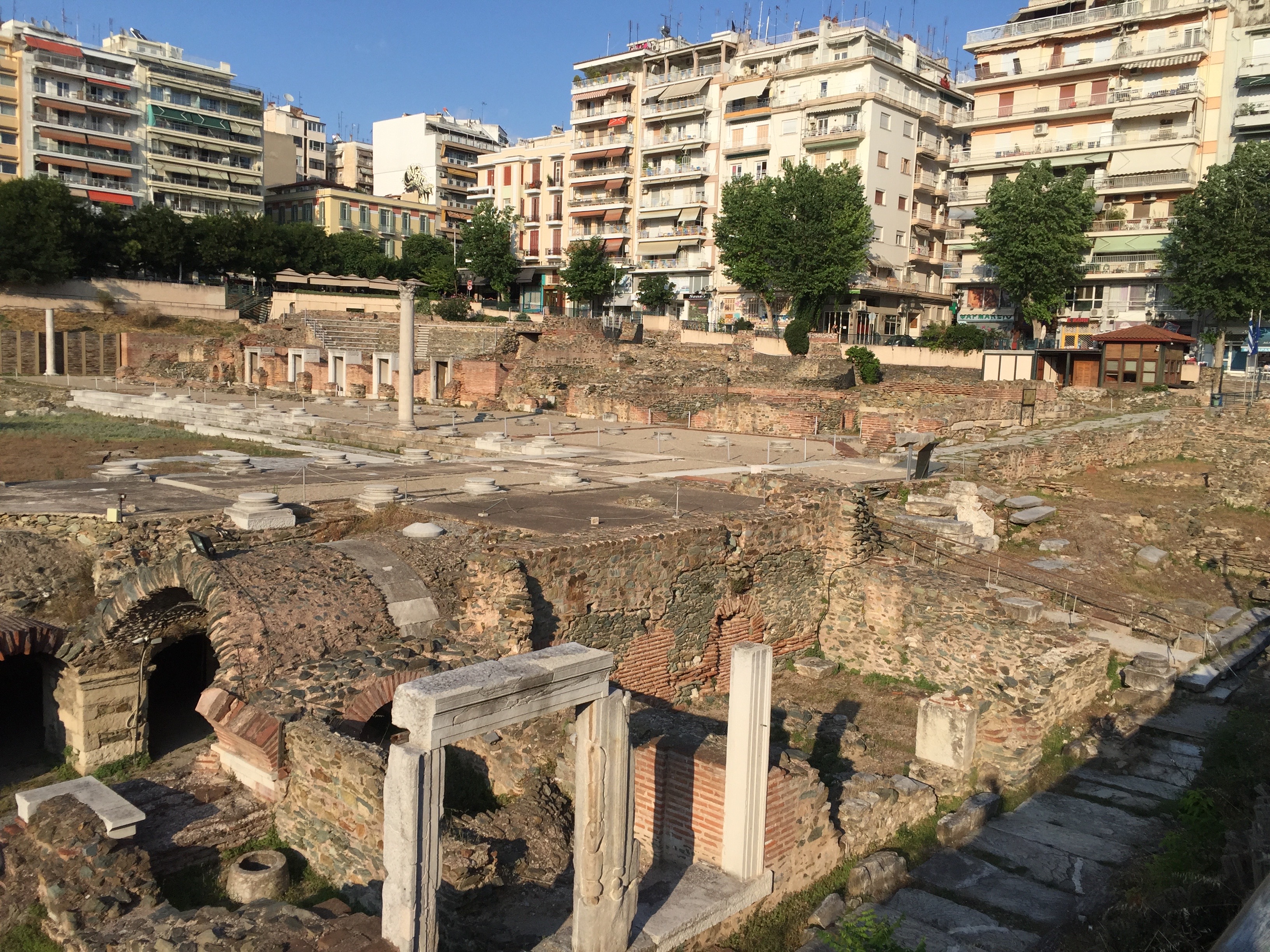
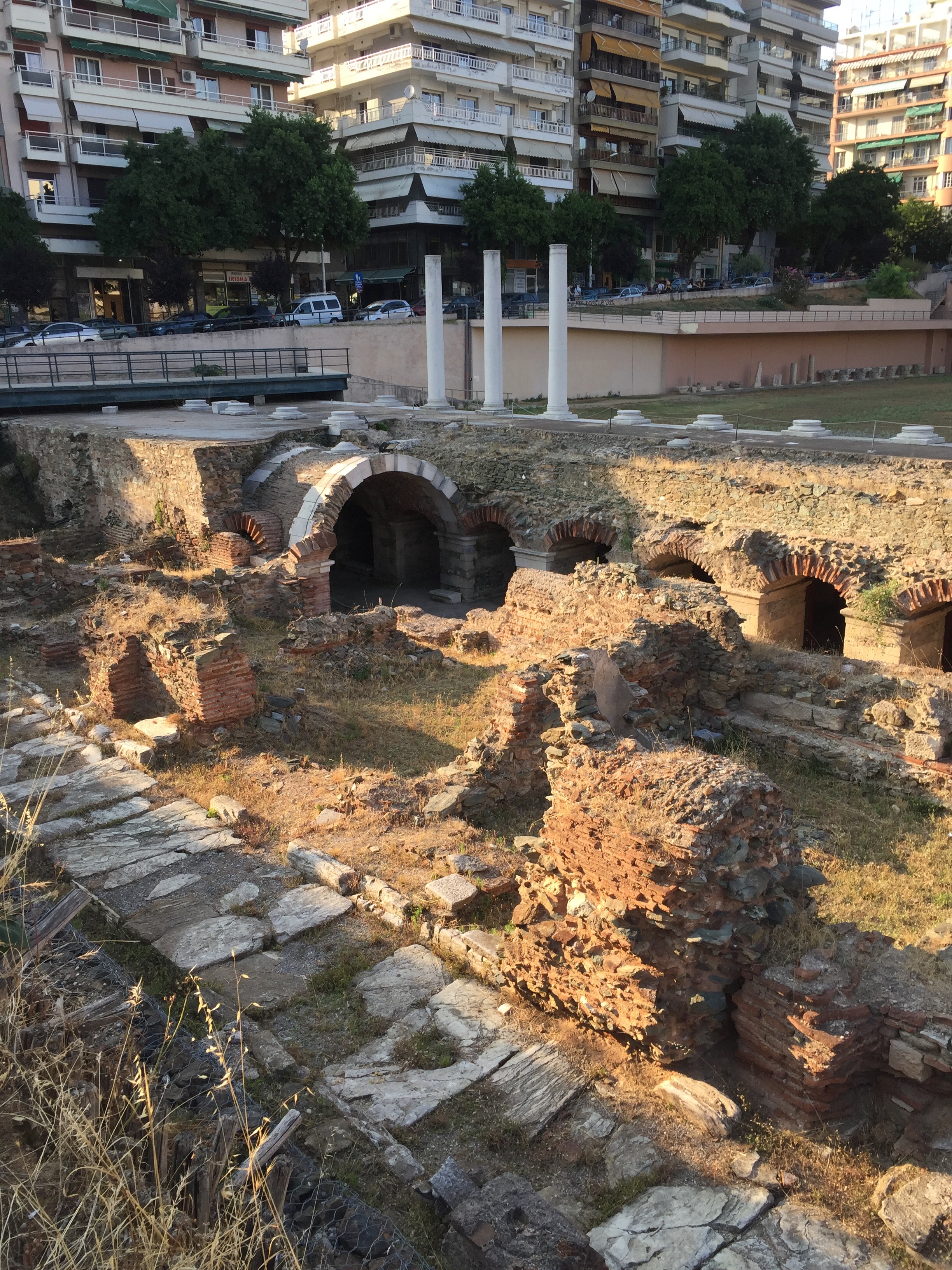
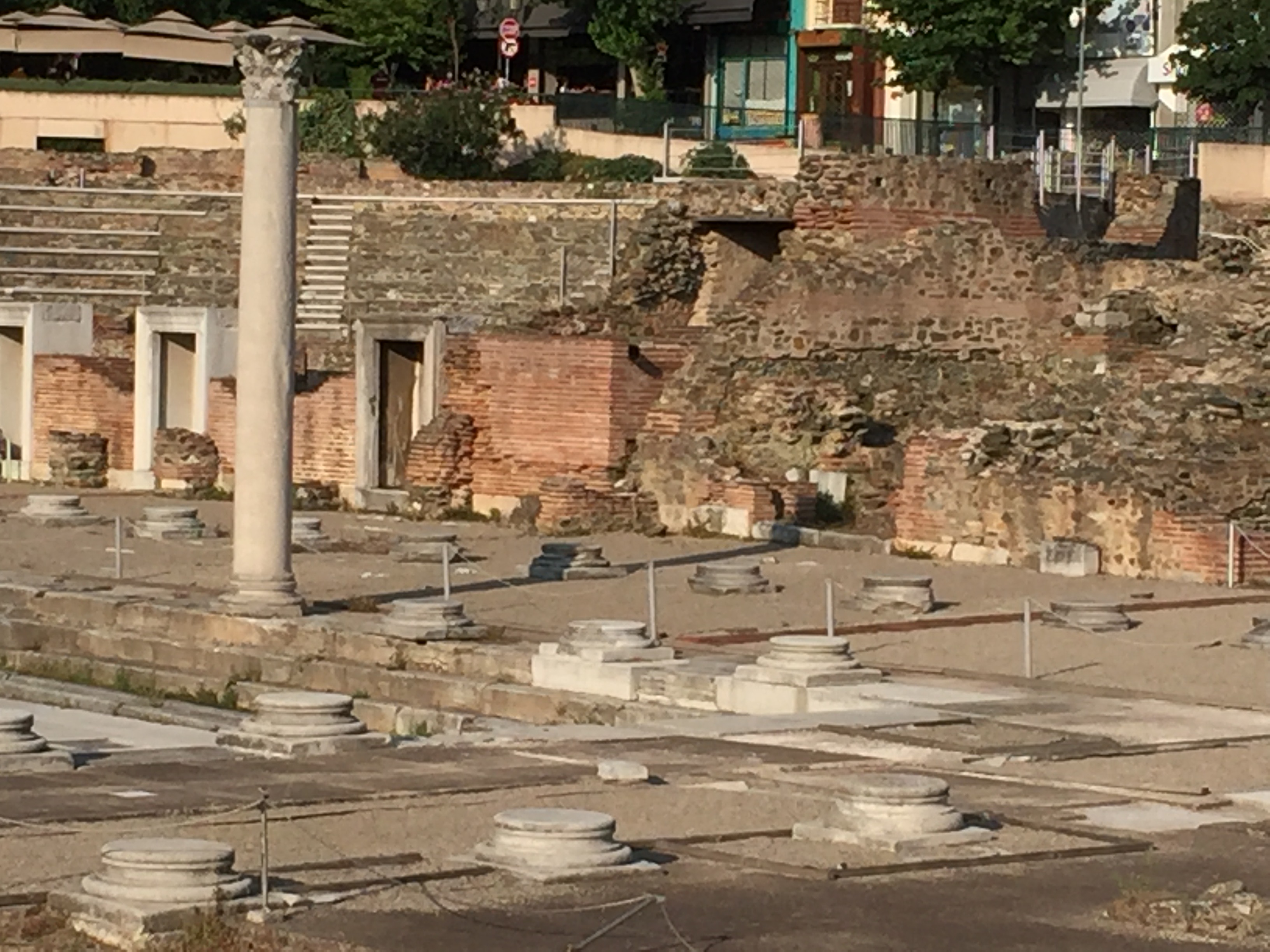
These are the ruins of a Roman forum, built in the late 1st century CE, it was discovered by accident when beginning construction of a court house in the 1960’s! It contained an amphitheater, baths, shops and residences. Many ancient ruins are well below the current grade level. We have a seemingly simple question: Where did all the dirt come from?

That afternoon, we drove on to Igoumenitsa where we THOUGHT we had a ferry ticket that evening. But we were a day early! So, we found a hotel (the clean but CHARMLESS El Greco), had another lovely Greek dinner at the water’s edge and strolled along another seafront full of vacationing families. There was stage set up in the park and it felt a little like the Greek Festival in Oakland – groups of Greek folk dancers in costume, singers and musicians, all very animated and happy.

The next day we strolled around town and landed perhaps our finest Greek meal. We confirmed long-held suspicions the cockles are clams! When the rain started – no mere drizzle – it sent us to the lobby of our hotel where we read for a few hours before it was time to head to the boat.

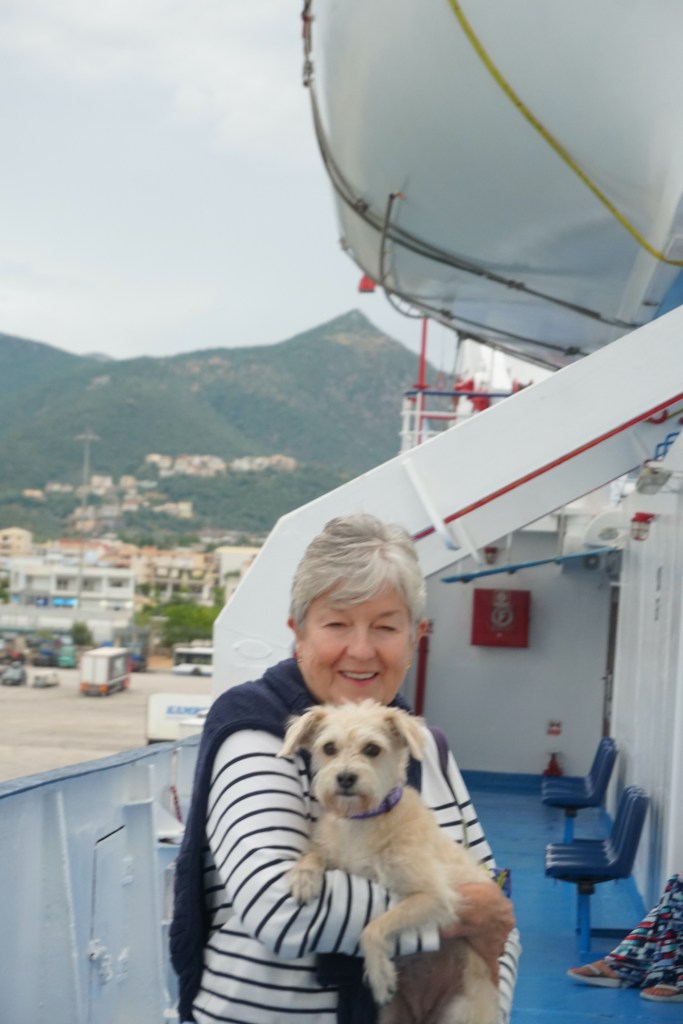
The ferry is a very large vessel and its bread and butter – tractor trailers. There might have been 18 to 30 55-foot trailers on board, all backed onto the boat and into very tidy rows on two decks. The trailer backs on from the dock, gets hundreds of minute directions from the loadmasters. Sam was tucked into a narrow outside aisle designated for smaller vehicles, and watched while a semi parked next to him and it was parallel parked, period.

We had a simple dinner from the cafeteria line on the boat and headed to our cabin. The luxury suite consisted of a bunk bed (headroom: bonk) and a very compact bath with a shower. It was actually nicer than the room at the El Greco! Ha!

We spent one uneventful day & night in Bari. During another stroll at the water’s edge, we tipped the age demographic up several years. It felt as though every teen ager in town had converged on the passeggiata!

Tomorrow we are headed for the Amalfi Coast and Sorrento. We are enjoying southern Italy as much as we enjoyed northern Italy! Looking forward to some scenery, some seafood and some more Roman ruins!

Love to you all,

Sam, Donna & LuLu

July 17, 2019
What We Found in Skopje

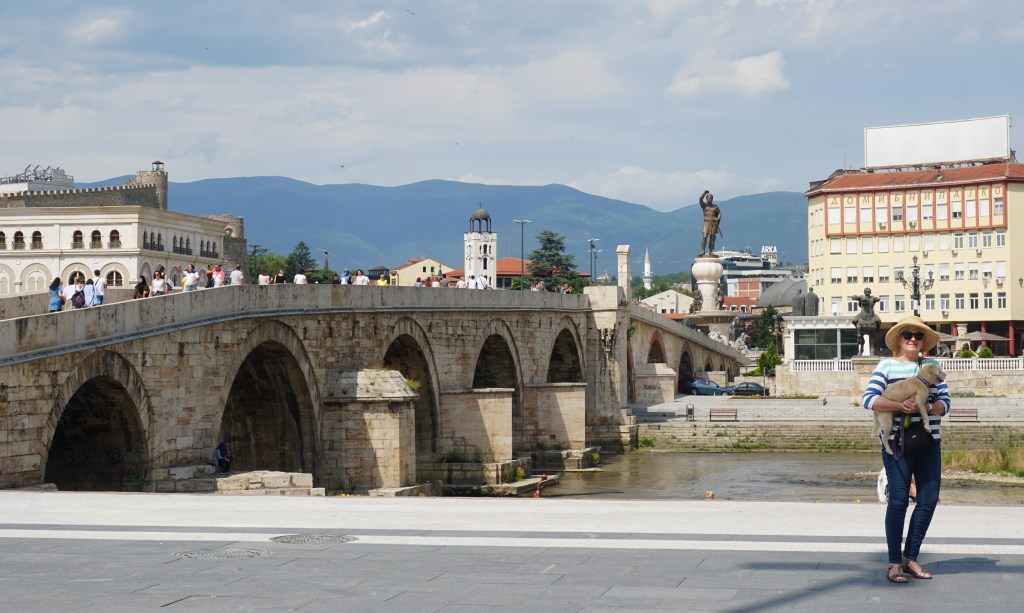
On July 25, 1963, Sam’s sister Nancy Hamilton Harrison and George Scriabine, her fiancé, were traveling on a motor scooter through Yugoslavia on their way to Greece. They stopped in Skopje for the night, checking in to Hotel Macedonia at the corner of Ulica Maksim Gorki and Poshtad Macedonia streets near the stone bridge that crossed the Vardar river. The next morning, July 26, at 5:17 AM a 6.9 magnitude earthquake (Richter) hit Skopje demolishing 80% of the city, including the Hotel Macedonia and killing Nancy and George, along with more that 1,000 other souls.

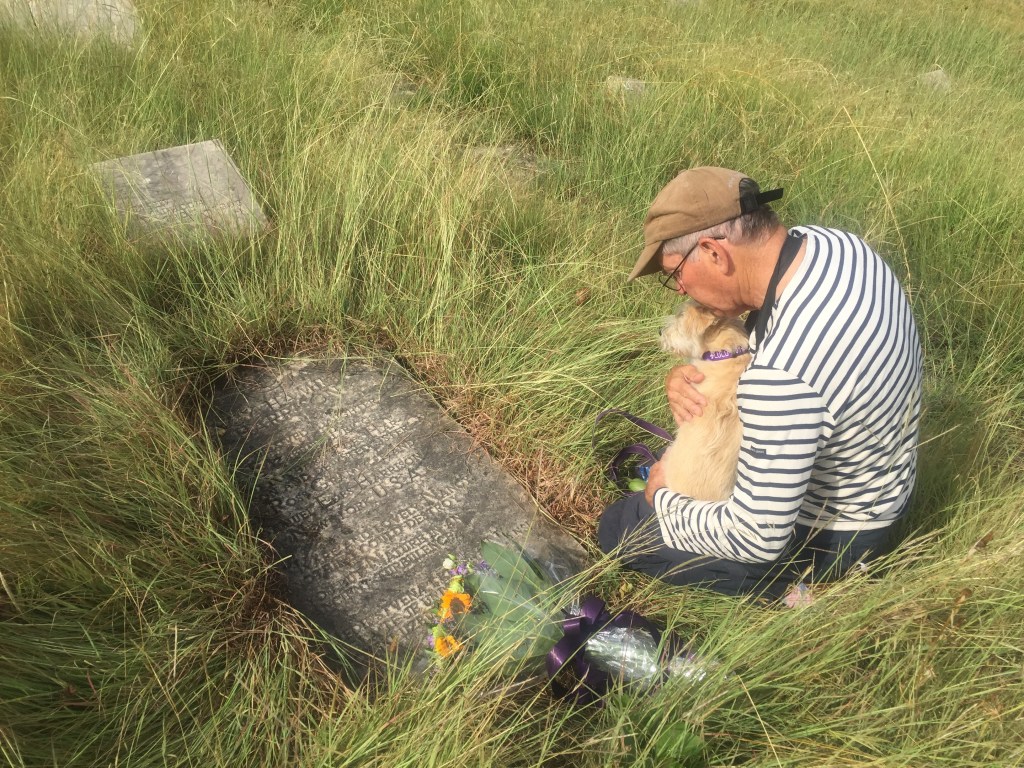
Sam has been longing to visit Nancy’s grave since this tragedy occurred, and it has always been on our shared list of places to go. So a major intention of this journey has been aiming towards Skopje.

The drive from Dubrovnik was long and challenging. Despite GPS advice that it would take 6-7 hours, it took twelve! The roads for much of the trip were narrow, curving, and unlit. There was construction and one way traffic controls, not to mention a couple of sustained downpours. By the time we arrived at our Airbnb, we were flattened.

We got up late the next morning and thanks to Tony, our interesting and terrific landlord, found our way to Dukat – the restaurant we ate in at least once a day for the rest of our stay. Fabulous food and lovely hospitality from Ellie, the owner.

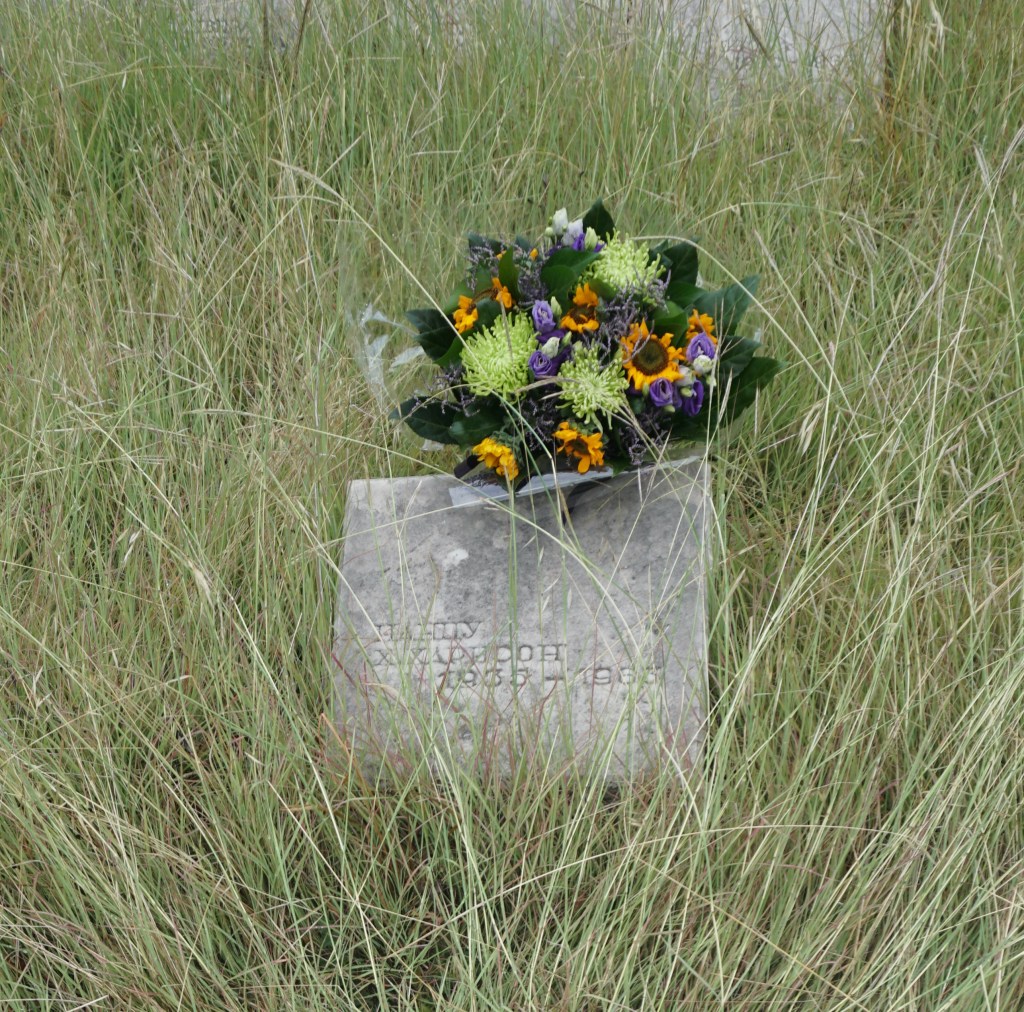
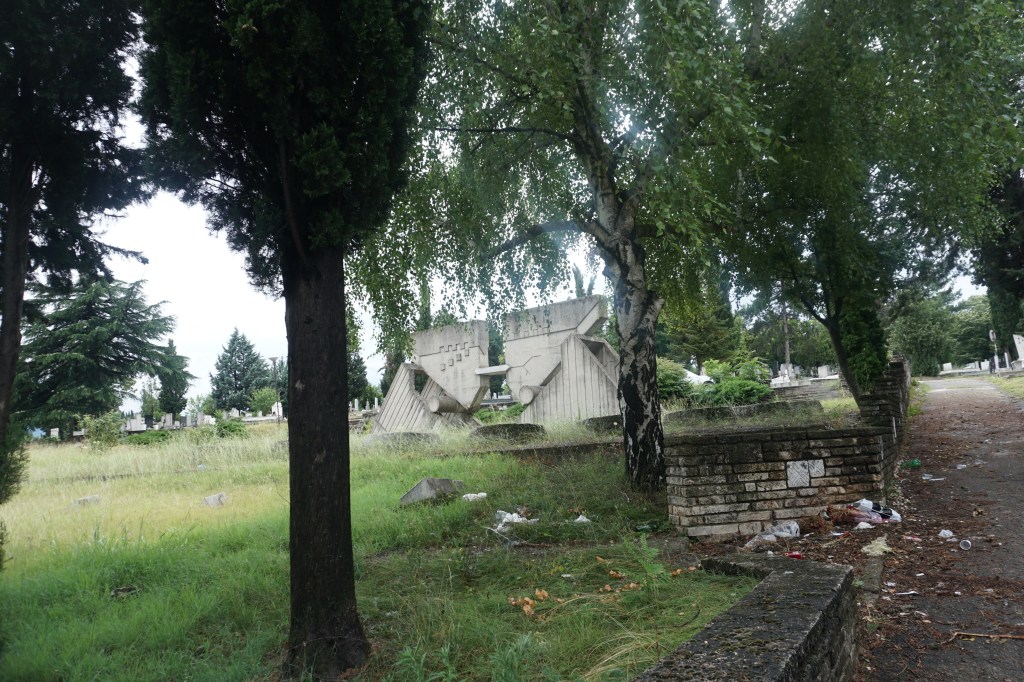
Then we called a taxi to go out to the Butel Cemetery, where we knew Nancy was buried. Thinking we had a grave number, 86 – V, and a picture of the headstone designed by Rik, Nancy’s father, we were anticipating an easy time of it. Our driver was Darko, who spoke a little bit of English and happened to know someone who worked at the cemetery. That was our first stroke of good luck. Although his friend was not there, Darko explained our situation to the workers and everyone was eager to help out. They took us up to the earthquake section of the cemetery – filled with white granite headstones, many unmarked, of a standard size and shape, low to the ground. But no sign of the headstone we were seeking. The grass was knee high, so it involved wading through the grass and brushing it away from each stone in order to read the names. After going through about half of that section, we gave up and vowed to come back the next day.

The next day it was late before we got our act together, but that was good, because Darko was available. And he arrived at the flat to say his friend had found the grave! He actually had seen the headstone 7-8 years previously and when Darko called him the first night to tell him about it, he remembered. So as soon as he got to work, he went on a mission! And found the grave! What a MIRACLE!  It seemed to us to be a combination of synchronicity, karma and good luck!

Sam cleaned off the stone and it’s quite close to what Rikki designed for her. And behind it is the generic stone that is on every grave in that area – written in Cyrillic. It may be that Nancy’s grave is the only one in the earthquake victim sector to have a second stone.

The relief of finding Nancy’s grave was terrific and we spent a quiet evening reflecting on her loss and ours.

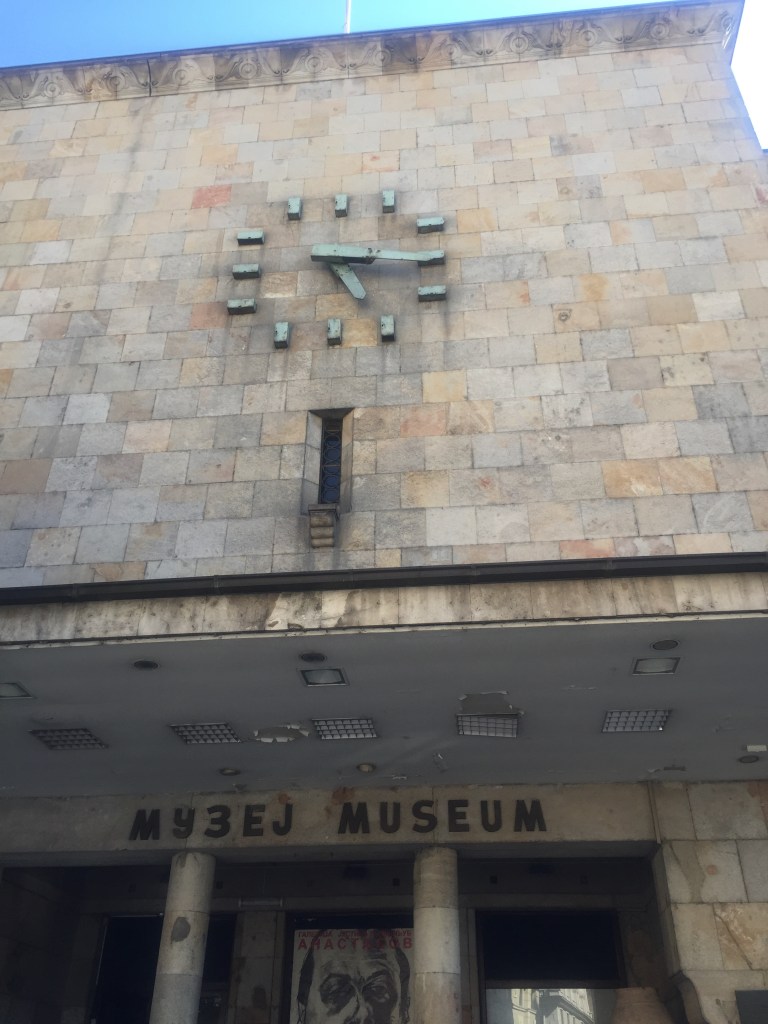
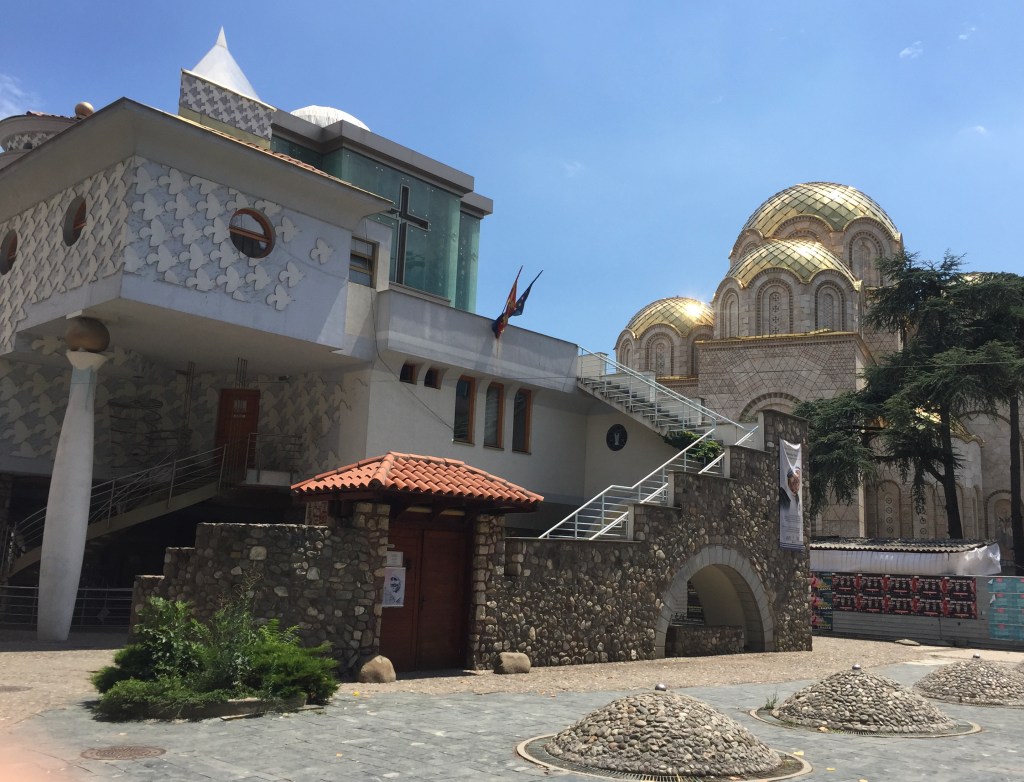
The next day we arrived unannounced at the City Museum in the Old Railway Station, hoping to share some of the articles that Sam’s family had saved about Nancy and the earthquake. After a brief look at the exhibit, Mihail, the director of the museum, showed up to meet us. He was ecstatic to hear about some new documents to add to their collection and suggested that we return the next day to meet with Zoja Bogdanovska, the curator of the exhibition. She offered to have the articles scanned so that we could keep the originals and was delighted to have new material. She also gifted Sam with 2 books about the earthquake and the museum exhibit.

When we visited the site of the Hotel Macedonia, we were a bit shocked. Two buildings of approximately equal stature stood side by side until the earthquake reduced one to rubble while the other remained standing. The terrible irony of being in the wrong building was heartbreaking and incomprehensible.

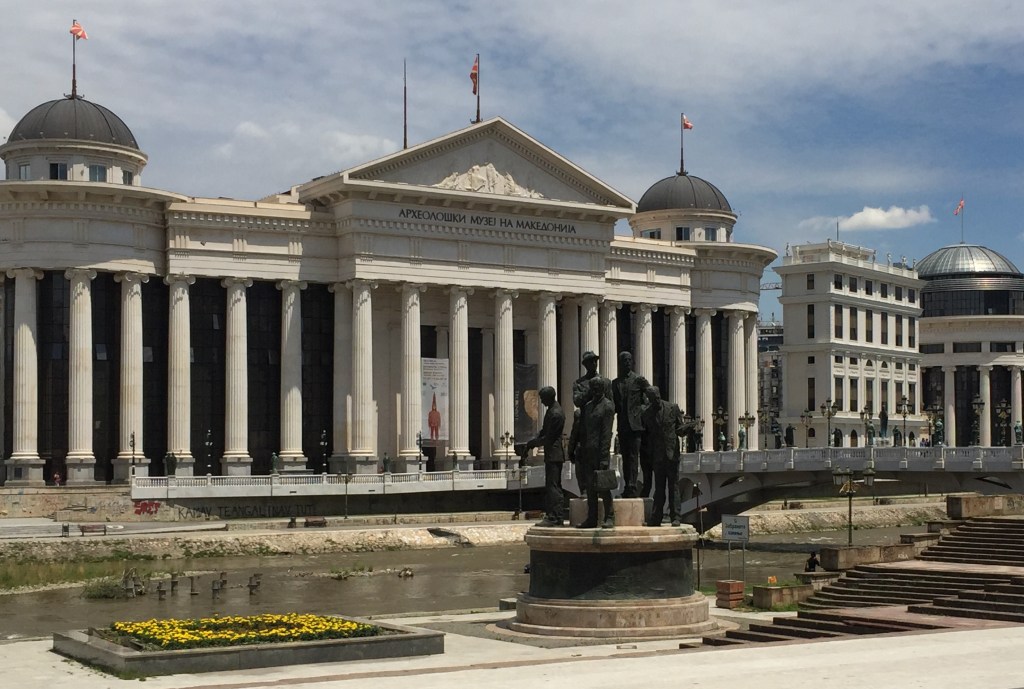
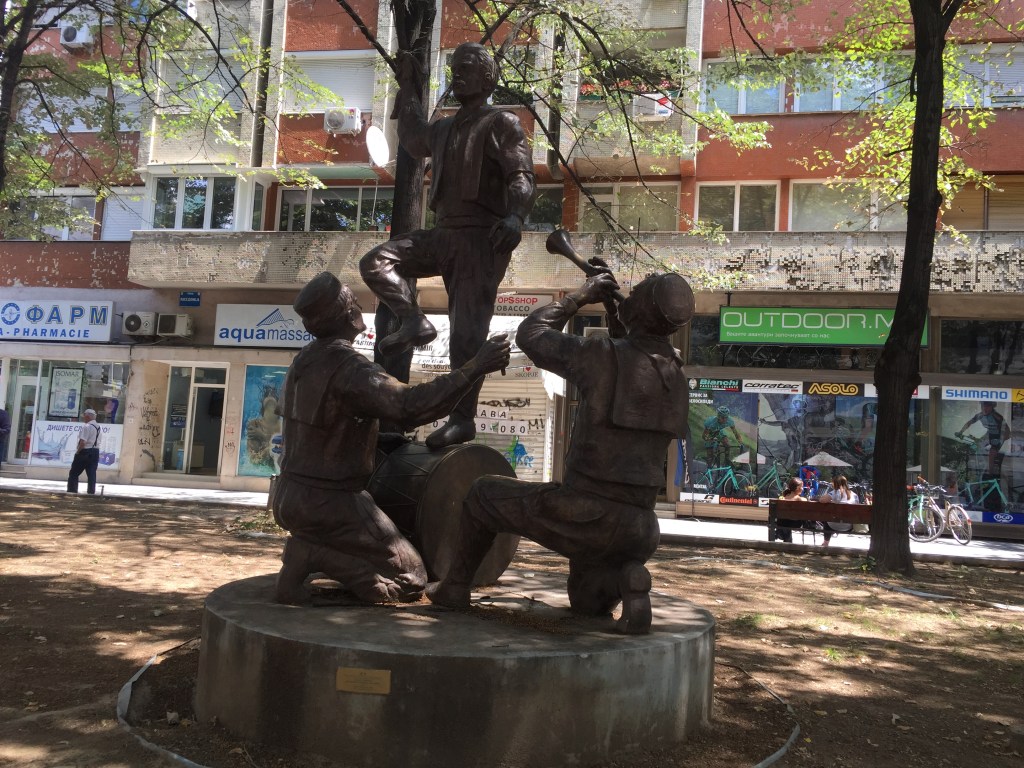
After the meeting with the curators, we took a stroll around the center of Skopje, which had been the focus of a major beautification project by the last federal administration. According to both Darko and Mihail, North Macedonia wasn’t that much different depending on who was in charge – rightists or leftists, nothing seemed to change very much. But about 10 years previously, with a right wing government running the show, the decision was made to beautify Skopje in order to attract more tourists. So, many statues were erected, the center was cleaned up and major hotels were encouraged to build. Mihail claims that not much has changed except that tens of millions of dollars were spent on this project that might have provided more economic opportunities for North Macedonians than the statues, fountains and hotels have done.

After an emotional visit here, we are heading to Greece for only a few days. We have to be in Paris on August 1st to drop off our rental car and head to Gothenburg to pick up the new car. In order to enjoy Italy on a more leisurely schedule, we are taking a ferry to Bari and then traveling north. We are hoping to come back to Greece (no car this time) from St. Rémy at a later date.

We are missing you all,

Donna, Sam & LuLu

July 12, 2019
Dubrovnik

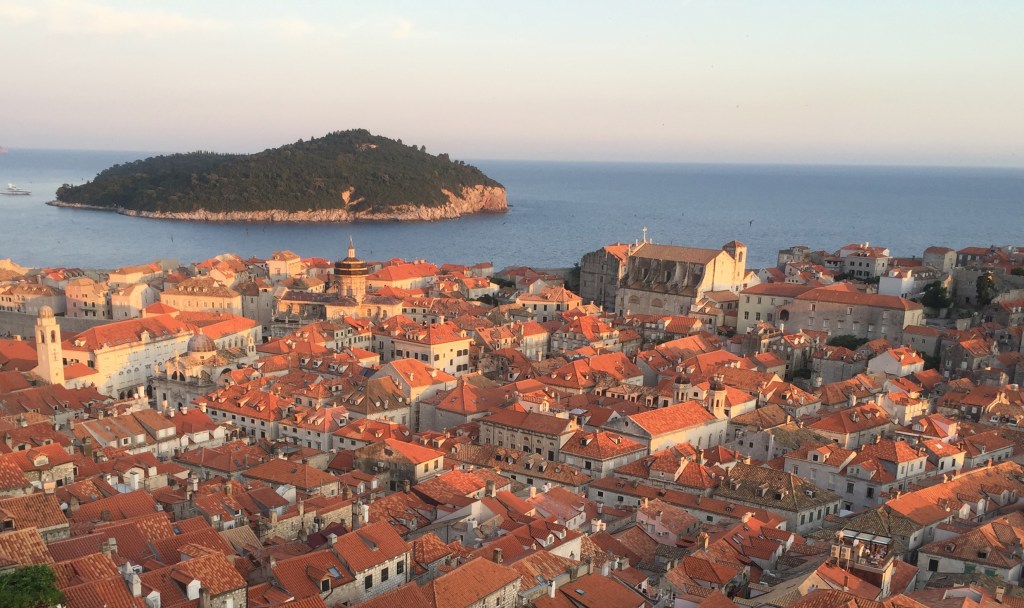
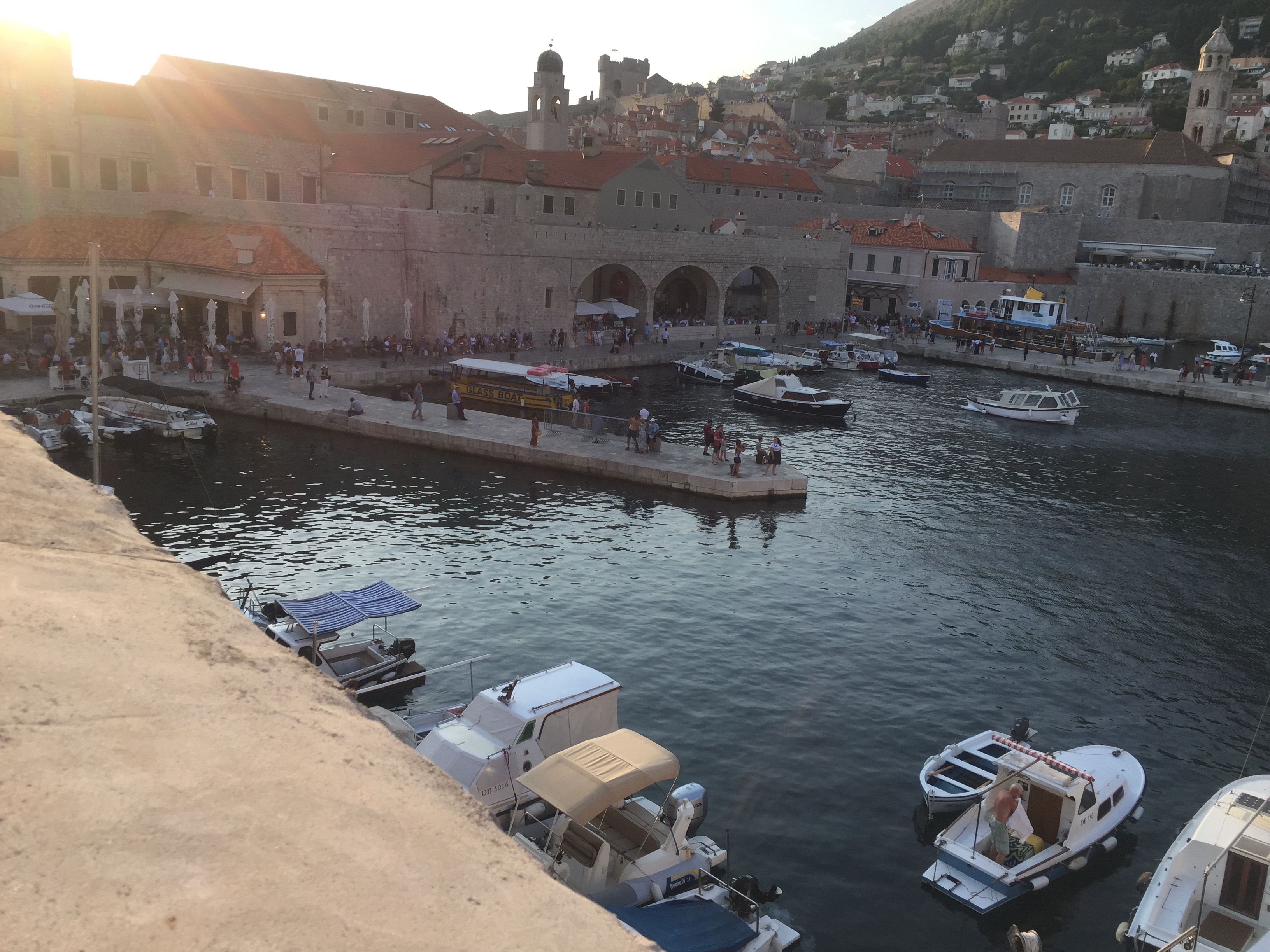
Dubrovnik was founded in the early 7th century CE by refugees fleeing the approaching barbarians. The prosperity of the city was historically based on maritime trade. As the capital of the maritime Republic of Ragusa, it achieved a high level of development, particularly during the 15th and 16th centuries, as it became notable for its wealth and skilled diplomacy.

Donna had been to Dubrovnik in 1973, and it held a special place in her heart. Seeing videos and photographs of destruction caused by the siege in 1991-92, during the Croatian War of Independence, had brought tears to her eyes. The grace and allure of this city is undeniable. So we were here with the hope that it had recovered its former glory.

It was an easy drive from Split to Dubrovnik, but upon arrival at our Airbnb flat, a nightmare began. Immediately upon entering the flat, Donna was struck with an overwhelming stench of mold. We waited for about a half an hour, to see if the smell would abate, but it didn’t. Donna began having a headache, which we worried could become a migraine, so we contacted the host to let them know we were leaving due to health concerns. Happily, we were able to locate another apartment at 9:00 PM and we settled in happily to the new place.

We filed a complaint and a request for a refund from Airbnb, but it was denied. They wanted a picture of the hazard. Smell-o-vision?

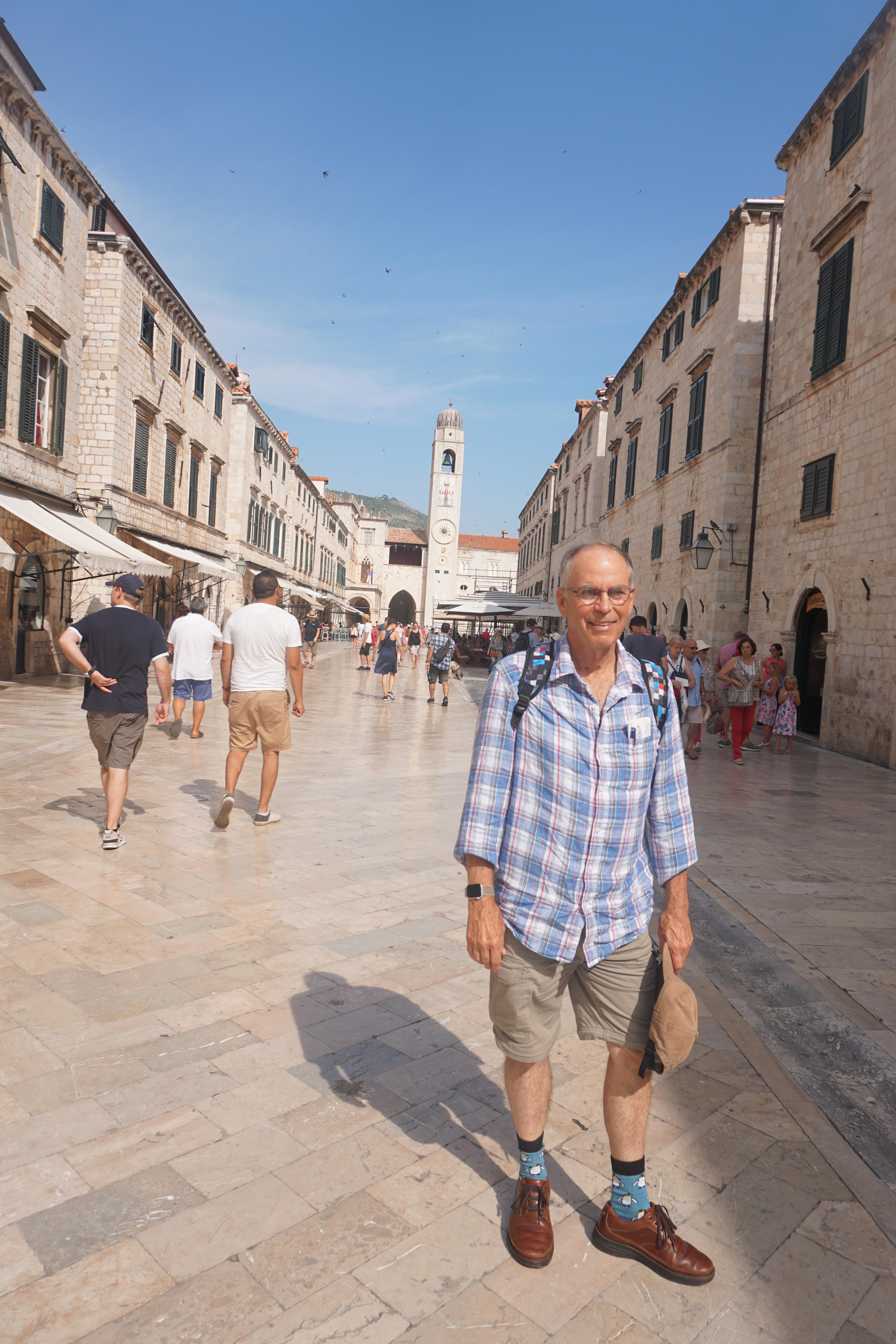
The new apartment was about 2 blocks away from a bus that went straight to the Old Town. BUT…no dogs on the bus. So we Uber’ed over and started our exploration of the beautiful old city. After a lovely lunch in a restaurant recommended by Shelley & Brian who had been there only a couple of weeks previously, we wandered around on this beautiful, old town.

One reason for some of the “over-touristing” that we have observed in Venice and here in Dubrovnik is cruise ships. The locals know the cruise ships schedules as well as they know their own names, because it affects them so directly in their daily lives. Bruno, our tour guide, could see both advantages and disadvantages to the swarms of folks descending from the ships. He said that they even come in the winter, which means his income is pretty steady all year round. We suppose the corollary of that is that it is congested all year round.

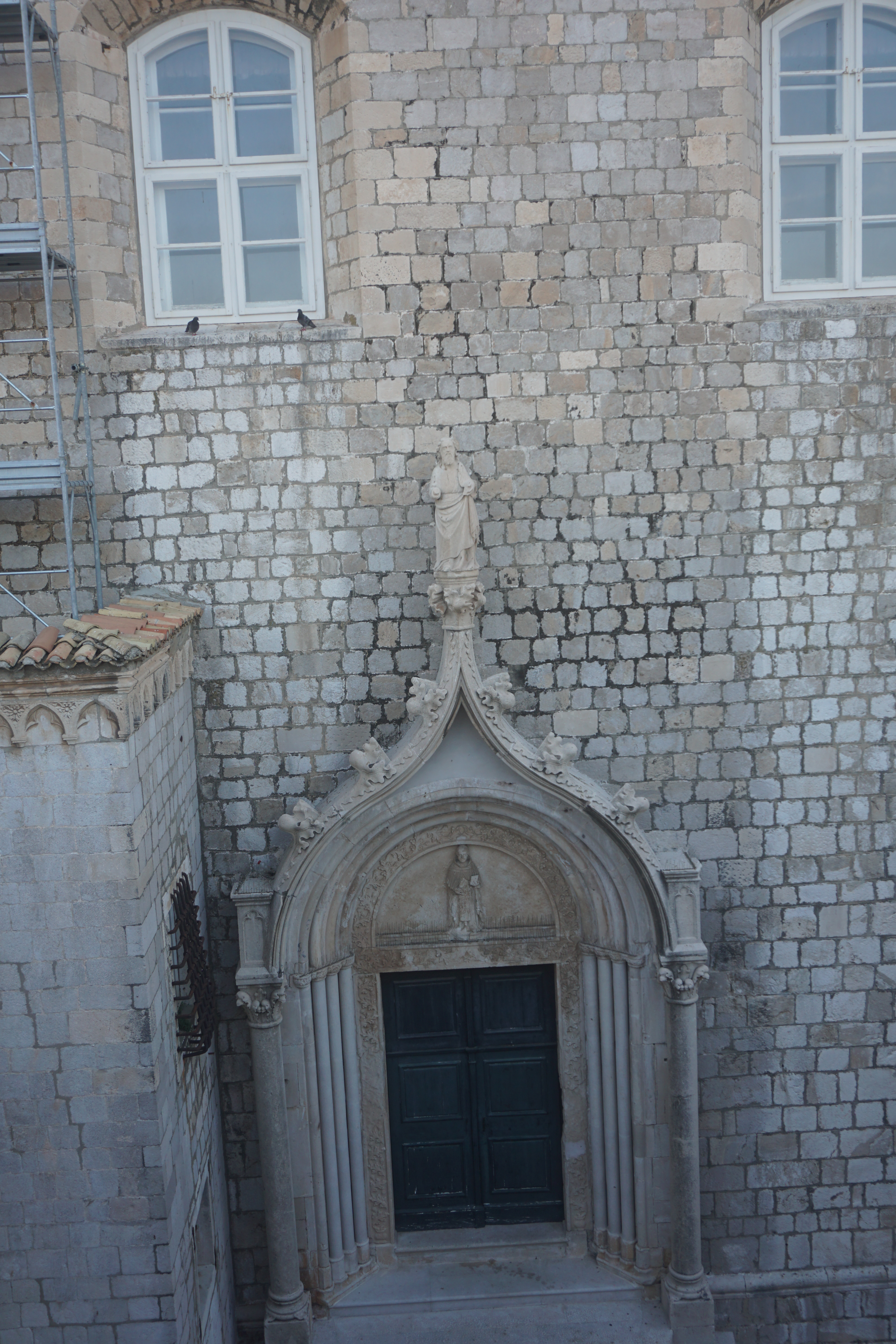
Based on the wonderful guided tour we took in Split, we decided to do that again. Bruno, our tour guide, was energetic and knowledgeable. He knew the history of the palaces, cathedrals and monasteries. For two hours we walked the wall of this ancient fortified city, awestruck by the views and the amazing architecture. Bruno also shared a bit of his personal life as a child of 6 or 7 during the siege of Dubrovnik by the Serbians in 1991-92. For him playing “war” with his cousin was easy. They would find spent shells and sneak into the armory. But if caught by his father or uncle, Big Trouble.

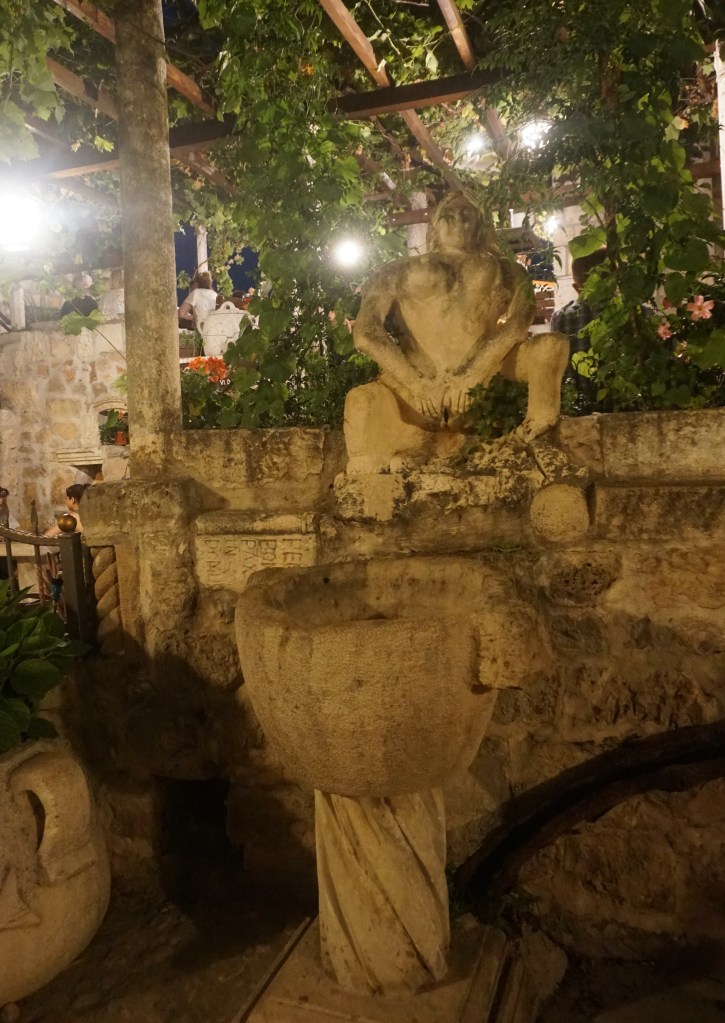
After the tour, we again wandered the narrow lanes, seeking a restaurant for dinner. Bruno had recommended Lady Pipi so we headed there. After climbing up about 8-10 steep flights of stone stairs we discovered a line of about 12-15 folks. The people at the head of the line said that it had taken them about 25 minutes to advance to the front, so, because the smell of grilled meats and fish was wafting out, we decided it was worth it. Waiting in line, we realized why the restaurant was named Lady Pipi:

Seated under a grape arbor (real grape vines), we ordered the grilled fish platter, containing sea bass, tuna and scampi. Very delicious! And worth the climb!

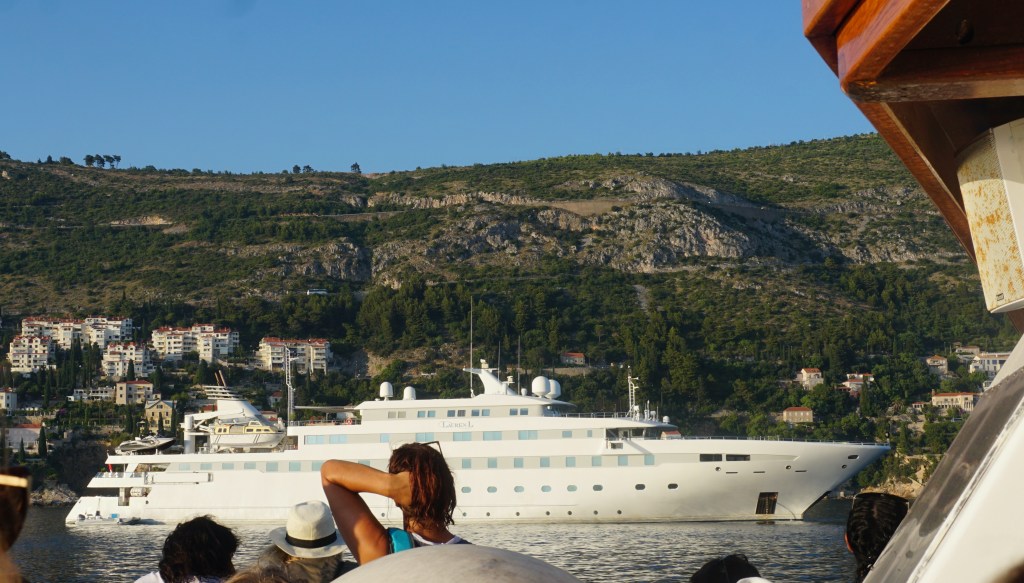
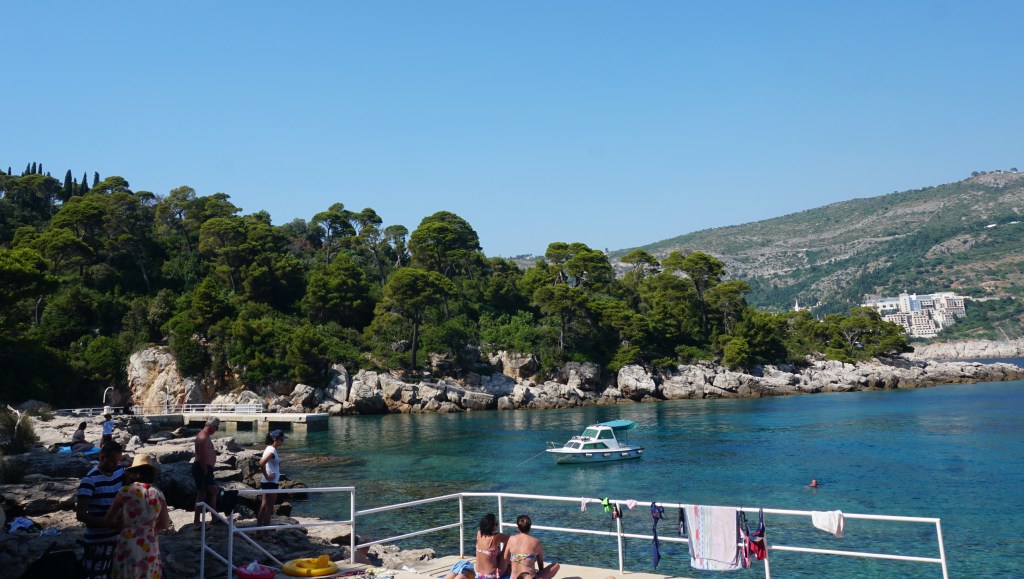
The next day after lunch, we decided to take the ferry to Lokrum Island, at the foot of the harbor. It is about a 10 minute ride out to the island and well worth it. There were mostly locals out for a family day at the beach. Again – a rocky pebbled shore edged the gorgeous teal Adriatic. We swam a little, read a little, napped a little, watched Nature in action as a mother pheasant was intent on disowning one of her chicks!

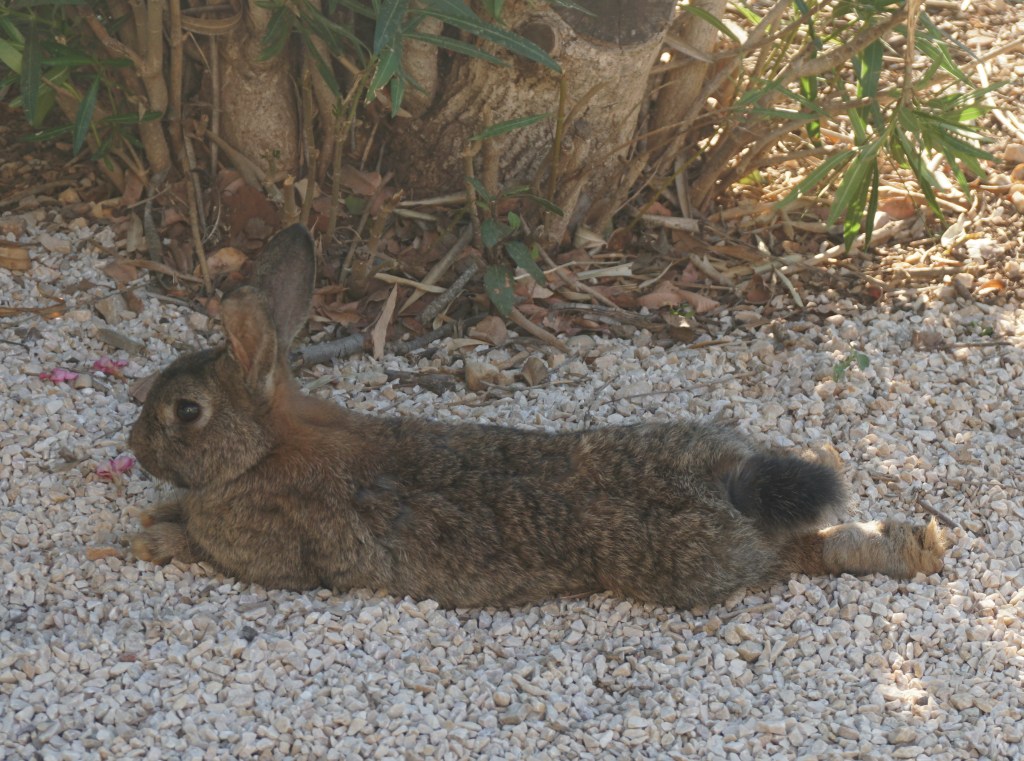
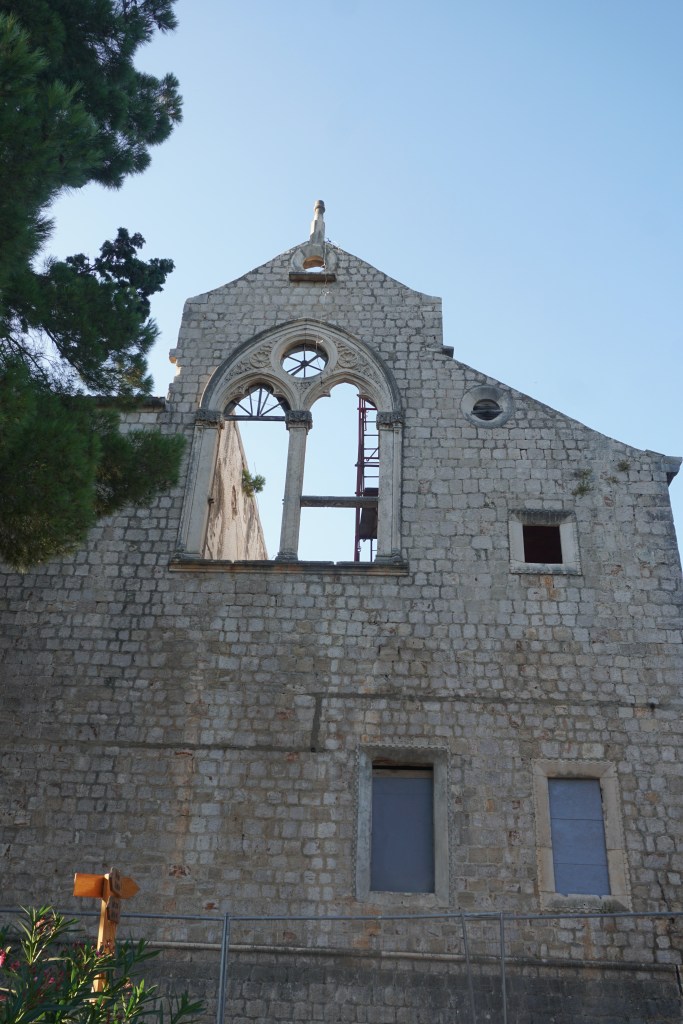
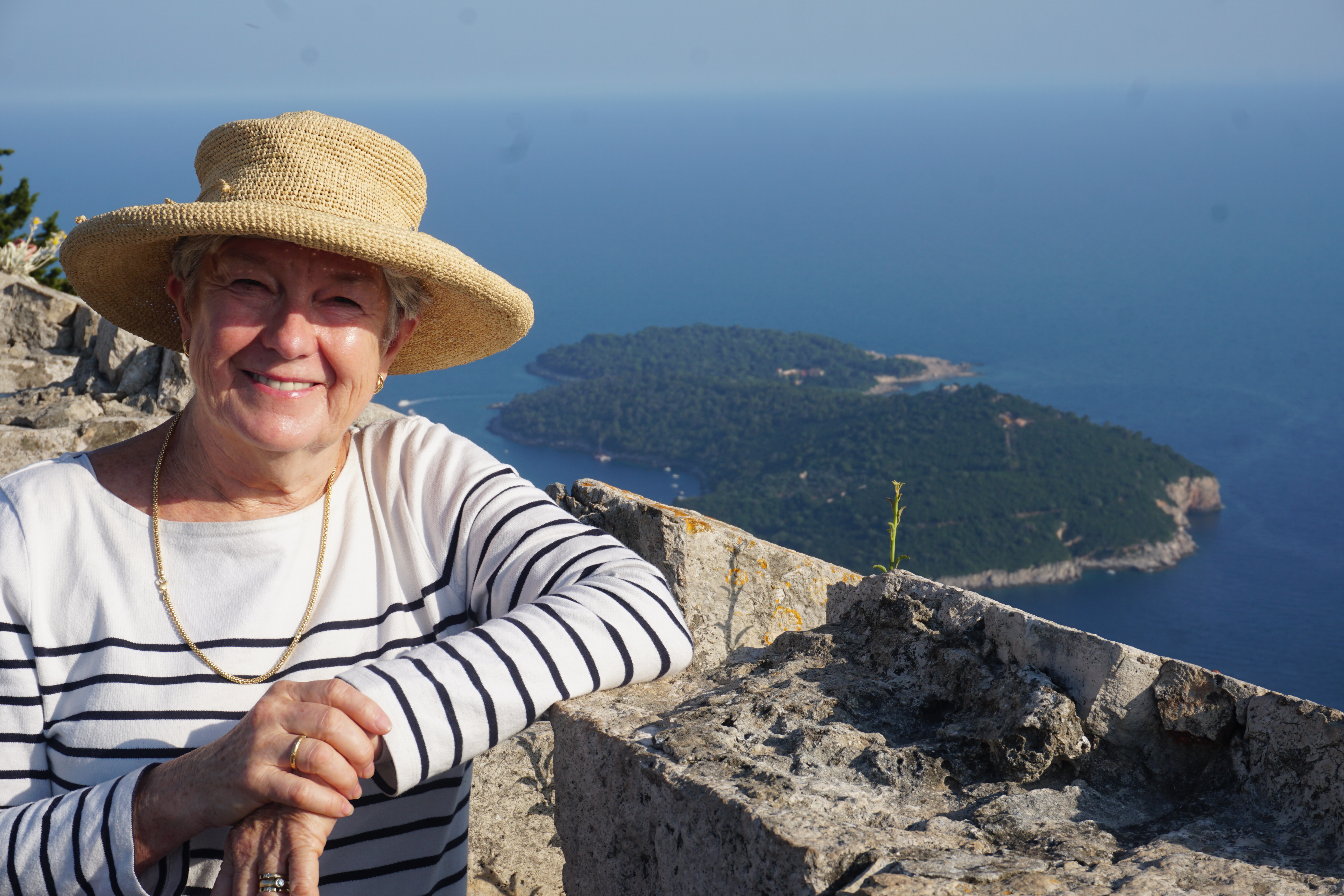
But before we got back on the ferry to return to Dubrovnik, we decided to explore the island a bit. It is home to the ruins of a Benedictine abbey and monastery. It is also a nature preserve due to an unusual variety of plants and animals brought from distant shores by sailors in gratitude for their safe journeys. There are peacocks roaming the island and the tamest rabbits you’ve ever seen, with apparently no fear of humans. Near the monastery there is also a small lake named the Dead Sea due to its high salt content. Today the grounds of the monastery have been transformed into a cafe & bar with a solid cocktail menu. You can sit under umbrealls and watch the sea. But watch the time! the last ferry leaves at 8:00 and no one is allowed to stay on the island.

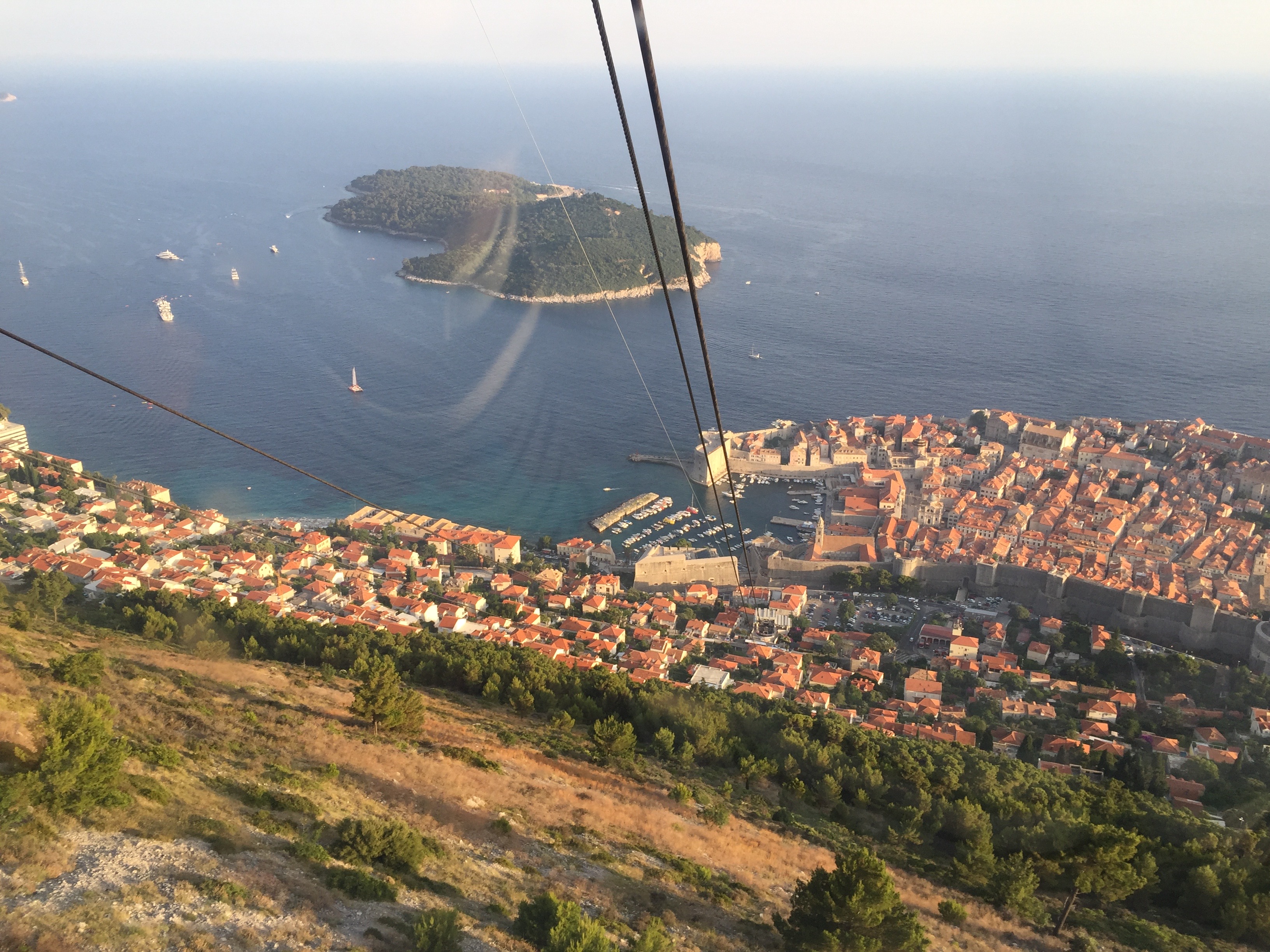
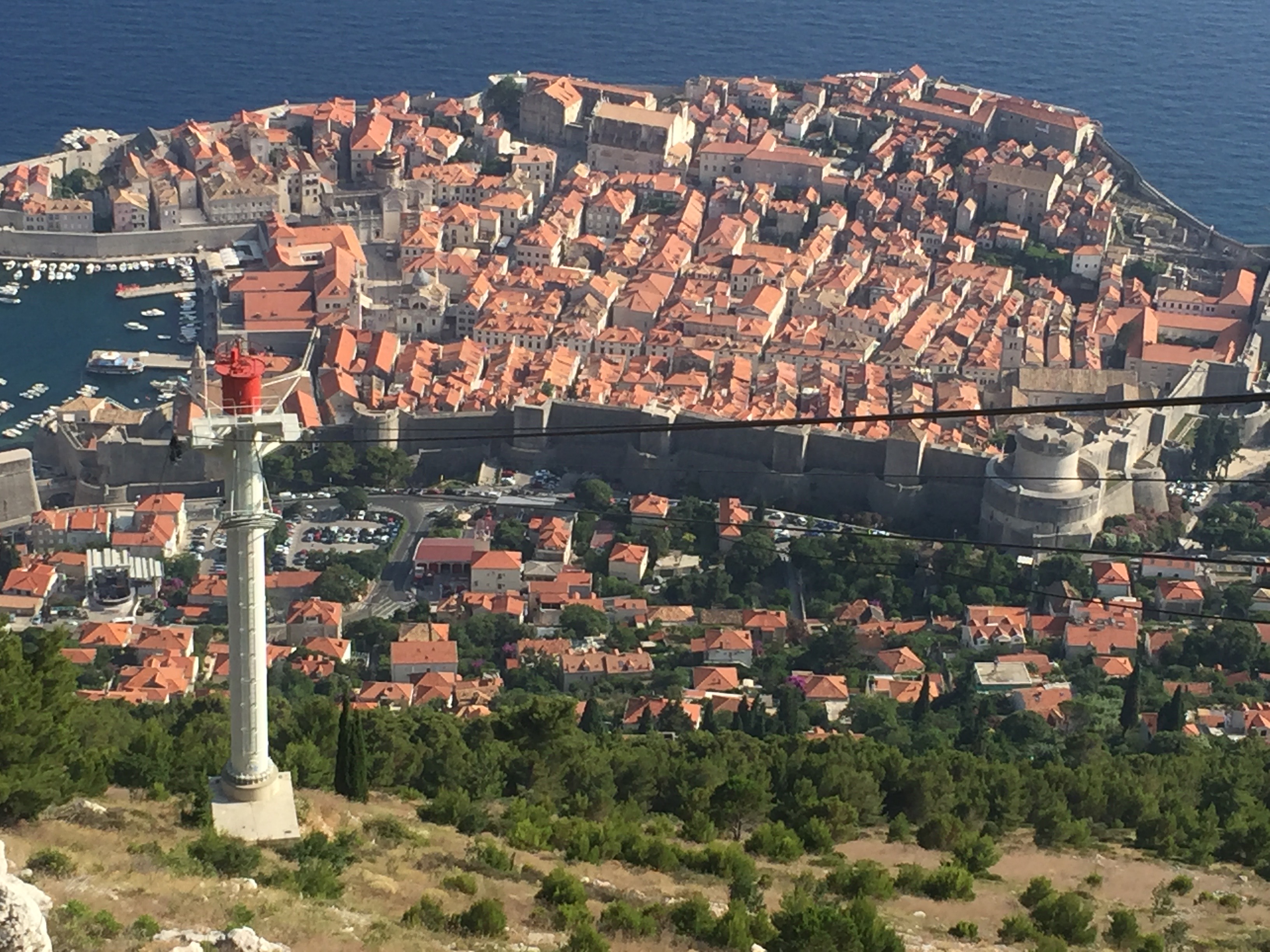
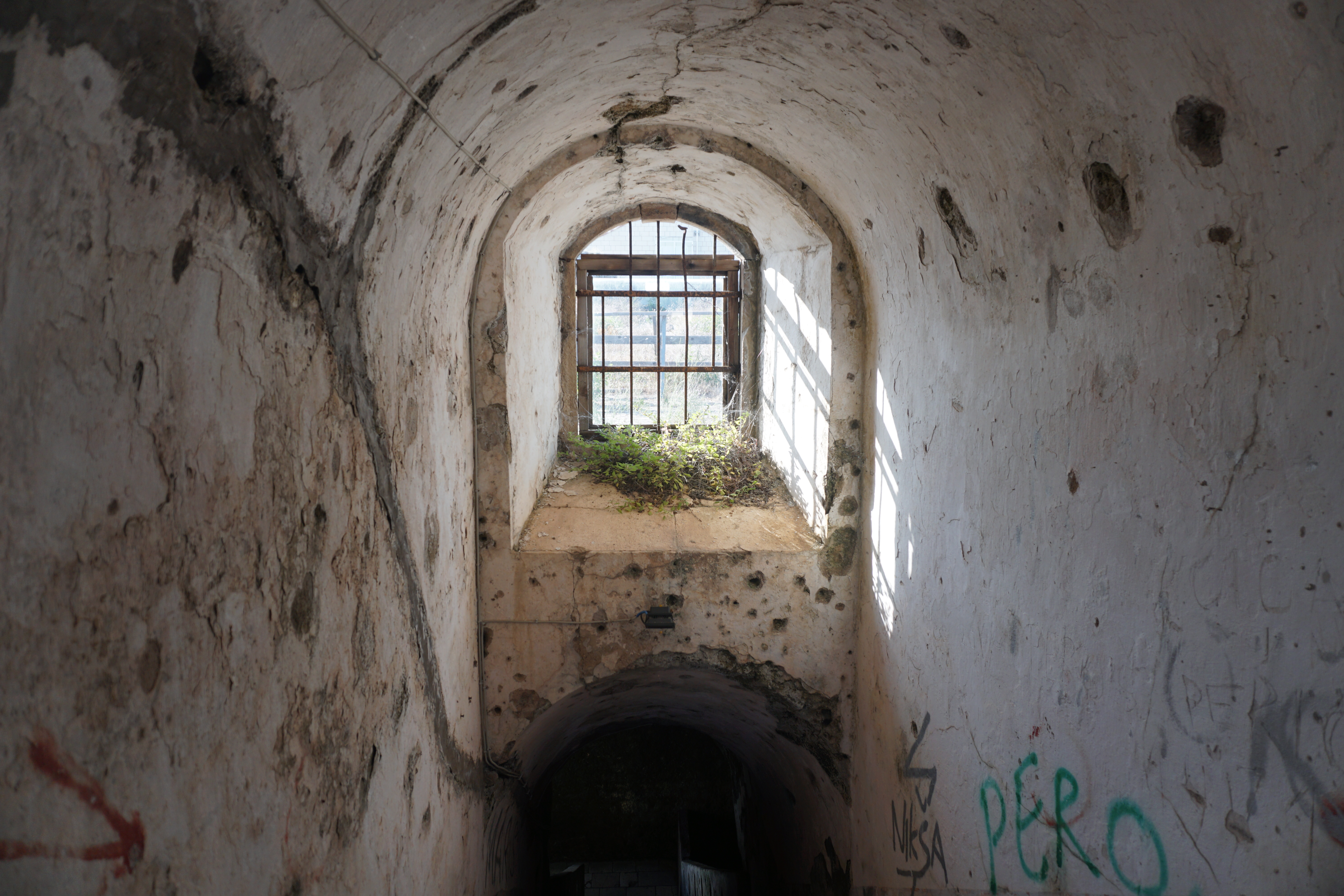
Our last day in Dubrovnik we decided to take the cable car to the top of Mt. Srd to visit the Homeland War museum. The museum is located in the ground floor of the Imperial Fort, built between 1806 and 1812 by Napoleon I’s troops. The exhibit consists of documents, art and documentary photographs, weapons, mines and explosive devices, war maps, parts of military equipment, authentic recordings, video materials, mine fields maps and war log books. Most of the exhibits were in English as well as Croatian, which was beneficial. There was also a contemporaneous BBC video being shown which documented the dreadful conditions that the citizens of Dubrovnik experienced during the siege by the Serbians in December 1991 to December 1992. Dubrovnik was under siege for eight months… so no water, no electricity, no food, no medicine. About 70% of the town experienced damage, including destruction, from the sustained bombing. At the time, reconstruction was estimated to be over $10 million. Due to gross disorganization within the Croatian military and total lack of preparedness, Dubrovnik very nearly fell to the Serbians. Happily, that did not happen. The Old Town has been restored and remains the jewel of the Adriatic that it is.

After the tour, we had drinks on the terrace overlooking a spectacular view of the Old Town, Lokrum Island and the glorious Adriatic. And then it was home to prepare for the next leg of our journey.

We are on our way to Skopje, North Macedonia, to find the final resting place of Sam’s sister, Nancy Hamilton Harrison. She perished in Skopje on July 26, 1963, while staying for one night on her way to Greece with George Scriabin, her fiancé. Sam has never been there, so it will be a bittersweet moment for us.

Missing you all,

Sam, Donna & LuLu

July 7, 2019
We Split for the Dalmatian Coast!

Our eventual goal on this leg of our journey, is Skopje, in North Macedonia. So we decided to cruise down the Dalmatian Coast, do some sightseeing and some chillin’ on the beach prior to cutting across Albania, Bosnia-Herzegovina and Kosovo to get to Macedonia. Split was the first stop on this itinerary.

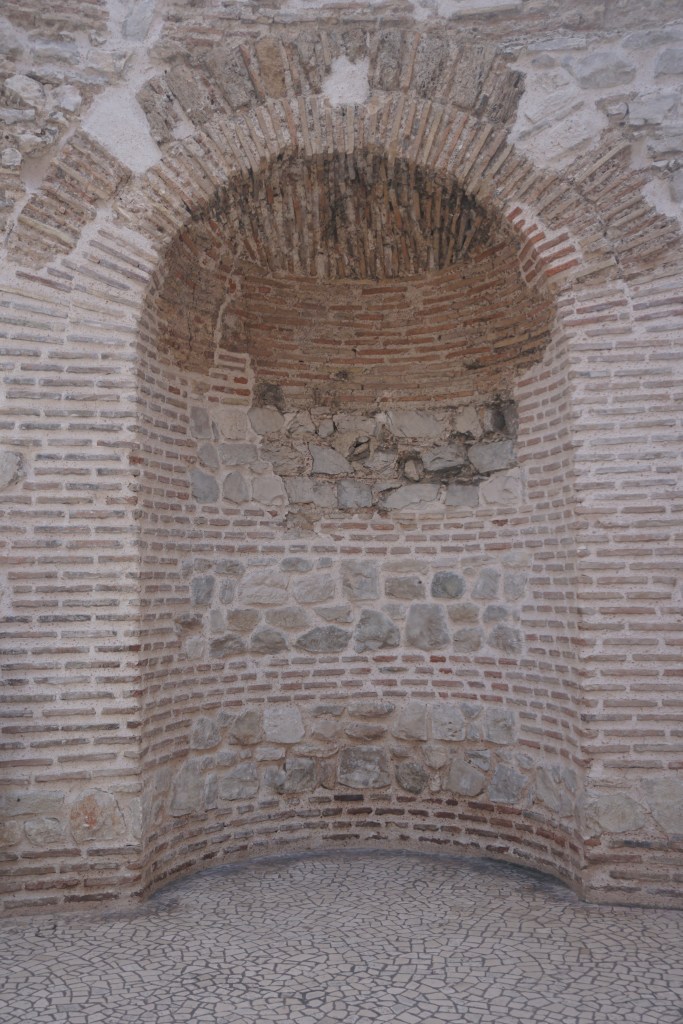
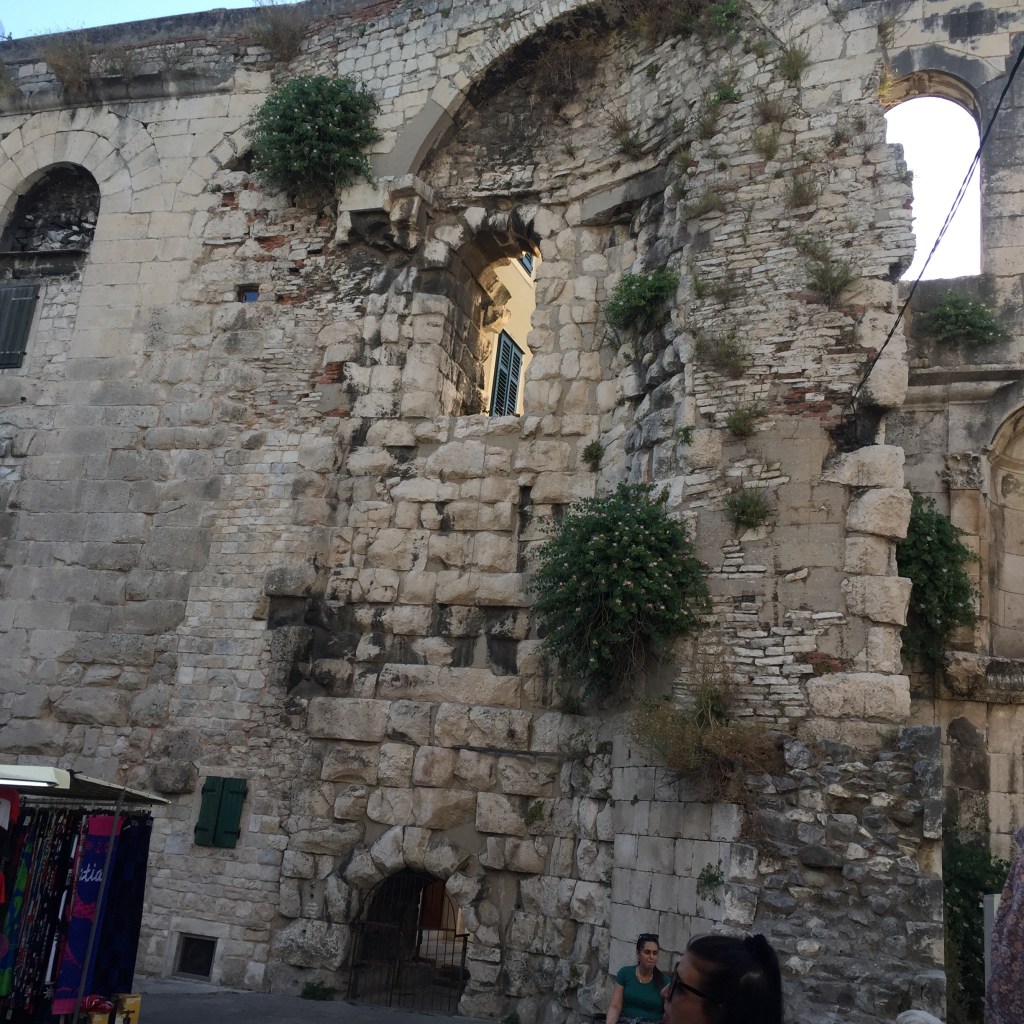
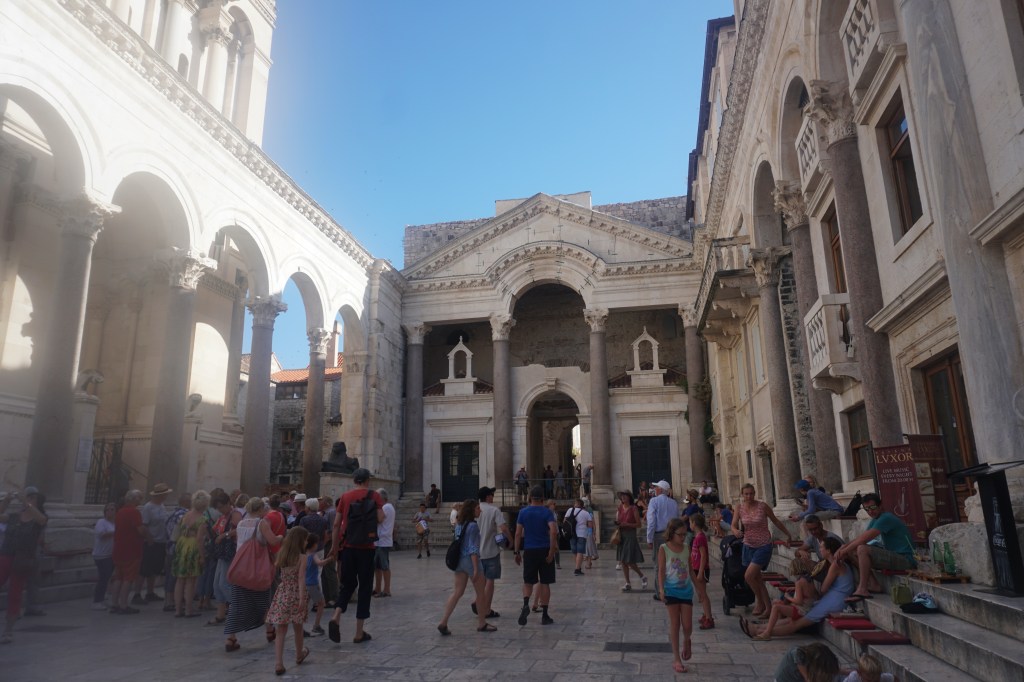
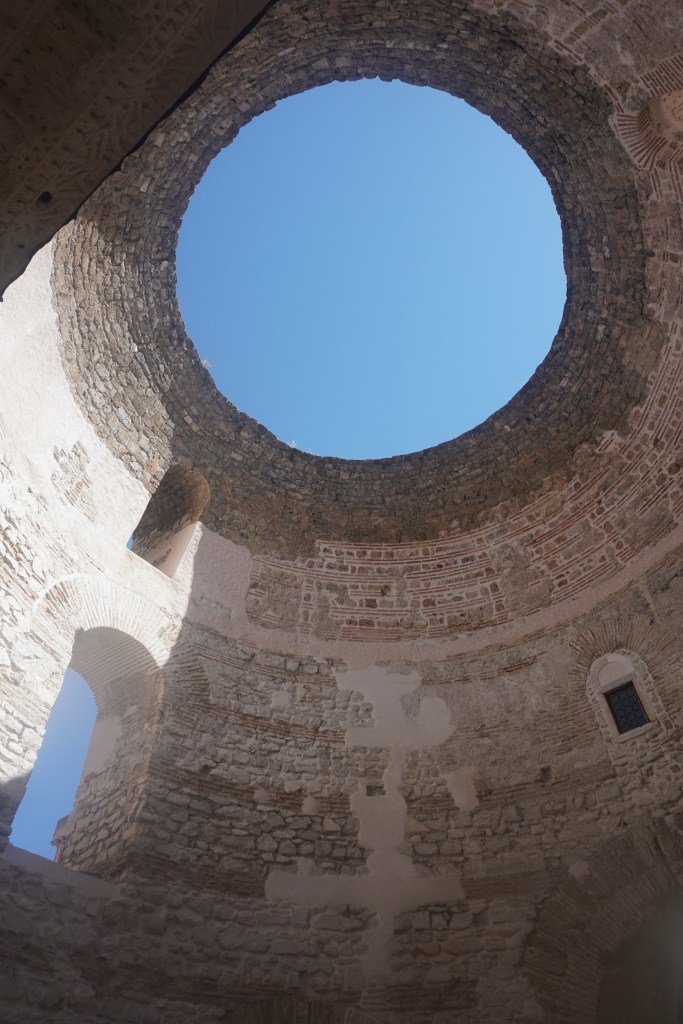
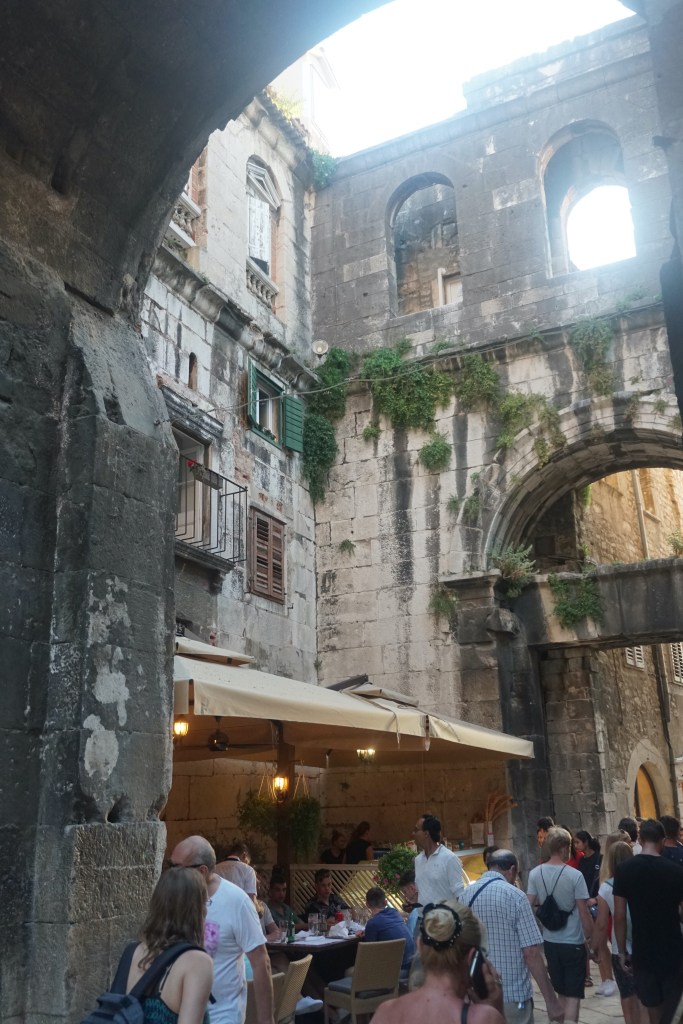
Split, Croatia, on the Dalmatian Coast, is a prime tourist destination. It is the second largest city in Croatia after Zagreb, the capital. For two millennia, it has been a major strategic outpost for its rulers – Greeks, Romans, Venetians, Hungarians, Austrians, Napoleon I… The list goes on. In the late 3rd and early 4th Century CE, Diocletian, a Roman emperor from 284 to 305, chose to build his retirement home in Split. Just a modest little bungalow? No! The Palace forms about half of the old town of Split. Half was for his personal use (about 91,500 square feet) and half was a well armed fortress. By Medieval times, small churches, residences and family palaces were build inside the walls. But the original layout of the Palace still exists. Today these spaces are home to souvenir and jewlery shops, restaurants and tourist accommodations. Despite these many transitions, Diocletian’s palace remains one of the most well preserved ancient buildings and has been declared a UNESCO World Heritage Site.

As we’ve mentioned, we’re using Airbnb exclusively so far to find our housing. And so far, so good. This time the address we were given was not where we ended up staying and there was about an hour of calling and waiting and looking for parking (and dealing with a really cranky guy yelling in Croatian) before we got into our apartment. That made for a grouchy evening. But by the next day, tranquility had prevailed, we had settled in, the car was parked for the duration of our stay, and we were able able to walk anywhere we wanted to go. Except to the beach, and then we took an Uber. (No Lyft available in Croatia.)

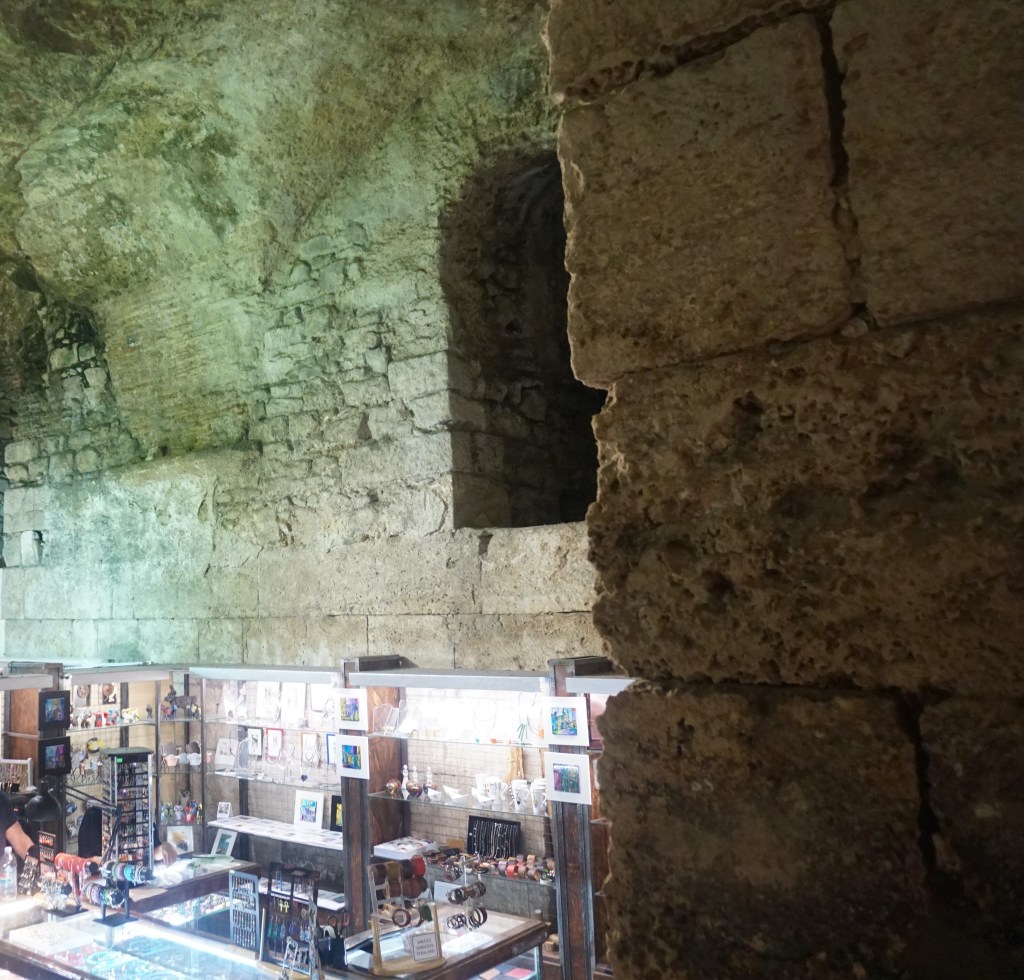
The first day, we spent walking around Diocletian’s Palace. We were still experiencing heat in the high 80’s and low 90’s, so this was an exercise in stamina for us. And for LuLu. The coolest place in the palace was the lower level which previously held one of the baths, but now contains shop after shop of souvenirs – something for everyone!

After walking about and gawking for a couple of hours, we decided to take a guided walk with a very knowledgeable guide. The Palace is a lesson in 17 centuries of architecture. From Roman to the Middle Ages to the Renaissance, there is an example of every era in this building. Pagan temples to Christian churches, all nestled in together. Clearly, Diocletian and his architects designed a proper imperial palace, with reception spaces, dining rooms, private apartments and so on. A tremendous amount of restoration has taken place and it continues apace. The mausoleum is currently under reconstruction.

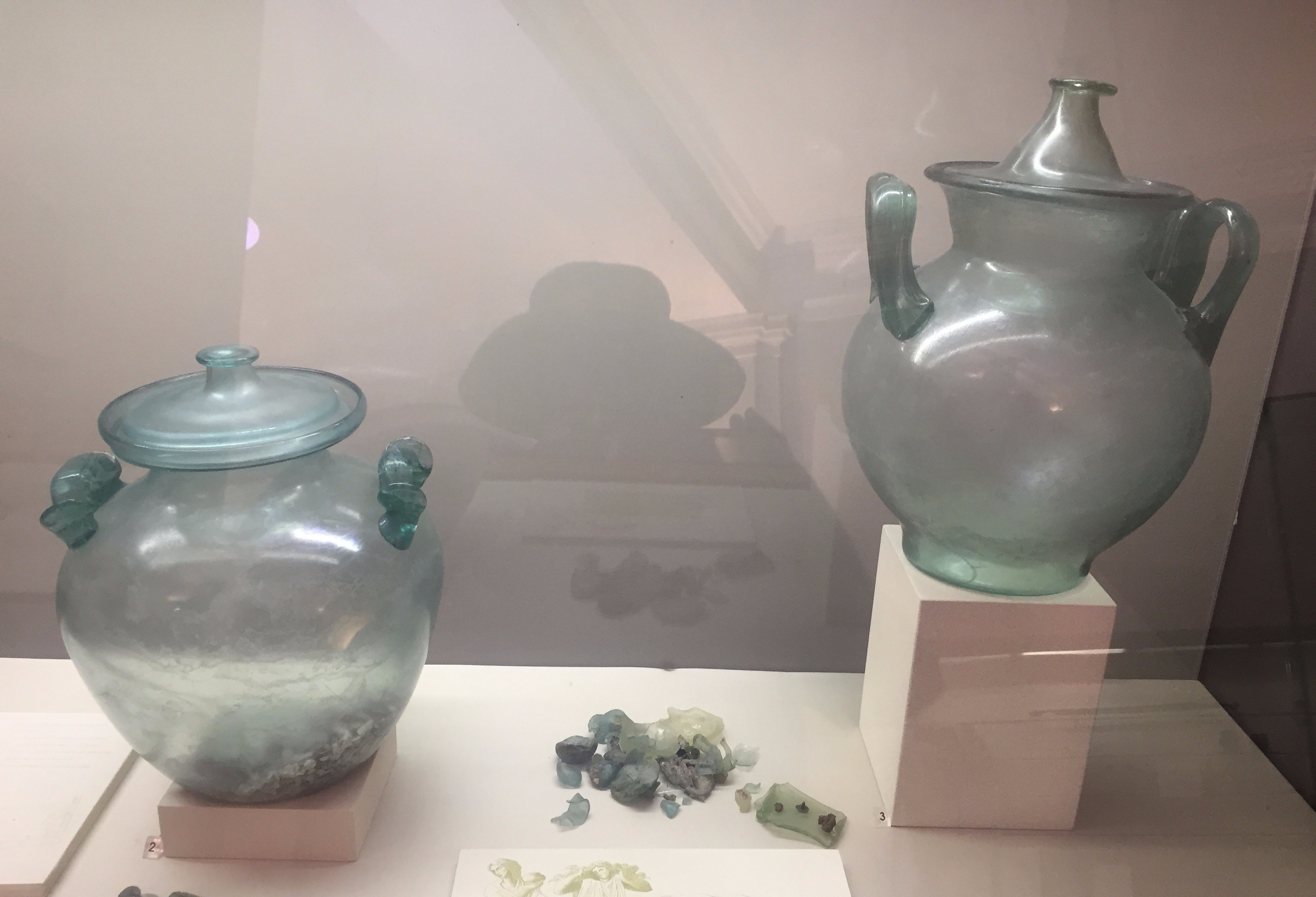
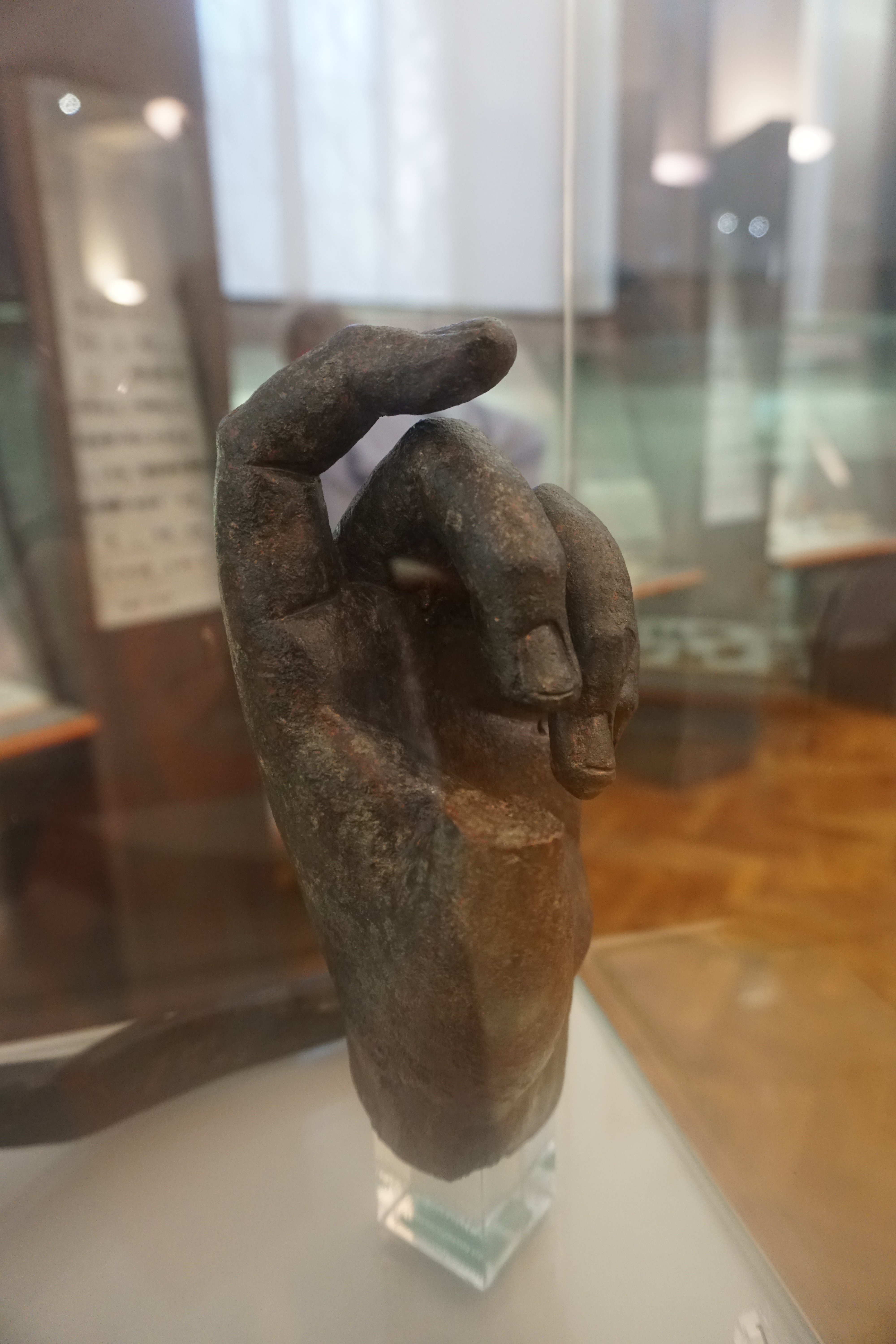
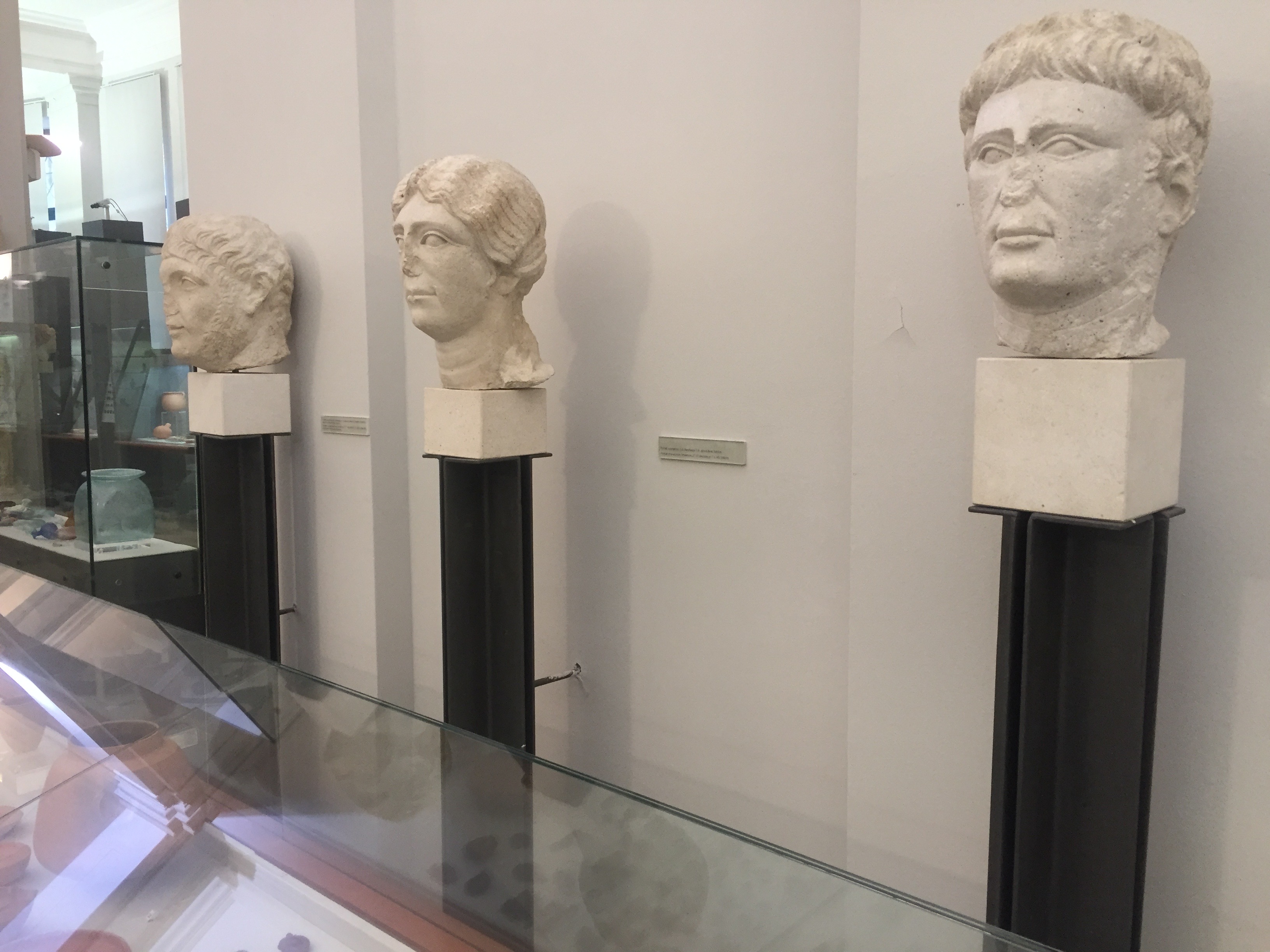
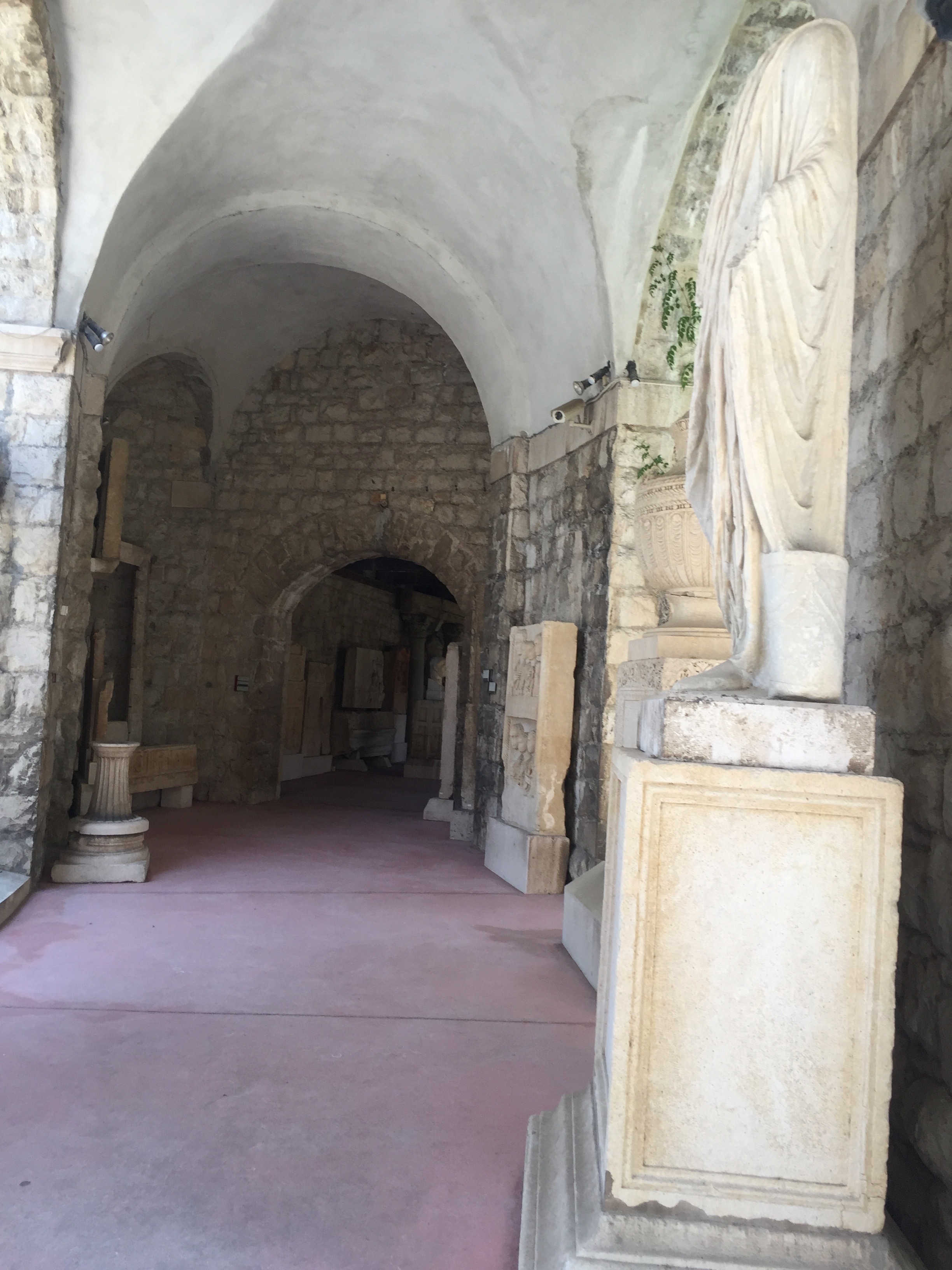
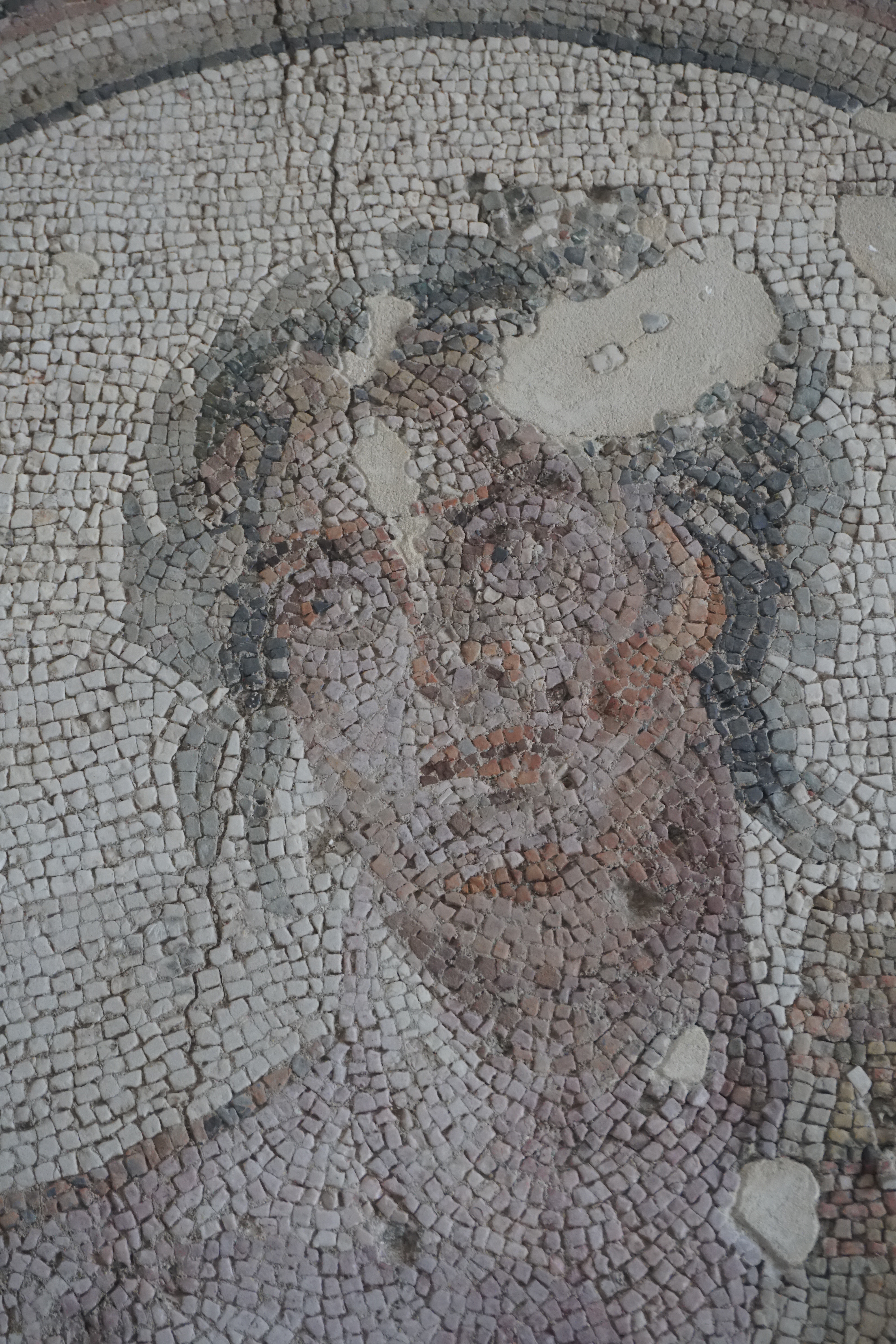
The next morning, we went to the Archeological Museum, which was just a few blocks from our flat. It’s a small museum, just one floor containing small items, with some larger pieces in the surrounding gardens. The first case was almost the most amazing. Glass pieces from the 1st and second centuries CE! We don’t even have glassware from 10 years ago! The glass jugs were multi-purpose, used in the kitchen until they were needed to hold cremains! The small Shmoo-shaped bottles are unguentariums, specifically for potions. Outside, loggias are filled with statues, sarcophagi and large mosaic portraits. Including a mosaic that could have ben entitled “Joan Crawford was here”

After lunch, we decided to hit the beach. And it was glorious! The water was clear and Coke bottle green near the pebbled shore and turned dark teal farther out. Cool and refreshing, we bobbed in the gentle waves, while heartier folks practiced their water polo strategy. It was a great relaxing break and reminded us that we ARE on vacation and not professional sightseers! There we go again, giving up another (semi-)professional discovery!

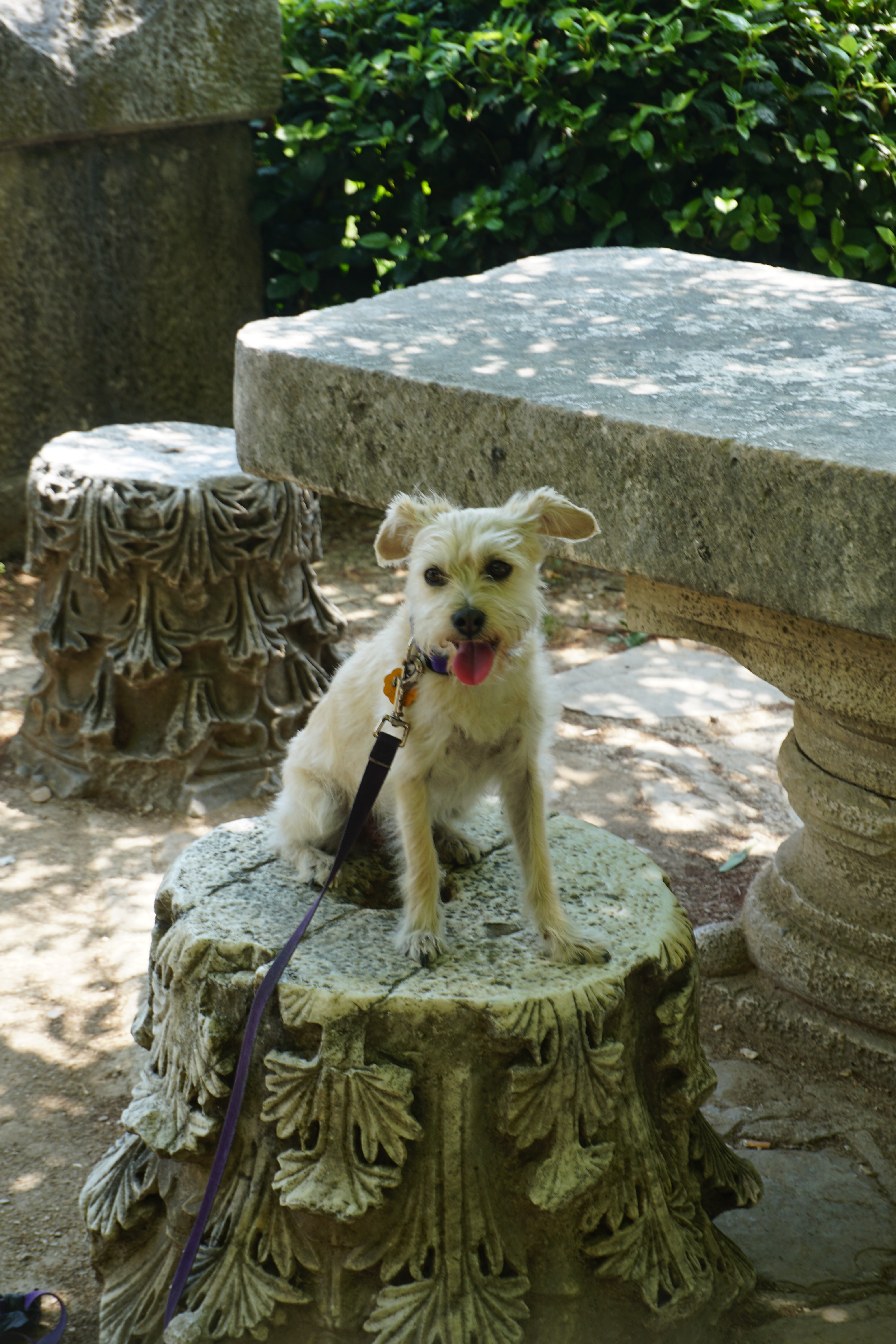
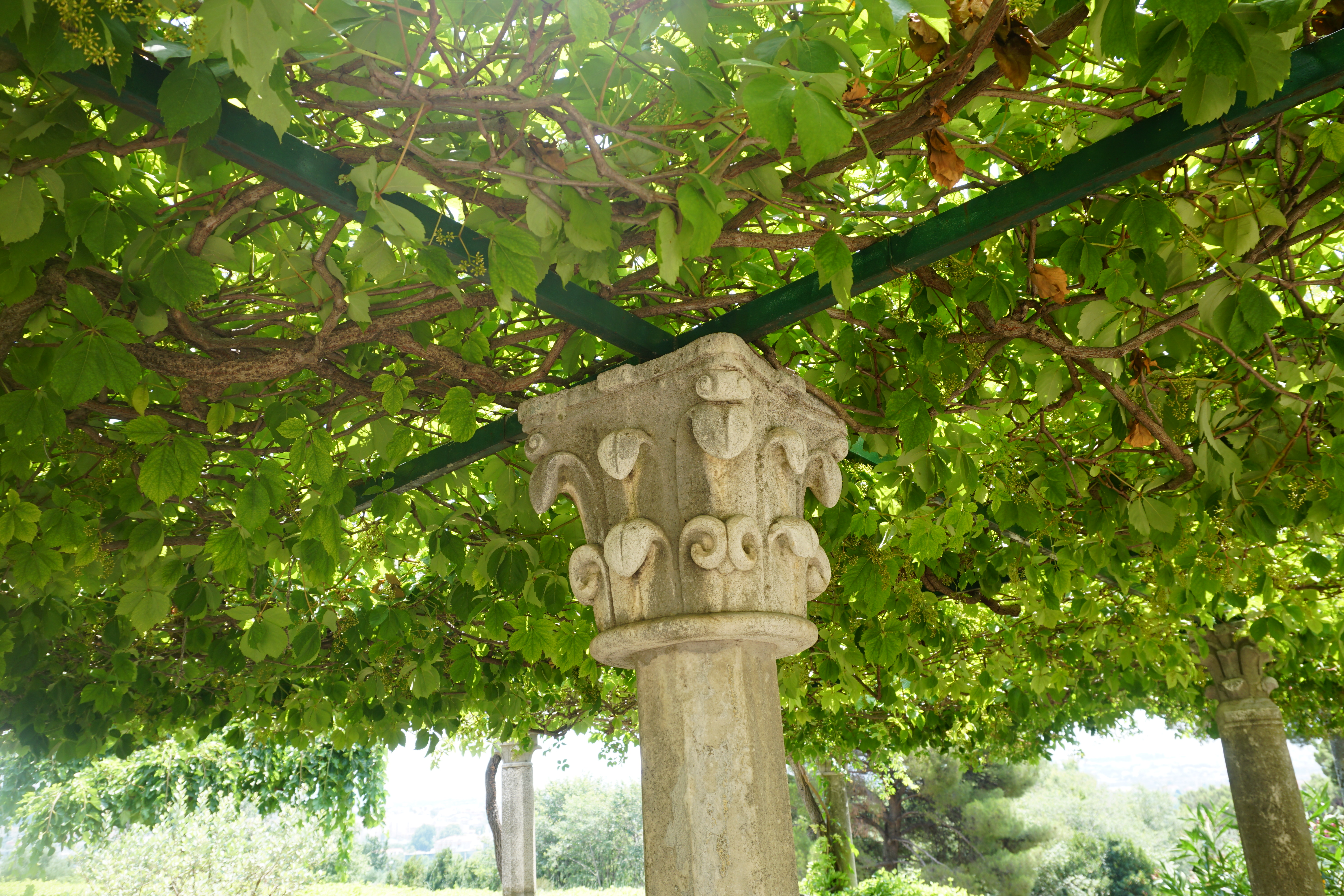
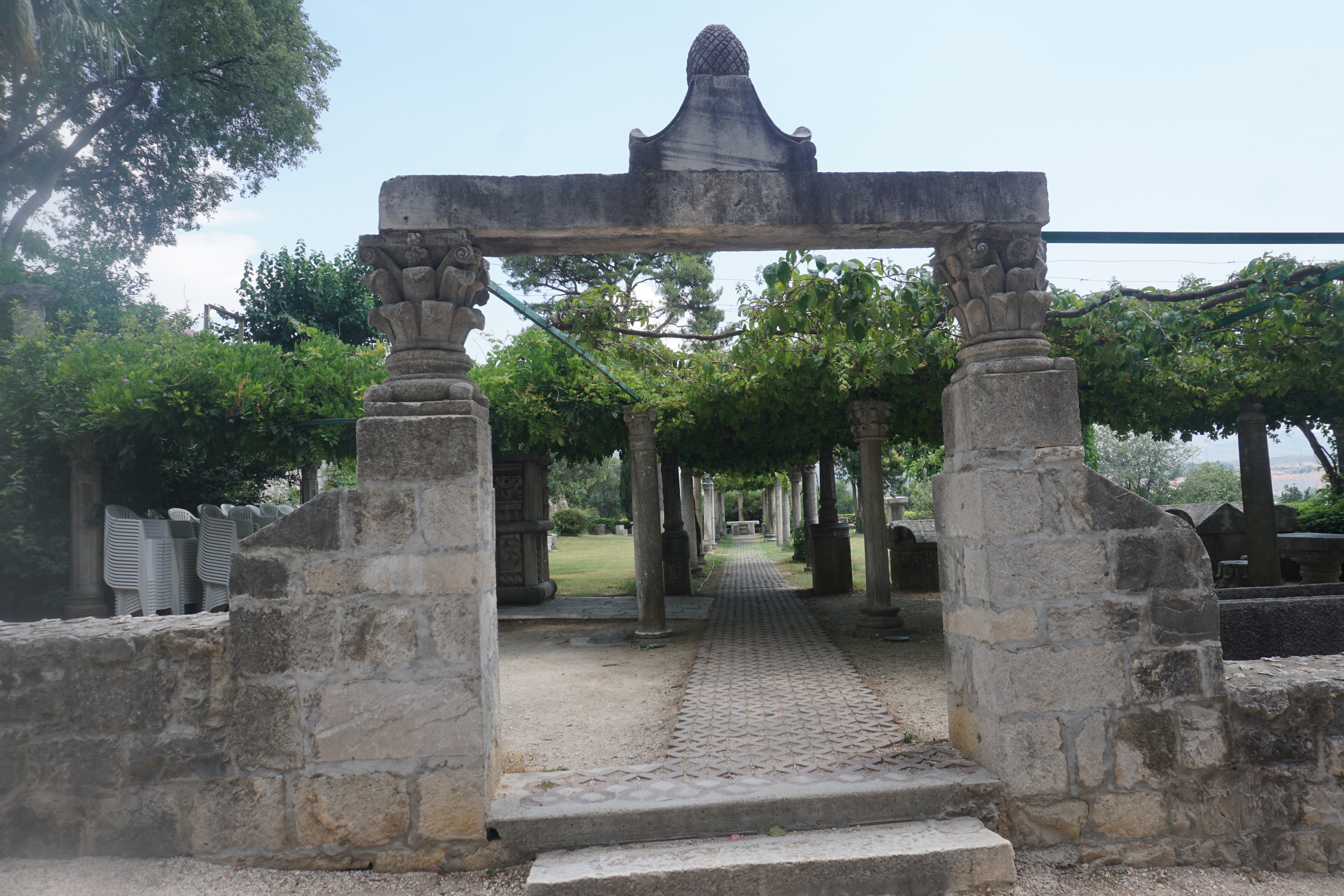
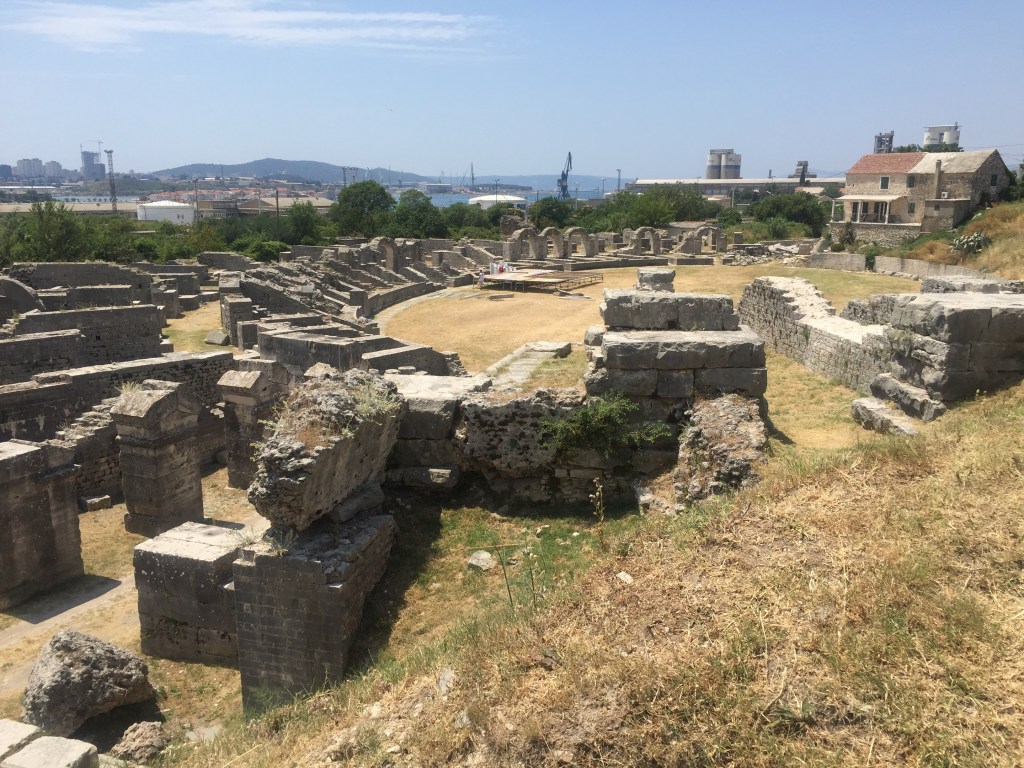
The next day, in the scorching heat of the day, we drove about 3.5 km over to Salona, previously the capital of the Roman province of Dalmatia. Today it is an archeological site, with ruins of a settlement, temples, baths, aqueducts, cemeteries and an amphitheater. We saw a collection of capitals at the headquarters of Monsignor Frane Bulić, the archaeologist who discovered and worked to reveal the site. Every capital, whether it’s a podium for LuLu or supporting a trellis is a different style! A long, stone-lined trench contained an uncounted number of sarcophagi.

From here we are headed to Dubrovnik, another over-touristed town, and again, one that is difficult to pass up. We will try to tread lightly.

Sending our love to you all,

Sam, Donna & LuLu

July 4th, 2019
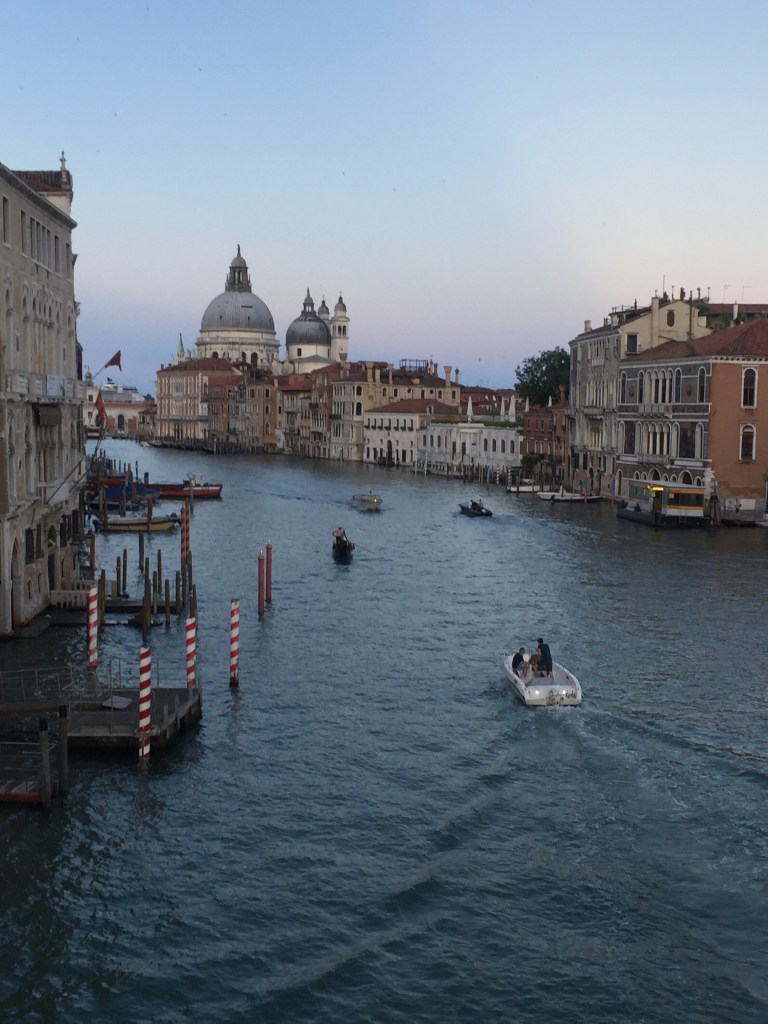
What Can You Say About Venice?

Well, to start with, it is CHOCK-A-BLOCK with tourists! And Venice was the first place we have been to on this trip where we heard a lot of English being spoken. There were other languages as well, including a lot of Italian. But perhaps 50% of the folks we observed (or heard) spoke English.

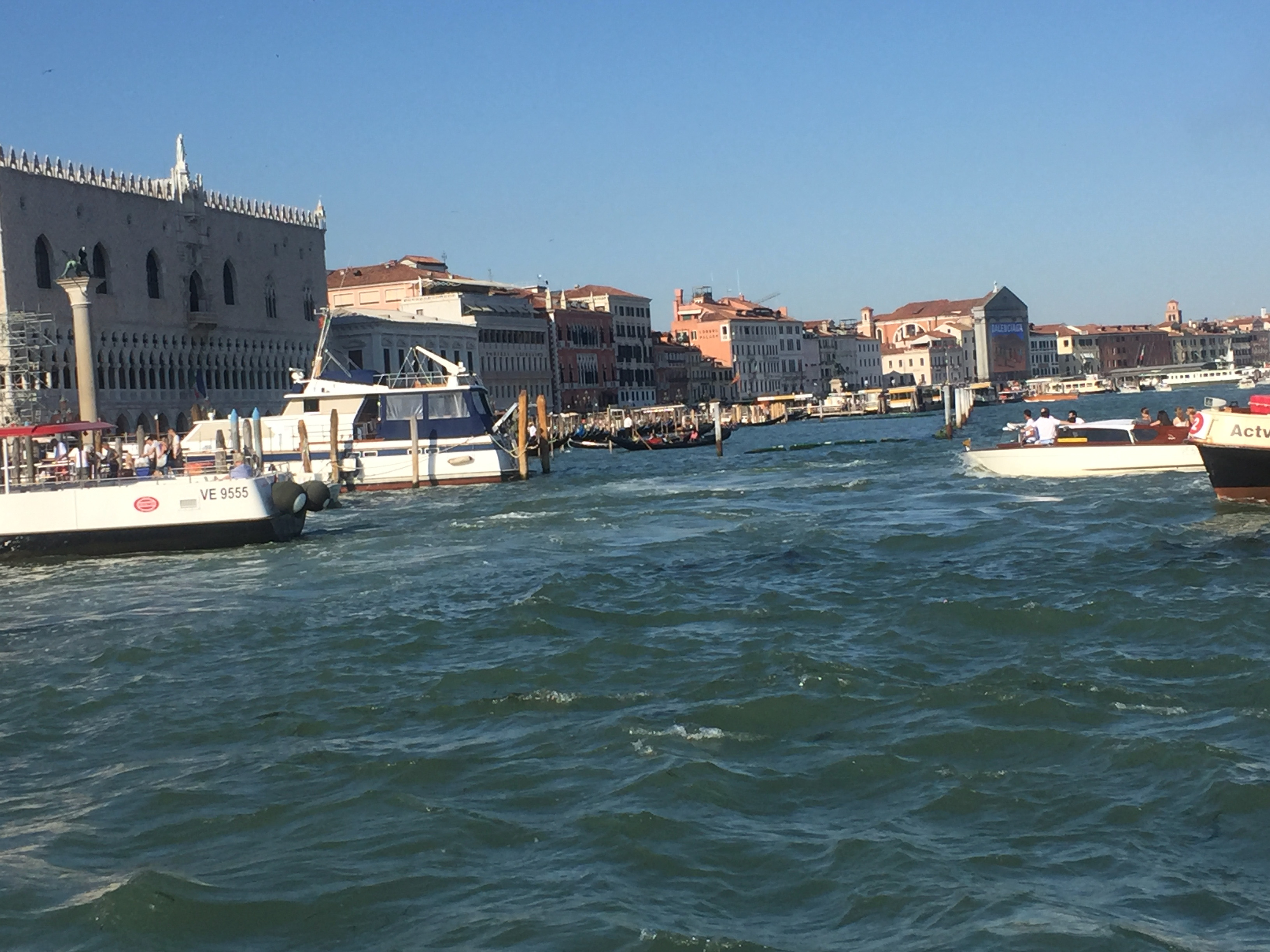
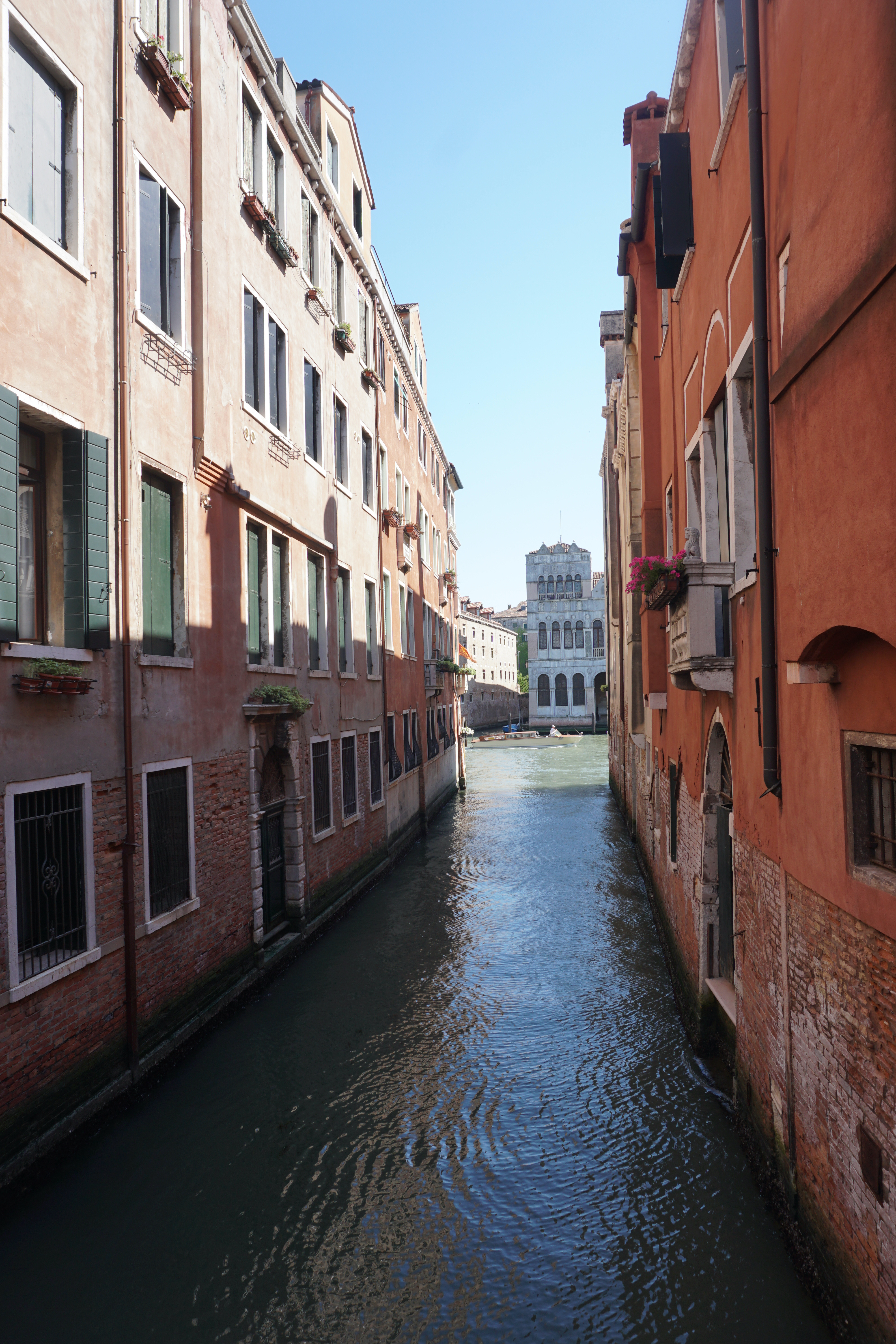
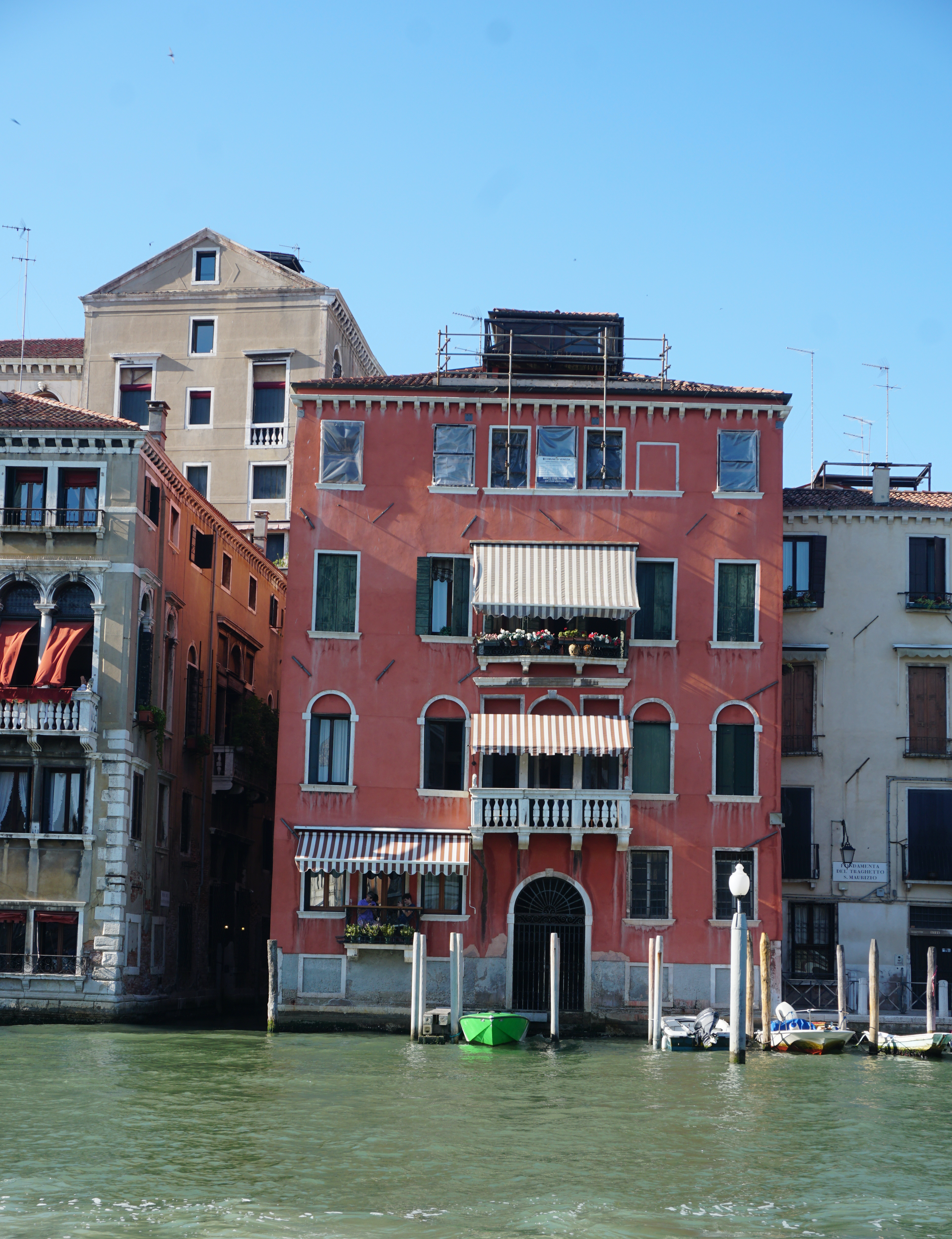
Venice is a Floating City, built on more than 100 small islands. However the buildings are not actually built on the islands. They were constructed on wooden platforms atop wooden stakes driven into the ground. Frequent flooding has always been a problem due to the fact that the city has sunk five inches in the last century. But climate change, rising sea levels and huge cruise ships – with huge water displacement and engine vibrations – put the city at even more risk. Much engineering work is being undertaken to save this unique city.

However, despite the crowds and the heat and the humidity, Venice remains her seductive self, a not-to-be-missed experience.

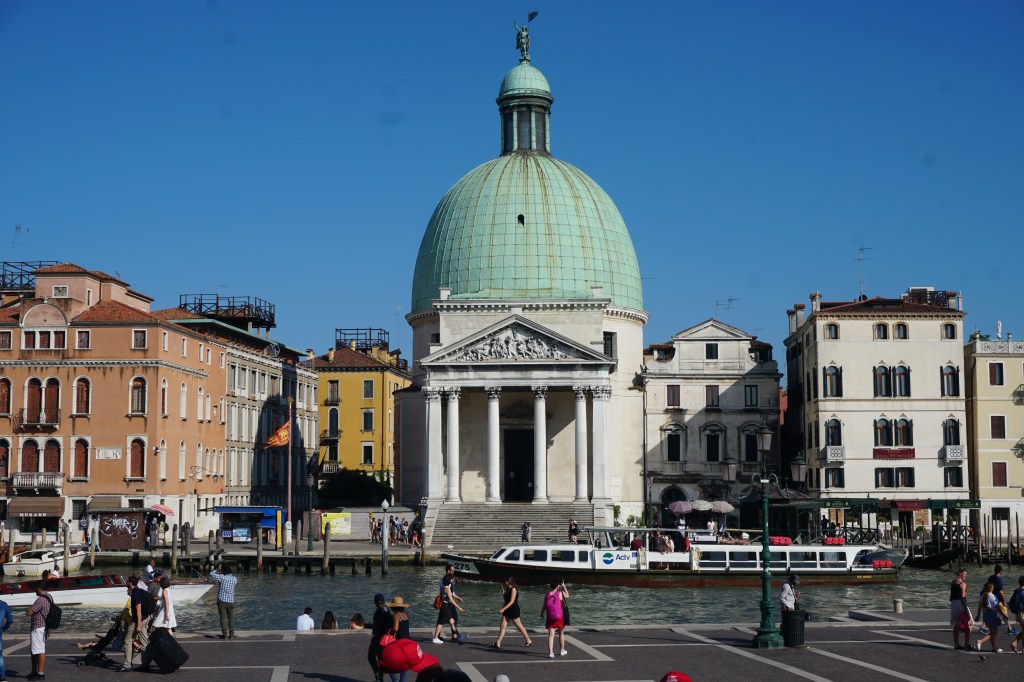
We arrived in the afternoon after a short drive from Treviso. The flat we rented is in a residence hotel in Quarto d’Altino, conveniently located near the train station. We took the train into Santa Lucia terminus in Venice – right on the Grand Canal!

We headed immediately into the Jewish Ghetto, on the advice of our concierge, Luisa. Tranquil and relatively free from crowds, we strolled along the stone walkways, down narrow alleys, and over bridges. We found nearly deserted piazzas with local residents walking their dogs, chatting with neighbors, or relaxing at small bars with their aperitivo. Because it was Shabbat, nearly everything was closed, but we made a note to head back to Gam Gam’s, a Jewish restaurant that had an enticing menu.

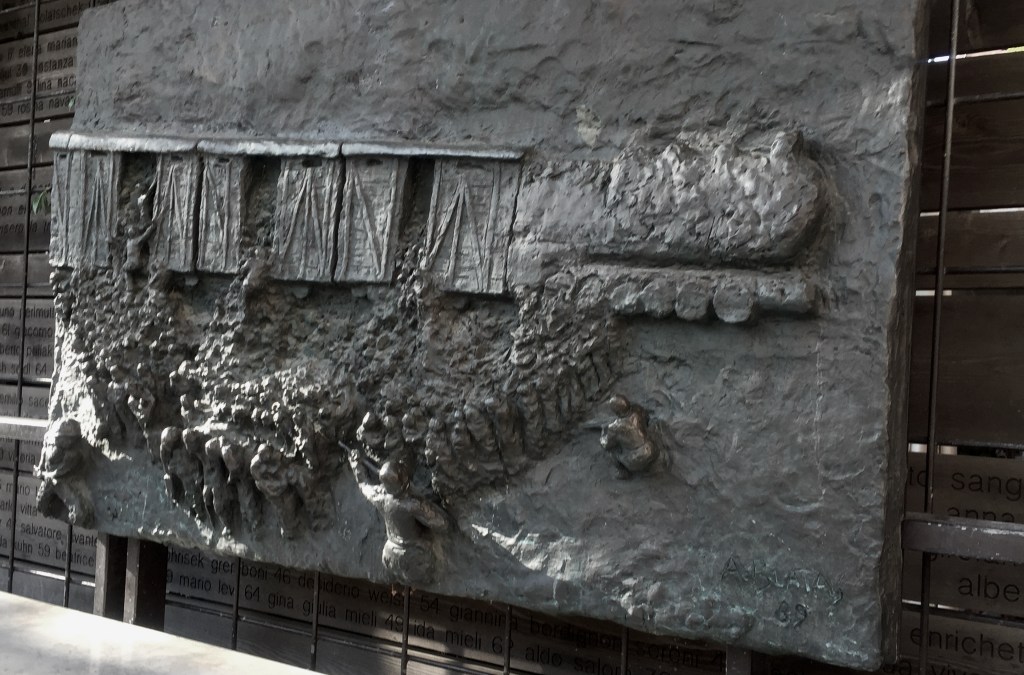
In our wanderings we discovered this memorial to the Holocaust is on the Campo di Ghetto Nuovo. The bronze bas relief sculpture is one of seven panels by Arbit Blatas, who lost his mother in the Holocaust. It is suspended in front of wooden slats carved with the names of Venetian victims of the Nazis. These slats represent the train cars in which the Jews were transported. A poignant remembrance of a tragic time.

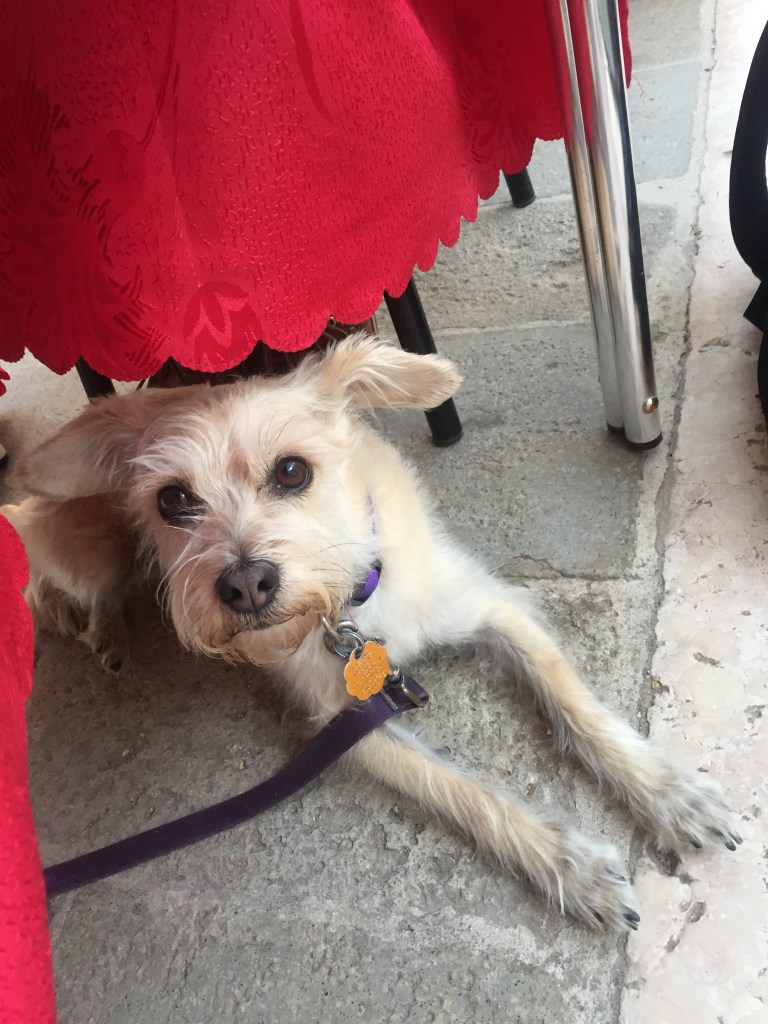
LuLu’s first experience of crossing a canal on a wooden bridge seemed to really frighten her. So the first day, we carried her across most of them. But by the second day, she was an old hand and had no qualms! She has become accustomed to lying at our feet while we have a meal. And almost every restaurant has offered her a bowl of water. She is definitely the most popular girl in our group!

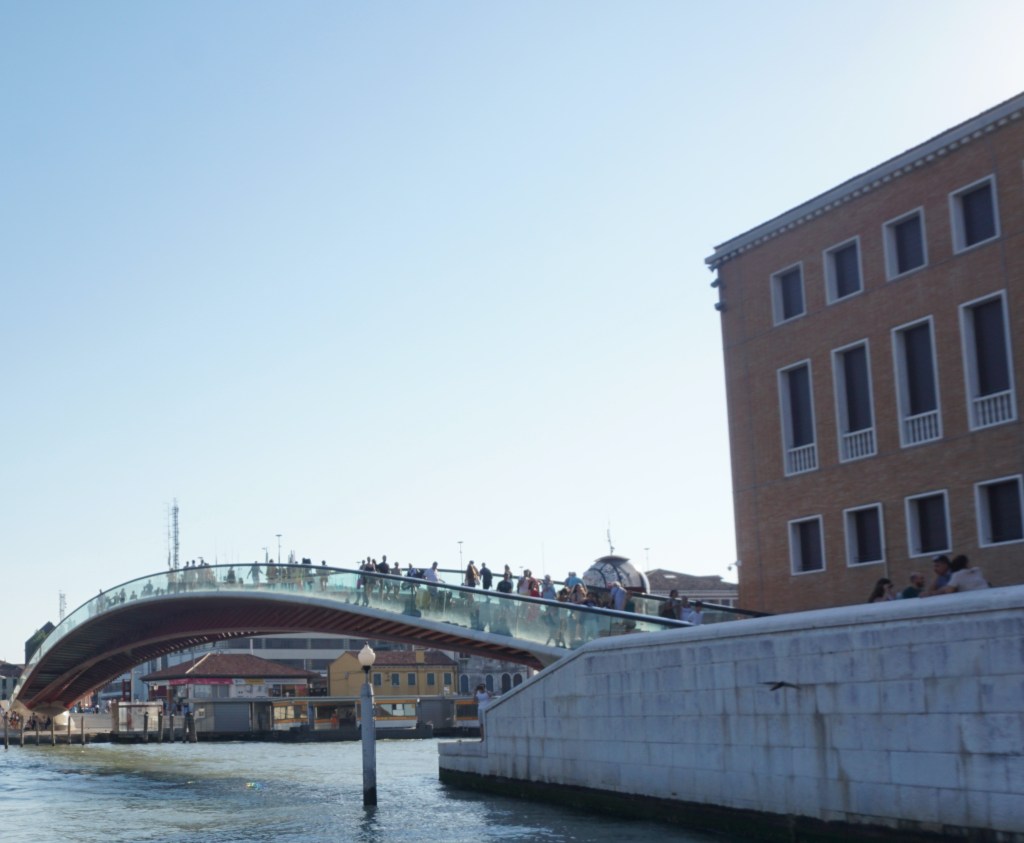
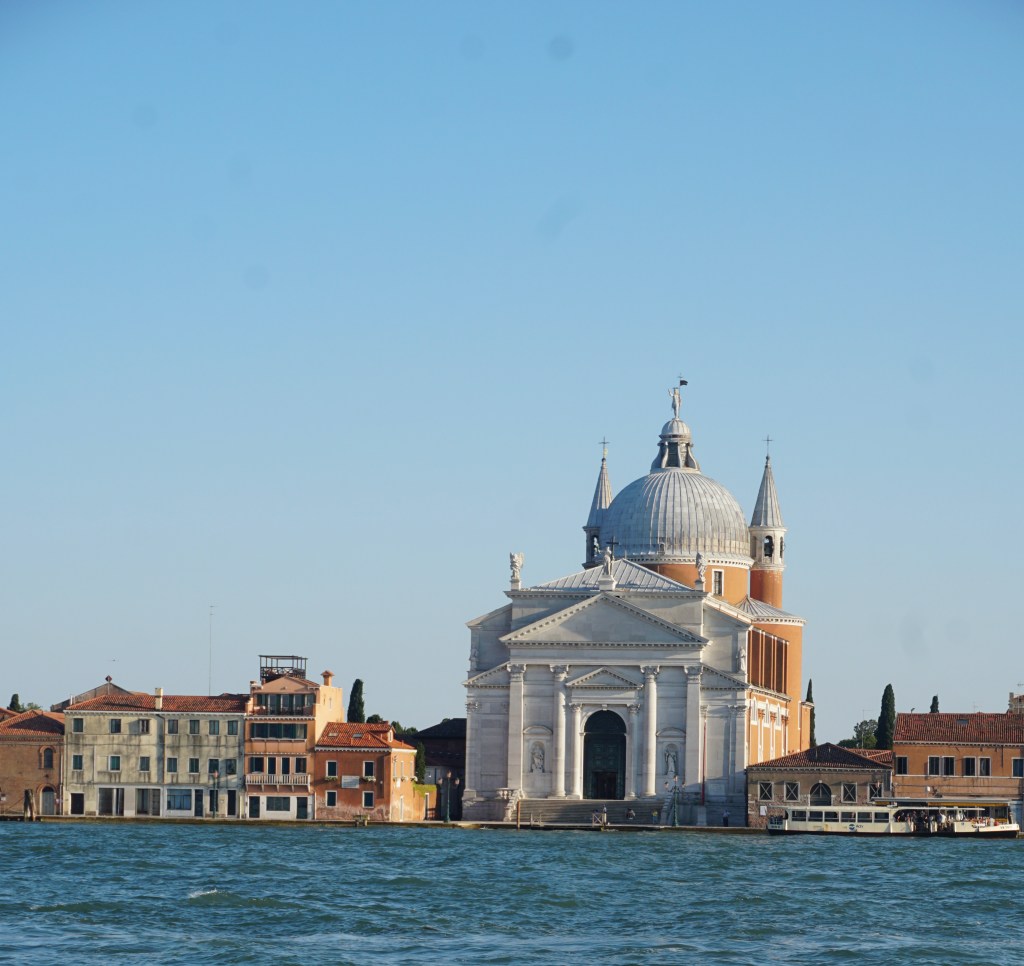
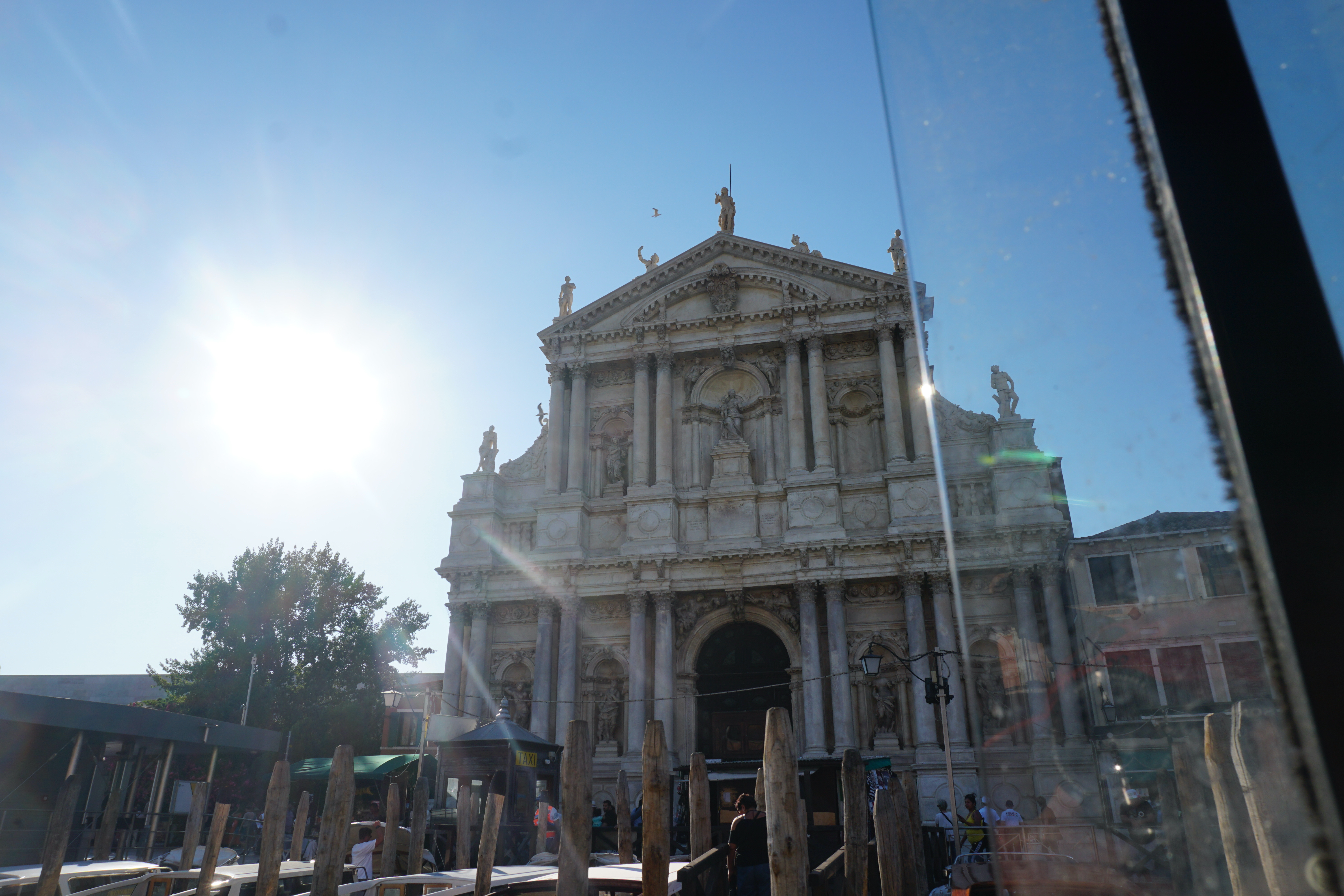
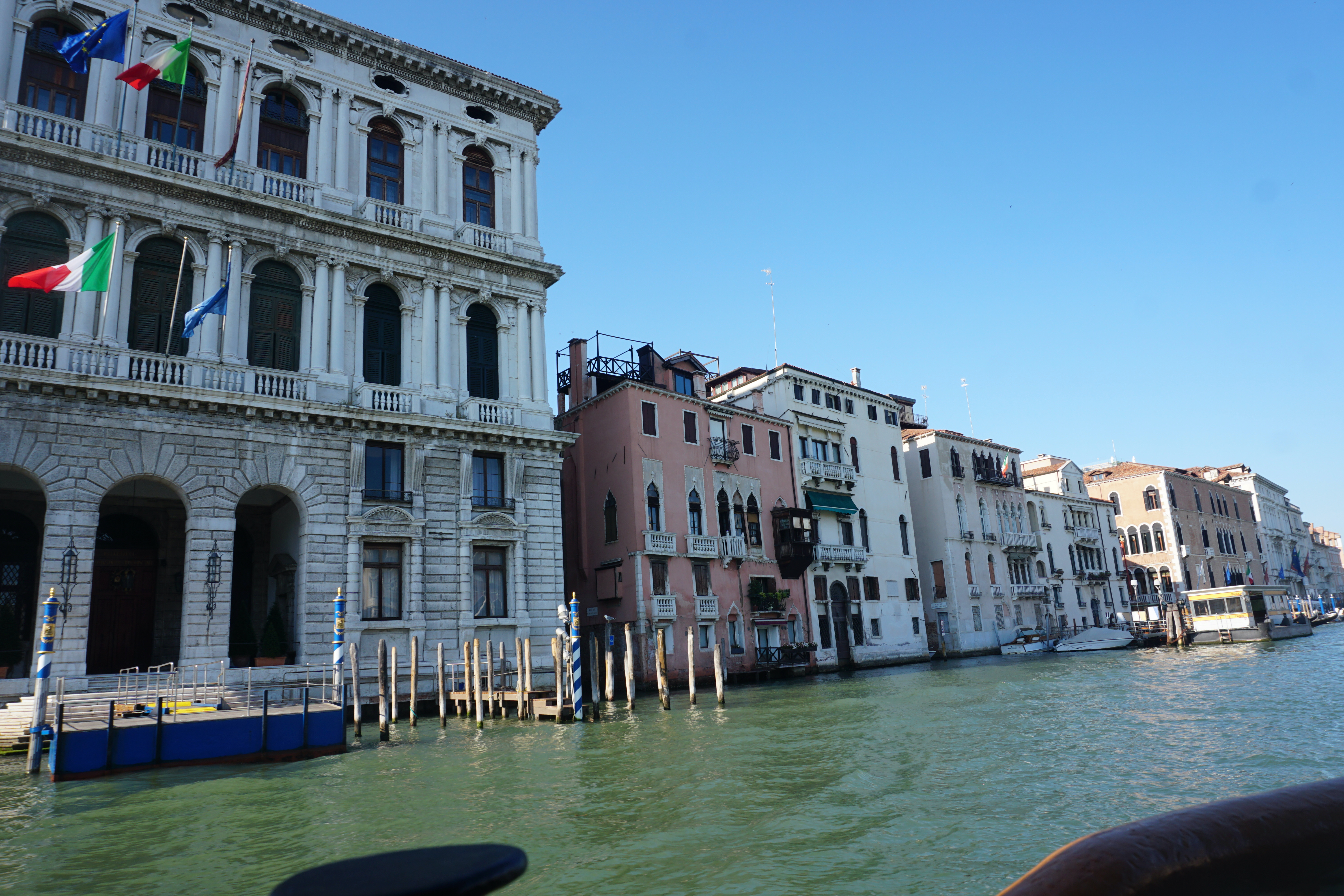
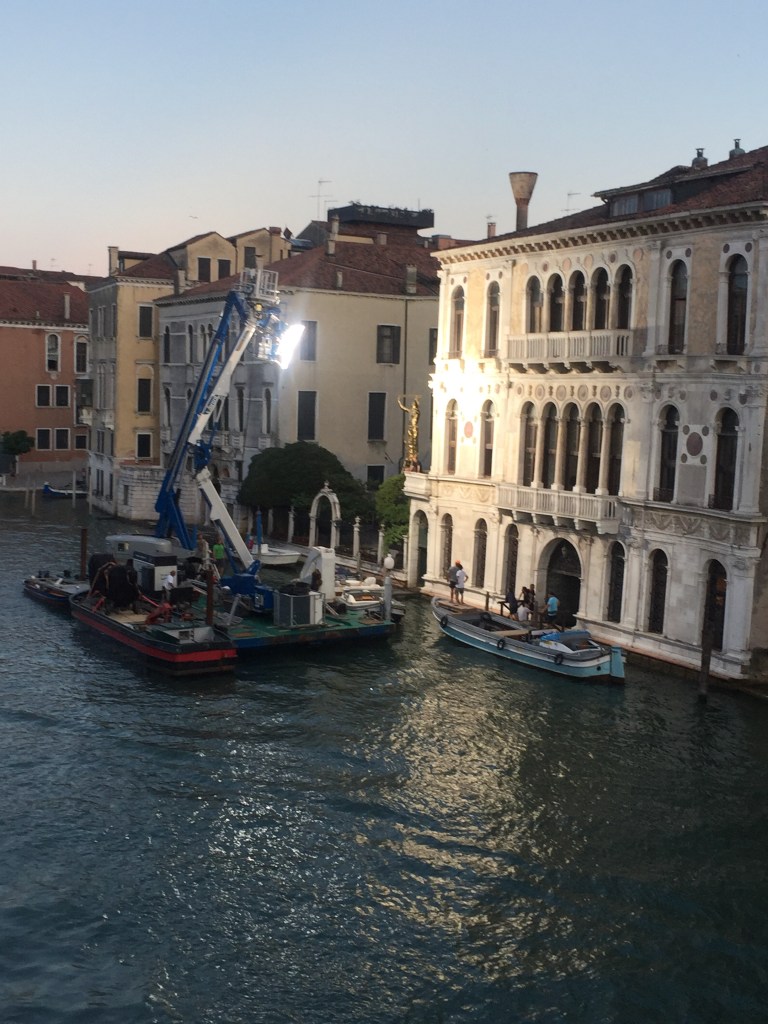
The next day, after missing a train and a long wait for another, we arrived in Venice in the afternoon. After a lovely lunch of sardines at Gam Gam’s, we headed out to catch the vaporetto, or water bus. This is the boat Venezians take on their watery commute! Mouths agape, we passed beautiful churches, amazing old palazzos and ritzy hotels. Counterclockwise, we took the Numero Due line (Grand Canal) to the west end of the line and then got off and took the Numero Uno out and back around (harbor and southern canal).

Unhappily, we arrived at the Peggy Guggenheim Collection too late, but vow to come back on the next Italian leg of this odyssey. It is housed in her home on the Grand Canal, the beautiful Palazzo Venier dei Leoni.

After another delightful meal sitting on the edge of a small canal (Messner), we headed back to the train station, fully comprehending why Venice is “over-touristed”. And planning to come back later to add to the congestion!

Next we are off to Split, Croatia. We are looking forward to some beach time as well as some sight seeing!

Love to all,

Sam, Donna & LuLu

July 1, 2019
Treviso – Canals & Charm with Fewer Tourists!

There is no certainty that we would have even gone to Treviso had we not seen the NYTimes article: https://www.nytimes.com/2019/06/10/travel/venice-treviso-overtourism.html?searchResultPosition=3

But the idea of a medieval walled city with canals and fewer tourists was an enticement to us for sure! Donna’s memories of crowds and dive bombing pigeons in Piazza San Marco made Treviso seem quite appealing. So, off we went!

But it must be said that one of the best things about Treviso was our Airbnb host, Guerrino Rossi! A compact man, full of ebullient energy, he hauled bags up the three flights of stairs (despite nudging into our age group), welcomed LuLu with cuddles and made us feel immediately at home in 500 year old house where he has lived for 59 years – since he was 6 years old! Our flat was DEFINITELY NOT IKEA! It felt authentically Italian (for a host of a certain age, I suppose, as well as a guest!).
The next great service that Guerrino provided was to recommend free parking in front of the police station. That felt safe! However, after Sam parked the car and headed back to the flat, his phone died, leaving him without a map or phone. While he was trying to find his way, Donna started panicking! He was gone over an hour and a half and was unreachable! Ben suggested using iCloud Find my Phone, but with no password to allow access, that was a no-go. After wandering around in search of Sam, and nearly getting lost herself, Donna realized she needed help. Calling the police seemed too grave, so she went back and asked Guerrino what to do. He responded by reassuring her that it is safe and then walking with her to where he told Sam to park the car and so it was. Twenty minutes in 90˚ heat! No Sam! About 3/4 of the way back to the flat, Guerrino’s wife, Graziella, called to say Sam had returned.Whew! Big relief! Benjamin called back and instructed us to add the Find My Friends app on our phones so that won’t happen again. We are supposing that even if the phone has died, the app can use the Apple watch to locate the person.

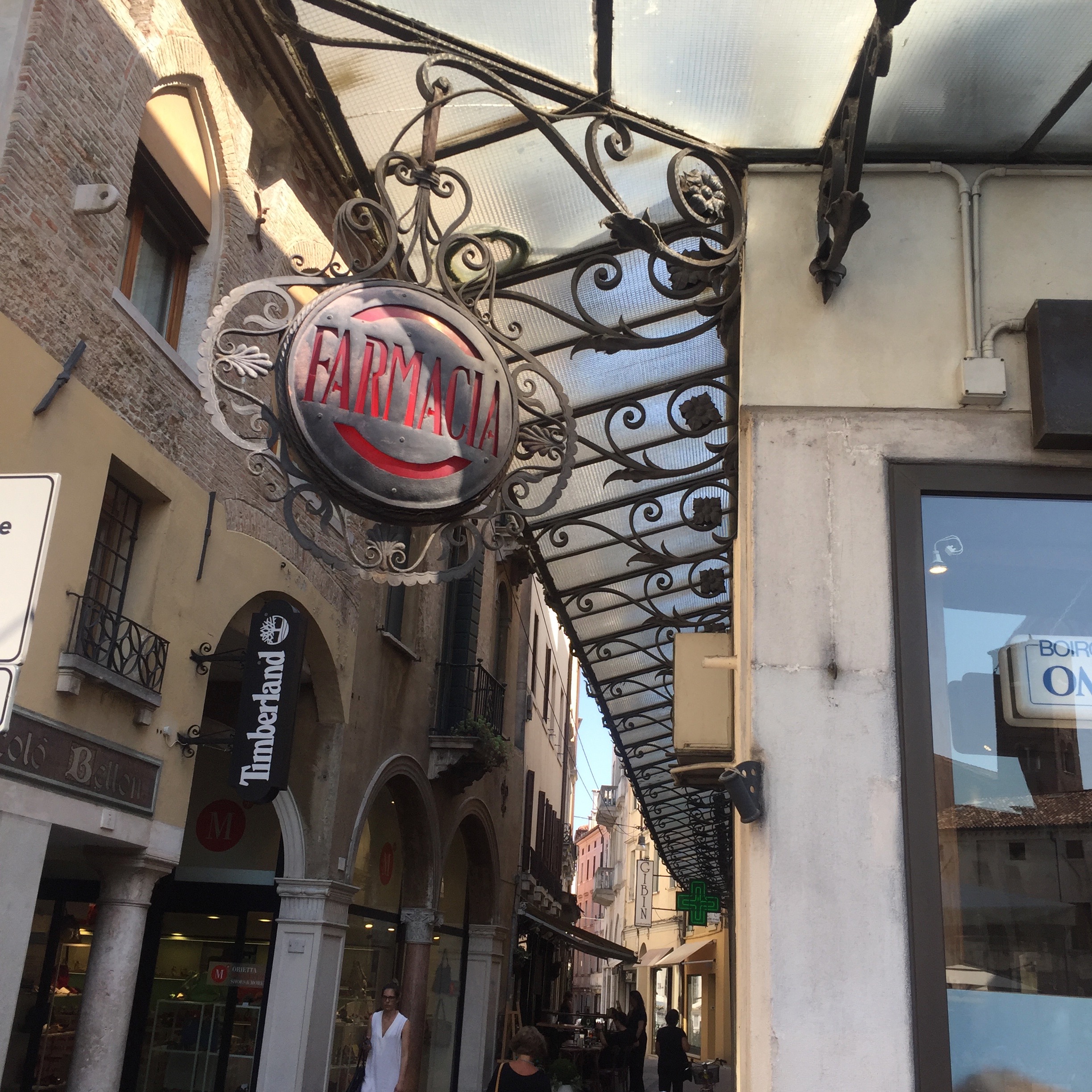
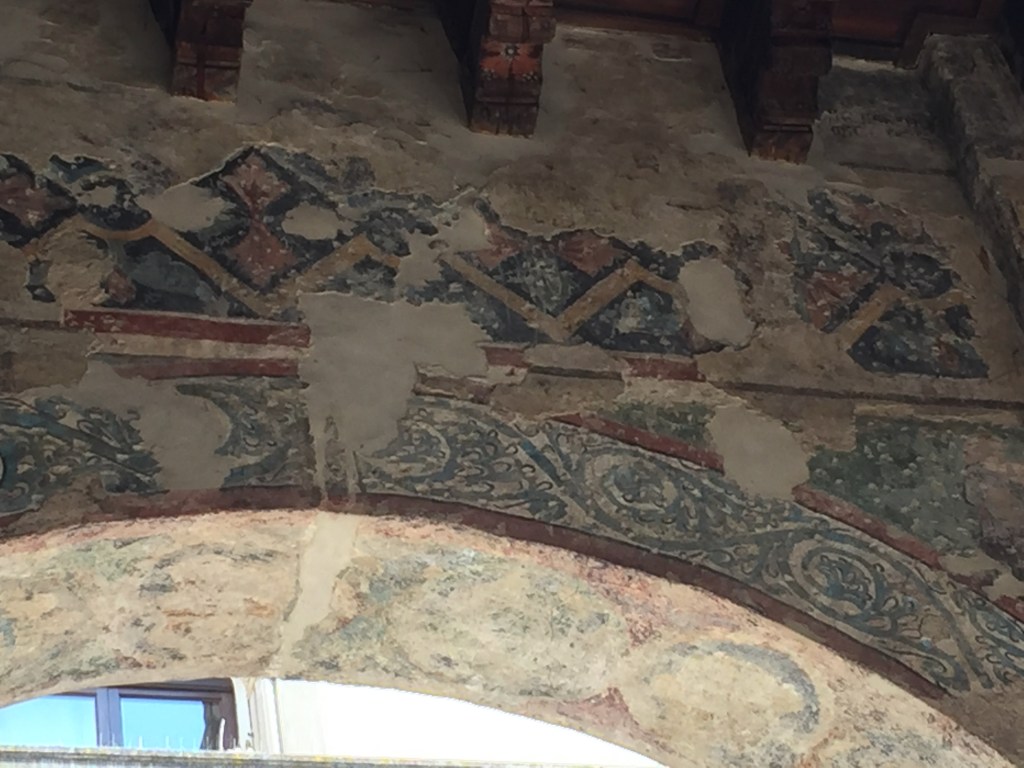
The next day was our only day to do any sightseeing. So we headed out to explore the heart of this lovely 15th century walled city. After a delicious lunch at Da Pino on the Piazza dei Signori of pizza and grilled branzino to die for, we wandered through the shady gallerias and across canals on stone and iron bridges. Under the loggia where the upper class Cavalieri used to convene, we found mosaics and frescoes from the 13th century, recently restored, after being severely damaged by Allied bombing in 1944.

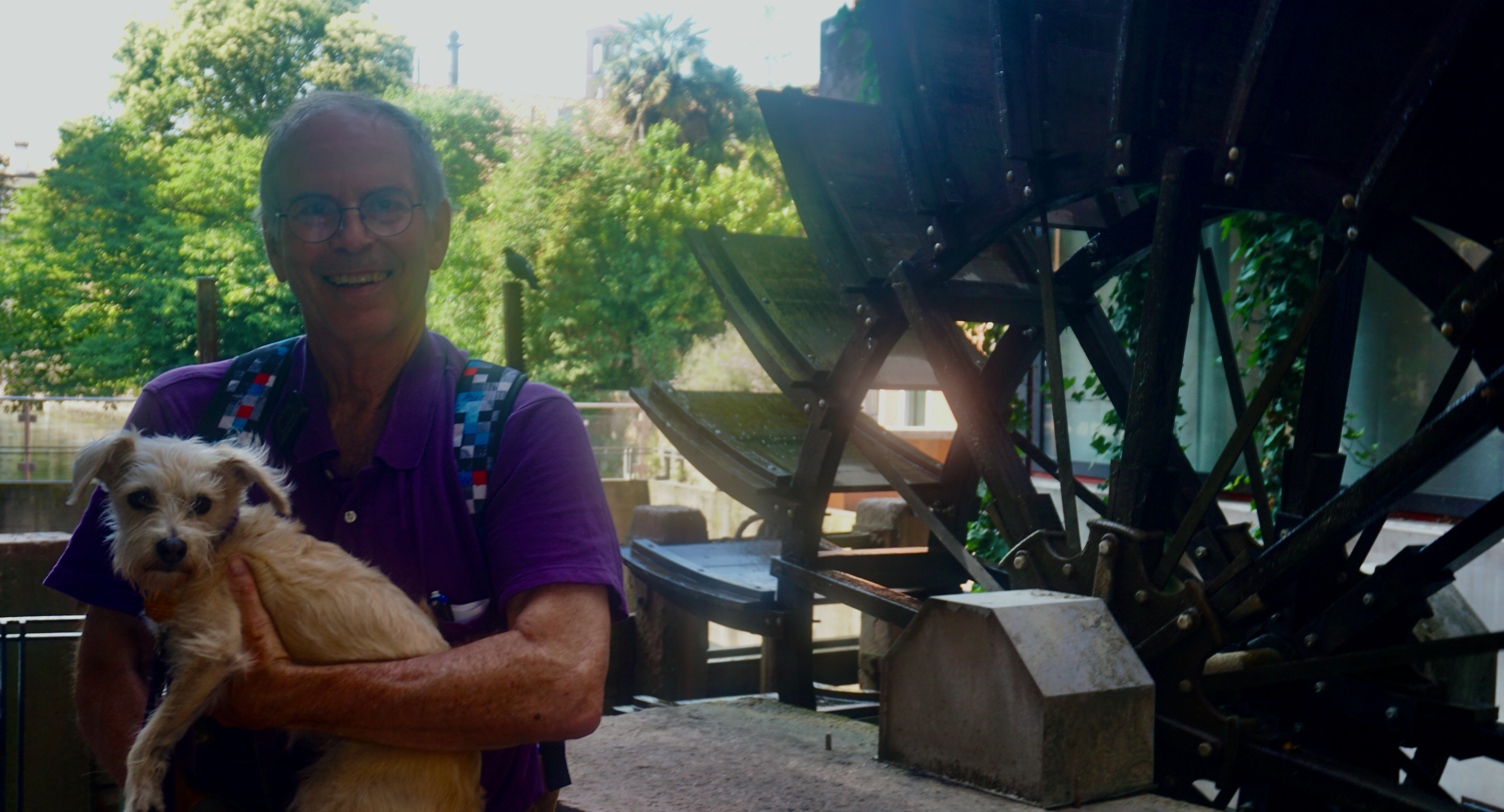
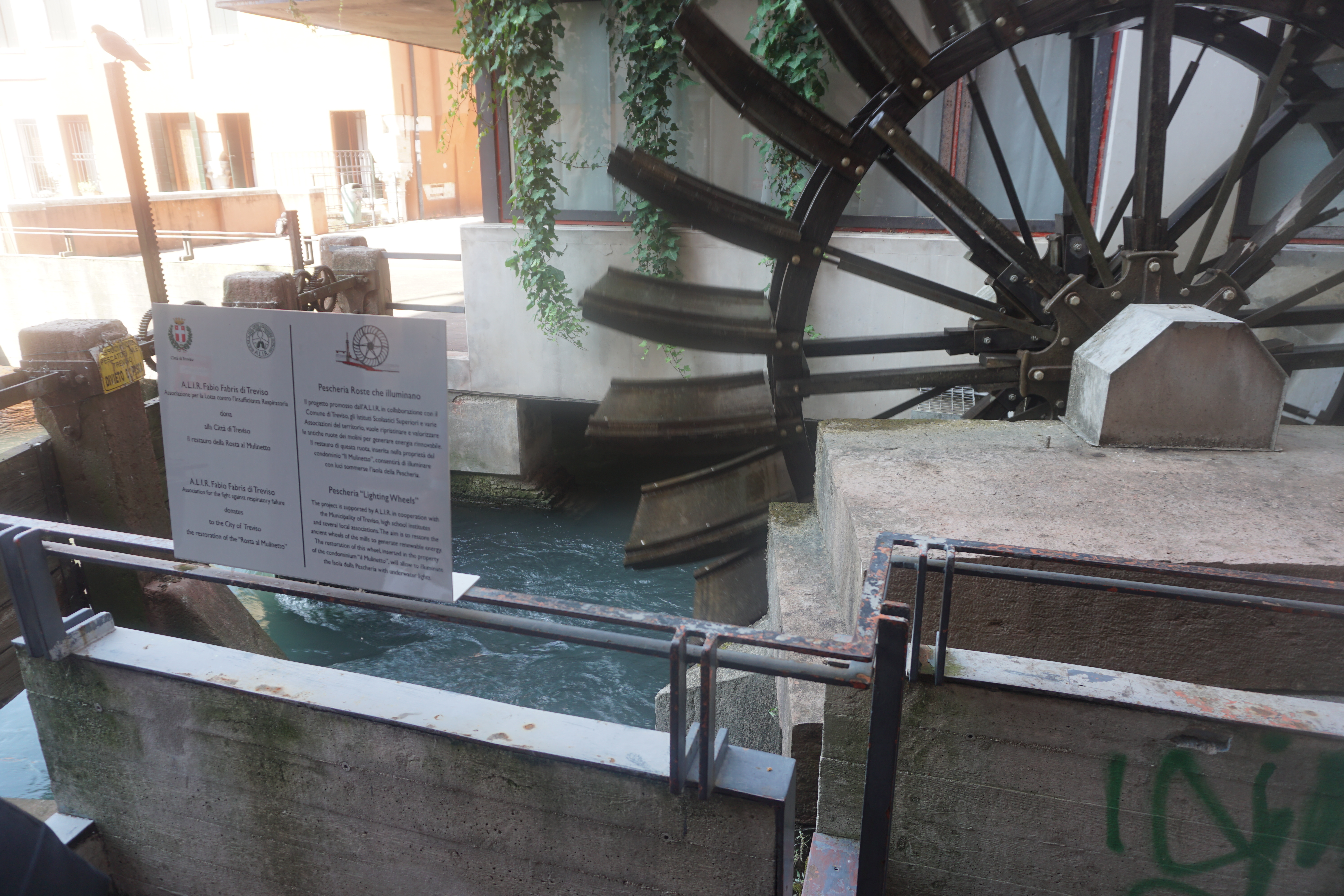
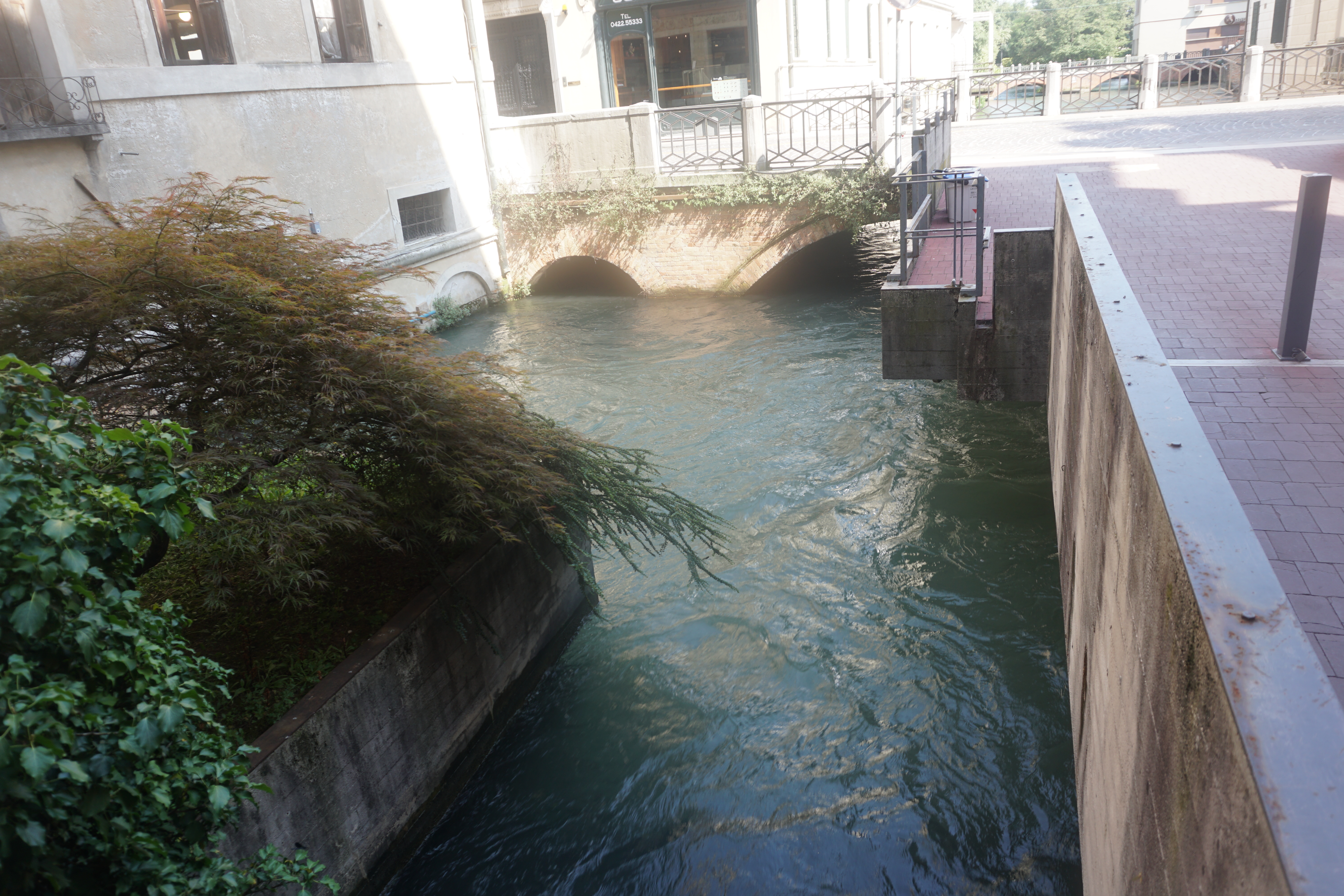
We discovered watermills, formerly used to grind the wheat for bread, but now providing energy for underwater lighting of the island that houses the open air fish market! Such ambiance!

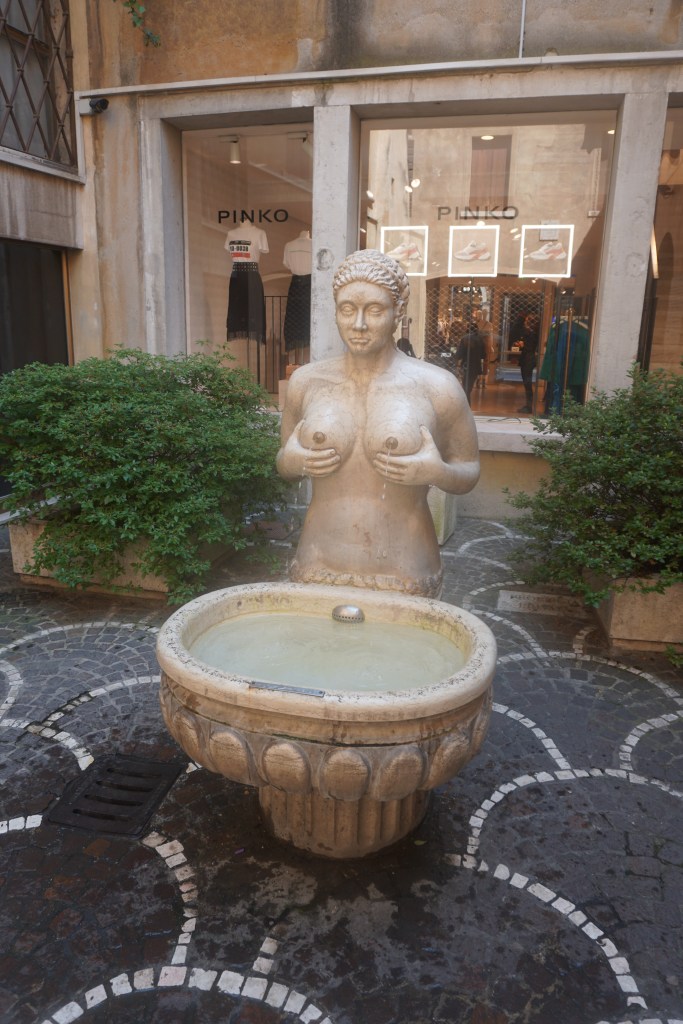
And hidden away in a tiny galleria, off of Via Calmaggiore is La Fontana delle Tette, the Fountain of Tits! This fountain was commissioned by a city magistrate in the 1500’s to celebrate the end of a severe drought. Originally, white wine flowed from one breast, red wine from the other. Nowadays, it’s just water, although on feast days, apparently she dispenses wine!

Treviso is the heart of prosecco production, the home of Benetton and reputed to be where tiramisu was born. But, given the extreme heat we were experiencing, gelato seemed more appealing than wine or sweaters or even cake! On Guerrino’s recommendation – and because it’s a tenant in his building – we went to Dassie, on the Via Sant’Augustino. Voted best gelato in Italy in 2018, we are believers! Donna loved both lemon and mango. Sam FLIPPED (chocolate, heads or tails) for the dark chocolate, which itself had won an award this year. It is open until midnight in the summer and is always hopping!

But despite the tranquility of Treviso, and the lovely hospitality or Guerrino and Graziella, we are still going to Venice! Sam has never been there and it’s a Must See for an architect. So, tomorrow, off we go!

Thinking of you all,

Sam, Donna & LuLu

June 27, 2019