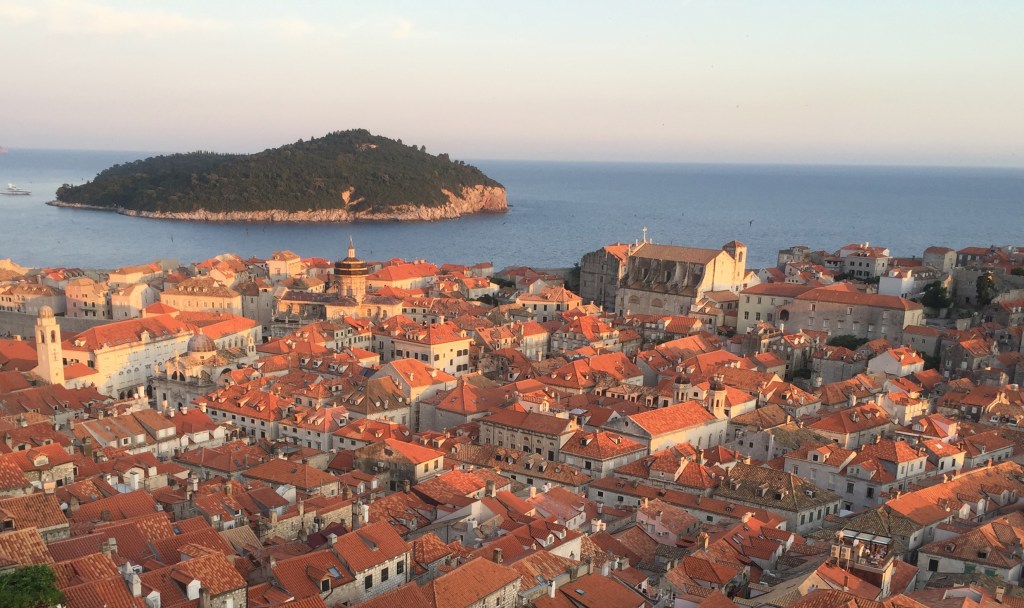
Dubrovnik was founded in the early 7th century CE by refugees fleeing the approaching barbarians. The prosperity of the city was historically based on maritime trade. As the capital of the maritime Republic of Ragusa, it achieved a high level of development, particularly during the 15th and 16th centuries, as it became notable for its wealth and skilled diplomacy.
Donna had been to Dubrovnik in 1973, and it held a special place in her heart. Seeing videos and photographs of destruction caused by the siege in 1991-92, during the Croatian War of Independence, had brought tears to her eyes. The grace and allure of this city is undeniable. So we were here with the hope that it had recovered its former glory.
It was an easy drive from Split to Dubrovnik, but upon arrival at our Airbnb flat, a nightmare began. Immediately upon entering the flat, Donna was struck with an overwhelming stench of mold. We waited for about a half an hour, to see if the smell would abate, but it didn’t. Donna began having a headache, which we worried could become a migraine, so we contacted the host to let them know we were leaving due to health concerns. Happily, we were able to locate another apartment at 9:00 PM and we settled in happily to the new place.
We filed a complaint and a request for a refund from Airbnb, but it was denied. They wanted a picture of the hazard. Smell-o-vision?
The new apartment was about 2 blocks away from a bus that went straight to the Old Town. BUT…no dogs on the bus. So we Uber’ed over and started our exploration of the beautiful old city. After a lovely lunch in a restaurant recommended by Shelley & Brian who had been there only a couple of weeks previously, we wandered around on this beautiful, old town.
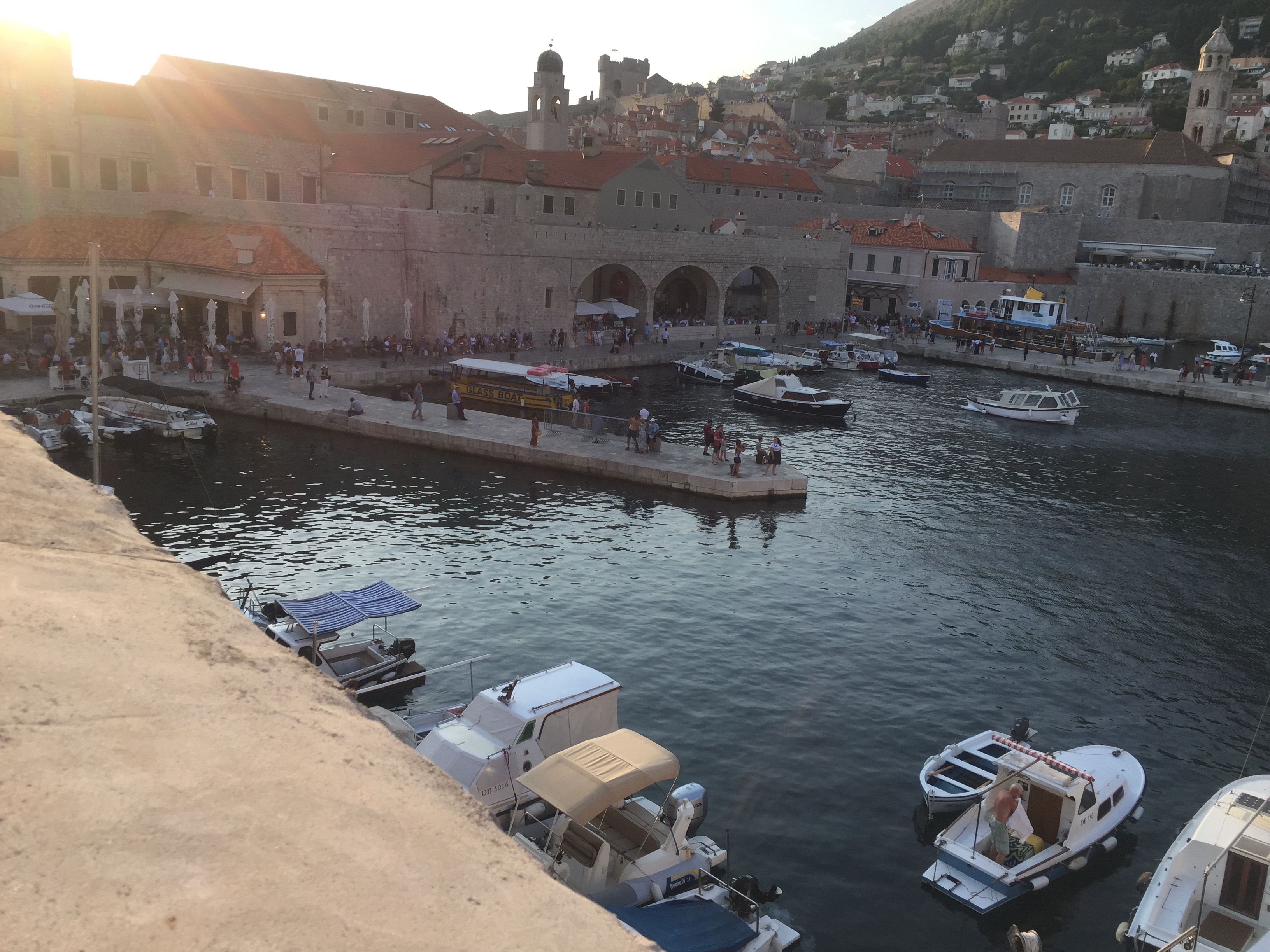
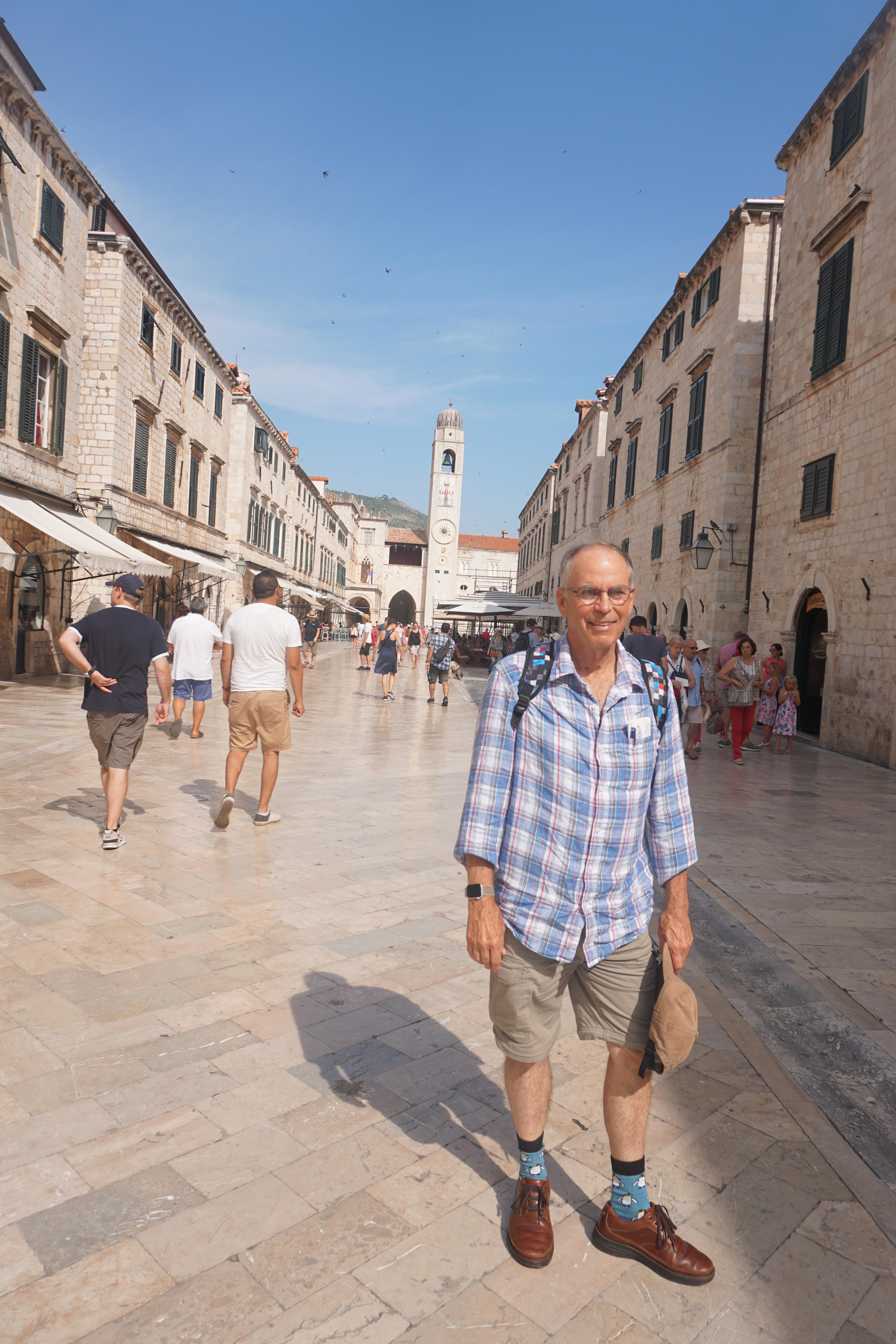

One reason for some of the “over-touristing” that we have observed in Venice and here in Dubrovnik is cruise ships. The locals know the cruise ships schedules as well as they know their own names, because it affects them so directly in their daily lives. Bruno, our tour guide, could see both advantages and disadvantages to the swarms of folks descending from the ships. He said that they even come in the winter, which means his income is pretty steady all year round. We suppose the corollary of that is that it is congested all year round.
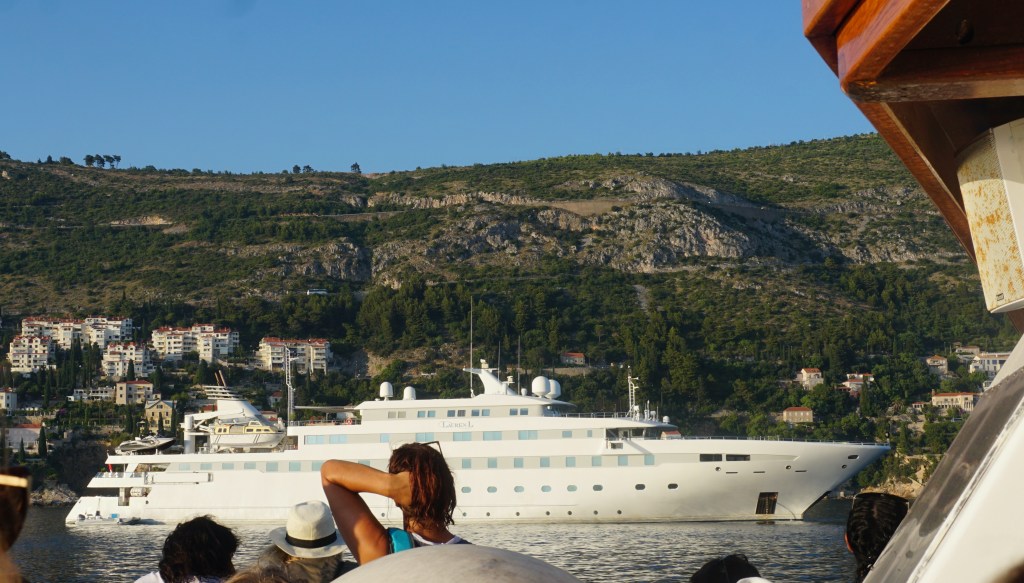
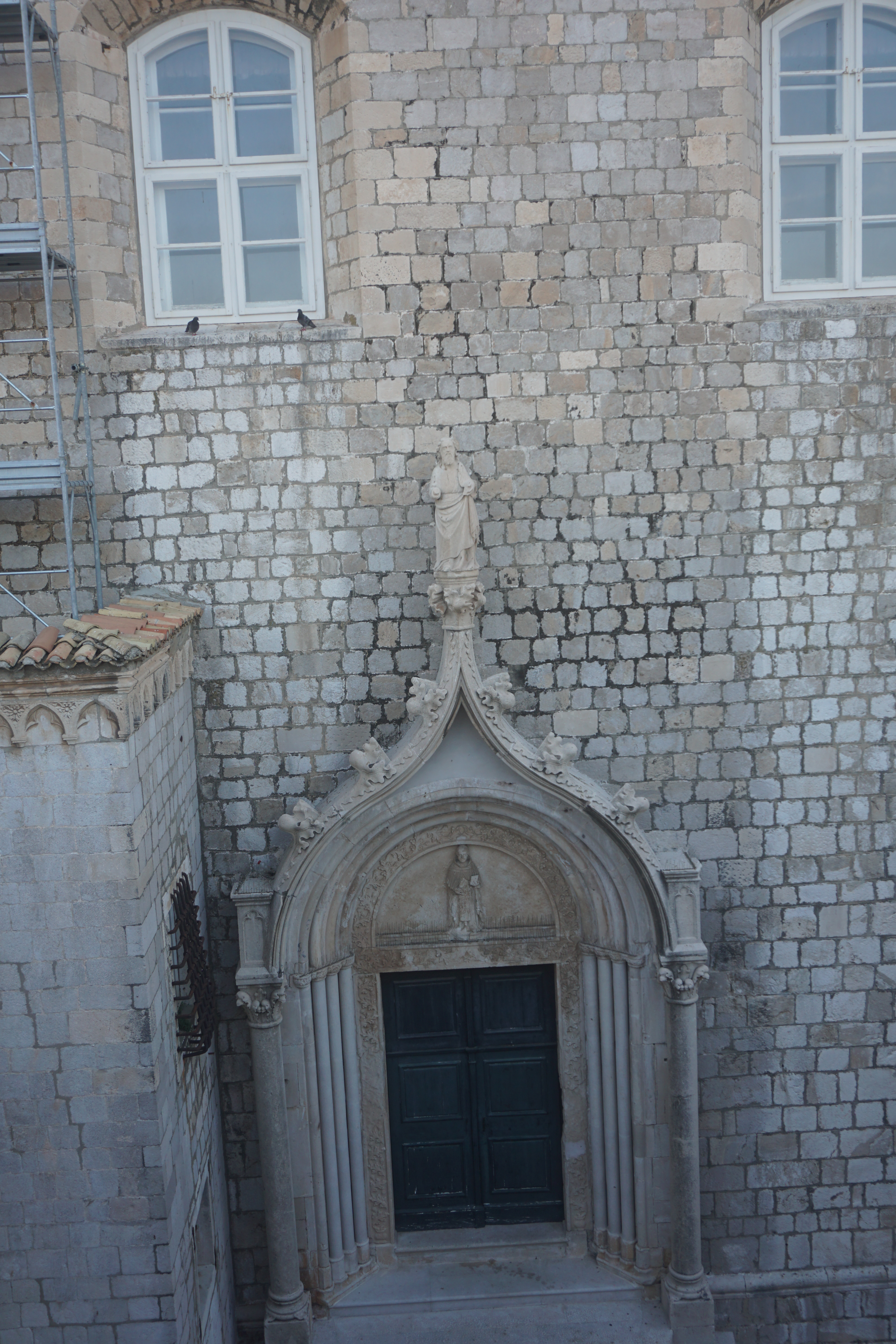
Based on the wonderful guided tour we took in Split, we decided to do that again. Bruno, our tour guide, was energetic and knowledgeable. He knew the history of the palaces, cathedrals and monasteries. For two hours we walked the wall of this ancient fortified city, awestruck by the views and the amazing architecture. Bruno also shared a bit of his personal life as a child of 6 or 7 during the siege of Dubrovnik by the Serbians in 1991-92. For him playing “war” with his cousin was easy. They would find spent shells and sneak into the armory. But if caught by his father or uncle, Big Trouble.
After the tour, we again wandered the narrow lanes, seeking a restaurant for dinner. Bruno had recommended Lady Pipi so we headed there. After climbing up about 8-10 steep flights of stone stairs we discovered a line of about 12-15 folks. The people at the head of the line said that it had taken them about 25 minutes to advance to the front, so, because the smell of grilled meats and fish was wafting out, we decided it was worth it. Waiting in line, we realized why the restaurant was named Lady Pipi:
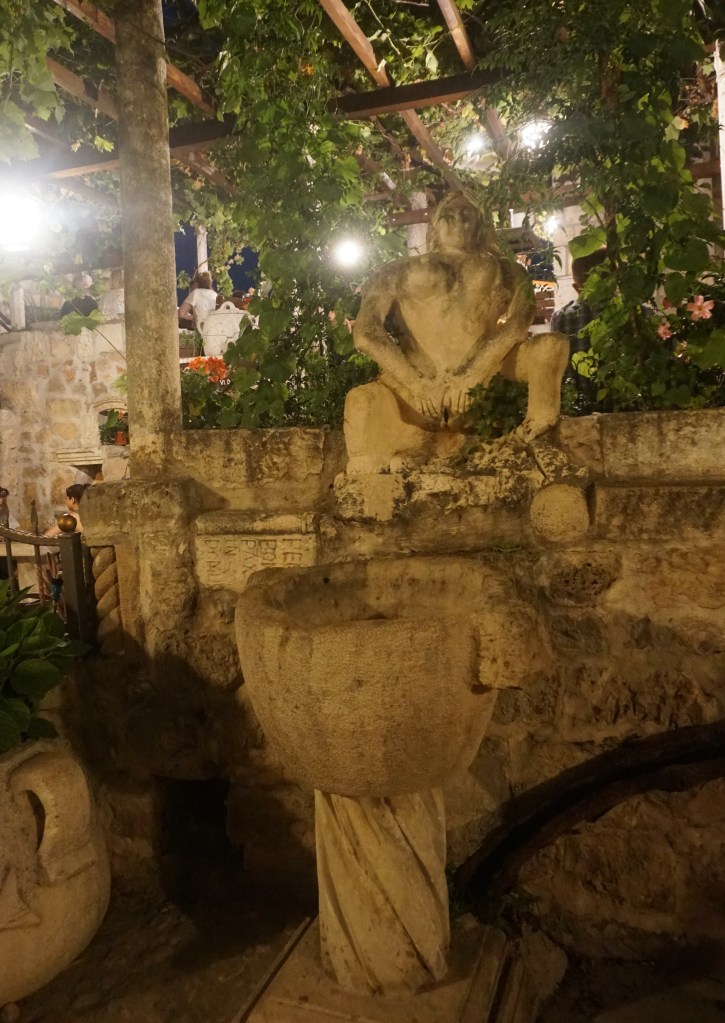
Seated under a grape arbor (real grape vines), we ordered the grilled fish platter, containing sea bass, tuna and scampi. Very delicious! And worth the climb!
The next day after lunch, we decided to take the ferry to Lokrum Island, at the foot of the harbor. It is about a 10 minute ride out to the island and well worth it. There were mostly locals out for a family day at the beach. Again – a rocky pebbled shore edged the gorgeous teal Adriatic. We swam a little, read a little, napped a little, watched Nature in action as a mother pheasant was intent on disowning one of her chicks!

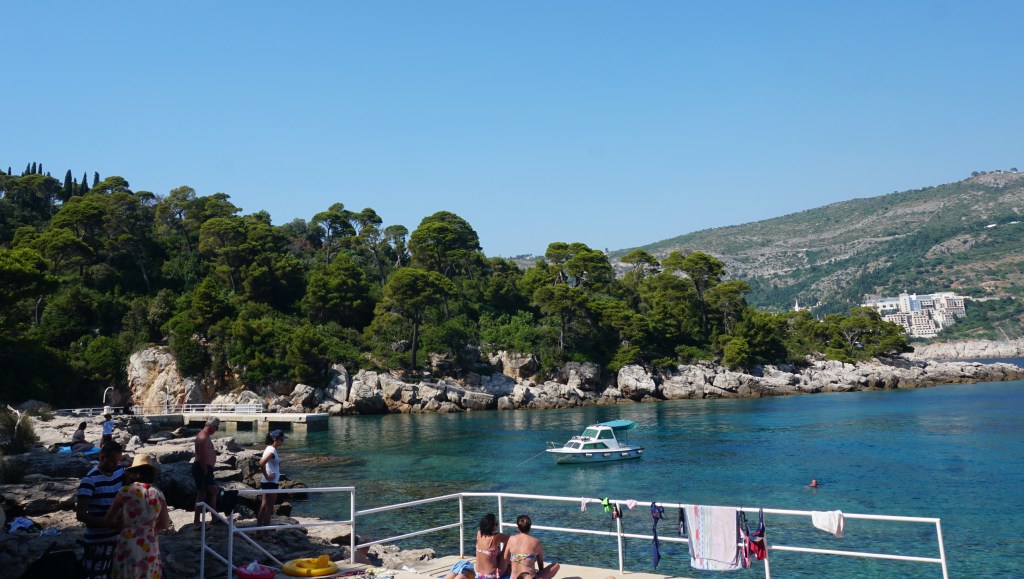
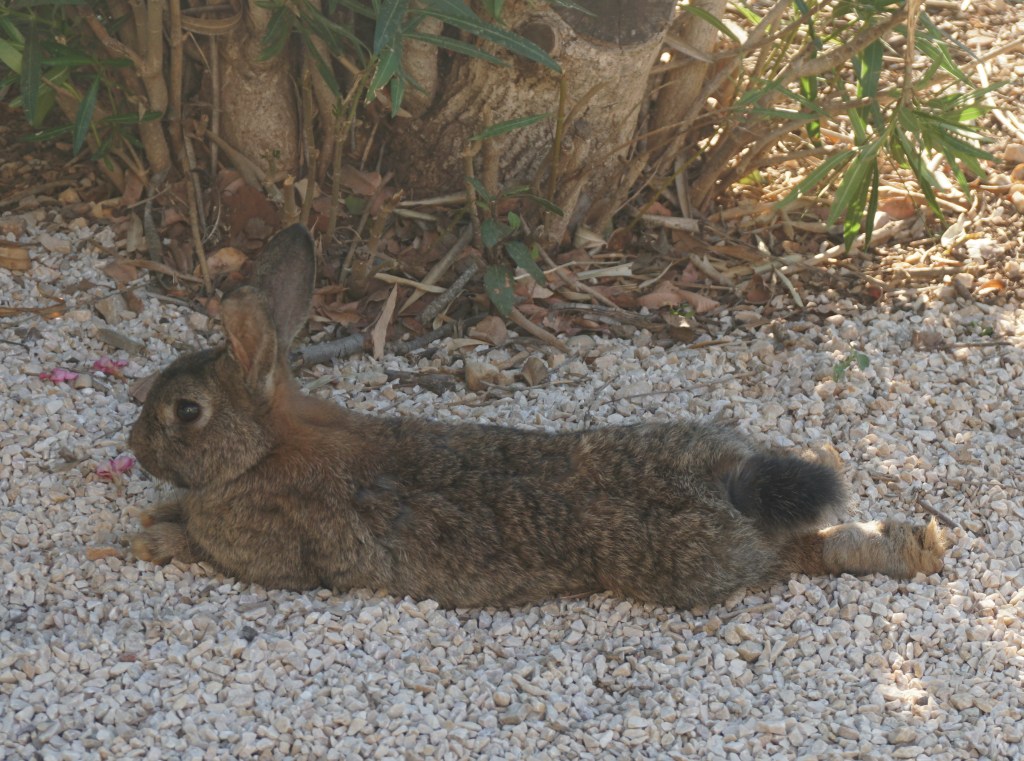
But before we got back on the ferry to return to Dubrovnik, we decided to explore the island a bit. It is home to the ruins of a Benedictine abbey and monastery. It is also a nature preserve due to an unusual variety of plants and animals brought from distant shores by sailors in gratitude for their safe journeys. There are peacocks roaming the island and the tamest rabbits you’ve ever seen, with apparently no fear of humans. Near the monastery there is also a small lake named the Dead Sea due to its high salt content. Today the grounds of the monastery have been transformed into a cafe & bar with a solid cocktail menu. You can sit under umbrealls and watch the sea. But watch the time! the last ferry leaves at 8:00 and no one is allowed to stay on the island.

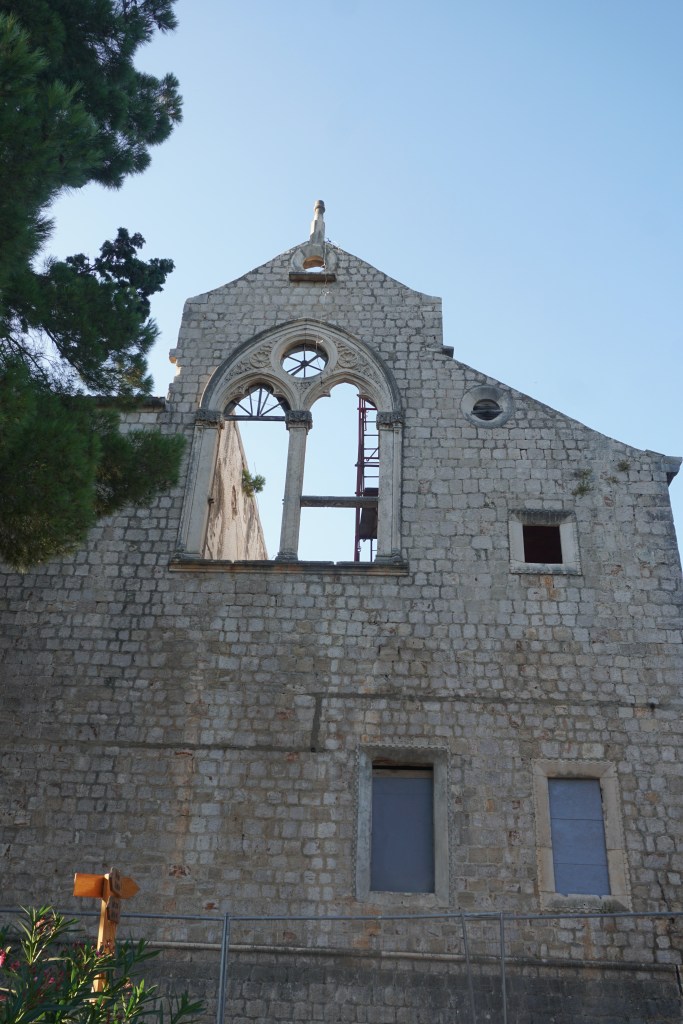

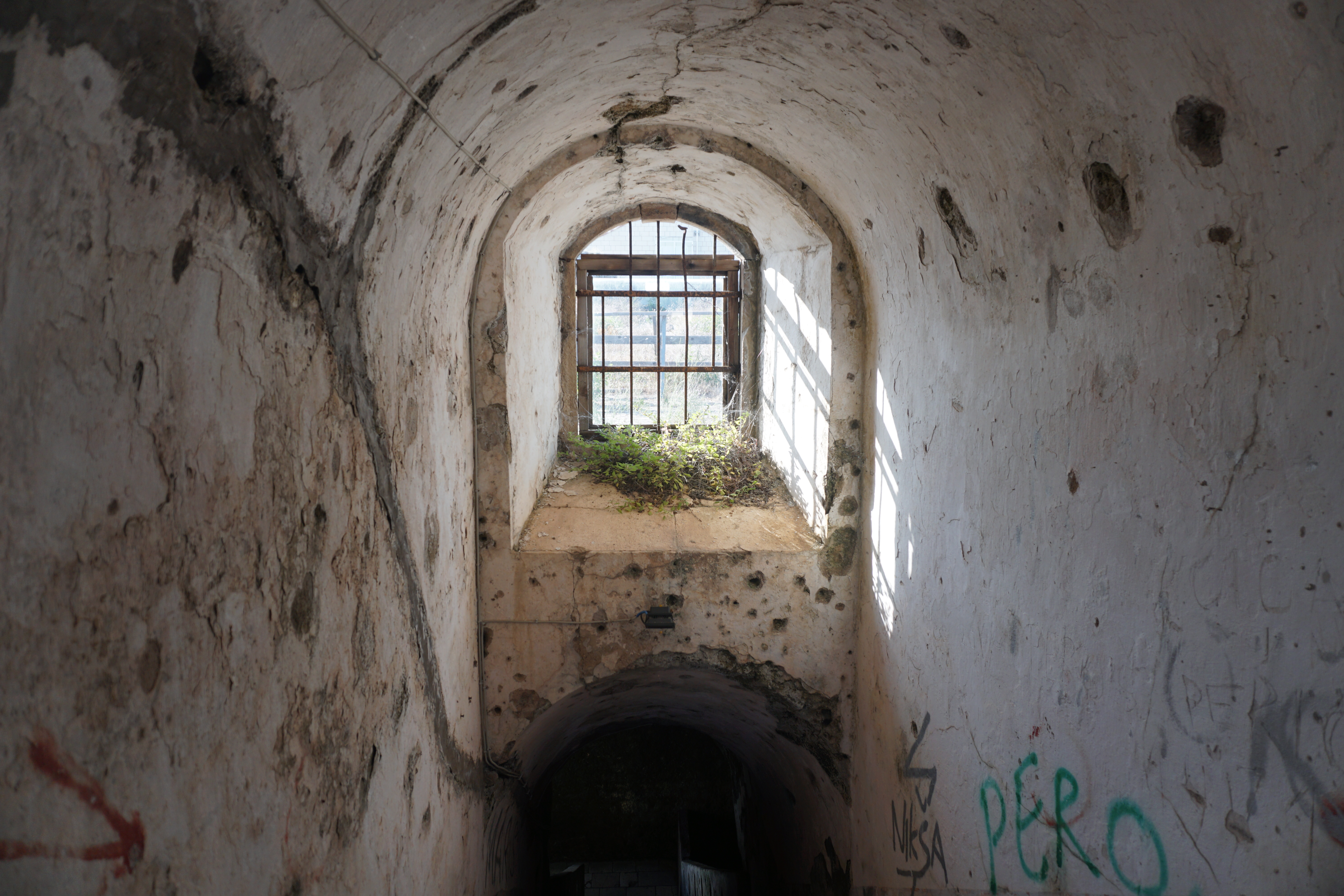
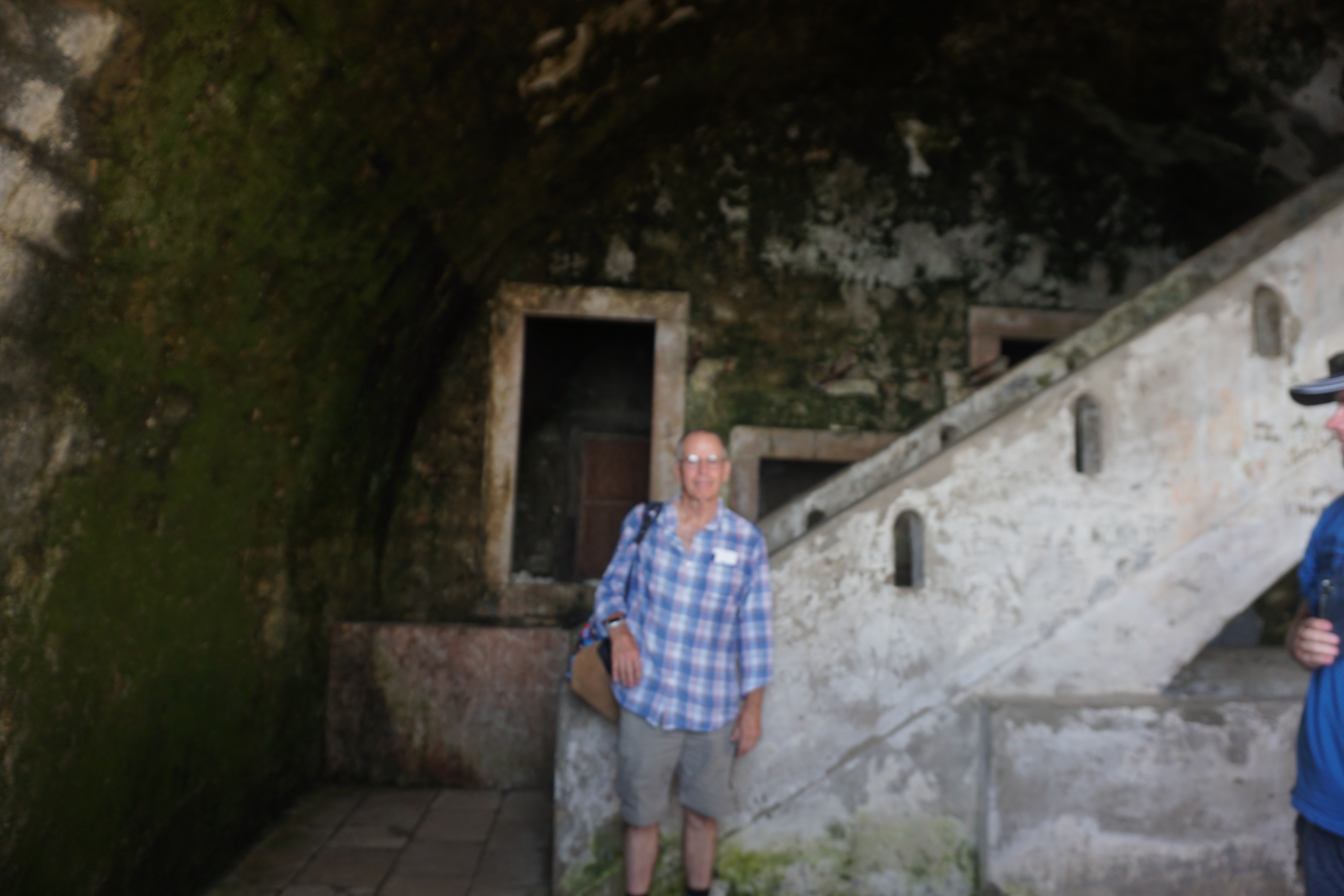
Our last day in Dubrovnik we decided to take the cable car to the top of Mt. Srd to visit the Homeland War museum. The museum is located in the ground floor of the Imperial Fort, built between 1806 and 1812 by Napoleon I’s troops. The exhibit consists of documents, art and documentary photographs, weapons, mines and explosive devices, war maps, parts of military equipment, authentic recordings, video materials, mine fields maps and war log books. Most of the exhibits were in English as well as Croatian, which was beneficial. There was also a contemporaneous BBC video being shown which documented the dreadful conditions that the citizens of Dubrovnik experienced during the siege by the Serbians in December 1991 to December 1992. Dubrovnik was under siege for eight months… so no water, no electricity, no food, no medicine. About 70% of the town experienced damage, including destruction, from the sustained bombing. At the time, reconstruction was estimated to be over $10 million. Due to gross disorganization within the Croatian military and total lack of preparedness, Dubrovnik very nearly fell to the Serbians. Happily, that did not happen. The Old Town has been restored and remains the jewel of the Adriatic that it is.
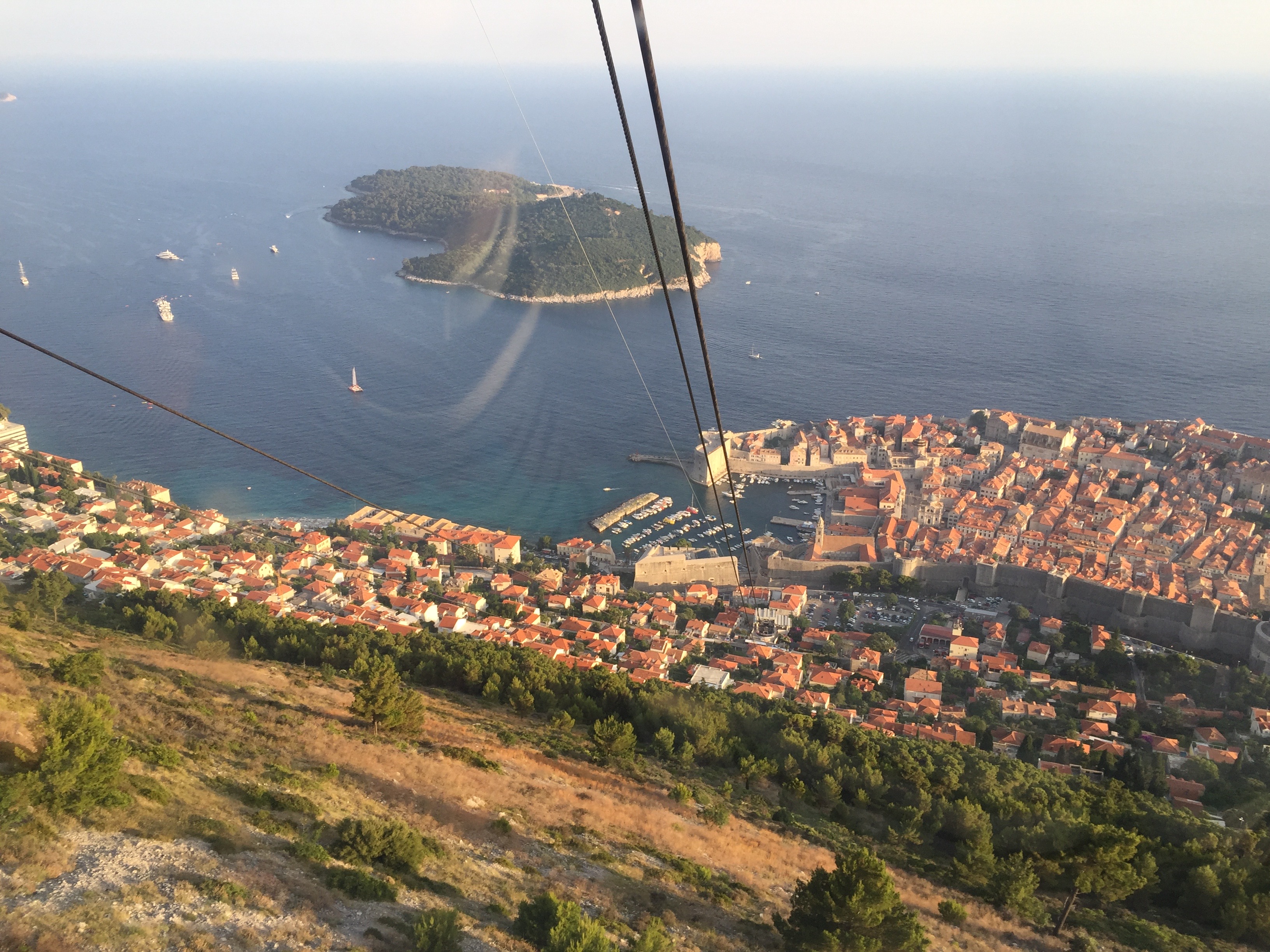
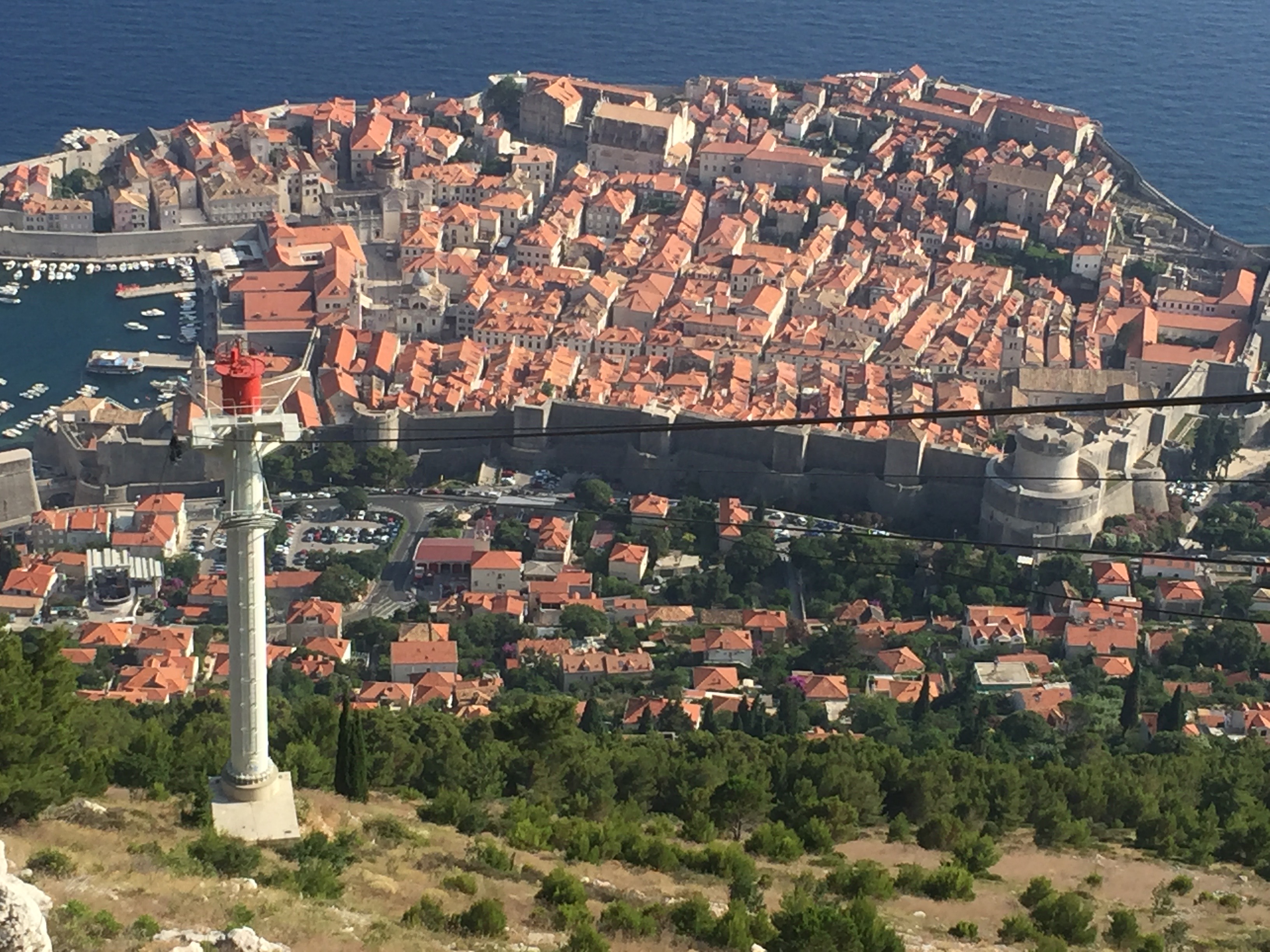
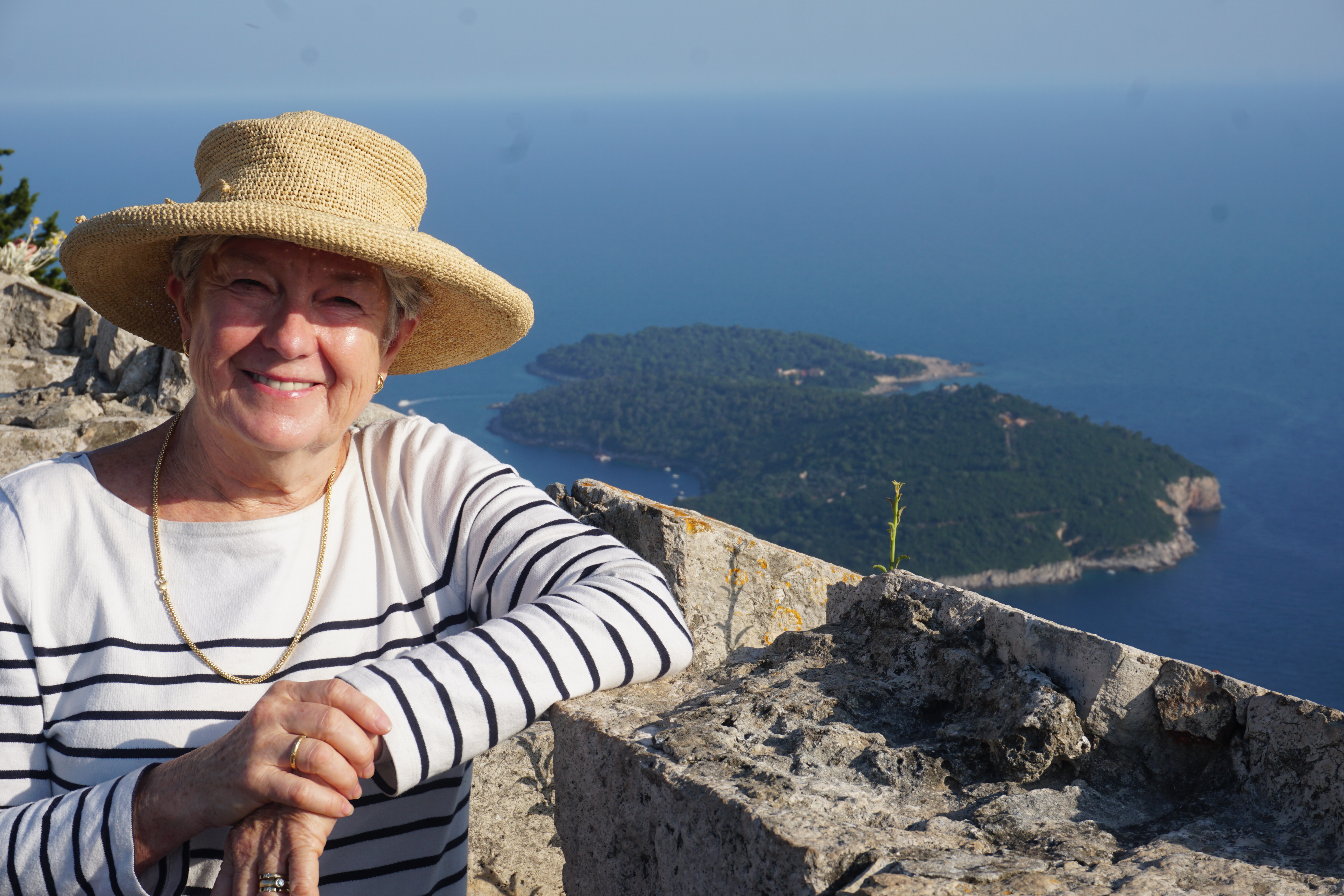
After the tour, we had drinks on the terrace overlooking a spectacular view of the Old Town, Lokrum Island and the glorious Adriatic. And then it was home to prepare for the next leg of our journey.
We are on our way to Skopje, North Macedonia, to find the final resting place of Sam’s sister, Nancy Hamilton Harrison. She perished in Skopje on July 26, 1963, while staying for one night on her way to Greece with George Scriabin, her fiancé. Sam has never been there, so it will be a bittersweet moment for us.
Missing you all,
Sam, Donna & LuLu
July 7, 2019

 LuLu's Outta Town
Very much enjoying these updates. Bravo!
LikeLike