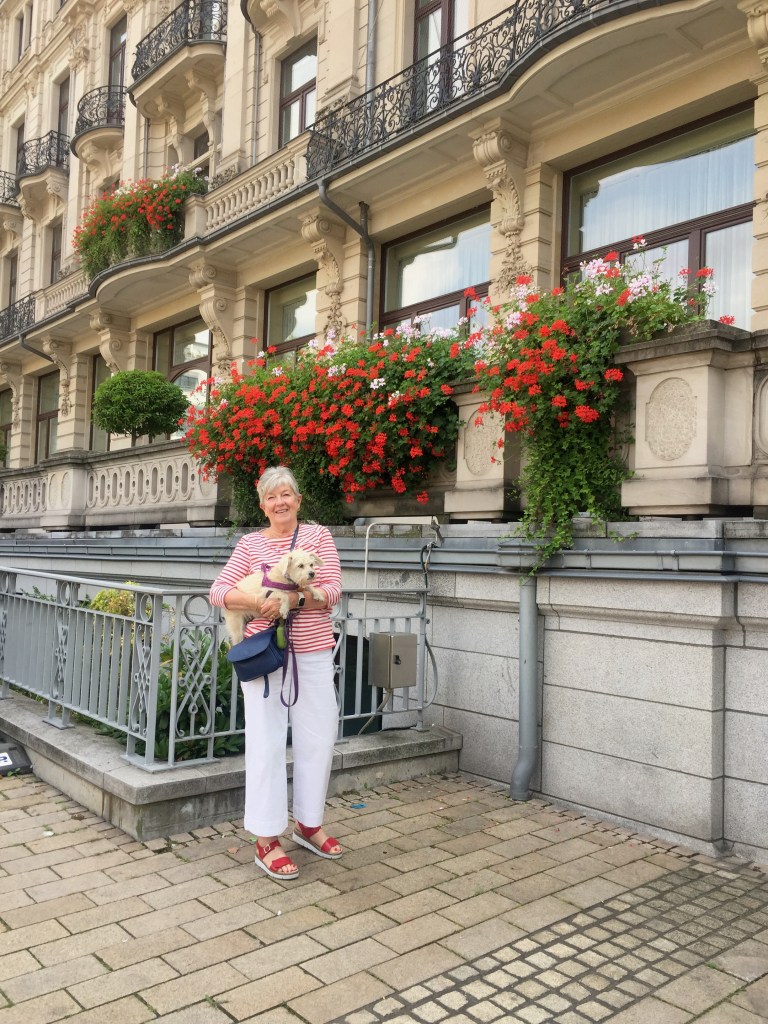
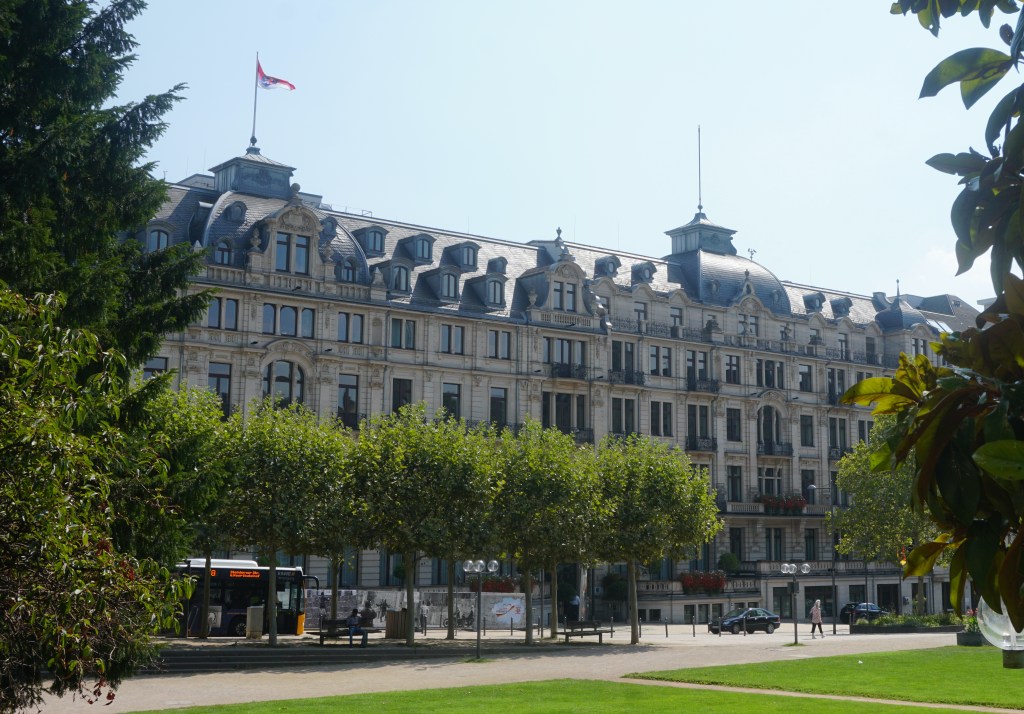
We arrived in Wiesbaden in the evening. And after getting lost for a bit trying to find parking, we managed to straggle into our Airbnb. Our apartment was located in Kaiser Friedrich-Therm, an apartment building with a beautiful, traditional German bad on the ground level. The building itself was constructed in the early 1900’s in a classical Wilhelminian style. Our apartment was quite traditional in style, yet conveniently modern.
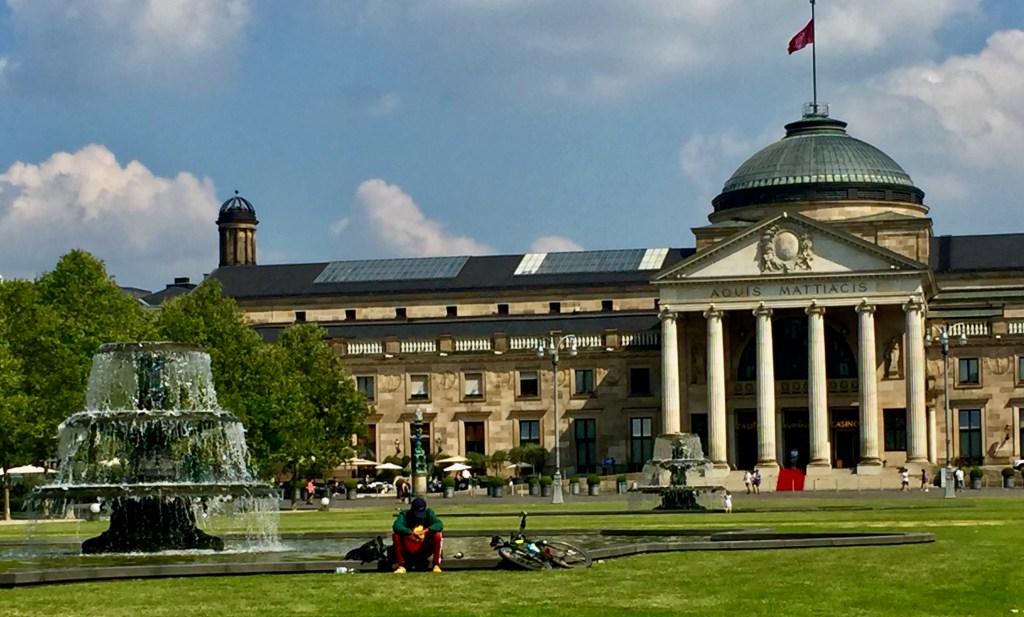
As early as 2,000 years ago the Romans discovered Wiesbaden’s special attraction when they found thermal springs. They felt the effects of the waters to be miraculous for themselves and their horses and set up the first bath houses. The site where the springs were found became the Roman fort “Aquae Mattiacorum.” After the Roman defeat by the Teutons in 407 CE, the “Wisibada” of the Germanic tribes became popular as a trading post along the Rhine.
It began to develop as a resort town in the early nineteenth century, and the European aristocracy came in droves, fueling a building boom. Its magnificent buildings have been preserved for the most part and reflect its glamorous past. Wiesbaden emerged from two world wars amazingly unscathed and was made the capital of the German state of Hesse in 1946.
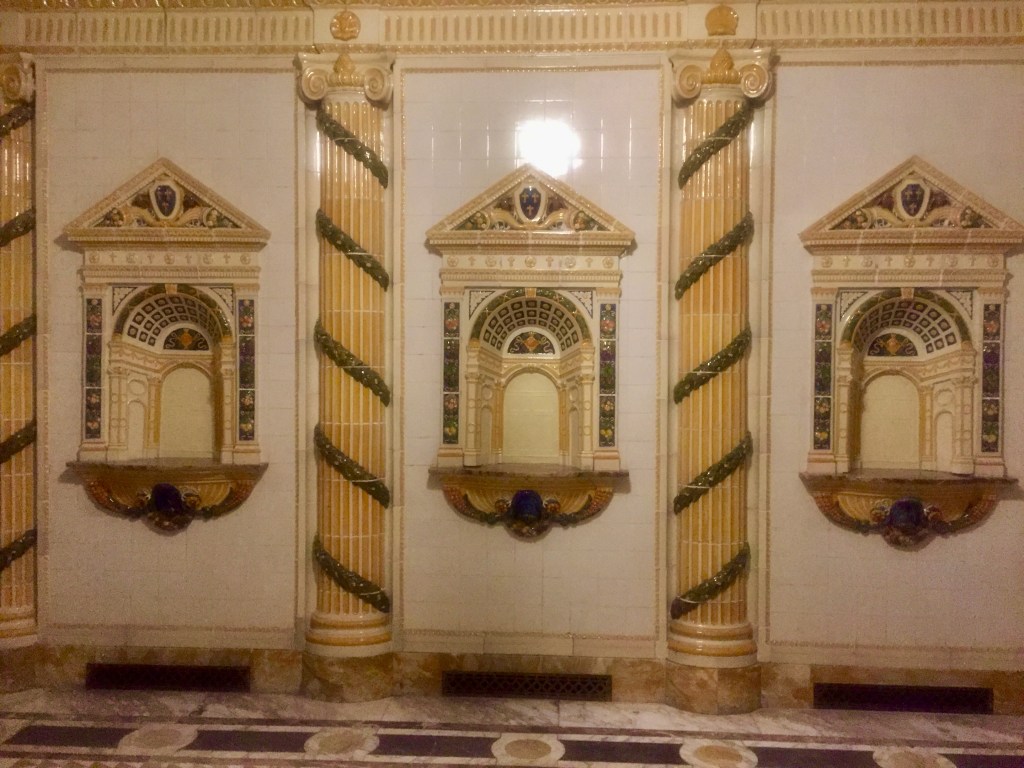
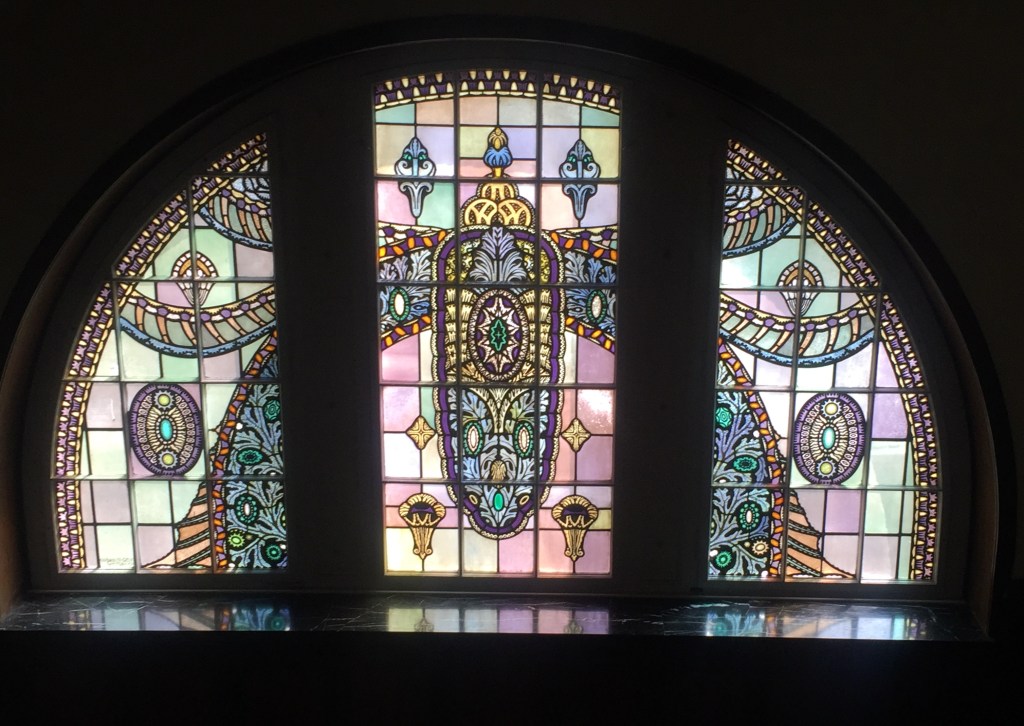
When Donna lived in Wiesbaden in the late 60’s her family resided for a year in Hotel Rose, presently the State Chancellery of the Prime Minister of Hesse. It was a beautiful old pile that had been converted from a hotel to a residential hotel with suites and apartments leased to permanent guests. Her family lived on the top floor in a small apartment with one bedroom and a nook for two twin beds. There was a small kitchen, a dining area and a living room. The basement had a traditional German hot spring bad (spa), with massage and esthetic services and an indoor tennis court. This was Donna’s introduction to Europe and it made an impression! It felt romantic and glamorous and foreign and she fell in love with the entire continent! So, it was a total stroke of luck to find the apartment in Kaiser Friedrich-Therm, which resonated strongly with her memories of Hotel Rose. Kaiser Friedrich Therm is located in the center of the Alt Stadt, which is now a pedestrian zone. This made for such a quiet respite! . In the foyer of the Kaiser Friedrich Therm spa are original ceramic fountains from 1903, previously dispensing the healing hot (sulphurous) water to those seeking the cure. And a glorious stained glass window was in the stairwell of the apartment building.

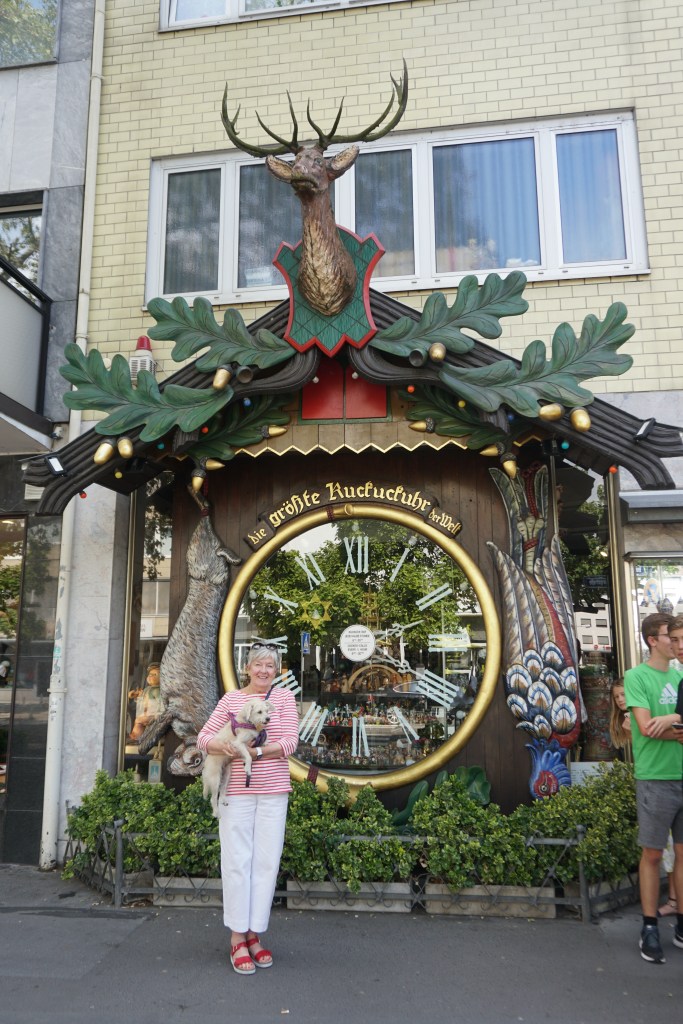
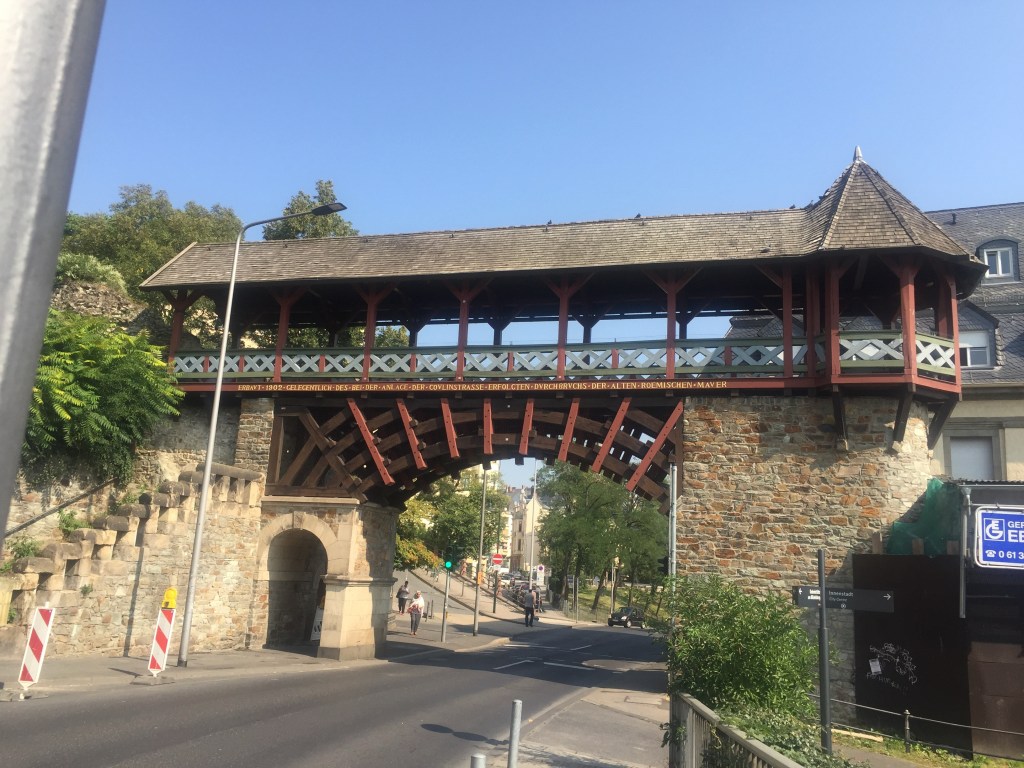
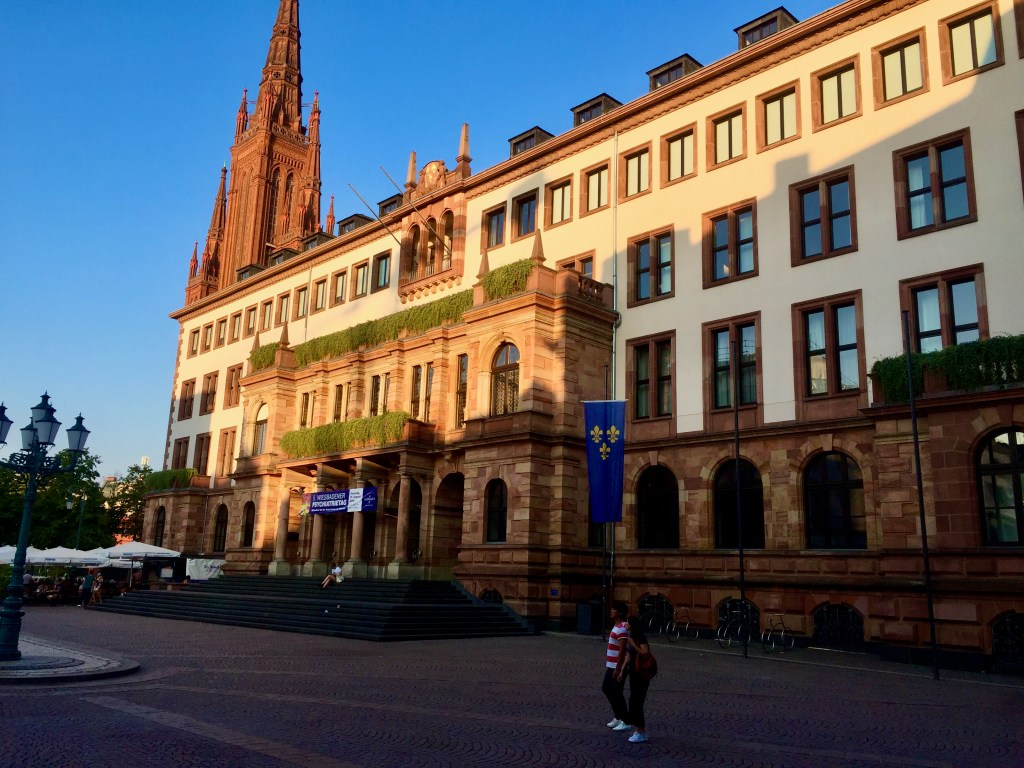
We spent our first day wandering around looking for various landmarks from Donna’s memories. Although Hotel Rose is now an office building, it remains such a beautiful example of the architecture of times past with window boxes full of geraniums in every color. We wandered past the Kurhaus, formerly a spa and now an event venue. We strolled past the MarktKirche to the Rathaus (town hall) and made dinner reservations at the Ratskeller – the typical German restaurant in the basement of the rathaus, found in most German towns of any size. We found the famous “largest cuckoo clock in the world,” erected in 1946, by German souvenir salesman Emil Kronberger. The clock strikes every half hour between 8:00 AM and 8:00 PM. The shop is full of every German souvenir you can imagine – beer steins, cuckoo clocks, nutcrackers, Hummel figurines, Christmas ornaments, you name it!

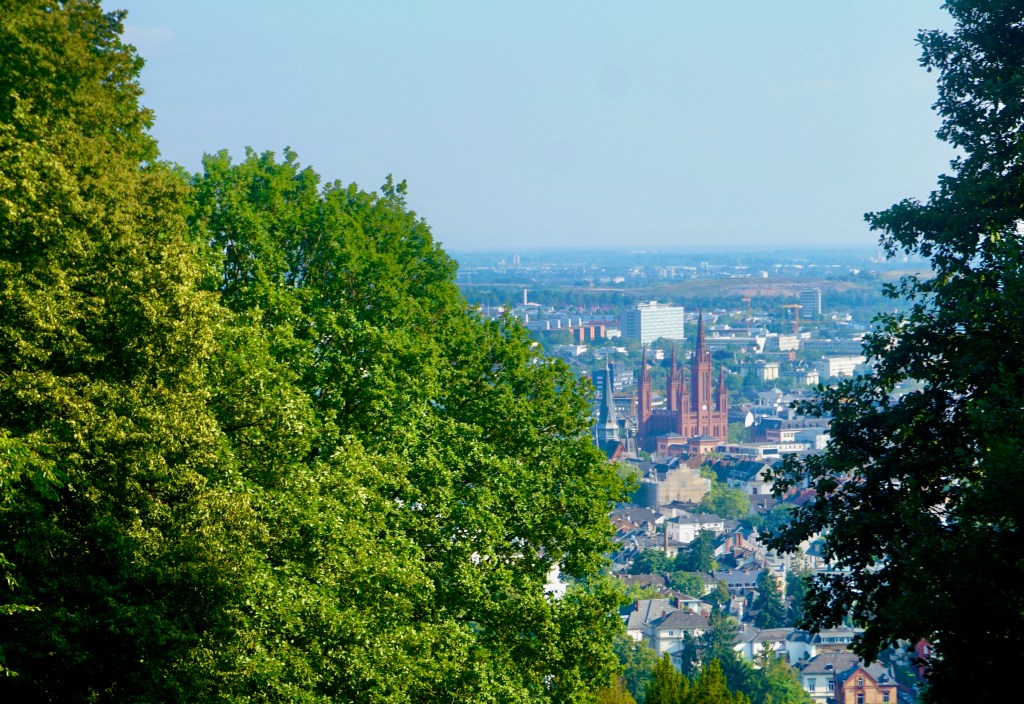
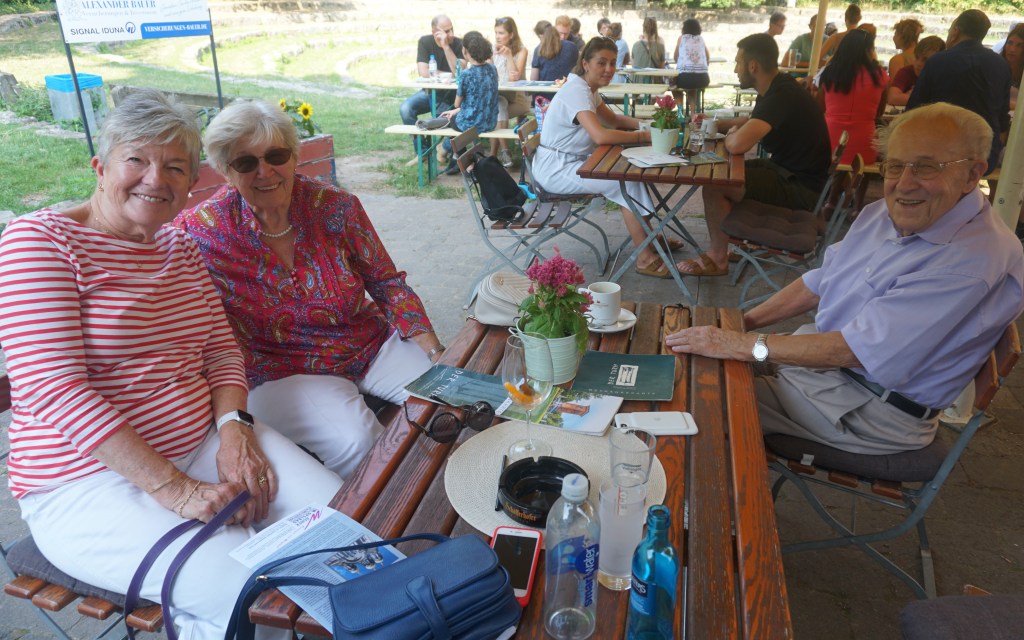
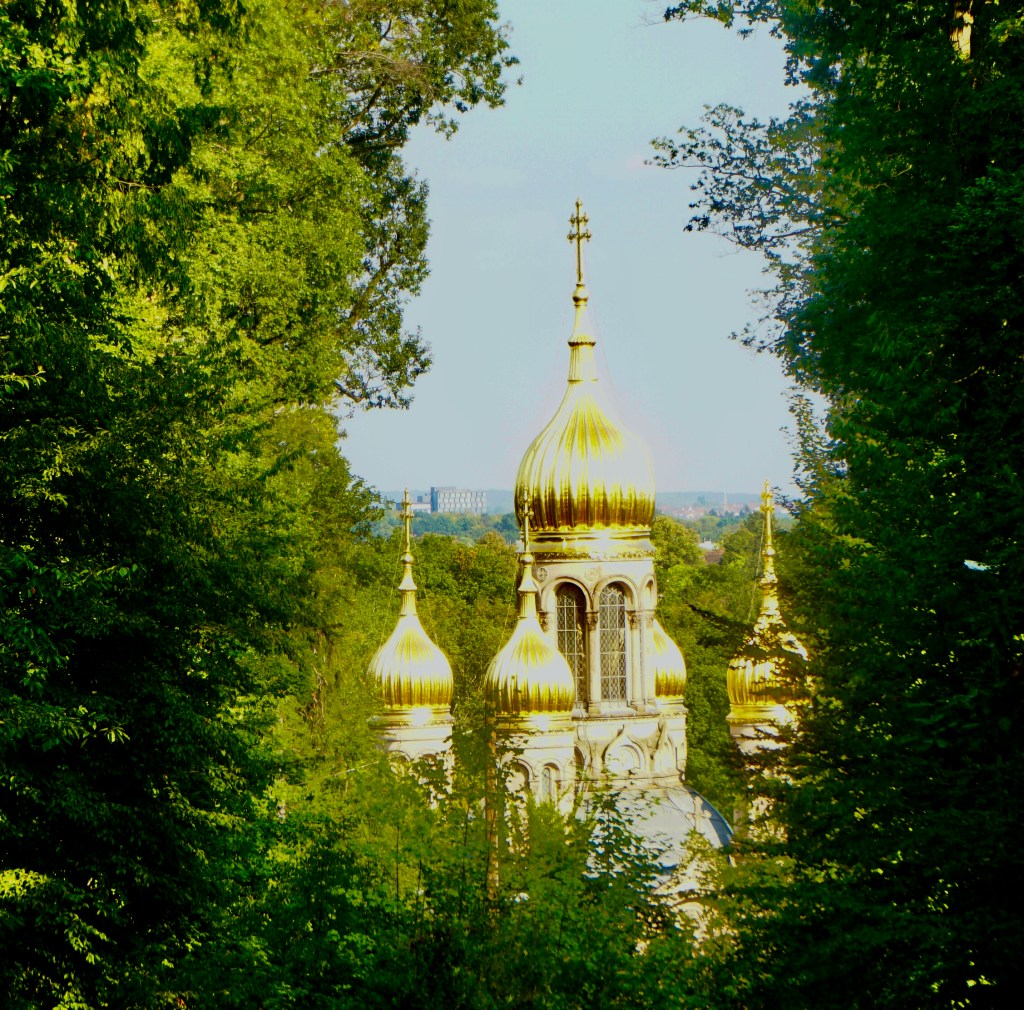
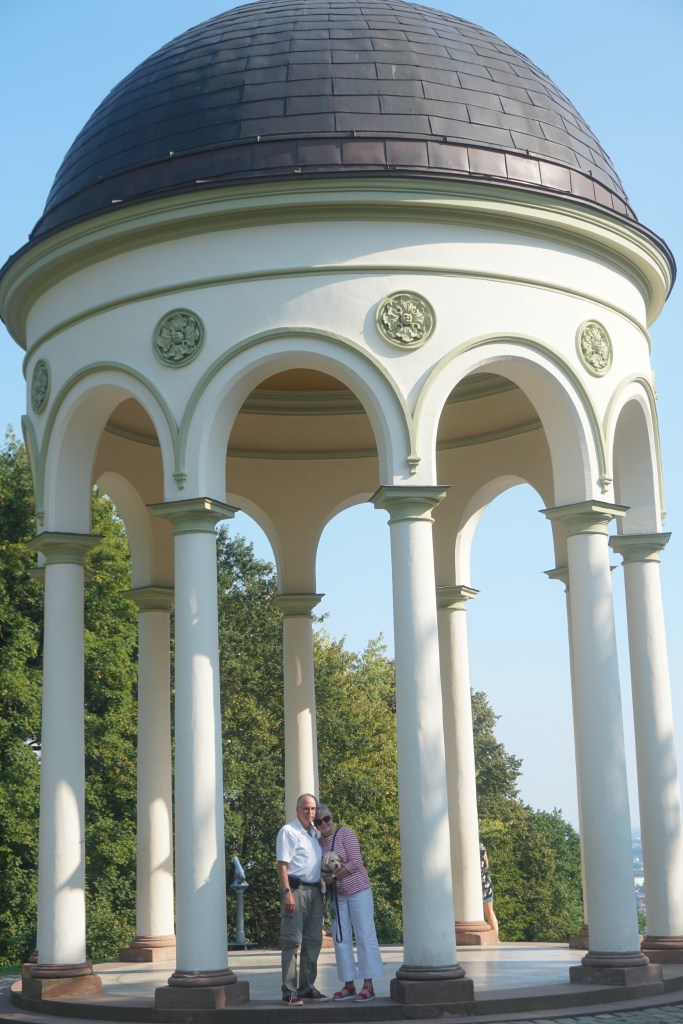
The following day, we decided to take the Neroberg Bahn to the top of Neroberg, the tallest point in the city at over 800 feet. This old style water powered funicular railway is a unique way to make the 1450 foot trip to the top of Neroberg. Built in 1888, this train is powered by a water-based system. The weight of the water pulls the top train down to the bottom where the water is discharged into a reservoir and pumped back up to the top for the next descent. The descent of the top train pulls the bottom train to the top. And on and on and on it goes! This is a popular leisure destination for Wiesbadeners with a nature trail for hiking, a public swimming pool and a small cafe open in the summer. There are some amazing panoramic views of Wiesbaden and surrounding towns. A gorgeous Russian Orthodox church is a few minutes walk away. We met a delightful German couple on the train going up the hill. He is 96 and she is 91! They were out for their Sunday treat and joined us for coffee and cake. We had a lovely chat which made a delightful day even better!
Our last evening in Wiesbaden, we decided to take advantage of the spa in our building. Built in the early 1900’s in a classical style, the baths are on the foundation of Roman era hot mineral springs. The spa, operated by the city, contains a warm tub- 102˚F, a cool tub – 65˚F, several saunas and steam rooms, masseurs, a variety of esthetic and cosmetic treatments, a quiet room and various other treatments and facilities. (Textile free, ergo photography forbidden.) We both took the warm bath and the cold bath prior to our massages. Donna got a facial also. We could get used to this!
Tomorrow we head to Munich, with a short stop in Hanweiler where Donna lived and, most importantly, where she learned to bake stollen!
Grüße an alle,
Donna, Sam & LuLu

 LuLu's Outta Town
Fascinating stuff! Learning a lot and enjoying the trip with you!
LikeLike