
The first indigenous inhabitants of this area in Provence settled here in the 6th and 7th centuries BCE. Protected by the mighty Alpilles range of limestone cliffs and believing that the springs in the area had healing properties, it was a salubrious location. Named Glanum after the Celtic-Ligurian god Glan, the first settlement was small, however subsequent relations with the Greeks from Marseille brought wealth to the inhabitants of Glanum, more sophisticated building techniques and an extension of the inhabited zone in the Hellenistic style. Then, in the early years of Augustus’s reign (63 BCE to 14 CE), Glanum became a Roman colony, after Rome moved in to ward off Hannibal. This brought another transformation to the town’s architecture, covering over the Greek construction with Roman works.
Glanum is one of the oldest, largest and best preserved archeological sites in Europe. It had everything needed for a civilized Roman city – a sacred spring, housing, shops, a forum, temples, baths, cafes, and a basilica, no less, for administrative purposes. Defensive walls and ramparts from earlier periods became surrounded by the larger town and were subsumed in the Roman plan. The siting of the main town provided for natural drainage to handle both runoff and waste.
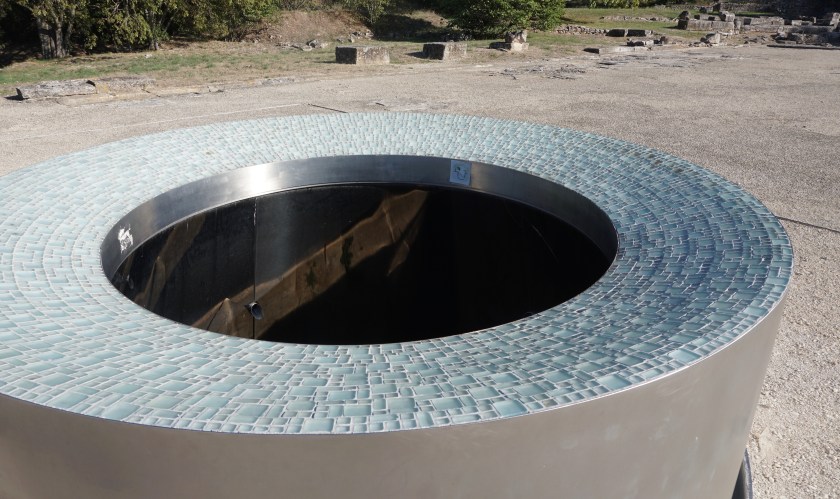
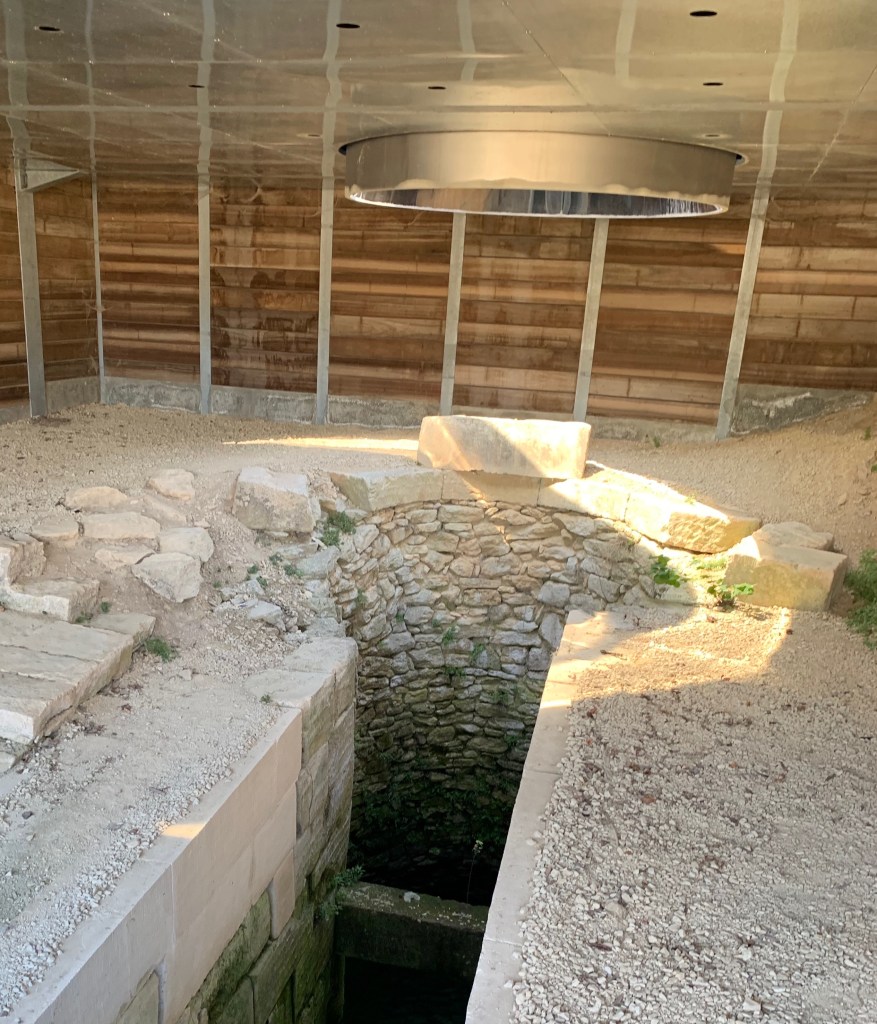
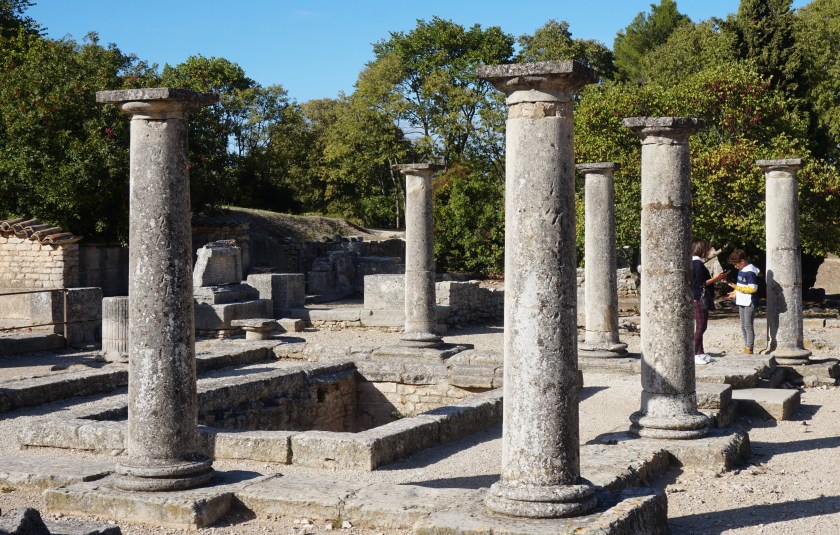
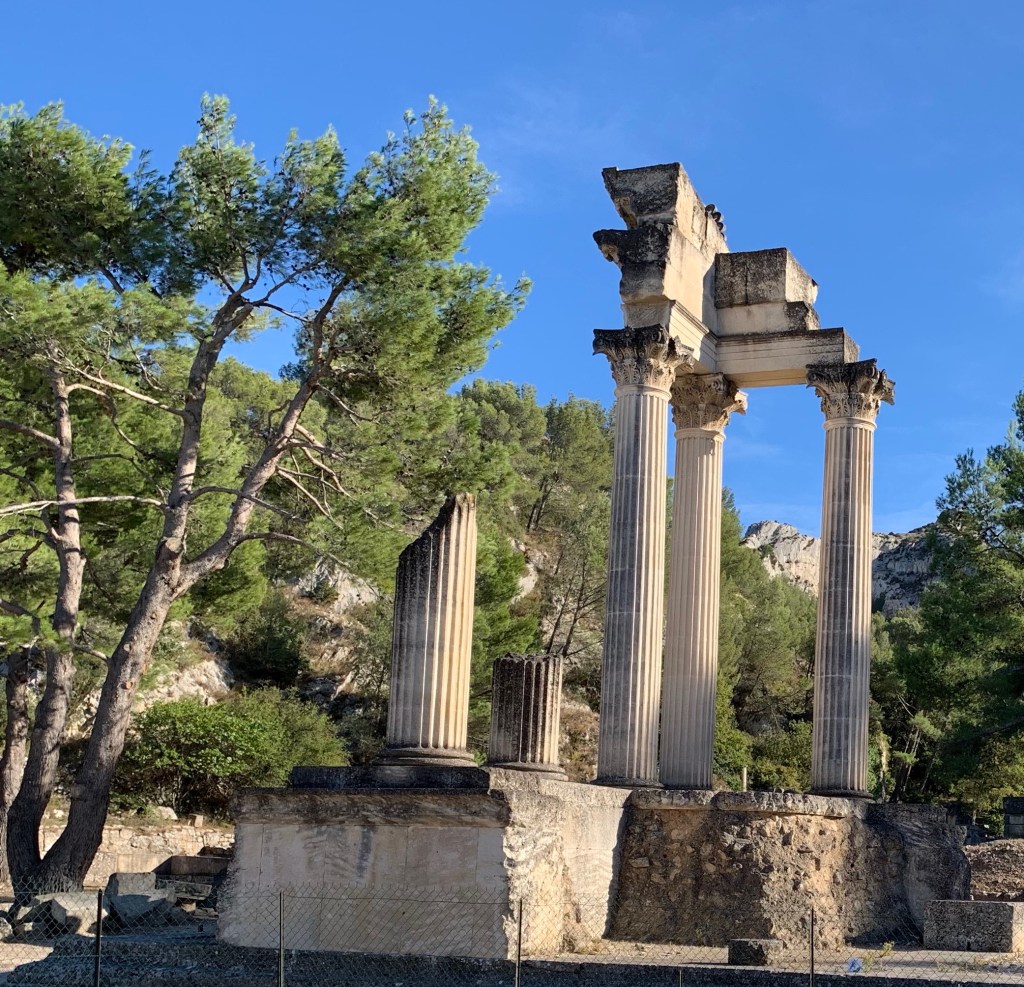
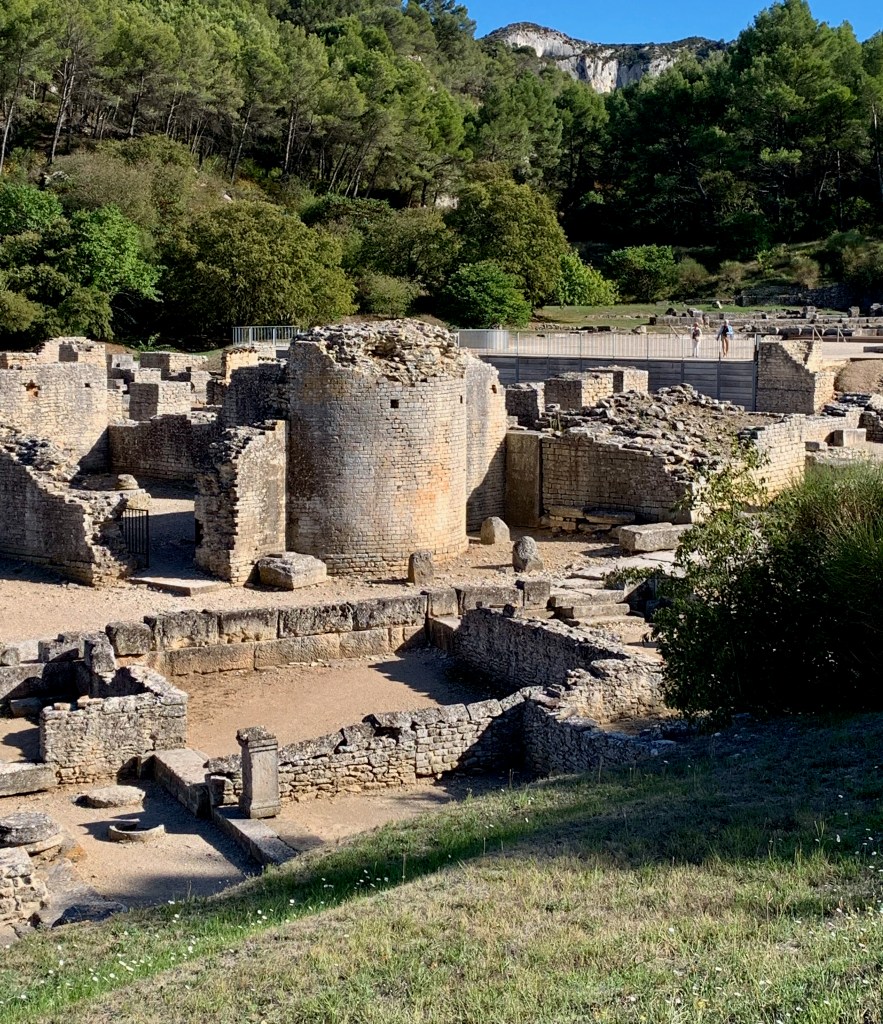

At the entrance to the town stood two amazing monuments that remain nearly completely intact to this day – the Mausoleum and the Triumphal Arch. These monuments stood for centuries without any indication that there were more ruins to be discovered!
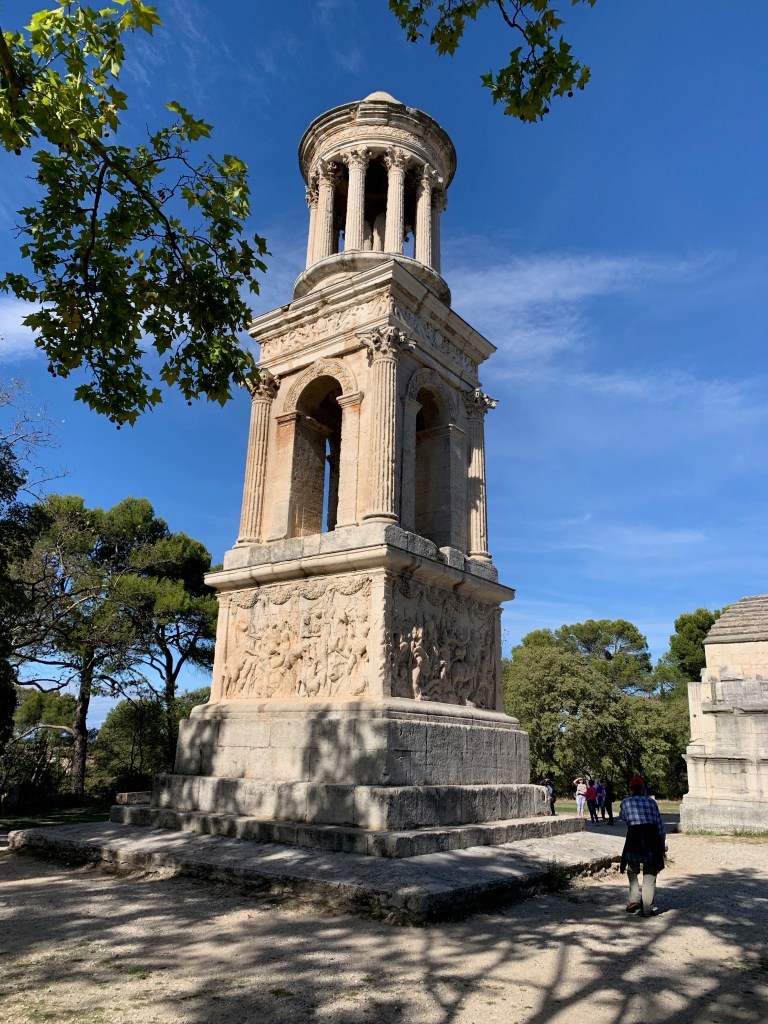
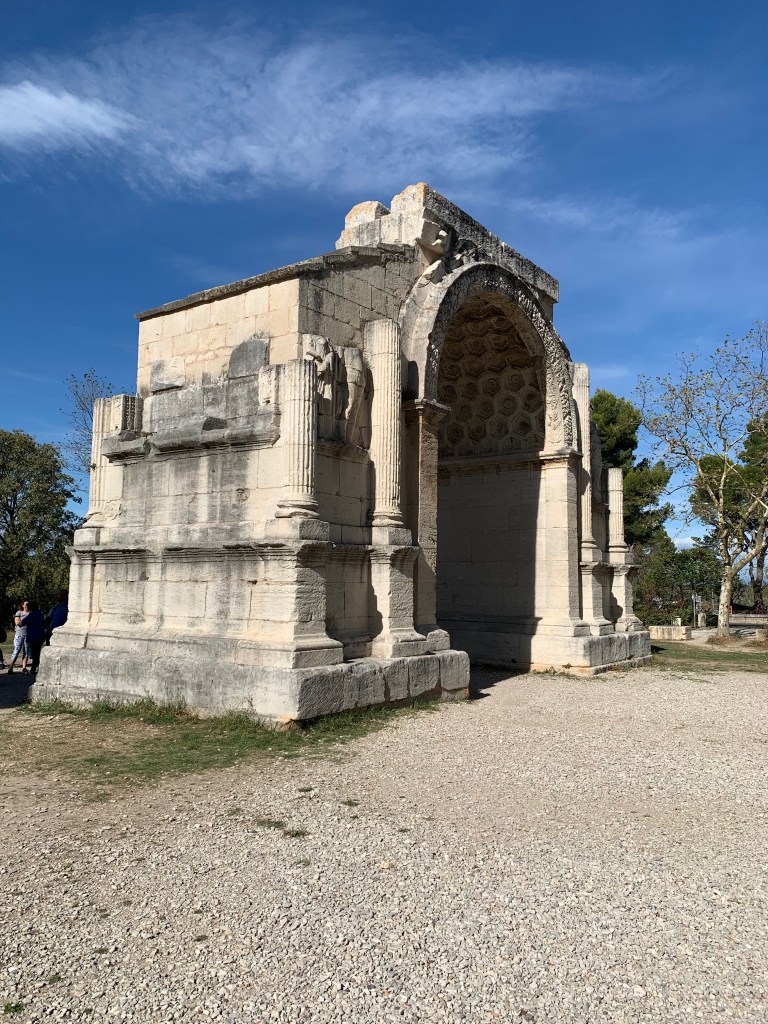
However, in 260 CE, the Alammannic (aka Barbarian) invasion nearly destroyed the town, and the survivors abandoned Glanum and moved to an inhabited area about 2 km north that later came into the possession of the Abbey of Saint-Remi in Reims.
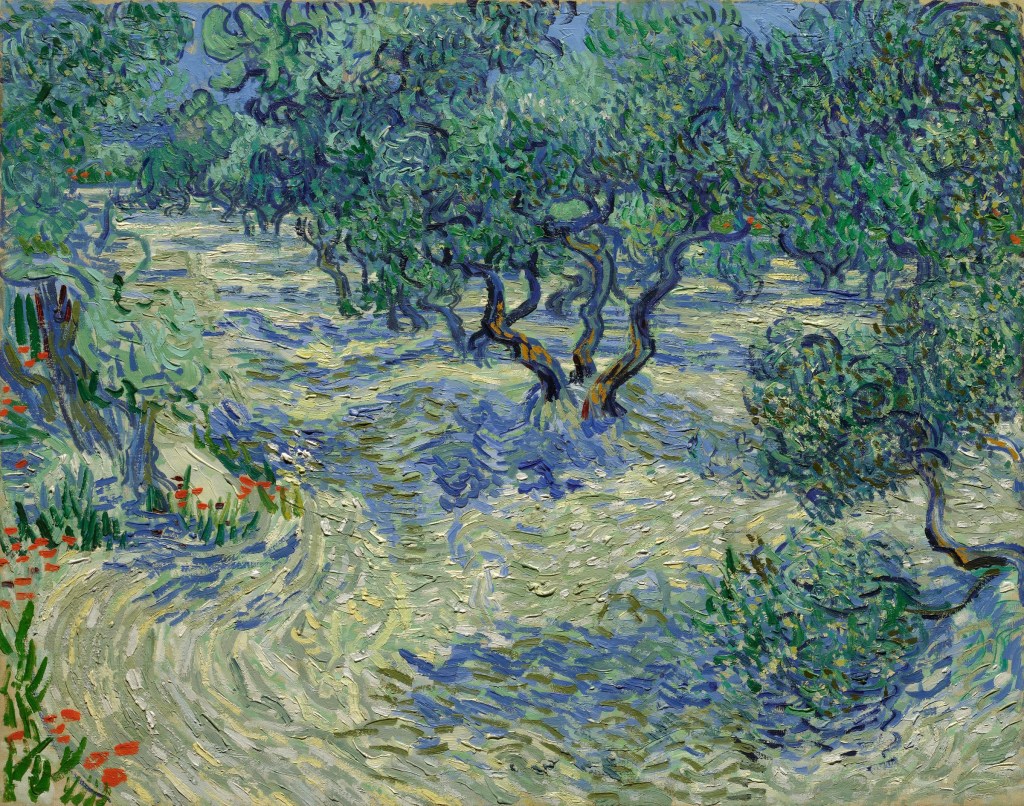
Following this destruction, Glanum was left to fall out of memory. Eventually, rain, silt and rocks from the Alpilles poured down the mountain sides and covered up the remains of what was once a vibrant town. The Mausoleum and the Triumphal Arch, on high ground, were the only remaining visible vestiges of the city. And it was not until 1921 that the ruins of Glanum were discovered under an olive grove immortalized by Vincent van Gogh during his stay in St. Rémy in 1889, and a vast archeological endeavor was undertaken.
Present day St. Rémy is a composite of old and new. Built using rocks scavenged from the remains of Glanum, the historical Vielle Ville is a web of narrow streets that weave around like a plate of spaghetti. Surrounded on four sides by a ring road consisting of Av. Victor Hugo, Bd. Mirabeau, Bd. Gambetta and Bd. Marceau, there are no parallel streets, no grid and not a full complement of actual street name signs. A street sign is a tile or enameled plaque set at a corner building at the level of the premier étage, or, to us, second floor. These lovely limestone paved streets are lined with medieval restored houses and lead to quiet little squares shaded by plane and chestnut trees. Cafes and bars invite you to sit, have a drink and people watch.
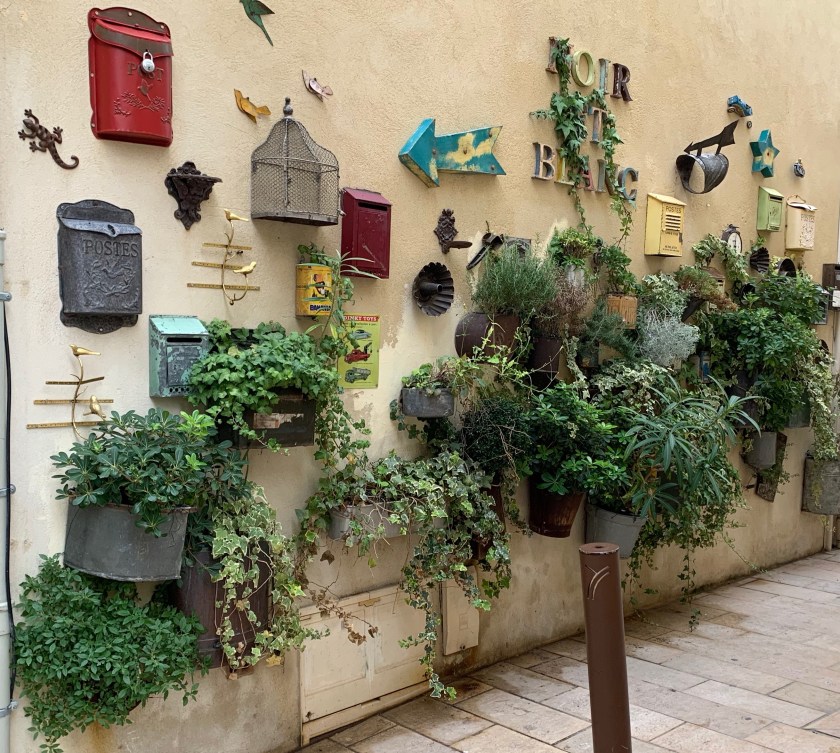
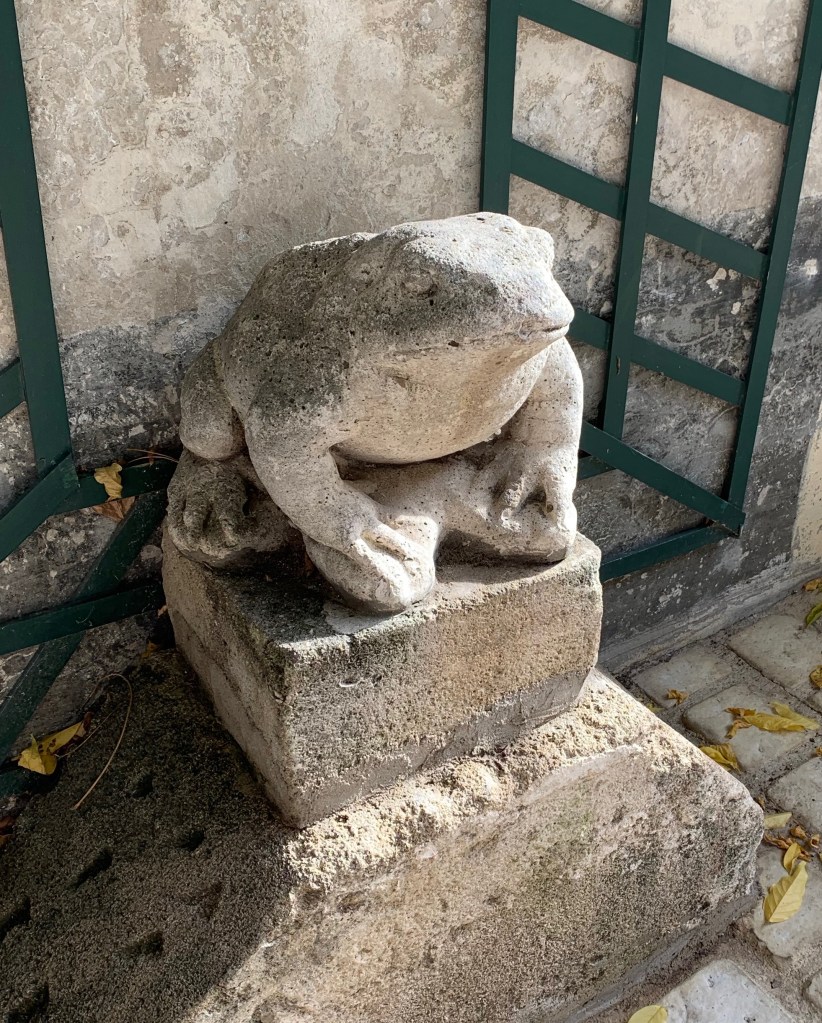
By the 1400’s St. Rémy was a walled town with only one entrance, the Porte St. Paul. Later other gates were added, however today there remain only two, the original St. Paul Gate and the Porte de Trou, or Hole Gate. What remains of the walls has been transformed into homes, hotels and shops.
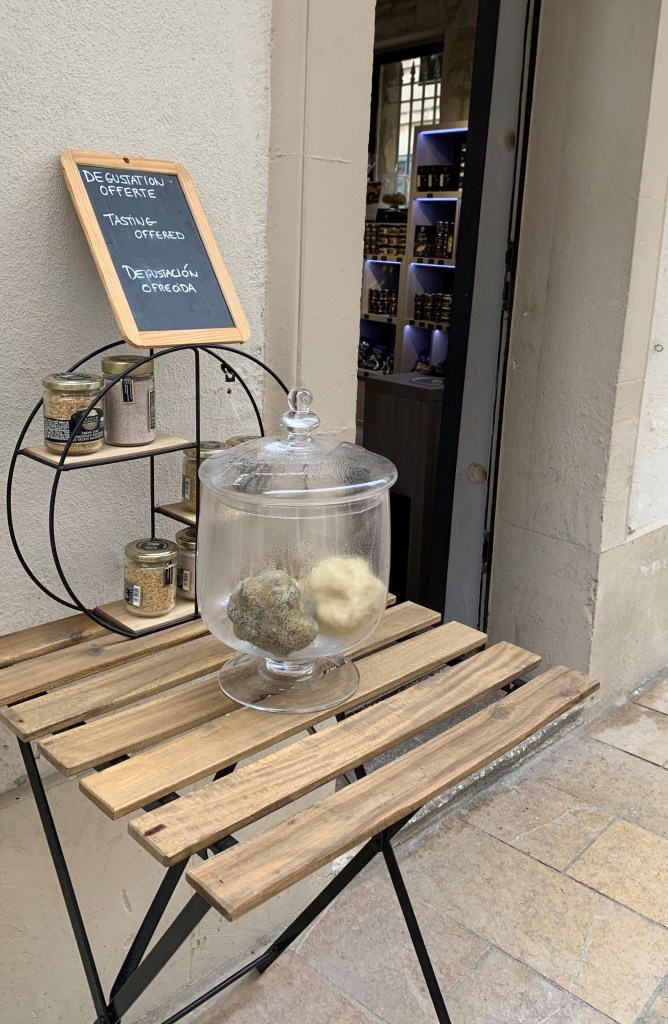
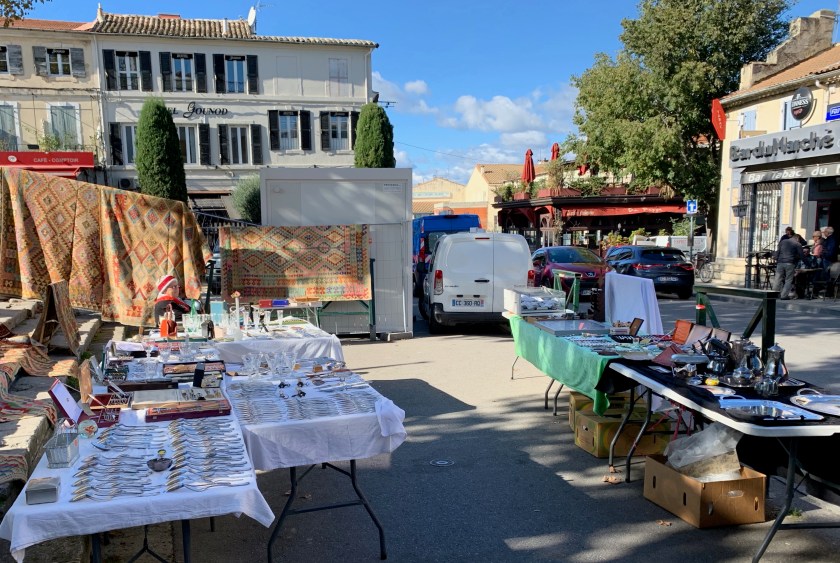
Much of the historic center is populated by more tourist-oriented shops. Lots of trinkets and souvenirs, lavender and soap purveyors, Provençal pottery and linens. There are many art galleries, a few small antique shops and some boutiques ranging from high end to bargain level. There are also caves à vin, fromageries, a terrific spice shop, and some wonderful restaurants. Spring and summer bring onslaughts of tourists. Many stay in St. Rémy itself or in hotels, gites and Airbnb’s in the nearby countryside. But also, tourists from cruise ships in Marseille show up often, especially on Wednesday, which is the Grand Marché Provençal. The Grand Marché has food purveyors as well as a wide variety of clothing, hats, shoes, housewares, table and bed linens, ceramics and pottery, soaps, art prints, and jewelry. On Saturday there is a Petit Marché Alimentaire in the Vielle Ville which is almost exclusively food-oriented and consists of local vendors of produce, meat and poultry, cheese, honey, wine, lavender, sausages and olives and olive oil.
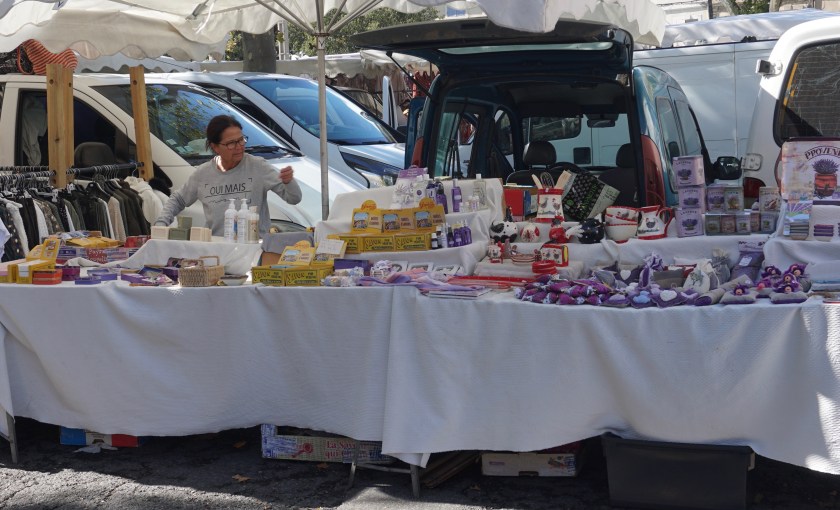
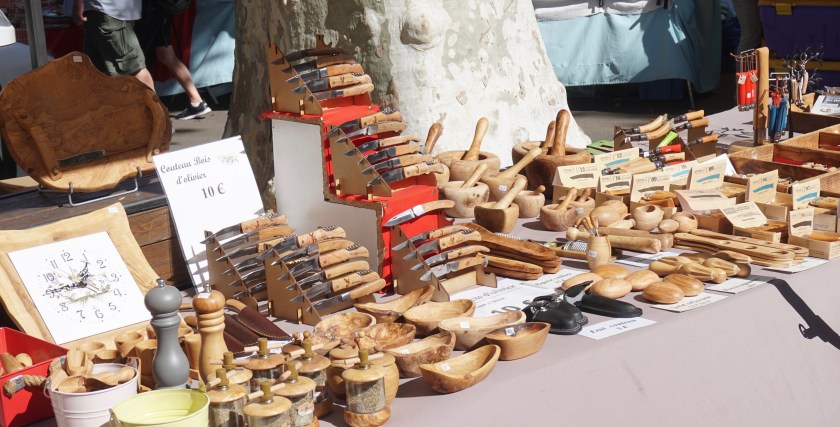

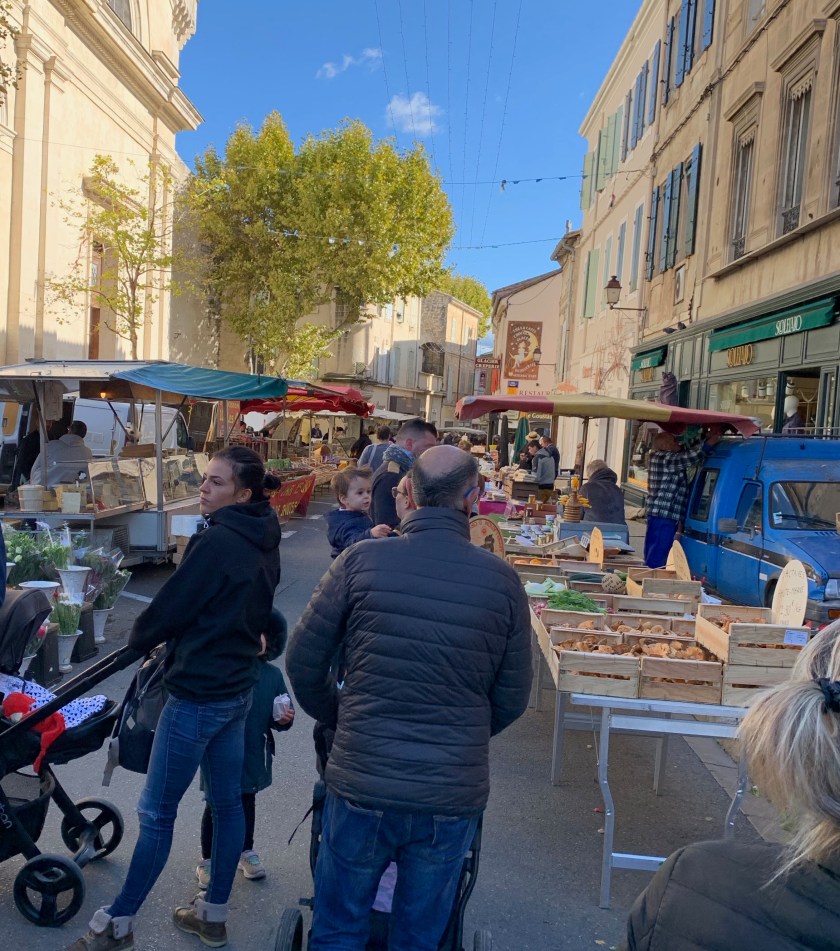
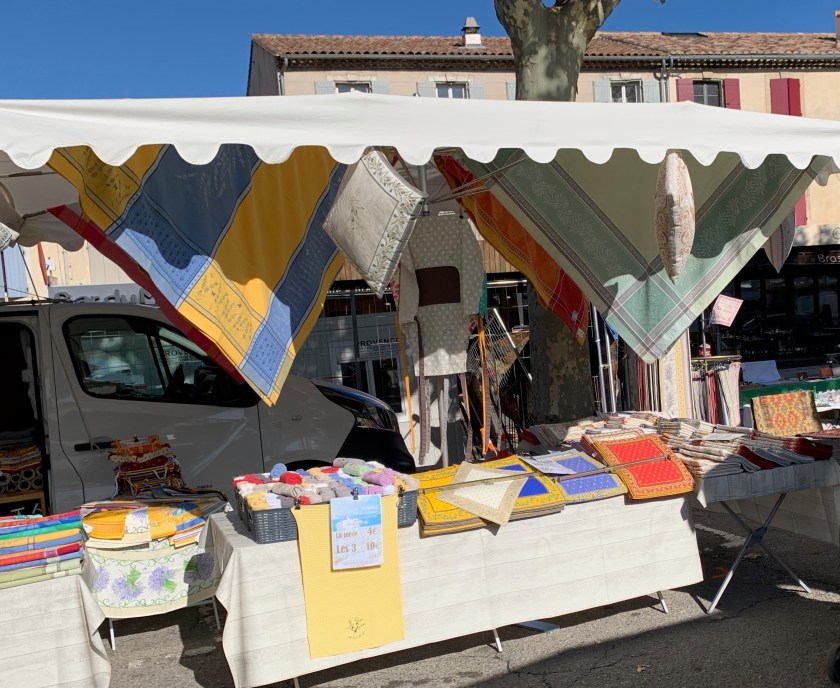
table linens
St. Rémy prides itself as being the birthplace in 1503 of Michel de Nostredame, aka Nostradamus, a French astrologer, physician and reputed seer, who is best known for his book Les Prophéties, published in 1555. Other famous residents include Fréderic Mistral, the poet; Charles Gounoud, the composer, who wrote the opera Mireille during his brief sojourn here; and Marie Gasquet, Provençale novelist and queen of the Felibrige, a literary and cultural association created to promote the Provencal/Occitane language and literature, F. Mistral having been one of the founders.
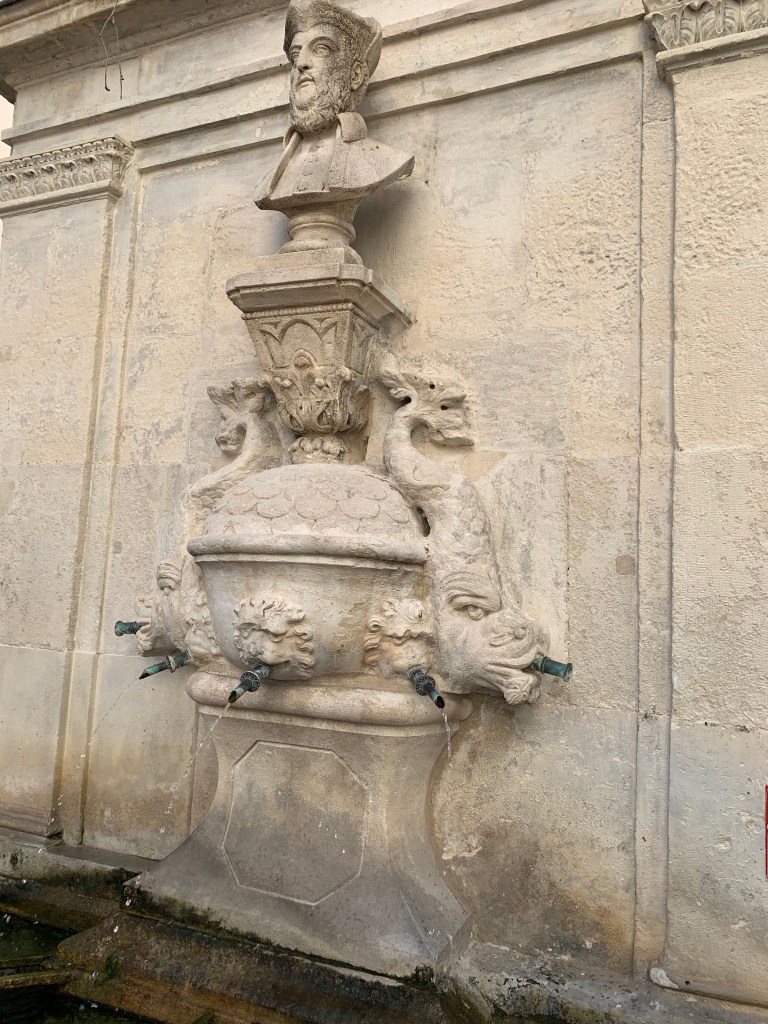
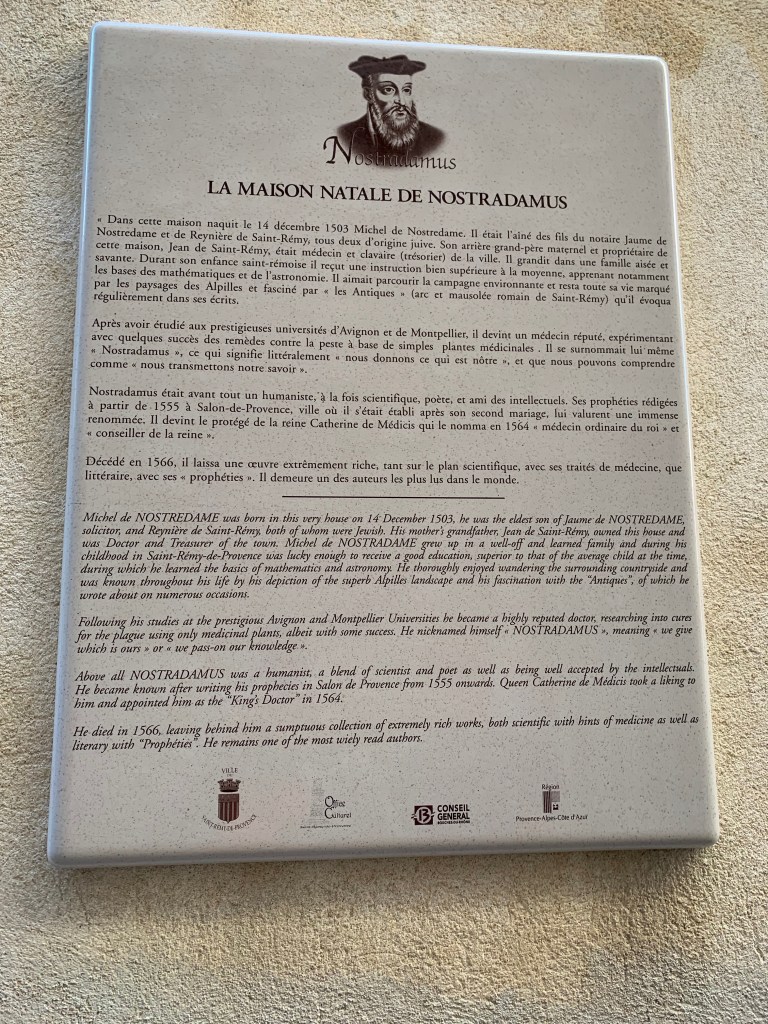
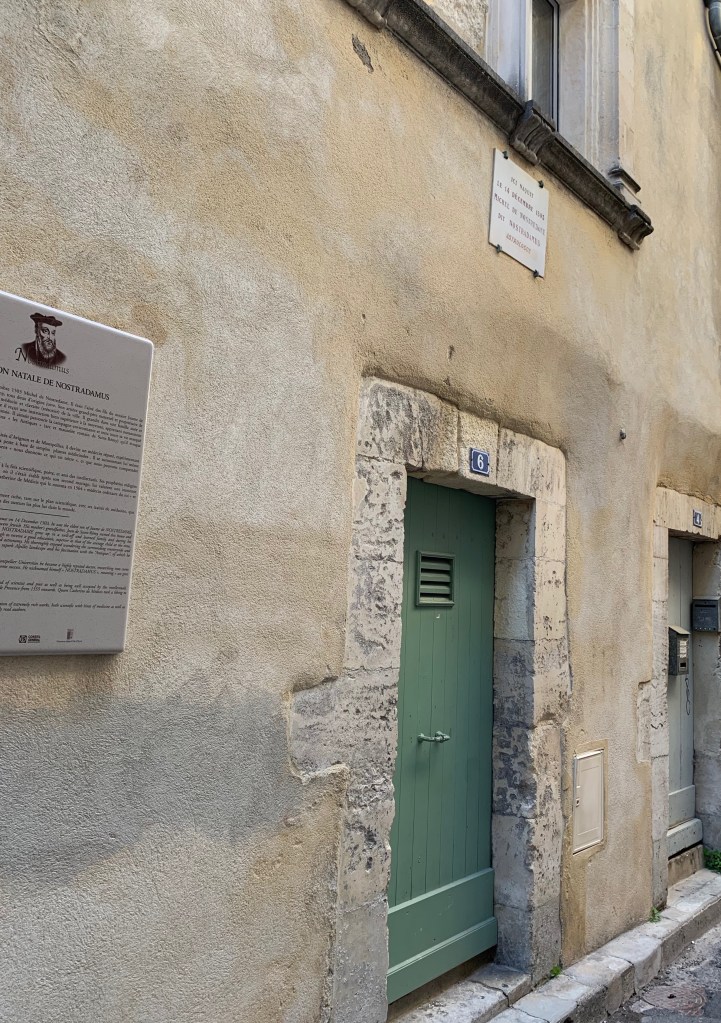
Out of many other famous persons who are associated with St. Rémy, Vincent van Gogh is probably the most celebrated. He first arrived on May 8th, 1889, to be “interned” at his own request, in the Asylum of Saint Paul Mausole.
Fascinated by the quality of light and the beauty of the landscapes that he discovered in Saint Remy, he was very inspired during his 53 week stay. He was relieved to find a very understanding reception among the religious and staff who welcomed him and allowed him a great deal of freedom to leave the asylum to paint (accompanied, bien sûr). Despite periods of serious mental disturbance, he completed nearly 150 paintings and 100 drawings within one year, including Starry Night and Self Portrait. He left Saint Rémy on May 16th, 1890 to go to Auvers sur Oise, where he committed suicide two weeks later. (We understand there is some controversy over whether his death was a suicide.)
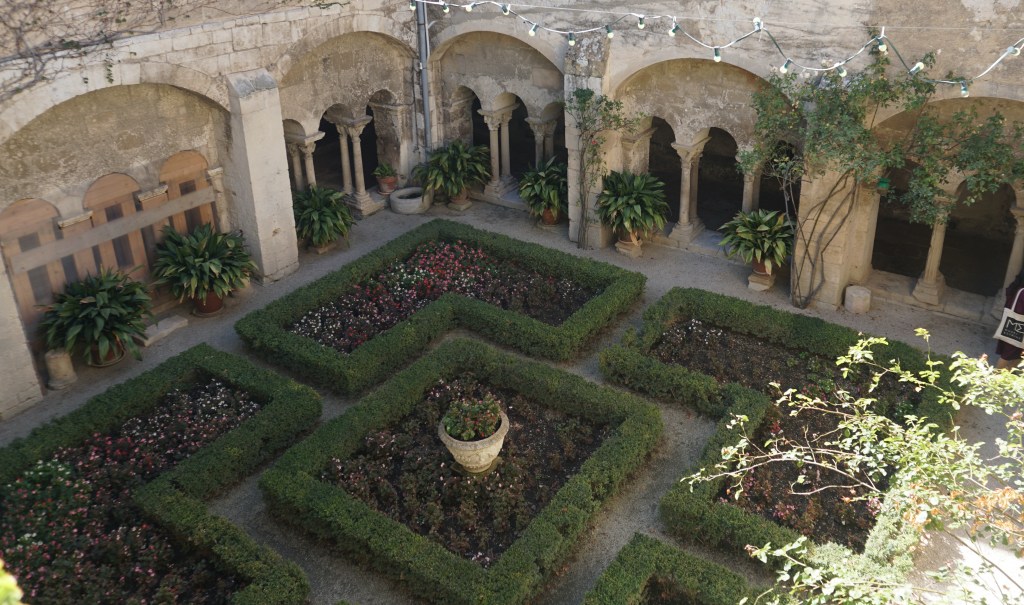
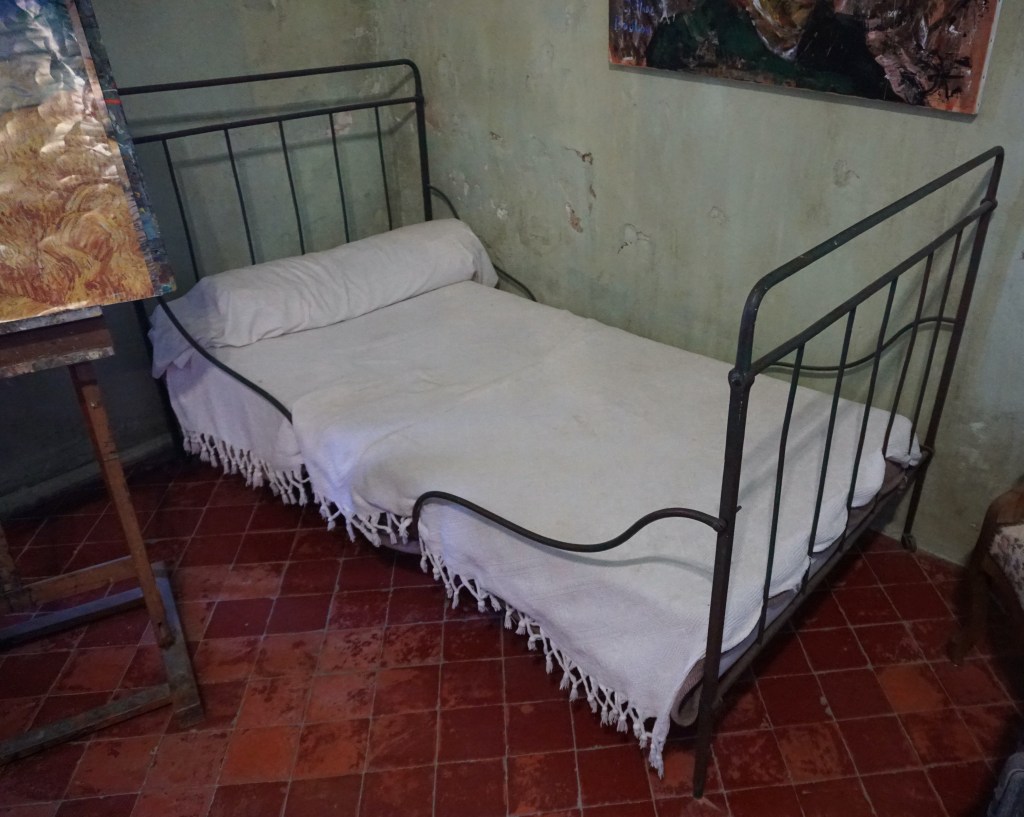

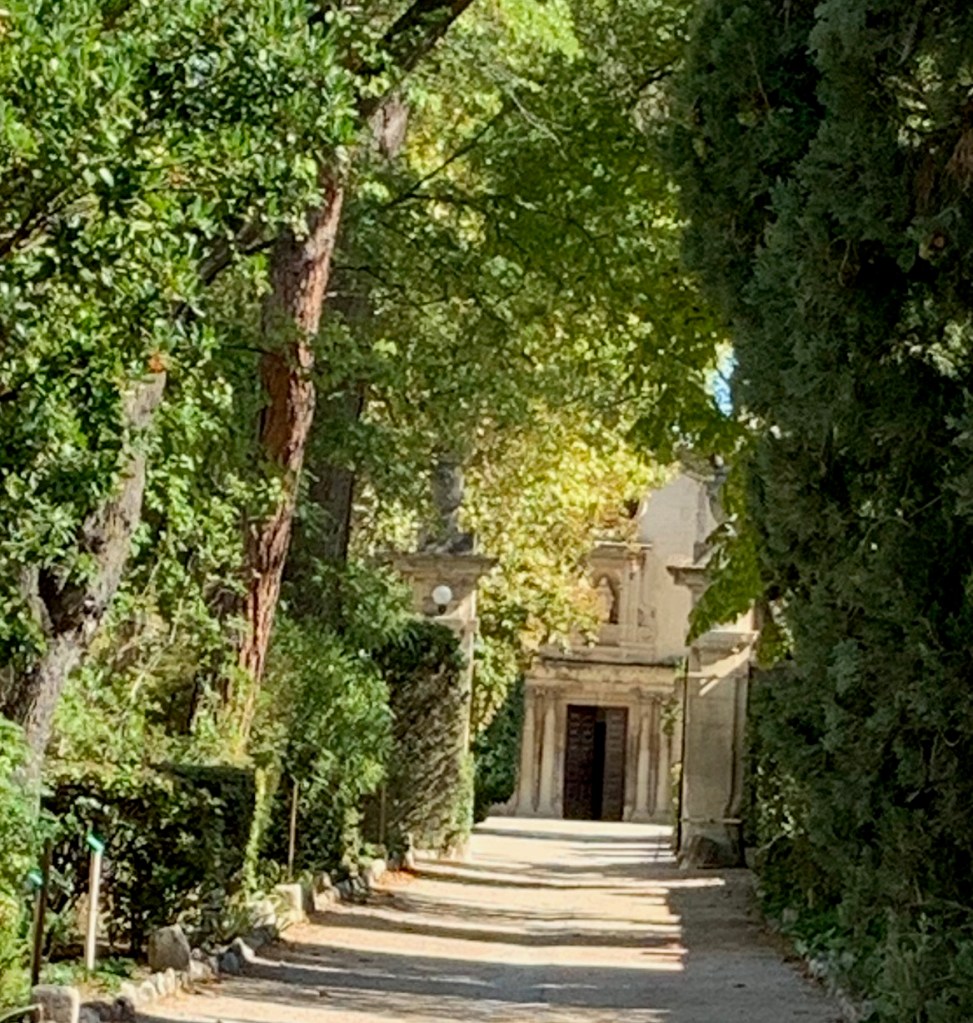

Interestingly, Albert Schweitzer was also a patient at the St. Paul Mausole asylum. Doctor Schweitzer was “hospitalized” here in 1917-18, for the remainder of WWI. He wasn’t so much ill as German. He took advantage of his “hospitalization” to write The Decay and the Restoration of Civilization and Civilization and Ethics, part of his philosophical study of civilization.
This is a bit of the history of this lovely little town where we have settled-for five months, that is. In the next post we look forward to sharing how much we enjoy living here and some of our daily activities.

 LuLu's Outta Town
How wonderful to hear from you!
Hope you are having an even more awesome time without the internet, although I know it’s crazy making.
Love the history and the pics – miss you at book club.
Sara
LikeLike
Really enjoyed that historical panorama of the layers of history in St. Remy and environs. // You mentioned Auvers Sur Oise in passing when discussing Van Gogh. I’ve been there because my friend’s great grandfather, an American from Michigan, lived there as part of the artists’ colony for a while. We saw Van Gogh’s room & sadly, his gravesite. // Sounds like you’re continuing to enjoy your marvelous vacation.
LikeLike
What a fascinating place! Thanks for the richly informative post, which makes one feel like the explorer traveler oneself!
Julio
LikeLike
Donna, I cannot tell you how much I enjoyed your news with all the quasi familiar pictures of St. Remy…😁. I forwarded your email to my old friend, Jean, in Houston since she was the person I went to St Remy with in 2003. Below is a photo just now from my office…. I am so glad you, Sam and Lulu are enjoying it as well. Bisous, Dorothy
Sent from my iPad
>
LikeLike
Donna & Sam, We’re happy to know that your internet situation will soon be (or perhaps already has been) resolved..What a wonderful town you chose for your sojourn in France. I wish there were reason to believe the House will have impeached and the Senate convicted Trump before you get home but I’m afraid there’s not a chance of the second part happening. Stay in France through the 2020 election?
Happy Thanksgiving to you both.
Dan & Leslie >
LikeLike